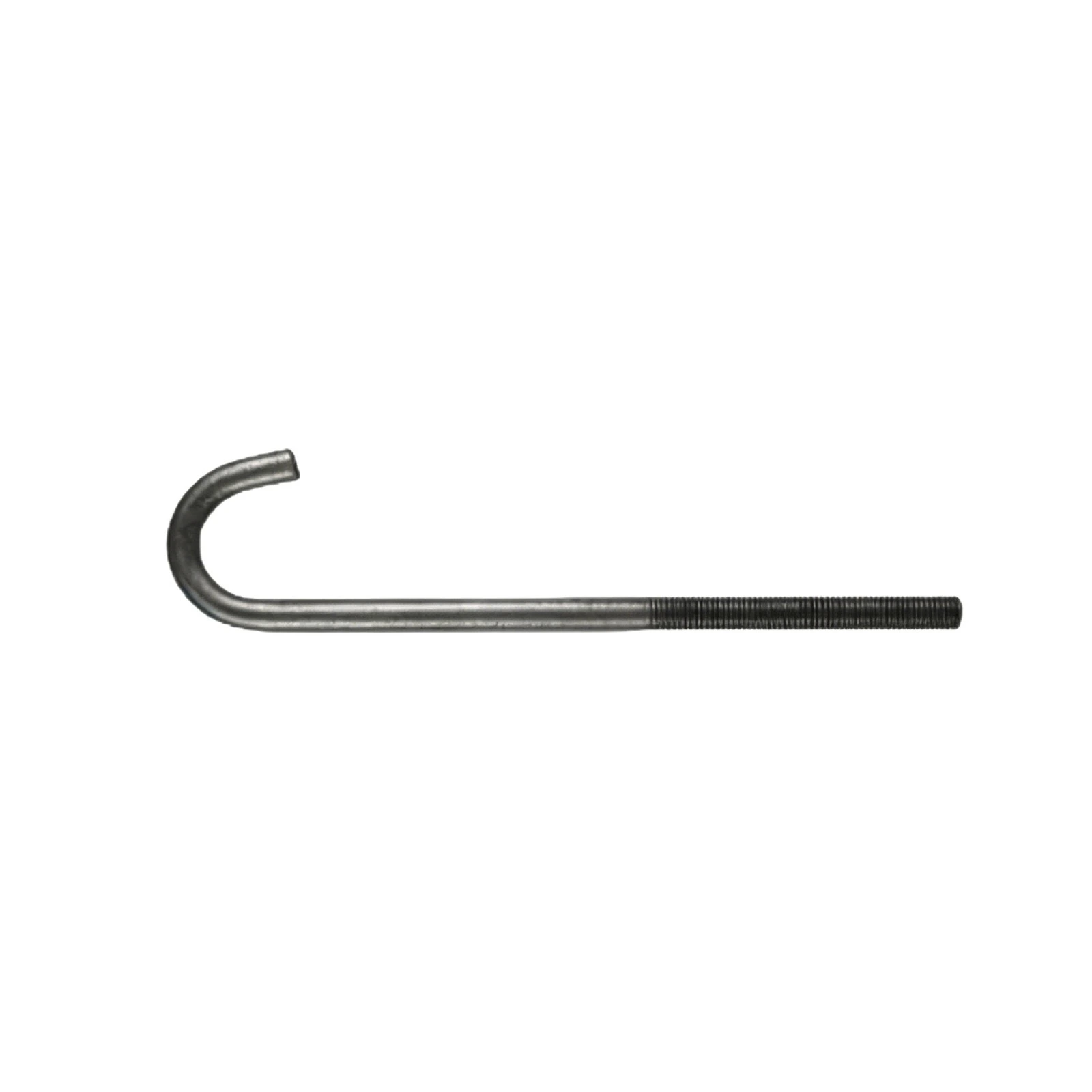
When ordering L-shaped anchor bolts against an older standard, buyers should verify the standard’s current status, confirm the specification approved for the project, and reconcile the drawing, dimensions, material and foundation interface before releasing the purchase order. A legacy standard number on a product page or old drawing is not, by itself, sufficient evidence that the referenced specification is appropriate for a new project.
This is particularly important for embedded anchor bolts because their geometry must match the foundation layout and the connection requirements of the supported structure. Diameter and overall length alone do not define the complete part. Bend dimensions, embedment requirements, exposed thread length, material, surface finish and inspection documentation may all affect whether the supplied bolt matches the approved design.
WOTU Fastener’s L-shaped anchor bolt product page references GB/T 799-1988. China’s official standards catalogue lists that edition as withdrawn and GB/T 799-2020 as current. Buyers should resolve the applicable specification for their project rather than assume that the legacy reference is sufficient for a new order.
1. Why Must Buyers Verify an Older Anchor Bolt Standard?
A standard helps define a product, but it is only one part of the procurement specification. Buyers also need to establish which edition applies to the project and whether the drawing, purchase documents and supplier’s proposed product are consistent with that requirement.
Distinguish Standard Status from Project Approval
The official record for GB/T 799-1988 lists the standard as withdrawn. The official record for GB/T 799-2020 lists the newer edition as current, with an implementation date of June 1, 2021.
This establishes the status shown in the official national standards catalogue. It does not, by itself, determine how every existing contract, legacy installation or previously approved drawing must be handled. For a new procurement, confirm the standard and edition required by the project’s design documents and applicable rules. If a contract or approved drawing explicitly refers to an older edition, the responsible designer or approving authority should clarify whether that reference remains acceptable.
Check the Replacement Edition and Relevant Requirements
Obtain the applicable standard and compare the requirements relevant to the product and project. Establish whether the newer edition affects dimensions, product designation, material requirements or other details that matter to the order. Do not assume that a newer edition is merely a renumbered version, or that every requirement has changed.
- Record the standard number and edition cited in the original documents.
- Verify its official status and any replacement edition.
- Identify the standard or specification approved for the project.
- Resolve differences in writing before ordering.
2. Which Document Should Control the Final Anchor Bolt Specification?
An anchor bolt procurement package may contain a product page, standard, engineering drawing, bill of materials, purchase specification and supplier quotation. These documents serve different purposes and may not contain identical information.
Identify the Approved Drawing and Revision
Before requesting a quotation, establish which drawing defines the required part. Check its number, revision, date, units and approval status. An old drawing may describe a previously installed component, while a current project drawing may include revised dimensions or a different foundation interface. A supplier’s general catalogue drawing may also differ from the project configuration.
If documents conflict, obtain written clarification from the party authorized to approve the project specification. Do not ask the supplier to choose whichever dimension appears more convenient.
Reconcile the Drawing with the Applicable Standard
Distinguish between dimensions or characteristics defined by the standard and project-specific requirements added by the designer. If the project requires a special bend, particular exposed thread length or another drawing-specific feature, identify it explicitly. A product that resembles a catalogue illustration is not necessarily equivalent to the component defined by the approved drawing.
3. Which Dimensions Must Be Confirmed for an L-Shaped Anchor Bolt?
A complete anchor bolt specification should define the geometry needed for manufacturing, installation and connection with the supported structure.
Verify Diameter, Overall Length and Measurement Datums
The drawing should identify the nominal diameter, overall length, threaded length and other required dimensions. Each measurement needs an unambiguous starting and ending point. Buyers should distinguish overall length, embedded length, projection above the foundation, threaded length available for the nut and bend dimensions. These dimensions are related but not interchangeable.
Confirm Bend Geometry and the Foundation Interface
The bend dimensions and orientation should match the applicable drawing and installation requirements. Confirm the relationship between the embedded portion, foundation layout and supported base plate or other connected component. Embedment and anchoring arrangements must come from the project’s engineering design; they should not be selected solely from bolt diameter or a general product description.
The drawing should identify bolt positions and orientations where these affect the foundation layout, allowing the site team to coordinate with reinforcement, formwork, templates and the supported structure.
4. How Should Material, Thread and Surface Finish Be Specified?
A standard number and dimensional drawing do not necessarily communicate every project requirement. Material, thread details and surface finish should be stated explicitly wherever they affect acceptance or installation.
Confirm Material or Mechanical Property Requirements
Identify the required material or mechanical property designation and the documentation needed to verify it. Do not infer a material grade from appearance or a general product description. Actual requirements must be supported by the applicable standard, approved drawing or project specification. If material certificates or inspection records are required, state them in the RFQ.
Define Thread and Surface-Finish Requirements
WOTU’s product page lists natural black oxide as a standard surface option and indicates that zinc-plated or hot-dip galvanized finishes may be requested. These are published product-page statements, not evidence that every finish is available for every dimension or automatically meets a project’s corrosion requirements. State the required treatment and acceptance criteria, and request evidence for the quoted configuration where a specific corrosion-protection standard applies.
5. How Does the Anchor Bolt Specification Affect the Foundation Connection?
Check the Foundation Detail and Bolt Position
The approved foundation drawing should establish bolt locations and the required interface with the supported structure. Depending on the project, check bolt spacing, projection above the foundation, template position, base-plate clearance and space for nuts and washers. Confirm that the product drawing and foundation drawing refer to the same configuration.
Separate Product Dimensions from Connection Capacity
A specified diameter, length or material grade does not, by itself, establish the capacity of the complete anchor connection. Performance may depend on concrete, embedment arrangement, edge distance, spacing, applied forces and other project-specific conditions. Where structural capacity must be demonstrated, the responsible engineer should establish the design requirements using the applicable code and actual project information.
6. What Should Buyers Include in an L-Shaped Anchor Bolt RFQ?
| RFQ field |
Information to provide |
Why it matters |
| Standard |
Standard number, edition and project-approved requirements |
Prevents an ambiguous reference controlling the order unintentionally |
| Drawing |
Drawing number, revision, units and approval status |
Establishes required product geometry |
| Dimensions |
Diameter, overall length, bend dimensions, embedment and exposed thread requirements |
Reduces manufacturing and installation ambiguity |
| Material |
Required grade or property designation |
Makes material compliance verifiable |
| Thread and finish |
Thread specification, threaded length, surface treatment and acceptance criteria |
Supports assembly and project requirements |
| Foundation interface |
Approved layout and connection details |
Coordinates the bolt with the foundation |
| Quality documents |
Required material or inspection records |
Defines evidence needed for acceptance |
| Quantity and deviations |
Order quantity, packing and any proposed changes |
Clarifies commercial scope and exceptions |
Compare the quotation against the approved specification and resolve differences in writing. A quotation that repeats the product name but omits the applicable standard edition or key dimensions may not provide enough information for a reliable purchase decision.
7. What Should Buyers Do When the Product Page Cites an Older Standard?
WOTU’s L-shaped anchor bolt product page lists M12–M48 as the available diameter range and an overall length range of 120–1500 mm. It also states that non-standard diameters, bend lengths and overall lengths can be customized. These published details do not independently establish that a particular configuration meets a new project’s requirements.
Before proceeding, ask WOTU to confirm the standard and edition used for the order, the requested dimensions, available material and finish options, consistency with the approved drawing, available quality documents and any deviations requiring approval. If the project specification has not been reconciled with the legacy reference, resolve that issue before treating the quotation as technically approved.
For product-specific clarification, buyers can contact WOTU Fastener with the standard reference, drawing revision and required dimensions.
Conclusion
Ordering L-shaped anchor bolts against an older standard requires more than checking a catalogue number. Buyers must verify the official standard status, establish the project-approved specification, reconcile the drawing and dimensions, confirm material and surface-finish requirements, and ensure that the bolt geometry matches the foundation connection.
GB/T 799-1988 is listed as withdrawn in China’s official standards catalogue, while GB/T 799-2020 is listed as current. The correct purchasing decision still depends on the requirements and approvals applicable to the individual project. Confirming those requirements before issuing the final order helps prevent ambiguous specifications, unapproved substitutions and avoidable site problems.
References
- State Administration for Market Regulation / Standardization Administration of China. GB/T 799-1988 — official standard status.
- State Administration for Market Regulation / Standardization Administration of China. GB/T 799-2020 — official standard status.
- WOTU Fastener. L-Shaped Anchor Bolt Product Information.