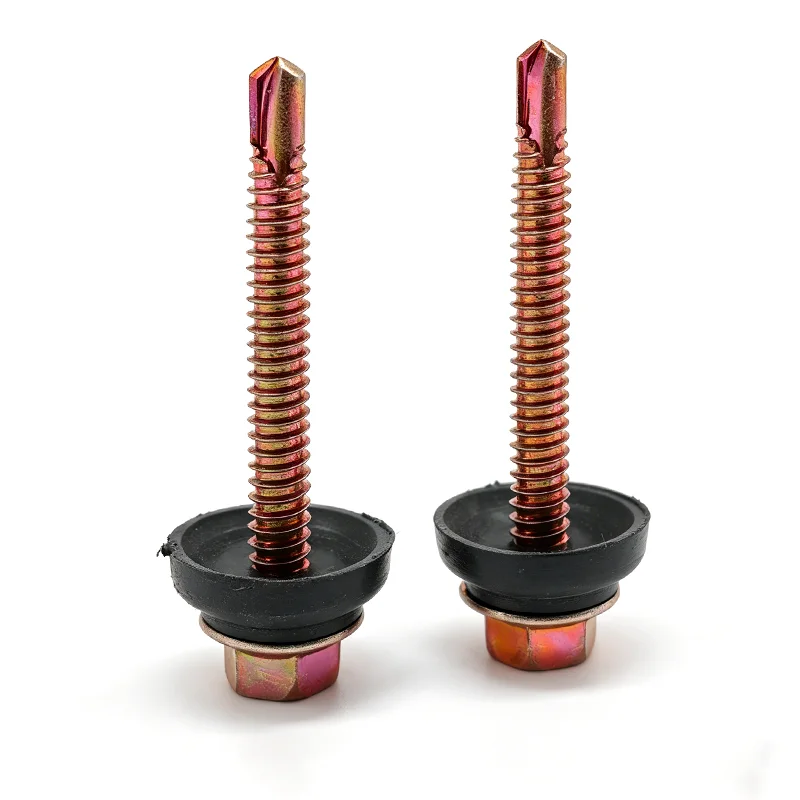
As we all know, self-drilling screws are now widely used in various fields, such as construction, road construction, power construction, factory construction, and equipment fixing.
Since they are pre-embedded in concrete structures and are considered pre-installed fasteners, the technical quality of this concealed project is particularly important. Over the years, these manufacturers have gradually established their own brands, and we have also established our own brand: Wotu – a self-drilling screw manufacturer.
Drilling screws may experience deviations during installation. As long as the deviation is within the allowable range, it will not cause any problems. We measure the deviation at the top and base, and it is approximately ±2.0 mm, with the top elevation around ±20 mm. After the pre-embedding is completed, the bolts should be promptly maintained and marked, and finished product protection should be ensured. This involves applying grease to the threads of the self-drilling screw to protect them. For added safety, a protective sleeve is recommended. After these measures are taken, concrete pouring can begin. During concrete pouring, especially when using pumped concrete, care must be taken to avoid the concrete compressing the self-drilling screw, as this can cause displacement. The concrete pump pipe should avoid contact with the screw as much as possible. When close to the screw, manual sprinkling of concrete is recommended. When using a vibrator, it should be controlled to avoid excessive vibration. Adhering to these principles will ensure the quality of the self-drilling screw.
Hebei Wotu Fastener Manufacturing Co., Ltd. strives to provide excellent service, timely delivery, and small products with high safety standards. We are committed to a win-win philosophy and look forward to cooperating with you for a brighter future!