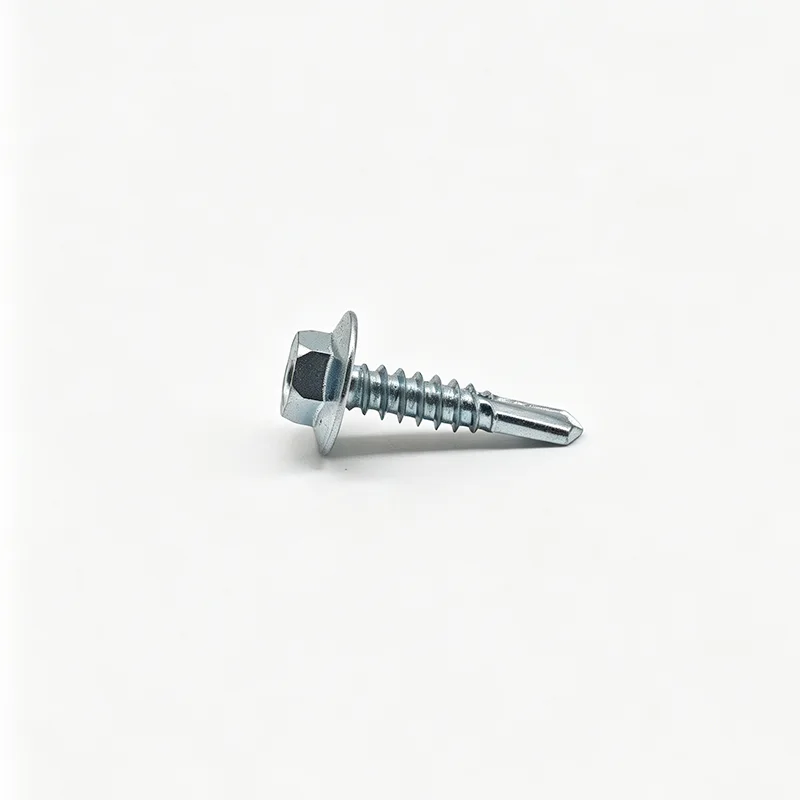
As we all know, the simplest way to prevent self-drilling screws from rusting is to properly isolate the screws from moisture-containing and humid environments.
This can be achieved through selective application of protective coatings and sealants, or by purchasing specially formulated rust-resistant or rust-proof screws. This is why many businesses and households have rust prevention tools at some point. Often, the main causes of rust, besides environmental factors, depend on the type of self-drilling screw. For screws with mild corrosion, some household remedies may be effective. However, more severe corrosion is much more difficult to address.
From a physical perspective: Rust is the result of a chemical reaction between certain metallic compounds and water vapor. The presence of certain oxidizing agents, especially salts, tends to increase the metal’s susceptibility to rust. Screws used outdoors or in humid environments, such as bathrooms or swimming pools, are particularly prone to rusting. The best way to shield screws from the moisture lurking around them is by covering them with some form of protective sealant. Commercial rust-preventive solutions are often in the form of liquid paint or sprays. Most of these contain zinc, which is known for its corrosion resistance, as well as graphite powder to aid adhesion. In high-humidity settings, it is important to coat the entire self-drilling screw before use. Applying coated self-drilling screws directly to the construction field would likely be difficult, as the treated screws are bound to slip. Simply coating the head during installation will make neck installation during the process much easier.
Self-drilling screws, Hebei Wotu Fastener Manufacturing Co., Ltd.