Fiberboard screws are selected based on more than screw size alone. For furniture assembly and board-based applications, buyers need to match the screw structure with the characteristics of fiberboard, MDF, and similar engineered wood materials. A suitable specification should consider thread design, head style, screw length, diameter, installation method, and application requirements.
For buyers sourcing industrial fasteners, understanding the relationship between screw structure and application is important. A suitable screw specification should connect material requirements, installation conditions, and final assembly expectations. Buyers can review a broader range of available fastener solutions through hengzuan fastener product categories before defining the final specification.
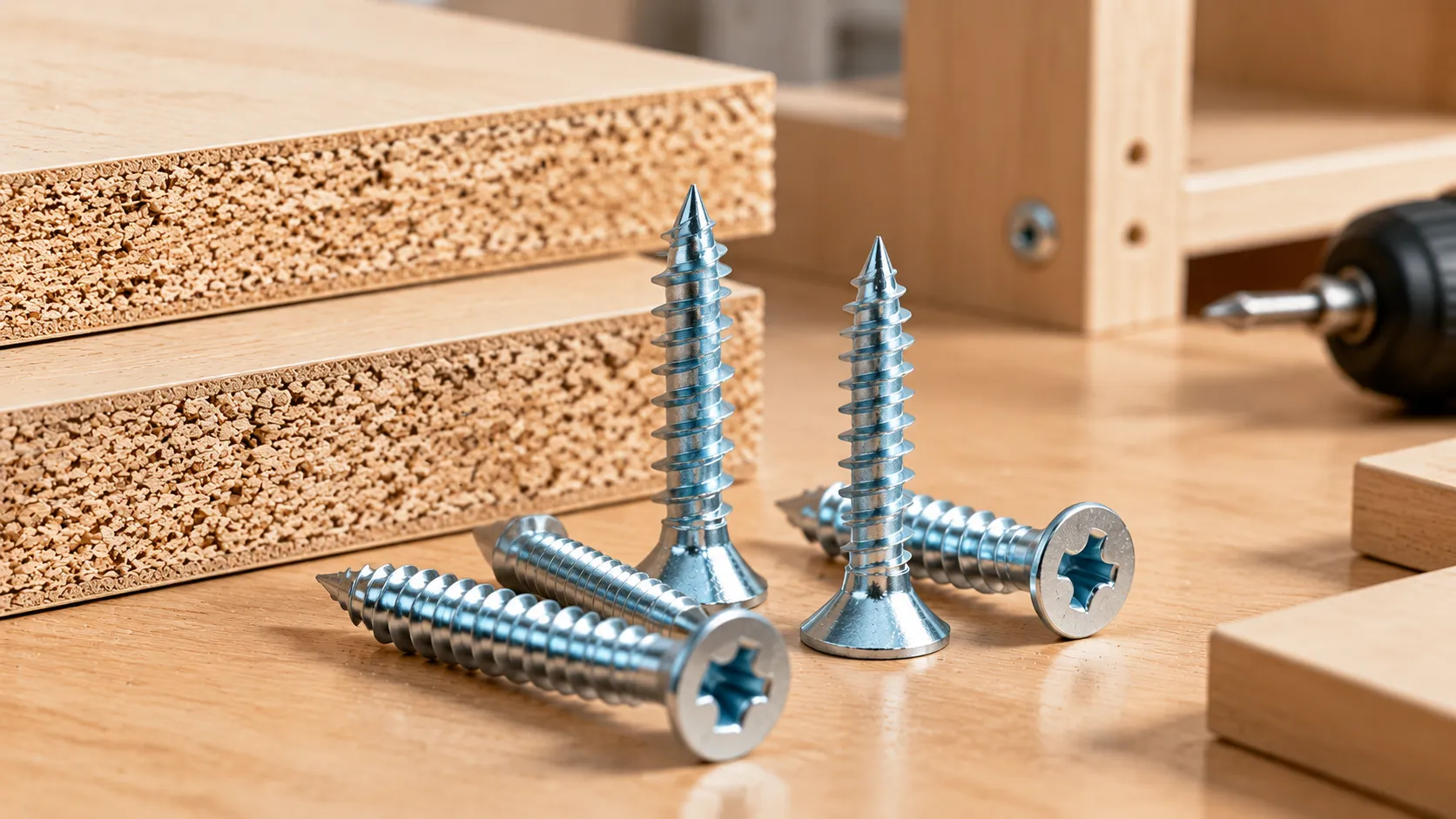
Countersunk Head Cross Thick Thread Fiberboard Screw is designed for applications requiring strong thread engagement and a flush head appearance. This article explains the key specification points buyers should define before sourcing fiberboard screws for production or project use.

What Makes a Fiberboard Screw Different from General Screws?
A fiberboard screw is designed specifically for fastening engineered wood materials such as fiberboard, MDF, and similar board products. Unlike screws intended primarily for metal connections, these screws need to create stable engagement inside relatively soft composite materials without damaging the board structure.
The thread geometry plays an important role in this process. A deeper and thicker thread profile provides stronger engagement with the internal structure of the board while helping reduce problems such as poor holding force or excessive material damage during installation.
For furniture manufacturers and distributors, choosing the correct fiberboard screw means evaluating the relationship between screw structure and the final application rather than selecting a fastener only by appearance.
Why Thread Design Matters in Fiberboard Applications
The thread is one of the most important decision variables when specifying a fiberboard screw. Engineered wood materials do not behave the same way as steel or solid wood, so the screw must create reliable mechanical engagement inside the board.
| Specification Factor |
Why It Matters |
Buyer Verification Point |
| Thread profile |
Affects how the screw engages with fiberboard material |
Confirm thread type and product drawing |
| Screw diameter |
Influences holding strength and installation compatibility |
Match diameter with board thickness and application |
| Screw length |
Determines effective engagement depth |
Confirm required fixing depth |
| Head design |
Affects surface finish and installation result |
Confirm whether flush mounting is required |
A common mistake in procurement is focusing only on nominal dimensions while ignoring how the thread interacts with the board material. The same screw size may perform differently depending on board density, thickness, and installation conditions.
How Countersunk Head Design Affects Furniture Assembly
Countersunk head screws are commonly selected when the finished surface needs to remain smooth or flush. The angled underside of the head allows the screw head to sit closer to the material surface when installation conditions are suitable.
For furniture panels, cabinet components, and board assemblies, this design can help avoid unnecessary surface interference. However, buyers should still confirm whether the board material and installation method are compatible with the selected countersunk head geometry.
The decision chain is:
Surface requirement → Head style → Installation condition → Final appearance
If a project requires a completely flat finished surface, the RFQ should clearly state the head style requirement instead of only describing the screw as a “wood screw.”
Choosing the Correct Screw Length and Diameter
The correct length and diameter depend on the board thickness, joint structure, and required holding depth. A screw that is too short may not provide sufficient engagement, while an unsuitable diameter may increase the risk of material damage during installation.
- Board or panel thickness
- Required fixing depth
- Connection structure
- Installation tools and method
- Required screw diameter and length range
For fiberboard screw procurement, dimensions should be connected with the actual application instead of being treated as isolated numbers.
What Information Should Be Included in a Fiberboard Screw RFQ?
A professional RFQ allows suppliers to provide comparable quotations. Incomplete specifications often lead to different interpretations between suppliers, making technical comparison difficult.
When preparing an inquiry for Countersunk Head Cross Thick Thread Fiberboard Screw , buyers should clearly define the application conditions and required configuration instead of requesting only a general “wood screw.”
| RFQ Item |
Why Buyers Should Include It |
| Product type |
Defines the required screw category and application purpose |
| Head style |
Determines surface finish and installation compatibility |
| Diameter and length |
Defines the basic product configuration |
| Material and surface requirement |
Clarifies corrosion protection and appearance requirements |
| Application details |
Helps suppliers evaluate suitability |
| Quantity requirement |
Allows suppliers to prepare quotation scope |
For bulk purchasing, buyers should also request supporting information such as product drawings, dimensional confirmation, and any available quality documentation relevant to the order.
How Buyers Can Evaluate a Fiberboard Screw Supplier
Supplier comparison should not focus only on unit price. Two quotations may appear similar while covering different product specifications.
A practical evaluation process includes:
- Confirm whether the offered screw matches the required product type.
- Check whether dimensions and head style match the application.
- Review technical information provided with the quotation.
- Clarify any deviations before order confirmation.
The evidence chain should be:
Buyer requirement → Product specification → Supplier confirmation → Order acceptance
This approach helps reduce risks caused by incorrect configuration, unsuitable dimensions, or unclear quotation scope.
Application Boundaries: When Fiberboard Screws Need Additional Confirmation
Fiberboard screws are intended for board-based fastening applications, but the final selection depends on project conditions. The recommendation may change when buyers move to different materials, load requirements, environmental conditions, or structural designs.
For example, a screw suitable for furniture panel assembly may not automatically apply to heavy structural connections or applications requiring different mechanical performance requirements.
The project specification, material type, and installation method should define the final selection.
Prepare a Clear RFQ Before Ordering Fiberboard Screws
A professional RFQ improves communication between buyers and suppliers by defining the product, application, coating requirements, and verification expectations before quotation.
Before submitting project requirements, buyers can review the available fastener product range to understand related screw categories and available solutions.
For detailed product evaluation, buyers can check the Countersunk Head Cross Thick Thread Fiberboard Screw page and compare the specification information with their application requirements.
When the specification is confirmed, buyers can submit RFQ requirements with product details, dimensions, application conditions, and quantity expectations to support accurate supplier feedback.