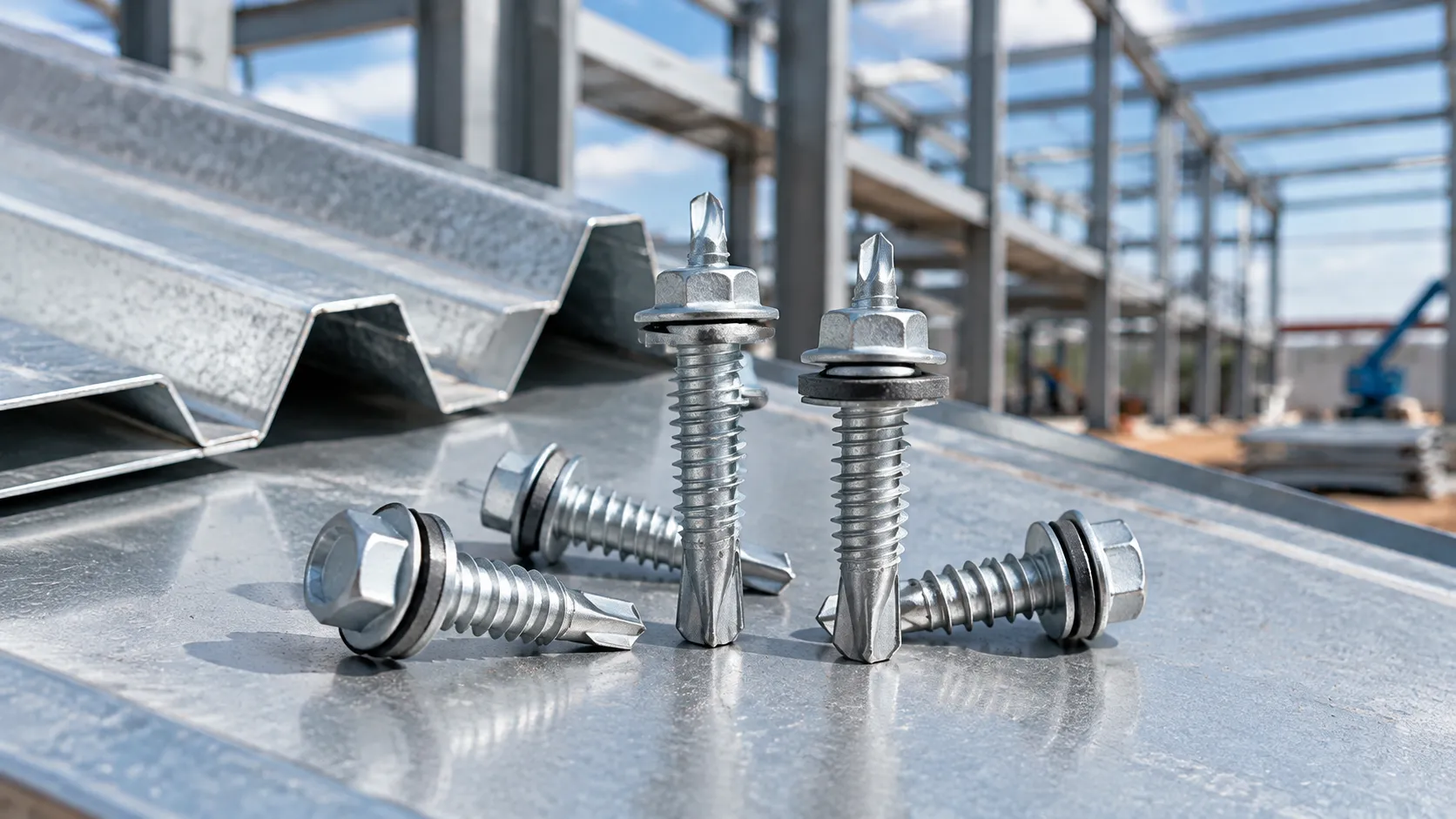
When sourcing dacromet hex head self drilling screw, a complete RFQ should define the application, screw configuration, coating requirement, dimensions, and supplier confirmation requirements. Buyers often receive different quotations because suppliers may interpret coating, size, drilling capability, or packaging scope differently.
Before preparing a project inquiry, buyers can review the available fastener product categories to understand related screw solutions and product options.
For projects requiring corrosion-resistant self-drilling fasteners, Dacromet Hex Head Self-Drilling Screw should be specified according to the actual application conditions rather than only by product name.
Why RFQ Quality Matters When Purchasing Self-Drilling Screws
Self-drilling screws combine drilling and fastening functions in one component, which makes specification accuracy important. Unlike standard screws that require a pre-drilled hole, self-drilling screws are selected according to the material thickness, connection method, and installation conditions.
For industrial buyers, an RFQ is not only a request for price. It is a technical communication document that allows suppliers to understand the required product scope and provide a suitable quotation.
A weak RFQ may create problems such as:
- Different suppliers quoting different configurations
- Unclear coating expectations
- Mismatch between screw dimensions and application
- Difficulty comparing supplier responses
Key Specification Items for Dacromet Hex Head Self-Drilling Screw
For Dacromet hex head self drilling screw procurement, buyers should define the product requirements that directly affect selection and quotation scope.
| RFQ Specification |
Why It Matters |
Supplier Confirmation |
| Screw type |
Confirms the required self-drilling screw structure |
Verify offered product matches the requested category |
| Head style |
Determines installation method and tool compatibility |
Confirm hex head configuration |
| Diameter and length |
Affects material engagement and connection suitability |
Confirm product dimensions |
| Dacromet coating requirement |
Defines surface treatment expectations |
Confirm coating specification and available documentation |
| Application material |
Helps evaluate product suitability |
Confirm intended use conditions |
How Dacromet Coating Should Be Defined in an RFQ

Surface treatment is an important part of self-drilling screw procurement because coating requirements influence corrosion protection expectations and application suitability.
When requesting Dacromet Hex Head Self-Drilling Screw , buyers should clearly describe the expected surface treatment requirements and application environment.
- Required surface coating type
- Expected application environment
- Appearance requirements if relevant
- Available technical requirements or specifications
The coating description should not be separated from the application. A screw used in a general environment may have different requirements from one used in outdoor or industrial conditions.
The decision relationship is:
Application environment → Coating requirement → Supplier confirmation → Acceptance criteria
How to Match Self-Drilling Screw Selection with Application Conditions
Selecting a self-drilling screw requires understanding the material being connected. The same screw configuration may not be suitable for every application because material thickness, connection design, and installation method can change the requirement.
Before ordering, buyers should provide:
- Base material type
- Material thickness range
- Connection purpose
- Installation method
- Required quantity
This information allows suppliers to evaluate whether the selected Dacromet Hex Head Self-Drilling Screw configuration matches the intended use.
How Buyers Can Compare Different Supplier Quotations
A common procurement problem is receiving multiple quotations that appear comparable but include different technical scopes.
Before comparing prices, buyers should first confirm that suppliers are quoting the same product configuration and technical requirements.
| Comparison Area |
Buyer Check Point |
| Product configuration |
Are all suppliers quoting the same screw type and dimensions? |
| Surface treatment |
Is the Dacromet coating requirement clearly included? |
| Technical information |
Are product specifications and drawings available? |
| Packaging scope |
Are quantity and packaging requirements consistent? |
| Deviation information |
Has the supplier clearly explained differences? |
A lower quotation price does not always represent a comparable offer if the technical scope is different. Procurement teams should first align product specifications, coating requirements, and application conditions before making commercial comparisons.
What Documents Should Buyers Request Before Order Confirmation?
Supplier documentation helps buyers verify whether the offered product matches the requested specification.
Depending on project requirements, buyers may request:
- Product specification information
- Dimension details
- Technical drawings when required
- Coating information
- Packaging details
The purpose of documentation is not only record keeping. It helps confirm the relationship between the requested specification and the supplied product.
RFQ Checklist for Dacromet Hex Head Self-Drilling Screw Buyers
A practical RFQ checklist should include the following information:
- Product definition: Specify Dacromet hex head self drilling screw and required configuration.
- Dimensions: Provide required diameter and length information.
- Application: Explain the material and connection conditions.
- Coating: Define required surface treatment expectations.
- Quantity: Provide purchasing volume requirements.
- Quality confirmation: Clarify required documents and acceptance requirements.
A complete RFQ allows suppliers to prepare a clearer response, including offered configuration, technical scope, and any required deviations.
How to Evaluate a Self-Drilling Screw Supplier
Supplier evaluation should focus on whether the supplier can clearly understand and respond to the project specification.
A practical evaluation process includes:
- Confirm that the supplier offers the requested Dacromet Hex Head Self-Drilling Screw configuration.
- Review whether the technical information matches the RFQ requirements.
- Check whether any product deviations are clearly explained.
- Confirm quotation scope before final approval.
The procurement decision chain is:
Buyer requirement → Product specification → Supplier response → Technical approval → Order confirmation
When Additional Confirmation Is Required Before Ordering
Although self-drilling screws are widely used for metal fastening applications, the final selection depends on the actual project conditions.
Additional confirmation may be required when:
- The connected material changes
- The material thickness differs from the original application
- The environmental conditions require different protection requirements
- The project specification defines additional requirements
The supplier and buyer should confirm the final configuration based on the approved specification rather than relying only on a product name.
Prepare a Clear RFQ Before Sourcing Self-Drilling Screws
A professional RFQ improves communication between buyers and suppliers by defining the product, application, coating requirements, and verification expectations before quotation.
Buyers can review related fastener product categories to understand available screw solutions before preparing sourcing requirements.
For detailed product information, buyers can evaluate the Dacromet Hex Head Self-Drilling Screw page and compare the specification information with their application needs.
After confirming the technical requirements, buyers can submit RFQ requirements with product specifications, application details, quantity expectations, and quality requirements for supplier evaluation.