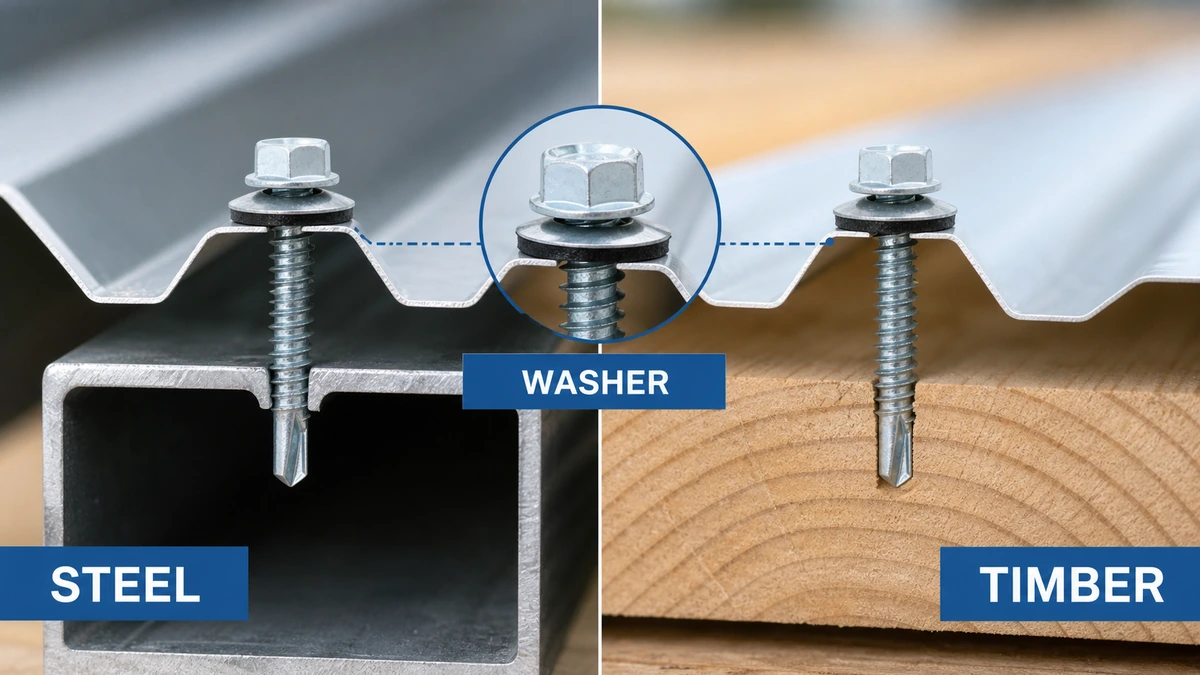
The correct self-tapping roofing screw depends on the complete panel-and-substrate stack-up. Steel supports typically require a point and thread matched to the support thickness and any pilot-hole requirement; timber supports require a wood-appropriate thread and sufficient embedment. In both cases, buyers must define diameter, length, head, sealing washer, material or coating, environment, pull-out requirements, and installation controls.
“Roofing screw” is not one technical specification. Product terminology also varies: some suppliers distinguish self-tapping screws, which form threads in a prepared hole, from self-drilling screws with an integral drill point. The RFQ should describe the required installation process rather than rely on a name alone.
Metal Roofing Screws: Self-Tapping Selection Matrix
| Design question |
Steel purlin/support |
Timber support |
| Substrate data |
Steel grade and thickness |
Timber species or engineered product, density/grade, and condition |
| Hole creation |
State whether drilling must be integral or a pilot hole is permitted |
State pilot-hole requirement and edge-distance constraints |
| Thread |
Match steel engagement and support thickness |
Match wood-thread form and required embedment |
| Length |
Panel, insulation/spacer, washer, gap, and required steel engagement |
Panel, spacer, and required timber embedment |
| Sealing |
Washer type, diameter, gasket material, and compression window |
Same; also confirm surface seating |
| Verification |
Pull-out, pull-over, drilling, and installation trial as required |
Withdrawal/pull-out, pull-over, splitting risk, and installation trial |
The project engineer or roofing-system provider should define design loads and acceptance. The screw supplier should confirm the offered product against those inputs.
1. Send the Full Fastened Stack-Up
List every layer:
- Roof panel material and thickness.
- Number of panel layers at laps.
- Insulation, spacer, clip, or bracket.
- Air gap.
- Support material.
- Support thickness or timber embedment zone.
- Washer and gasket.
Overall screw length must be calculated from the real stack-up, not panel thickness alone. At laps, ridges, and accessories, the required length may differ from field fasteners.
Create a fastener schedule for:
- Panel-to-support fasteners.
- Side-lap fasteners.
- Flashing and trim.
- Ridge or high-bead fixing.
- Clips and brackets.
2. Match the Point and Thread to the Substrate
For steel, provide the minimum and maximum drilling thickness and state whether the screw must drill and tap in one operation. A point designed for thin sheet may fail to drill a thicker support; a point intended for thicker steel may not suit a thin assembly.
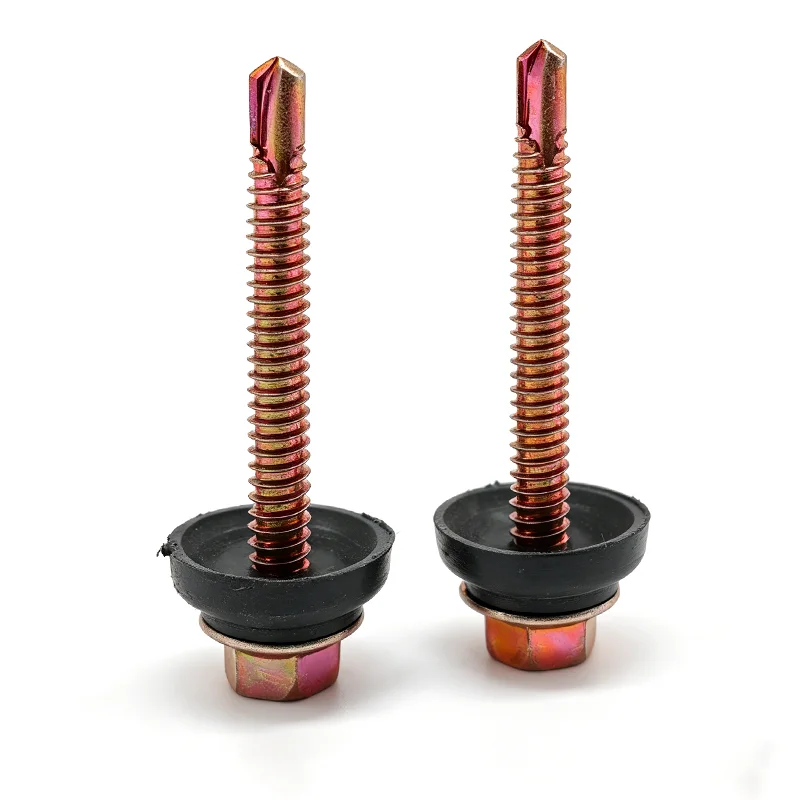
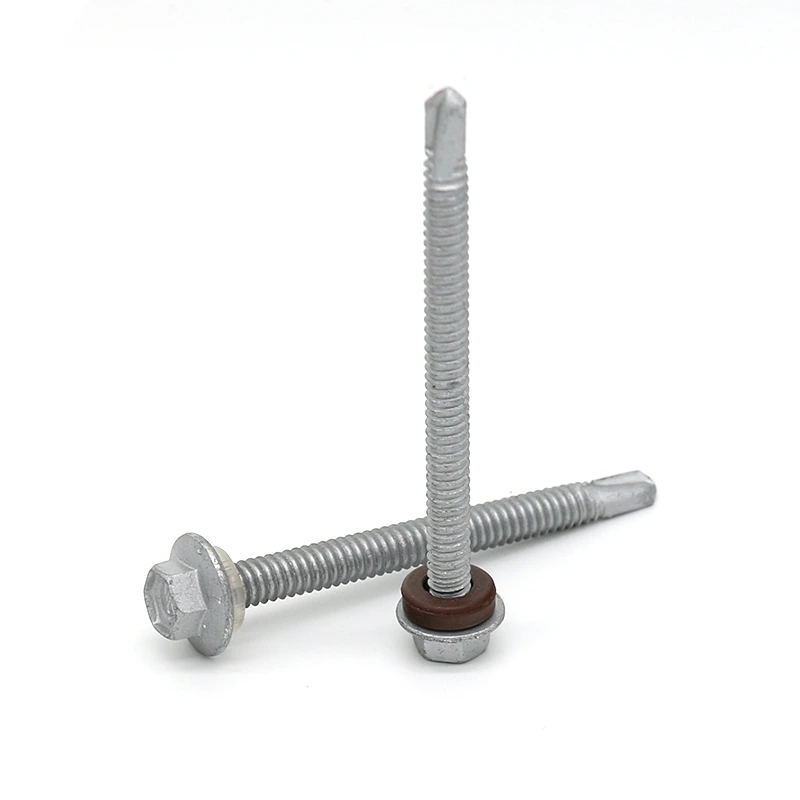
Wotu lists examples including a hex-head self-drilling screw with cup washer and a Dacromet hex-head self-drilling screw. The product data identifies defined drilling-thickness ranges for these items, so buyers should match the exact offered size to the support rather than generalize across the family.
For timber, use a thread designed for wood and state the required embedment. Wotu’s hexagonal wood screw range can be discussed for timber fastening, but washer, sealing, structural capacity, and roofing-system compatibility still require confirmation.
3. Choose Diameter and Length From Design Loads
Diameter affects:
- Tensile capacity.
- Shear capacity.
- Pull-out or withdrawal.
- Panel pull-over.
- Head and washer size.
- Installation torque.
Length affects engagement and protrusion. A longer screw is not automatically stronger if the point, thread, or unsupported length is wrong.
Ask for project-relevant test data or calculations using the specified panel and substrate. Do not transfer a value from a different steel thickness, timber type, washer, edge distance, or installation condition.
4. Specify the Head and Sealing Washer as a System
A weather-sealing fastener normally needs a controlled bearing surface and gasket system. State:
- Head style and drive.
- Washer material and outside diameter.
- Gasket material.
- Bonded or separate construction.
- Required seating surface.
- Compatibility with roof coating.
- Expected temperature and exposure.
If EPDM or another elastomer is required, name it in the RFQ. Do not assume every cup washer or roofing screw includes the same gasket.
The washer must be compressed correctly. Under-driving may leave an incomplete seal; over-driving may deform the washer, damage the gasket, strip the substrate, or distort the panel.
5. Select Material or Coating for the Environment
Provide:
- Indoor, outdoor, coastal, industrial, agricultural, or chemical exposure.
- Expected condensation.
- Roof-panel material and coating.
- Required corrosion-test evidence or project standard.
- Desired service and inspection plan.
Zinc plating, Dacromet-type coatings, hot-dip galvanizing, and stainless materials are not universal substitutes. Consider coating damage during drilling, galvanic compatibility, exposed cut edges, and the complete roof-system specification.
Ask the supplier to identify the substrate material, coating system, coating evidence, and any application limitations for the quoted item.
6. Define Installation Controls
Include:
- Driver type.
- Speed range.
- Torque or depth-control method.
- Required socket.
- Installation orientation.
- Permitted re-driving.
- Washer-compression acceptance.
- Strip-out or spin-out rejection.
- Inspection sampling.
Run a site or laboratory installation trial on representative panel and support material. Confirm drilling time, seating, washer compression, thread engagement, and failure mode before full deployment.
Roofing Screw RFQ Checklist
Assembly
- Panel material/coating:
- Panel thickness and lap layers:
- Clip/spacer/insulation:
- Support: steel or timber:
- Steel grade and thickness:
- Timber type/grade and required embedment:
Fastener
- Self-tapping or integral self-drilling requirement:
- Diameter:
- Length:
- Point:
- Thread:
- Head and drive:
- Washer:
- Gasket:
- Material/coating:
- Color:
Performance and installation
- Design loads:
- Required tests:
- Edge and spacing conditions:
- Driver speed:
- Torque/depth control:
- Installation trial:
- Inspection criteria:
Commercial
- Quantity by size:
- Packaging and private label:
- Required documents:
- Destination:
- Delivery schedule:
Confirm Order and Quotation Terms
List quantity by diameter, length, point, thread, coating, washer, gasket, and color. Ask the supplier to state minimum order quantity for standard and customized items, available nonstandard dimensions, sample or installation-trial quantity, requested standards and corrosion or mechanical test evidence, packaging and private-label options, production lead time, destination, and trade terms. Price comparisons should normalize material, coating, washer system, test scope, customization, packaging, and quantity rather than compare only a per-piece figure.
Frequently Asked Questions
Are self-tapping and self-drilling roofing screws the same?
Not always. A self-drilling screw has an integral drill point; a self-tapping screw may require a prepared hole. Supplier naming varies, so specify the installation requirement and point geometry.
Can the same screw be used for steel and timber?
Only if the manufacturer and project design confirm suitability for both. Steel and timber require different thread engagement, point behavior, and capacity verification.
How is roofing screw length selected?
Add all assembly layers and the required substrate engagement or timber embedment. Check the point length, unthreaded sections, and permitted protrusion.
Why do roofing screws leak?
Common contributing factors include an incorrect washer system, under- or over-driving, tilted installation, damaged panel coating, poor seating, wrong fastener length, or substrate movement. Investigate the full assembly.
What should buyers test before bulk ordering?
Test drilling or insertion, seating, washer compression, pull-out/withdrawal, panel pull-over, corrosion evidence where required, and installation repeatability using representative materials.
Request a Substrate-Matched Fastener Quote
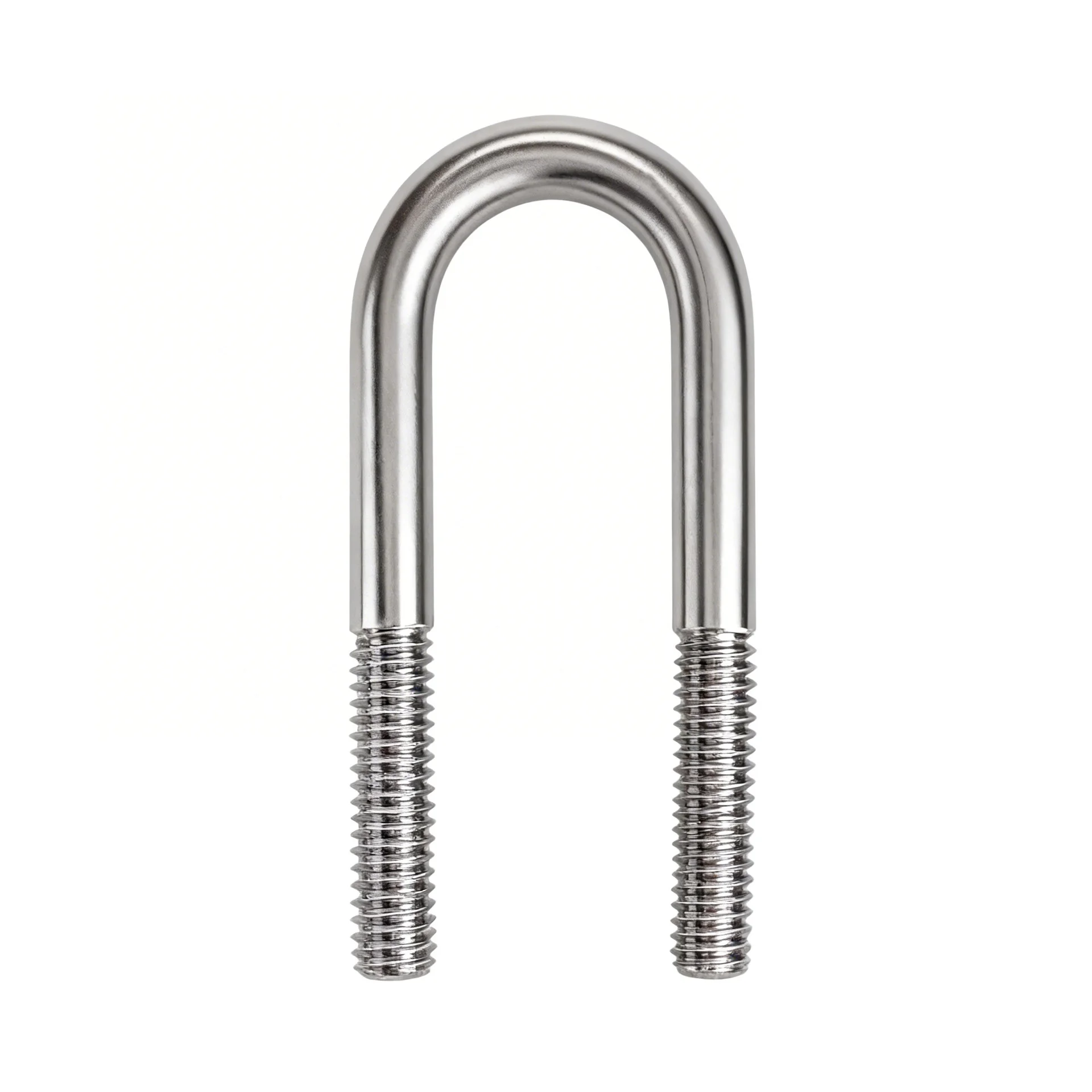
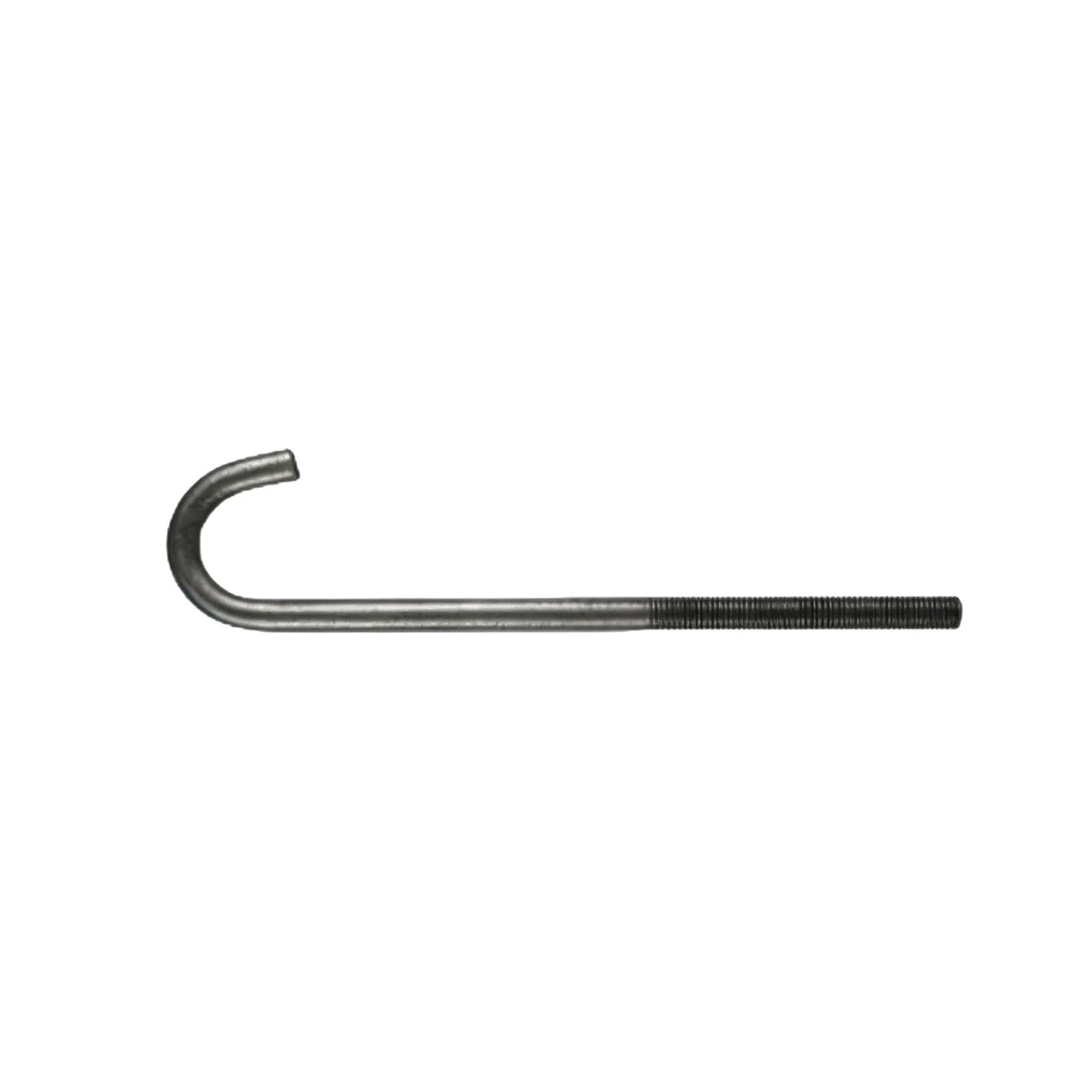
Wotu supplies self-drilling screws, self-tapping screws, bolts, nuts, washers, anchor bolts, and U-bolts for project and distribution orders. Review the fastener product range and self-tapping screw category, then send the stack-up, substrate data, fastener schedule, environment, tests, packaging, and quantity through Wotu’s contact page.