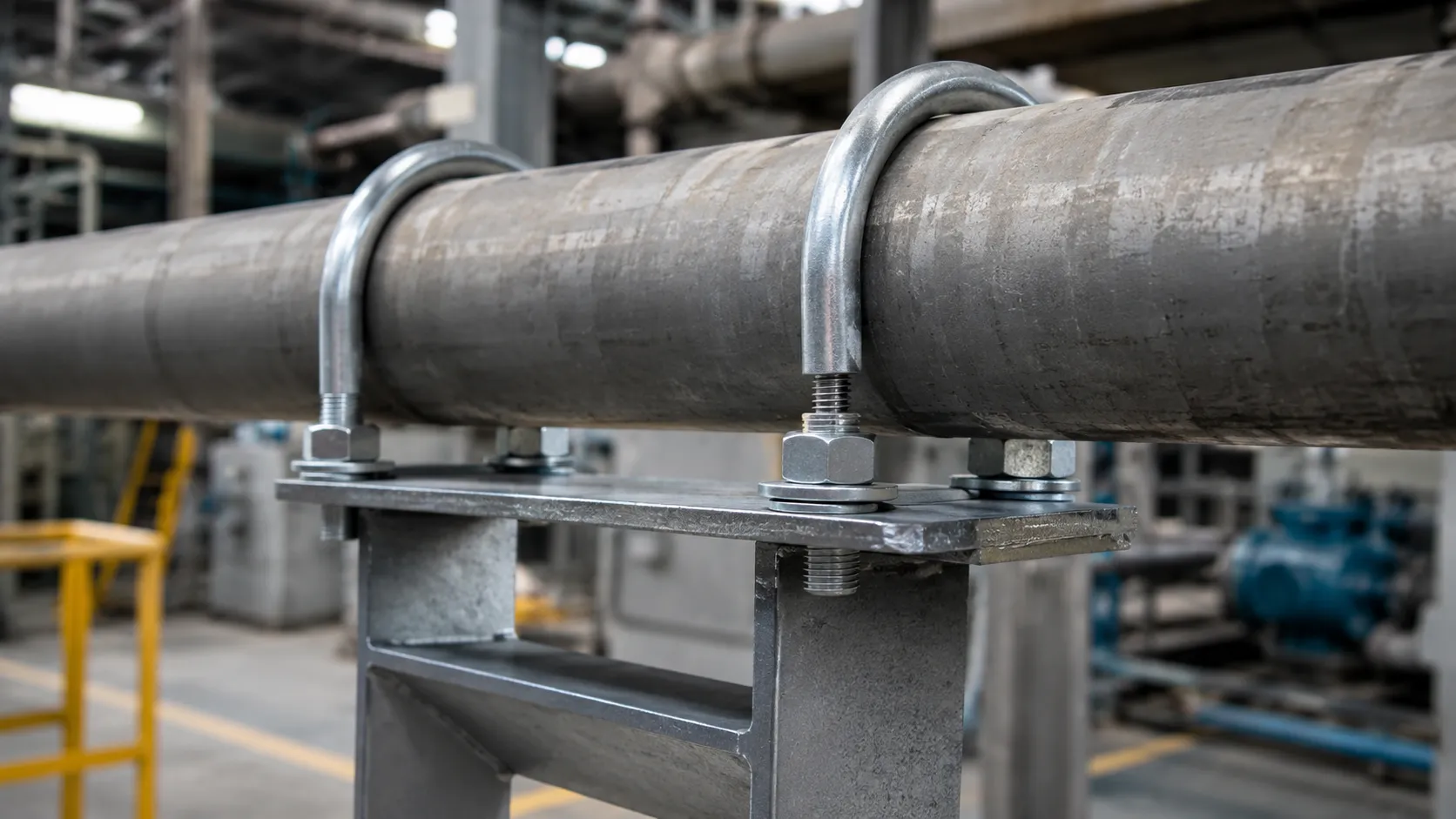
U bolts usually loosen in pipe supports because the connection loses clamping force, receives continuous vibration, restricts thermal pipe movement, uses an incorrectly sized U bolt, experiences surface settlement, or suffers from corrosion and inadequate inspection. This issue affects EPC contractors, pipe installers, industrial maintenance teams, equipment manufacturers and fastener distributors working with water, oil and gas, HVAC, machinery and structural piping systems. The most important factors are the pipe’s actual outside diameter, the intended support function, U bolt dimensions, material grade, surface treatment, nut compatibility and project-specific tightening requirements. A U bolt should secure the pipe without crushing it or unintentionally preventing designed movement. This guide explains six common causes of loosening, how to diagnose each problem, when retightening is appropriate, which specifications buyers should confirm and how to select a suitable pipe support U bolt.
Why Do U Bolts Loosen After Installation?
A U bolt remains secure only while the connection maintains sufficient clamping force and the pipe support continues to operate as designed.
The connection may gradually lose its original preload because of:
- Uneven tightening between the two legs
- Vibration or repeated dynamic loading
- Settlement of painted, coated or rough contact surfaces
- Thermal expansion and contraction of the pipe
- Incorrect inside width or leg length
- Corrosion, thread damage or incompatible accessories
- Deformation of a soft pipe, liner or supporting plate
- Failure to inspect the connection after initial operation
In bolted joints generally, settlement, creep and material relaxation can reduce preload over time. Dynamic loads and vibration can then create relative movement and increase the risk of loosening.
However, a loose U bolt does not always mean the installer simply failed to tighten it enough. The support may have the wrong dimensions, may be restraining a pipe that needs to move or may be using a fastening method unsuitable for the operating environment.
Cause 1: Incorrect or Uneven U Bolt Tightening
One of the most common causes of U bolt loosening is an incorrect initial tightening process.
A U bolt has two threaded legs. If one nut is fully tightened before the other, the cross plate or support may tilt and the two legs may carry different loads.
This can create:
- Uneven pressure on the pipe
- Bending of the U bolt legs
- Poor contact between the nuts and support plate
- Local deformation of the pipe
- Reduced clamping force on one side
- Premature thread or washer wear
The connection may appear tight during installation but lose stability after the pipe begins vibrating or changing temperature.
How should both U bolt nuts be tightened?
Unless a project procedure specifies otherwise, the installer should normally:
- Position the U bolt centrally around the pipe.
- Install the plate, washers and nuts on both legs.
- Tighten each nut by hand until the components are seated.
- Alternate between the two sides in small increments.
- Keep the visible thread engagement reasonably equal.
- Apply the project-specified tightening method.
- Inspect the pipe and support for deformation.
- Mark the nut positions when visual movement monitoring is required.
Bolt tightening creates preload, and this preload provides the clamping force that helps prevent joint separation and slippage. The required value must be based on the fastener, material, lubrication, coating and joint design rather than a generic torque table.
Is there one standard torque for every U bolt?
No.
The correct tightening requirement depends on:
- Thread diameter and pitch
- Material and strength grade
- Nut grade
- Surface coating
- Lubrication condition
- Washer arrangement
- Pipe wall thickness
- Support function
- Operating load
- Project standard
An M12 black-finished U bolt and an M12 hot-dip galvanized U bolt may not produce the same clamping force from the same applied torque because surface friction can differ.
Buyers should request the tightening requirement from the responsible project engineer or equipment designer. A supplier should not invent a universal torque value without knowing the joint configuration.
Cause 2: Vibration and Repeated Dynamic Loading
Pipe systems connected to pumps, compressors, engines, generators, fans and processing machinery may experience continuous vibration.
Road vehicles, railway equipment, bridge components and construction machinery can also expose U bolts to repeated impact and changing loads.
When the clamping force is insufficient, vibration can create small movements between:
- The pipe and U bolt
- The U bolt and mounting plate
- The washer and nut
- The support and structural member
These movements may cause the nut to rotate or may gradually reduce the preload through surface settlement and wear.
Bolted joints exposed to vibration and dynamic loading need sufficient preload and an appropriate locking method. Wedge-locking systems, for example, are specifically designed to resist unintended loosening under severe vibration, although the correct locking system must be selected by the project designer.
What are the warning signs of vibration-related loosening?
Inspect the connection for:
- Visible nut rotation
- Broken torque or inspection marks
- Polished contact areas
- Rust-colored fretting residue
- Elongated mounting holes
- Pipe movement or rattling
- Damaged coatings
- Flattened or distorted washers
- Fatigue cracks near the U-shaped bend
- Repeated loosening after retightening
Simply tightening the same U bolt again may provide only a temporary solution.
The maintenance team should also identify and correct the source of vibration, verify the support spacing and determine whether a different support, liner or locking arrangement is required.
How can vibration-related loosening be reduced?
Possible measures include:
- Correcting the U bolt size and fit
- Applying the specified preload
- Tightening both legs evenly
- Using compatible hardened washers
- Using a project-approved locking nut or locking system
- Adding vibration-isolating components where designed
- Correcting pipe alignment
- Increasing support stability
- Inspecting connections after commissioning
- Replacing worn or permanently deformed U bolts
Do not add an unapproved locking device to a critical pipe system without checking its temperature rating, corrosion resistance, strength and compatibility with the connection design.
Cause 3: Thermal Expansion and Contraction of the Pipe
Pipes expand as their temperature rises and contract as they cool.
In steam, hot water, exhaust, chemical process and outdoor pipeline systems, these repeated temperature changes may create substantial axial movement.
The pipe support may be designed as:
- An anchor that prevents movement
- A guide that controls movement in a particular direction
- A support that carries weight while allowing sliding
- A hold-down point that limits uplift
- A restraint that controls a defined load
A U bolt that is tightened as a rigid clamp when the design requires guided or sliding movement may create excessive friction and stress.
The pipe may then push against the U bolt, support plate or nuts during every thermal cycle.
How does thermal movement cause loosening?
Repeated movement can:
- Wear the pipe coating
- Polish the U bolt contact area
- Deform liners
- Move the support plate
- Reduce clamping force
- Bend the U bolt legs
- Damage threads
- Transfer unintended loads into the pipe
Thermal cycling is also one of the operating conditions that can contribute to preload loss in bolted joints, especially where coatings, soft layers or multiple clamped components are present.
Should every pipe U bolt tightly clamp the pipe?
No.
The tightening method must match the support function.
A U bolt used as an anchor may require a different fit from one used as a guide. Some pipe support assemblies also use insulation or separation components between the saddle, U bolt and pipe.
Before installation, confirm:
- Whether axial movement is allowed
- Whether lateral movement is allowed
- Whether the support is an anchor or guide
- The expected operating temperature
- The direction and amount of thermal movement
- Whether a liner or sliding surface is required
- Whether the U bolt should be snug or fully clamped
- The permitted pipe-contact pressure
The piping stress engineer or project drawing should define these requirements.
Cause 4: Incorrect U Bolt Dimensions or Shape
A U bolt can loosen even when its nuts were initially tightened correctly if it does not fit the pipe and support.
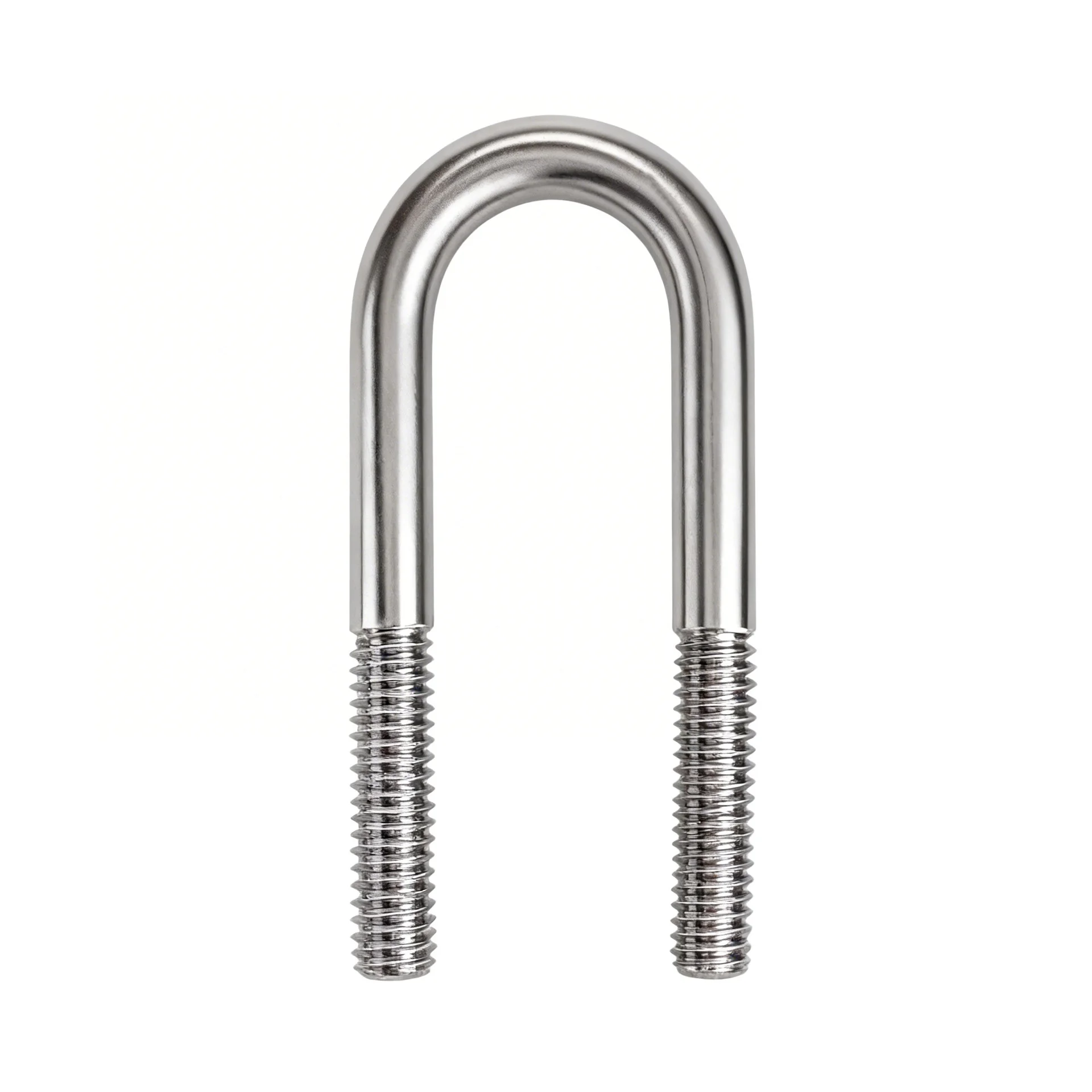
The most important dimensions normally include:
- Rod diameter
- Inside width
- Inside height
- Leg length
- Thread length
- Bend radius
- Pipe outside diameter
- Plate thickness
- Washer and nut thickness
- Required installation clearance
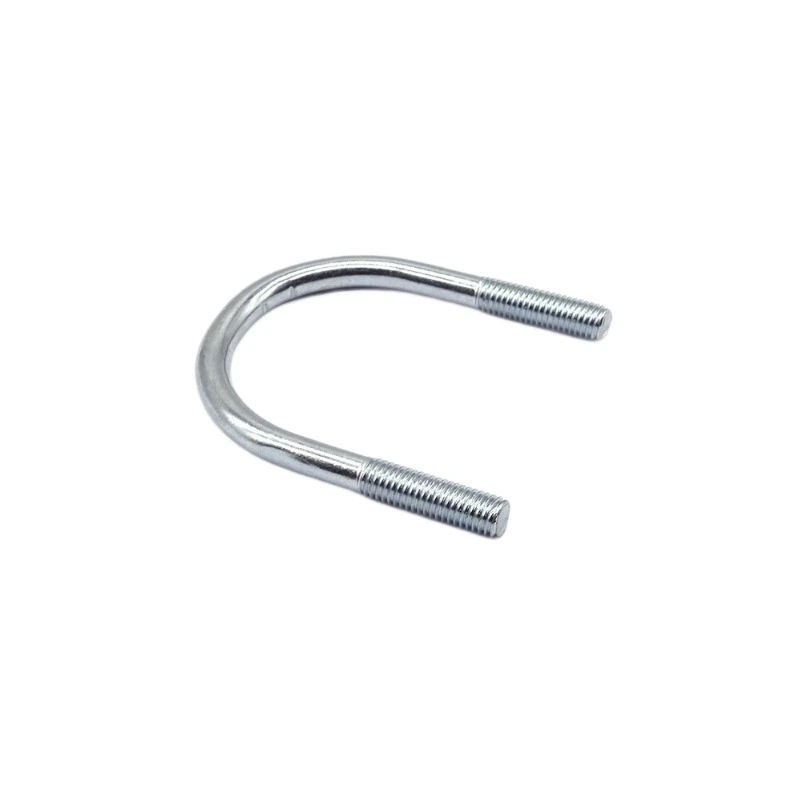
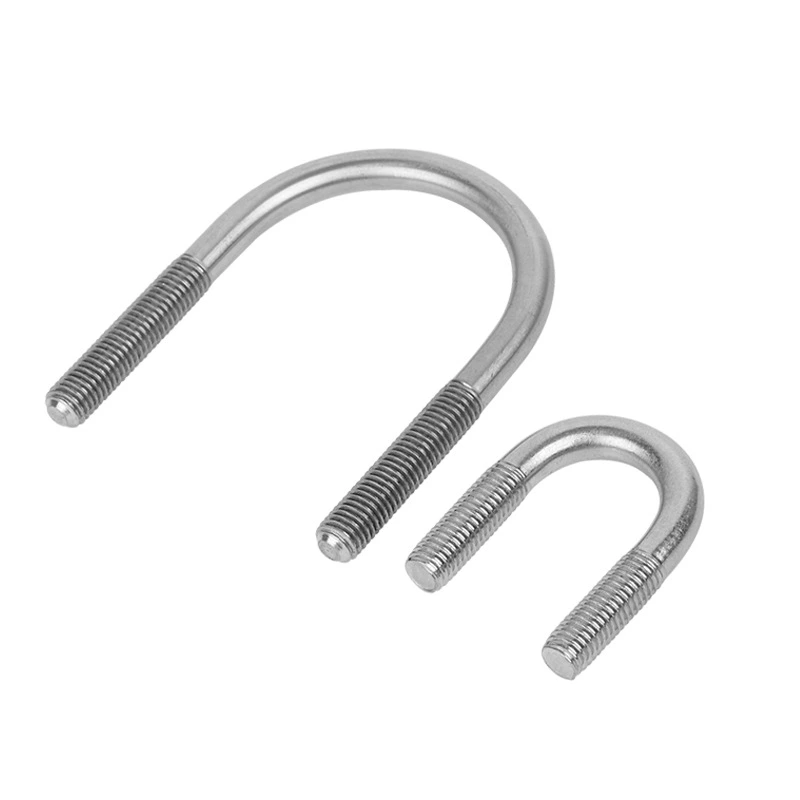
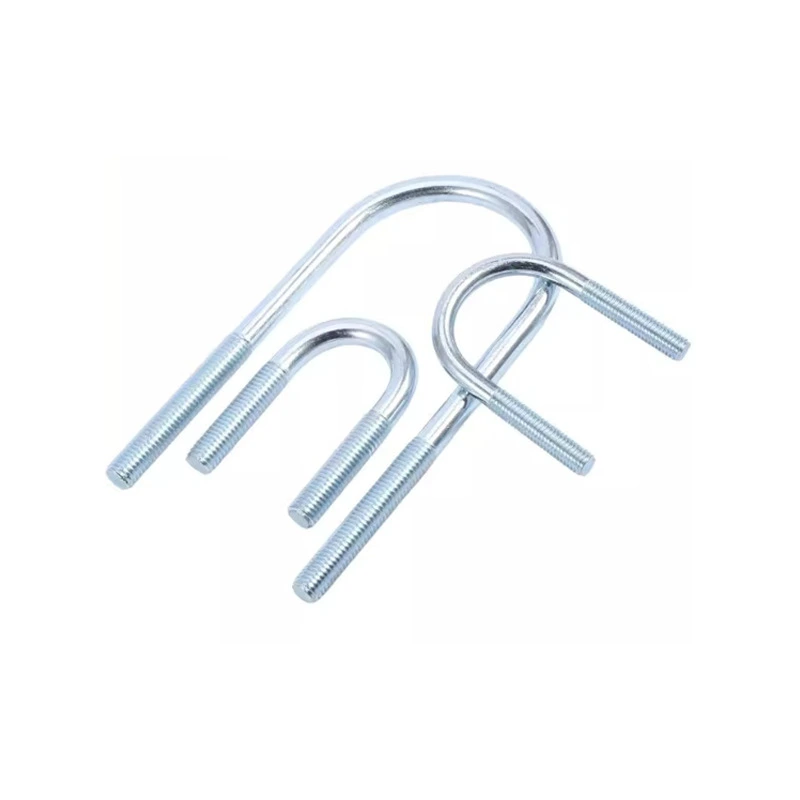
Wotu’s U-Bolts product category includes pipe-fixing U bolts for industrial, structural and infrastructure applications.
Its current U bolt product range is listed for approximately 25–139.7 mm pipe outside diameters, M10–M24 rod diameters and customized total lengths.
What happens when the inside width is too large?
An oversized inside width may result in:
- Poor pipe contact
- Lateral pipe movement
- Uneven loading
- Excessive leg bending
- Difficulty centering the U bolt
- Repeated impact under vibration
The installer may tighten the nuts further to compensate, but this does not correct the geometry.
What happens when the inside width is too small?
An undersized U bolt may:
- Fail to fit over the pipe
- Damage the pipe coating
- Create point loading
- Spread the threaded legs outward
- Misalign with the support holes
- Deform during installation
Why must buyers use the actual pipe outside diameter?
Nominal pipe size is not always the same as the measured outside diameter.
The RFQ should therefore identify:
- Pipe standard
- Nominal pipe size
- Actual outside diameter
- Insulation or coating thickness
- Required clearance
- U bolt rod diameter
- Support plate dimensions
For lined, coated or insulated pipes, the buyer must clarify whether the U bolt fits directly around the pipe or around the completed outer assembly.
Which U bolt shape is required?
The shape should match the object being secured.
Common options include:
- Round-bend U bolt
- Square-bend U bolt
- Semi-round U bolt
- Extended-leg U bolt
- U bolt with plate
- U bolt with protective lining
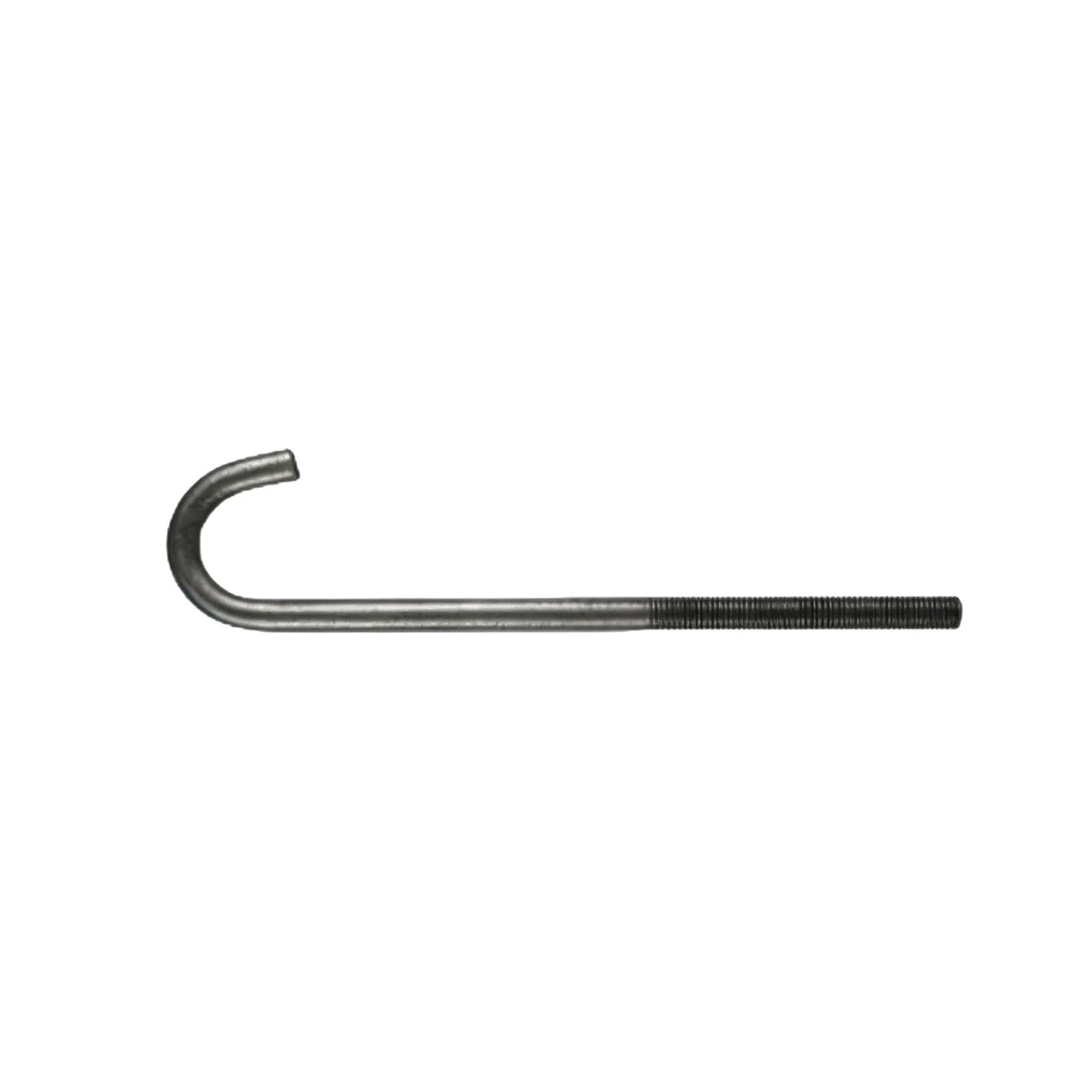
- Non-standard bent fastener
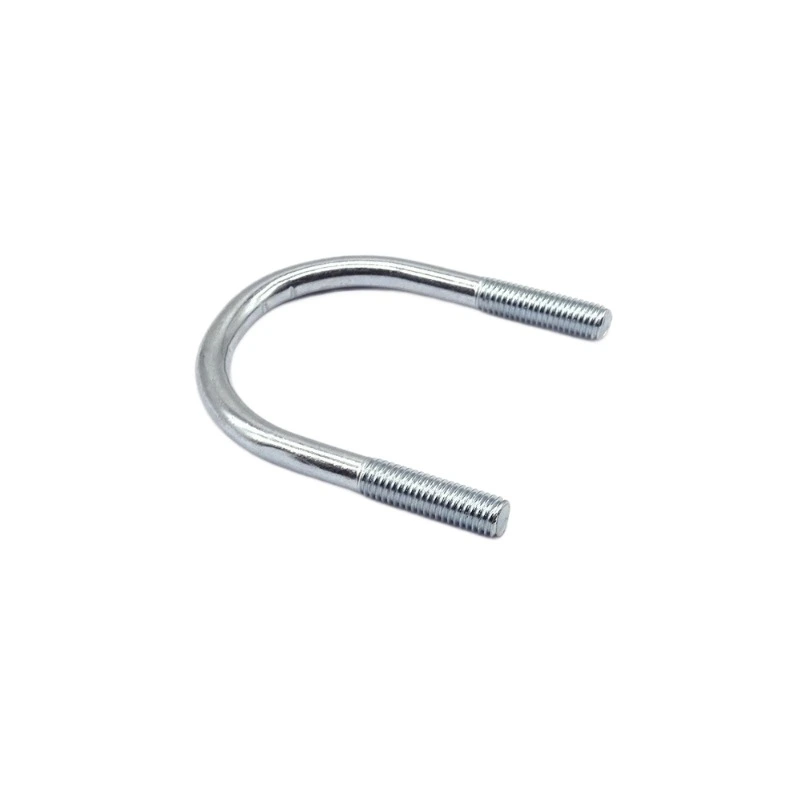
Wotu’s M10–M24 custom U bolt product supports customized bending curvature and threaded-leg length according to pipe outside diameter and installation space.
Cause 5: Surface Settlement, Coating Compression and Material Relaxation
A newly assembled bolted connection does not always maintain its exact original dimensions.
Microscopic surface roughness may flatten after tightening. Paint, soft coatings, rubber liners, insulation materials and other compressible layers may also settle under load.
This reduces the grip length and can decrease the preload in the U bolt.
Technical bolting guidance distinguishes settlement from relaxation:
- Settlement involves the flattening or permanent deformation of contact surfaces.
- Relaxation involves a gradual reduction in elastic strain in the bolt or clamped components.
- Creep involves time-dependent deformation, often influenced by stress and temperature.
All three mechanisms can reduce preload.
Which pipe support components may settle?
Potential sources include:
- Painted support plates
- Thick galvanized surfaces
- Rubber liners
- Polymer cushions
- Insulation layers
- Soft washers
- Rough structural surfaces
- Multiple stacked plates
- Gaskets or packing materials
This does not mean that protective layers should automatically be removed. They may be required for corrosion protection, electrical isolation, vibration control or pipe protection.
Instead, the joint should be designed to account for their behavior.
Should U bolts be retightened after installation?
Some systems may require a post-installation inspection or retightening check after commissioning, initial loading or thermal cycling.
However, retightening is not universally required and can be unsafe when:
- The pipe is pressurized
- The system is hot
- The support is carrying an active load
- The U bolt is already yielding
- The pipe wall is thin
- The project prohibits field adjustment
- The cause of loosening has not been identified
Follow the project maintenance procedure and isolate the system when required.
Repeated retightening without investigating the cause can damage threads, deform the pipe or overstress the U bolt.
Cause 6: Corrosion, Damaged Threads and Incorrect Accessories
Outdoor, coastal, chemical and humid environments may expose U bolts to corrosion.
Corrosion can reduce the effective cross-section of the rod, damage threads and create uneven contact between the nut and fastener.
A severely corroded U bolt may appear tight but no longer provide the required strength.
What corrosion signs require attention?
Inspect for:
- Red rust
- White corrosion products on zinc coatings
- Pitting
- Flaking or peeling coatings
- Reduced rod diameter
- Seized nuts
- Damaged thread crests
- Cracks near the bend
- Corrosion between the pipe and U bolt
- Rust staining around the mounting holes
Do not rely only on the exposed thread. Corrosion may be more severe on the hidden inside surface where the U bolt contacts the pipe.
How should the surface treatment be selected?
The correct finish depends on:
- Indoor or outdoor use
- Humidity
- Salt exposure
- Chemical exposure
- Temperature
- Required service life
- Project standard
- Maintenance access
- Compatibility with the pipe material
Wotu offers natural black oxide, blue-white zinc plating and hot-dip galvanizing for its U bolt products. The product page positions black-finished options for indoor equipment and factory piping, while hot-dip galvanized options are intended for outdoor infrastructure and corrosive exposure. Final suitability should still be confirmed for the actual project environment.
Why must nuts and washers match the U bolt?
Problems may occur when buyers combine components from different sources without checking:
- Thread pitch
- Thread class
- Nut grade
- Washer hardness
- Coating thickness
- Material compatibility
- Corrosion protection
- Temperature resistance
An incorrect nut may bind before reaching the required clamping condition or may strip under load.
Wotu can supply its U bolts with matching nuts, flat washers and spring washers. Buyers can also review the company’s Nuts product category when planning a complete fastener package.
How Tight Should a Pipe Support U Bolt Be?
A pipe support U bolt should be tightened enough to perform its specified support function without damaging the pipe or preventing movement that the piping design requires.
There is no responsible universal answer such as “tighten every U bolt as much as possible.”
The correct tightening requirement depends on:
- Anchor, guide or support function
- Pipe material
- Pipe wall thickness
- Pipe outside diameter
- U bolt material and grade
- Thread size
- Surface finish
- Lubrication
- Support plate thickness
- Washer arrangement
- Operating temperature
- Vibration level
- Project design loads
What happens when a U bolt is too loose?
An under-tightened U bolt may allow:
- Pipe vibration
- Rattling
- Lateral movement
- Impact loading
- Coating wear
- Hole elongation
- Nut rotation
- Fatigue damage
What happens when a U bolt is too tight?
An over-tightened U bolt may cause:
- Pipe wall deformation
- Damaged insulation
- Crushed protective liners
- Coating failure
- Restricted thermal movement
- Bent U bolt legs
- Thread yielding
- Excessive local stress
The installer should use the approved tightening procedure and a calibrated tool when the project specifies a torque or preload requirement.
How Can Maintenance Teams Check for a Loose U Bolt?
A basic inspection should cover the complete connection rather than only checking whether the nut turns.
Visual inspection
Check:
- Nut position
- Thread engagement
- Inspection marks
- Washer condition
- Pipe alignment
- Coating damage
- Rust or fretting residue
- U bolt deformation
- Support plate movement
- Cracks near the bend
Physical inspection
Where permitted and safe:
- Check whether the pipe moves inside the support.
- Check whether the mounting plate rocks.
- Compare the exposed thread length on both legs.
- Confirm that the nuts remain seated.
- Measure visible rod diameter where corrosion is present.
- Verify that the support has not moved from its original location.
Dimensional inspection
Compare the installed U bolt with the approved drawing:
- Inside width
- Inside height
- Leg length
- Thread length
- Hole spacing
- Pipe outside diameter
- Support plate thickness
Tightening verification
Do not use a torque wrench blindly on an old or corroded connection.
Existing torque can be affected by rust, contamination, coating condition and prior thread damage. Follow the project’s inspection method and replace questionable components when necessary.
When Should a Loose U Bolt Be Replaced?
Replace the U bolt instead of simply retightening it when there is evidence of:
- Permanent deformation
- Bent threaded legs
- Cracks at the U-shaped bend
- Severe corrosion or pitting
- Reduced rod diameter
- Stripped threads
- Seized or cross-threaded nuts
- Heat damage
- Repeated loosening
- Unknown material or grade
- Incorrect dimensions
- Damage caused by impact
- Failure to match the project drawing
A replacement should match the approved material, dimensions, coating and accessories.
Do not straighten and reuse a permanently deformed U bolt unless an authorized engineering procedure explicitly permits it.
What Specifications Should Buyers Provide for Custom U Bolts?
A complete U bolt RFQ should include:
| RFQ item |
Information required |
| Application |
Pipeline, machinery, steel structure, photovoltaic support or guardrail |
| Pipe details |
Standard, nominal size and actual outside diameter |
| U bolt shape |
Round, square, semi-round or custom bend |
| Rod diameter |
M10, M12, M16, M20, M24 or custom |
| Inside width |
Clear distance between the two legs |
| Inside height |
Distance from the inside of the bend to the leg end reference |
| Leg length |
Required length through the support |
| Thread length |
Usable thread needed for plate, washers and nuts |
| Material |
Project-specified steel and strength grade |
| Surface treatment |
Black, zinc plated, hot-dip galvanized or custom |
| Accessories |
Nuts, flat washers, spring washers or plates |
| Quantity |
Quantity per size and total order quantity |
| Tolerance |
Dimensional, bending and thread requirements |
| Inspection |
Material, dimensional, thread and coating documents |
| Packaging |
Carton, bundle, pallet, crate and private label |
| Destination |
Country, port and environmental conditions |
| Drawing |
Latest approved drawing and revision |
The actual pipe outside diameter should be emphasized because it directly affects the U bolt inside width and bend geometry.
What Materials and Sizes Does Wotu Supply?
Wotu lists the following options for its U bolt products:
| Product item |
Available information |
| Rod diameters |
M10, M12, M16, M20 and M24 |
| Pipe outside diameter |
Approximately 25–139.7 mm |
| Materials |
Q235 and 35K carbon steel |
| Strength options |
Grade 4.8 and Grade 8.8 |
| Surface finishes |
Natural black oxide, blue-white zinc plated and hot-dip galvanized |
| Customization |
Bending curvature, total length and threaded-leg length |
| Accessories |
Nuts, flat washers and spring washers |
| Packaging |
Bundles, 25 kg export cartons, wrapped wooden pallets and private-label packaging |
These are supplier-listed capabilities; the final drawing, material, coating and inspection requirements should be confirmed for each purchase order.
How Are U Bolts Manufactured and Inspected?
A typical U bolt production process may include:
- Round steel inspection
- Cutting to the required length
- Cold bending and forming
- Thread rolling or threading
- Deburring
- Surface treatment
- Dimensional inspection
- Thread and nut-fit inspection
- Coating inspection
- Marking and packaging
Wotu describes its manufacturing sequence as round steel cutting, bending and forming, thread production and anti-corrosion surface treatment. The company states that bending dimensions, thread accuracy and coating adhesion are sampled before shipment.
Which dimensions should be inspected?
Recommended inspection points include:
- Rod diameter
- Inside width
- Inside height
- Leg length
- Thread length
- Thread pitch
- Bend radius
- Leg parallelism
- Overall symmetry
- Nut engagement
Which surface checks may be required?
Depending on the order:
- Visual coating inspection
- Coating thickness measurement
- Adhesion check
- Salt-spray test
- Packaging protection inspection
- Batch identification
Testing requirements should be stated before quotation because additional tests can affect price and production time.
What Are the MOQ and Customization Options?
Wotu states that mainstream M10–M24 specifications are stocked and that both small samples and full-container export orders can be accepted. Exact MOQ, stock status and shipment timing should be reconfirmed for the selected size and finish.
Available customization may include:
- Rod diameter
- Inside width
- Inside height
- Leg length
- Thread length
- Special bend shape
- Material
- Strength grade
- Surface treatment
- Matching nuts and washers
- Logo
- Carton markings
- Pallet labels
- Private-label export packaging
Non-standard orders normally require an approved drawing before production.
What Determines the Price of a Custom U Bolt?
U bolt pricing is affected by:
- Steel material
- Strength grade
- Rod diameter
- Total rod length
- Thread length
- Bend shape
- Order quantity
- Standard or non-standard dimensions
- Surface treatment
- Coating thickness
- Nut and washer quantity
- Dimensional tolerance
- Inspection documents
- Third-party testing
- Packaging
- Private labeling
- Delivery time
- International freight
A large-diameter hot-dip galvanized U bolt with long threaded legs and complete accessories generally requires more material and processing than a standard black-finished U bolt.
Buyers should request quotations that clearly identify:
- Unit price
- Included nuts and washers
- Tooling or setup charges
- Testing charges
- Packaging
- Gross weight
- Lead time
- Trade term
- Quotation validity
How Long Does a U Bolt Order Take?
Lead time depends on:
- Stock availability
- Size and material
- Surface treatment
- Order quantity
- Drawing approval
- Custom tooling
- Testing
- Packaging
- Production schedule
Wotu currently states that regular stocked specifications may be prepared quickly, while customized non-standard U bolts require production according to the approved pipe diameter, bend and threaded-length requirements.
Buyers should confirm the production and shipping schedule in writing rather than assuming every size is immediately available.
How Should Buyers Evaluate a U Bolt Manufacturer?
Before ordering, ask the supplier:
- Can you manufacture according to our drawing?
- What pipe outside diameters can you support?
- Which rod diameters and materials are available?
- Can you provide Grade 4.8 or Grade 8.8 products?
- Which coatings are available?
- Can you provide matching nuts and washers?
- How do you inspect inside width and leg length?
- How do you check thread accuracy?
- Can you provide material certificates?
- Can you provide a dimensional inspection report?
- Can you measure coating thickness?
- What is the MOQ?
- What is the lead time?
- Can you provide samples?
- How are different sizes identified?
- How are threads protected during shipping?
- Can you provide customized packaging?
- How do you handle drawing revisions?
Wotu states that it supports customized non-standard fasteners based on drawings, samples and application requirements and applies ISO 9001:2015 quality-management procedures to product testing.
Frequently Asked Questions
Why does a U bolt keep coming loose?
Repeated loosening usually indicates insufficient preload, vibration, incorrect dimensions, settlement, thermal movement, corrosion or an unsuitable locking method. Identify the root cause before retightening.
Can vibration loosen a U bolt?
Yes. Vibration and dynamic loading can create joint movement, reduce preload and allow unintended nut rotation when the connection is not properly designed or tightened.
Should both nuts be tightened equally?
Both sides should normally be tightened progressively and evenly unless the approved installation procedure states otherwise. Uneven tightening can tilt the support and produce unequal leg loading.
Can a U bolt be too tight?
Yes. Excessive tightening can deform thin-wall pipe, damage coatings or insulation, restrict thermal movement and overstress the U bolt.
Should a pipe be able to slide inside a U bolt?
That depends on whether the support is designed as an anchor, guide, hold-down point or sliding support. The piping design should define the required movement.
Does a galvanized U bolt need galvanized nuts?
The nuts, washers and U bolt must have compatible threads, materials and corrosion protection. Ordering the components as a matched set can reduce compatibility problems.
When should U bolts be inspected?
Inspection frequency depends on the operating risk, vibration, temperature cycles, corrosion exposure and maintenance plan. High-vibration or critical systems generally require closer monitoring.
Can a loose U bolt simply be retightened?
It may be retightened only after the system is made safe and the cause is identified. Replace the U bolt if it is corroded, cracked, deformed or has damaged threads.
Prevent U Bolt Loosening Before It Causes Downtime
Reliable pipe support begins with the correct U bolt specification.
Before ordering, confirm:
- Actual pipe outside diameter
- Support function
- U bolt shape
- Rod diameter
- Inside width and height
- Leg and thread length
- Material and grade
- Surface treatment
- Nuts and washers
- Operating temperature
- Vibration level
- Inspection requirements
- Packaging and identification
When requesting a quotation, send Wotu your pipe dimensions, drawing, material, coating, quantity, destination and application environment.
Contact Wotu Fastener to receive a custom U bolt specification review, matching fastener recommendation, packaging details and quotation.