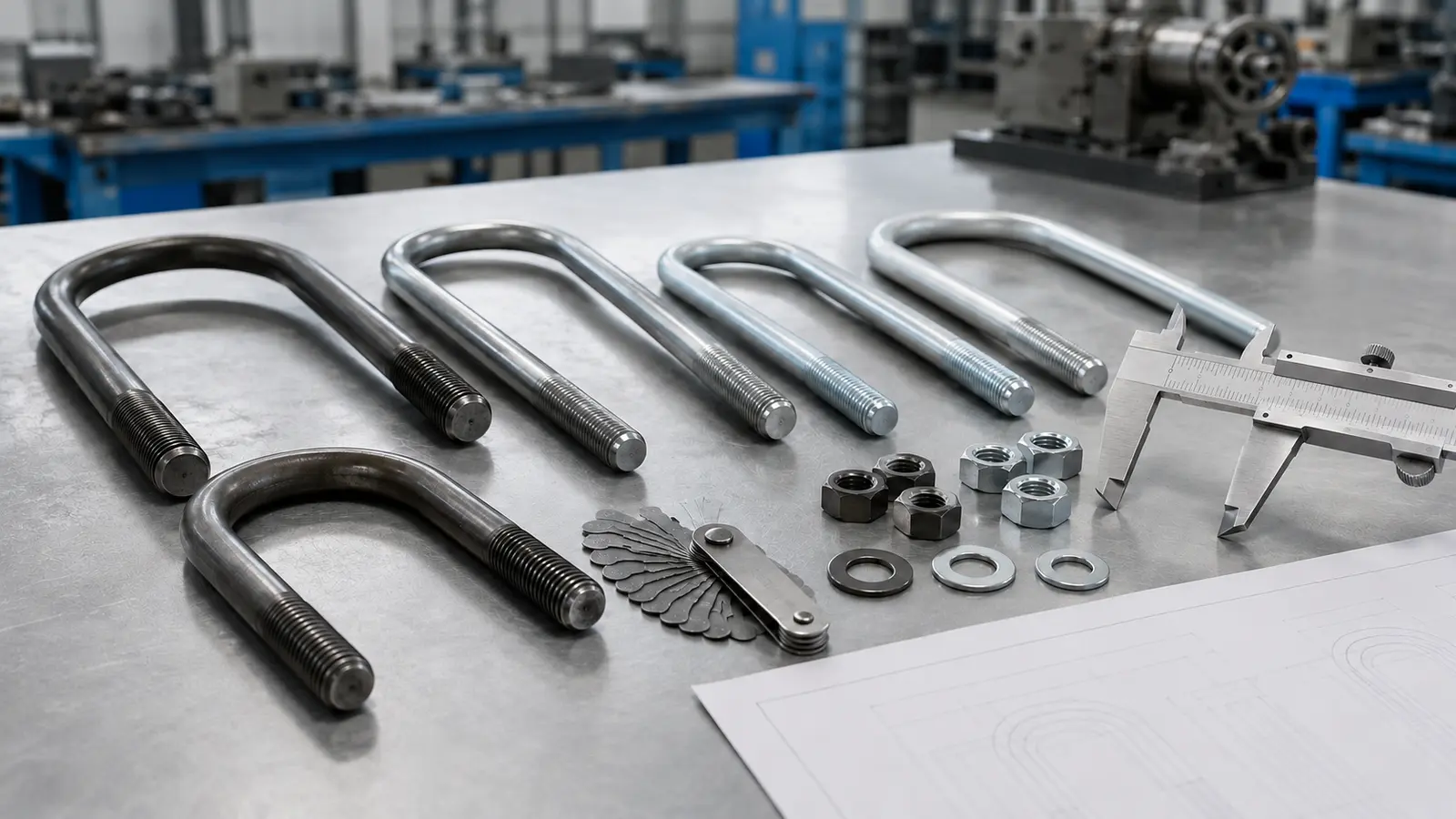
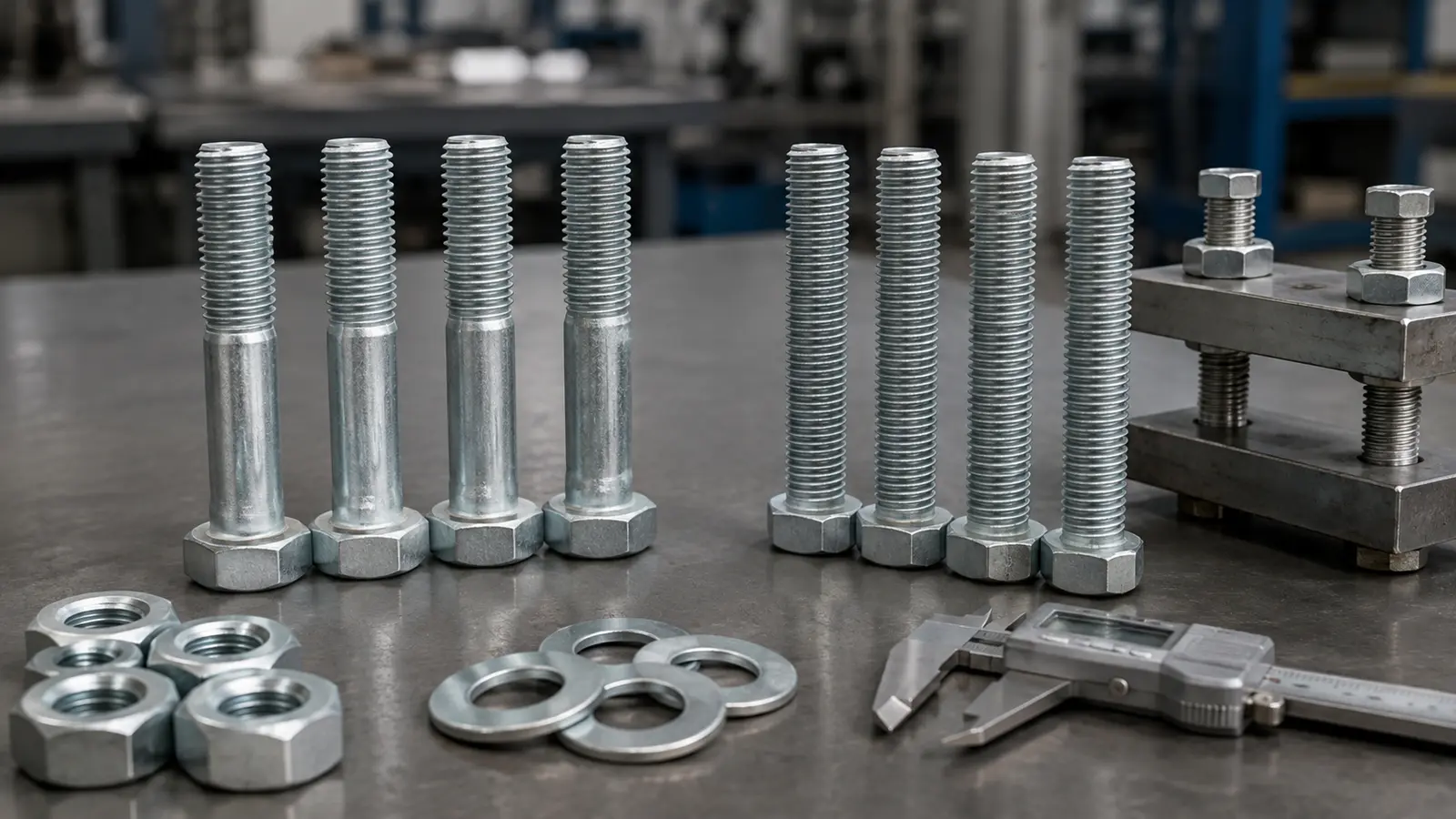
A bolt manufacturer should be evaluated against a defined joint, drawing and acceptance plan—not a product list or unit price alone. Buyers need to verify whether the supplier can manufacture the required geometry, control material and heat-treatment requirements where applicable, manage threads and coatings as one dimensional system, inspect critical characteristics, preserve batch traceability and declare deviations before production. The RFQ should include the application, drawing or recognized product specification, dimensions and tolerances, material or property requirement, finish, mating parts, inspection level, documents, packaging and quantity. Comparable quotations must return the offered specification, manufacturing assumptions, exclusions and evidence scope on the same basis.
Start With the Joint Before Comparing Manufacturers
The keyword bolt manufacturer covers many products that perform different mechanical and installation functions. A standard hex bolt, anchor bolt and formed U-bolt cannot be evaluated through the same short checklist. The required evidence depends on how the fastener locates, clamps, anchors or supports the connected parts.
Start by describing the joint. Identify the components being connected, hole or mounting geometry, clamp stack, mating thread, service environment, installation method and any movement or vibration the design must accommodate. For a U-bolt around a pipe, for example, rod diameter alone does not establish fit. Inside width, bend radius, leg length, thread length, saddle or plate geometry and mating hardware interact with the supported component and bracket. A dimension can meet a generic catalogue description yet still conflict with the actual assembly.
This is why the buyer should visit a complete industrial fastener category only after defining the fastening function. Product discovery helps identify a family, but the drawing and application establish what must be manufactured and inspected.
Which Manufacturing Responsibilities Should the Supplier Declare?
A supplier may manufacture some operations internally and source others. The commercial question is not whether every process sits under one roof. It is whether responsibility, process control and evidence remain clear from raw material through shipment. Forming, heading, thread production, heat treatment, surface finishing, sorting and packaging can each affect the accepted fastener.
Ask the bidder to identify the proposed process route and which operations are subcontracted. For outsourced heat treatment or coating, the response should state who approves the processor, how lots are identified before and after processing, and which reports return with the goods. A vague statement such as “all processes controlled” is less useful than a route showing the responsible party, lot transfer and inspection record at each critical stage.
The boundary also matters for custom work. If the order is produced from a buyer drawing, clarify who controls drawing revision, who approves a production deviation and whether tooling is dedicated or adaptable. A sample made to an early drawing can be dimensionally correct but commercially obsolete after a later revision. The purchase order should identify the approved drawing number and revision rather than relying on an email attachment with no revision status.
Normalize the Technical Scope Before Comparing Quotations
| Review area |
Buyer must define |
Manufacturer should return |
What the evidence must prove |
| Product identity |
Drawing or product standard, revision and application |
Offered designation and any alternative |
Both parties are pricing the same fastener |
| Material and properties |
Material, property class or project requirement |
Proposed material route and certificate scope |
The supplied lot matches the ordered mechanical basis |
| Critical dimensions |
Dimensions, tolerances, thread and fit interfaces |
Dimensioned drawing and inspection method |
The part can assemble with the mating components |
| Surface finish |
Coating system, appearance and functional requirement |
Offered finish, process assumptions and inspection |
Coating and thread fit are controlled together |
| Lot acceptance |
Sampling, tests, records and rejection rules |
Inspection plan and report format |
The delivered batch, not only a sample, is acceptable |
| Commercial boundary |
Quantity, sets, packing, destination and delivery basis |
Included hardware, packing, documents and exclusions |
Unit prices cover the same supply scope |
A completed comparison table does not automatically make quotations equivalent. Procurement must check whether each response uses the buyer’s requirement or a supplier assumption. One bidder may quote a bare U-bolt while another includes nuts and washers. One may price a stated coating system; another may use a visually similar finish without the same functional definition. Mark each difference as confirmed, deviation, optional or requiring review before creating a commercial ranking.
What Material Evidence Should Buyers Request?
“Steel bolt” is not a complete material requirement. Depending on the product and project, the controlling basis may be a material grade, a fastener property class, a project drawing or another approved specification. The supplier should not select a higher-sounding grade as an automatic substitute because strength, ductility, heat treatment, coating compatibility and installation practice can all affect approval.
When a material certificate is required, specify what must be traceable to the shipment. Procurement should verify the product or lot identification, material designation, relevant chemical or mechanical results, quantity relationship and issuing source. A certificate for generic raw material does not necessarily prove the final fastener properties after forming or heat treatment. Conversely, a finished-fastener test report does not replace raw-material evidence when the project requires both.
The required test depends on the ordered product and specification. International fastener standards separate mechanical-property requirements, coatings and dimensional product definitions rather than treating “bolt quality” as one certificate. The RFQ should therefore name the applicable document or project requirement and identify the expected evidence. Wotu’s product information alone must not be interpreted as certification to an unlisted standard.
How Do Threads, Coating and Formed Geometry Affect Fit?
Thread identity and mating hardware
Thread diameter without pitch, tolerance or mating-part information leaves an interface undefined. The manufacturer should confirm thread designation, threaded length, start condition and the nut or tapped component used for fit verification. If nuts and washers are supplied as a set, the quotation should identify their specification and finish rather than describing them only as “matching accessories.”
Thread gauging proves a defined dimensional condition; it does not prove every installation outcome. Coating thickness, lubrication, mating-part variation and tightening method can change assembly behavior. Where the project has a controlled tightening requirement, engineering should define the applicable assembly procedure and validation rather than deriving torque from diameter alone.
Formed dimensions and springback
For bent fasteners, material condition, rod diameter, bend radius and tooling influence the finished geometry. The drawing should distinguish inside dimensions from centreline or outside dimensions and identify which dimensions are critical after coating. If the manufacturer proposes a tooling radius or dimensional convention different from the drawing, that difference should be approved before the sample is made.
Inspection evidence should show the actual datum and measurement method. A report saying “width passed” is weak when the drawing does not clarify whether width is measured inside the legs, across their centres or outside the material. The inspection sheet should use the same characteristic names and datum references as the approved drawing.
Coating and post-coating fit
Black oxide, electroplated zinc and hot-dip galvanized finishes are not interchangeable descriptions. They involve different process and dimensional considerations. The buyer should specify the required coating system and any project-specific corrosion, appearance or mating-thread conditions. A color description alone cannot define coating performance.
Coating adds material to surfaces and can affect thread engagement or gauge condition. The impact depends on the thread system, process and ordered requirement. Ask whether dimensions and thread acceptance are controlled before or after coating, which mating components are used, and how repaired or damaged coating is handled. For high-strength or application-critical fasteners, coating-process risks also require specification-based review rather than a generic finish choice.
Why Is Sample Approval Not Enough for Bulk Orders?
A pre-production sample is useful for checking fit, formed geometry, visible finish, assembly and packaging concept. It should carry an identity: drawing revision, material or property requirement, finish, manufacturing route where relevant and sample date. Otherwise, the buyer may approve an object without defining the production condition it represents.
Sample approval must also state what happens next. Critical dimensions and functional checks move into the production inspection plan; approved visual characteristics can be retained as a reference; any sample deviation must be resolved rather than silently copied into the batch. If the sample used temporary tooling or a substitute finish, that limitation belongs in the approval record.
Production acceptance is a separate decision. The buyer should define lot formation, sampling, inspection characteristics, report frequency and the action taken when a lot fails. A perfect sample cannot prove consistency across a bulk order. Likewise, a single failed piece should be handled under the agreed acceptance rule rather than through an improvised dispute after shipment.
How Should Traceability Continue Through Packing?
Traceability is useful only when the paperwork can be connected to cartons, pallets or bundles. Agree on the lot identifier and where it appears: packing list, carton label, pallet label, inspection report and certificate. If coating or heat treatment creates sublots, the manufacturer should explain how those identities are preserved or reconciled.
Packaging is therefore part of quality control. Mixed diameters, mixed finishes or incomplete sets can pass dimensional inspection yet fail the buyer’s receiving process. The packing specification should state pieces or sets per package, allowable mixing, label fields, pallet limits, corrosion protection and the relationship between package labels and inspection documents. For distributor orders, private labeling should not remove the manufacturing lot reference needed for a claim investigation.
How Should Buyers Evaluate a Specific U-Bolt Offer?
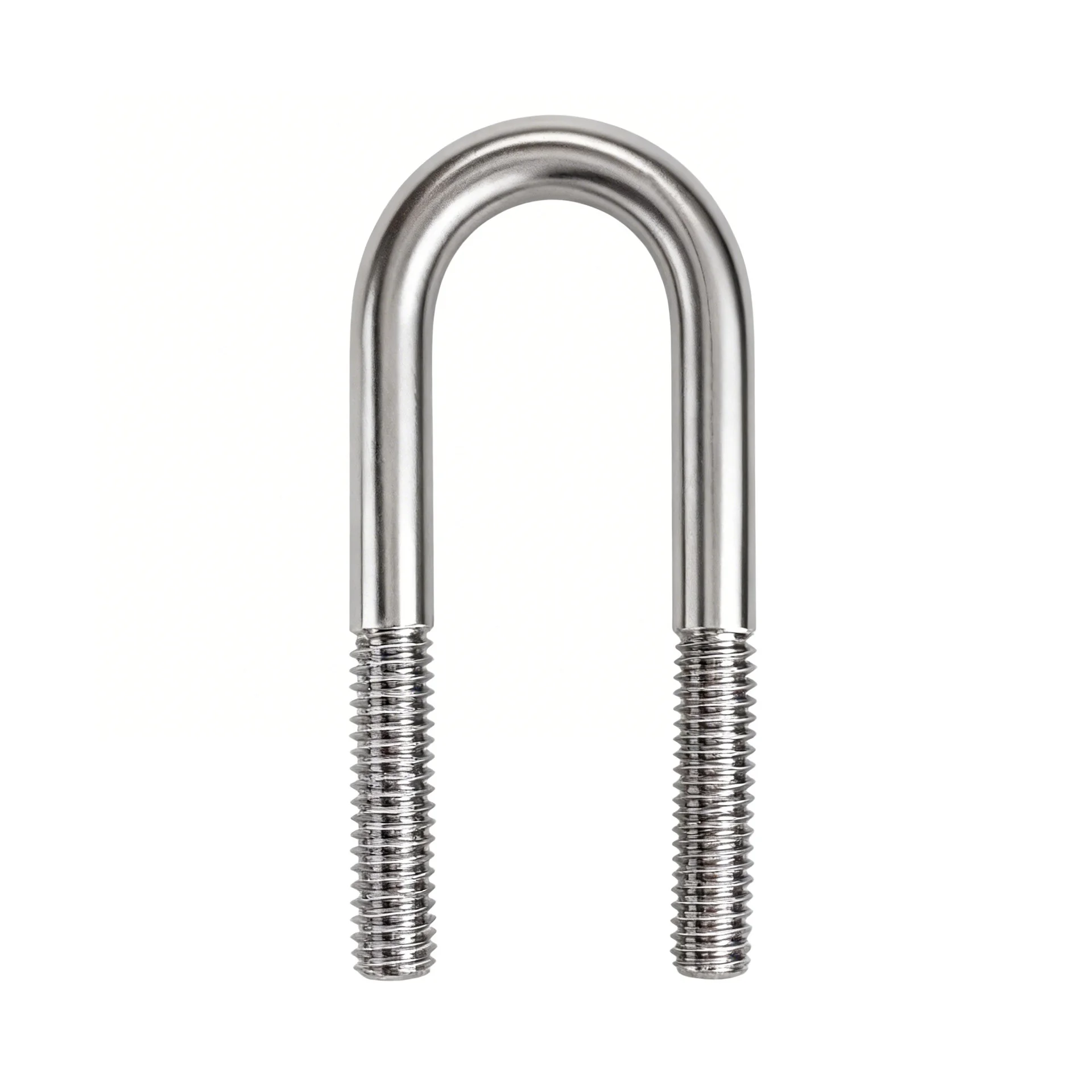
Wotu’s U-bolt product page lists M10, M12, M16, M20 and M24 options, several surface finishes, customization by drawing dimensions and matching nuts or washers. These details identify an available product family; they do not complete a project specification.
The buyer still needs to send the supported pipe or component geometry, rod diameter, inside width, inside height or leg length, thread length, bend radius where controlled, material or property requirement, finish, mating hardware and load-design responsibility. If a saddle, plate or special washer is part of the assembly, include its drawing and clarify whether it is in the seller’s scope.
This product-page review has a clear boundary. A formed U-bolt selected for clamping or support should not be treated as proof of structural design capacity. The project engineer remains responsible for the joint design, loads, support spacing and installation requirements unless a documented engineering scope says otherwise. The manufacturer quotation should confirm what is being made and inspected, not invent an application rating from a catalogue dimension.
What Red Flags Require Clarification Before Supplier Approval?
- The offer repeats the product name but omits the drawing revision or controlling specification.
- Material is described only as steel, stainless or high strength without the ordered designation.
- A coating color is quoted without the coating system or acceptance requirement.
- The manufacturer confirms diameter but does not define thread, pitch, tolerance or mating hardware.
- A custom formed part is approved from one dimension while the bend and leg geometry remain unclear.
- Inspection is promised, but the report does not identify characteristics, methods, sampling or lot.
- Certificates are offered without a traceable link to physical packages.
- Included nuts, washers, tooling, inspection and packaging are not separated from optional items.
These conditions are not automatic evidence of a poor supplier. They show that the offer is not ready for a fair comparison or purchase approval. A revised quotation should close each gap or record it as a deviation with an owner and due date.
What Should the Final Bolt Manufacturer RFQ Contain?
The buyer’s RFQ should establish the joint and acceptance basis: application, drawing or product specification, dimensions and tolerances, material or property requirement, finish, mating parts, quantity, sample requirement, inspection characteristics, certificates, packaging, destination and schedule. Each field changes a real decision. Dimensions control fit; material and processing control the ordered mechanical condition; coating interacts with thread and environment; inspection defines what proves conformity; packaging preserves identity and quantity through delivery.
Ask the bolt manufacturer to return an annotated requirement table rather than only a unit price. The response should identify the offered product, process assumptions, included mating parts, sample plan, inspection and document scope, packing method, subcontracted critical processes, exclusions and deviations. Alternatives should be explained by consequence: what changes in fit, finish, evidence, delivery scope or approval work.
After technical scope is aligned, price and lead time can be compared on a common basis. Project teams can send the drawing, application, required finish, quantity and evidence list through Wotu’s industrial fastener RFQ form. Request a response that marks every requirement as confirmed, deviated, optional or awaiting buyer review before approving the sample or purchase order.