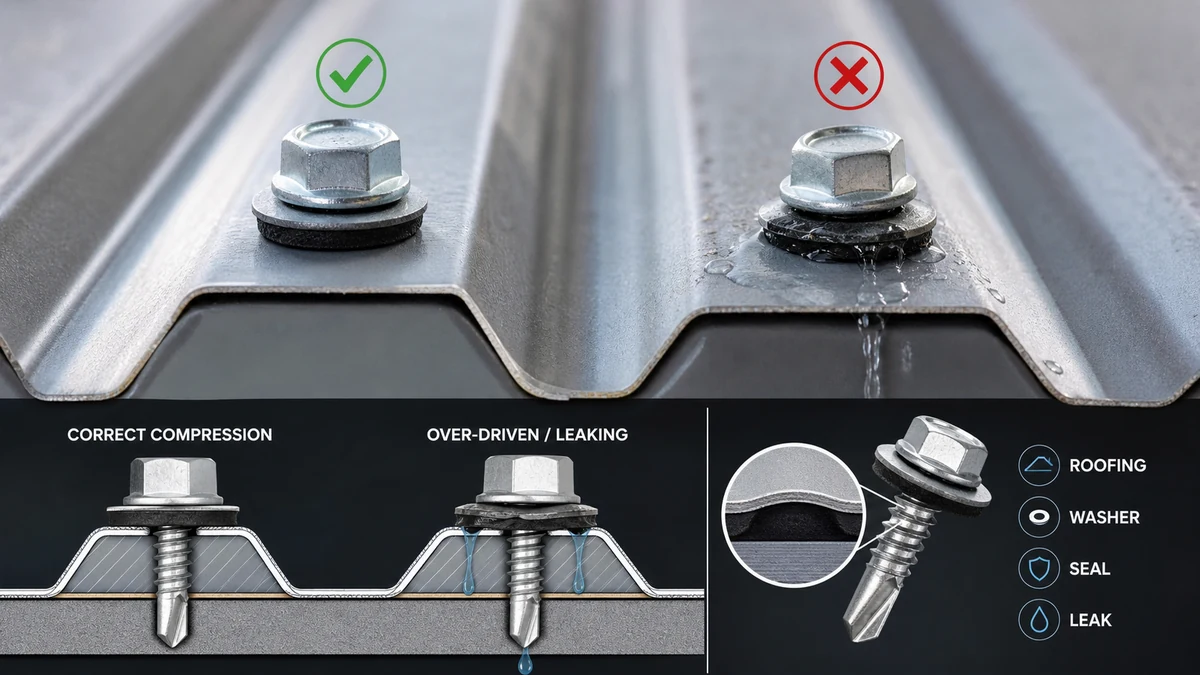
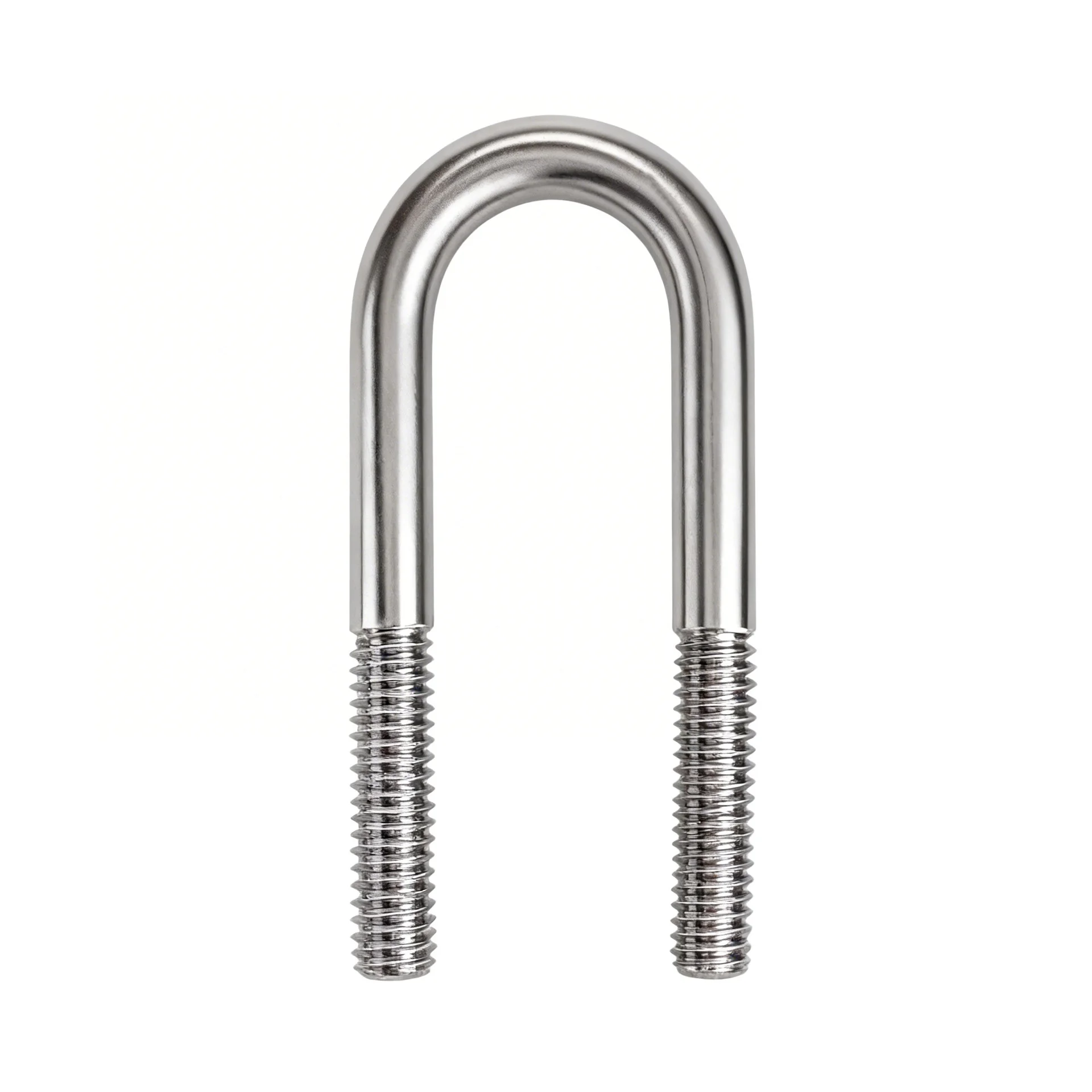
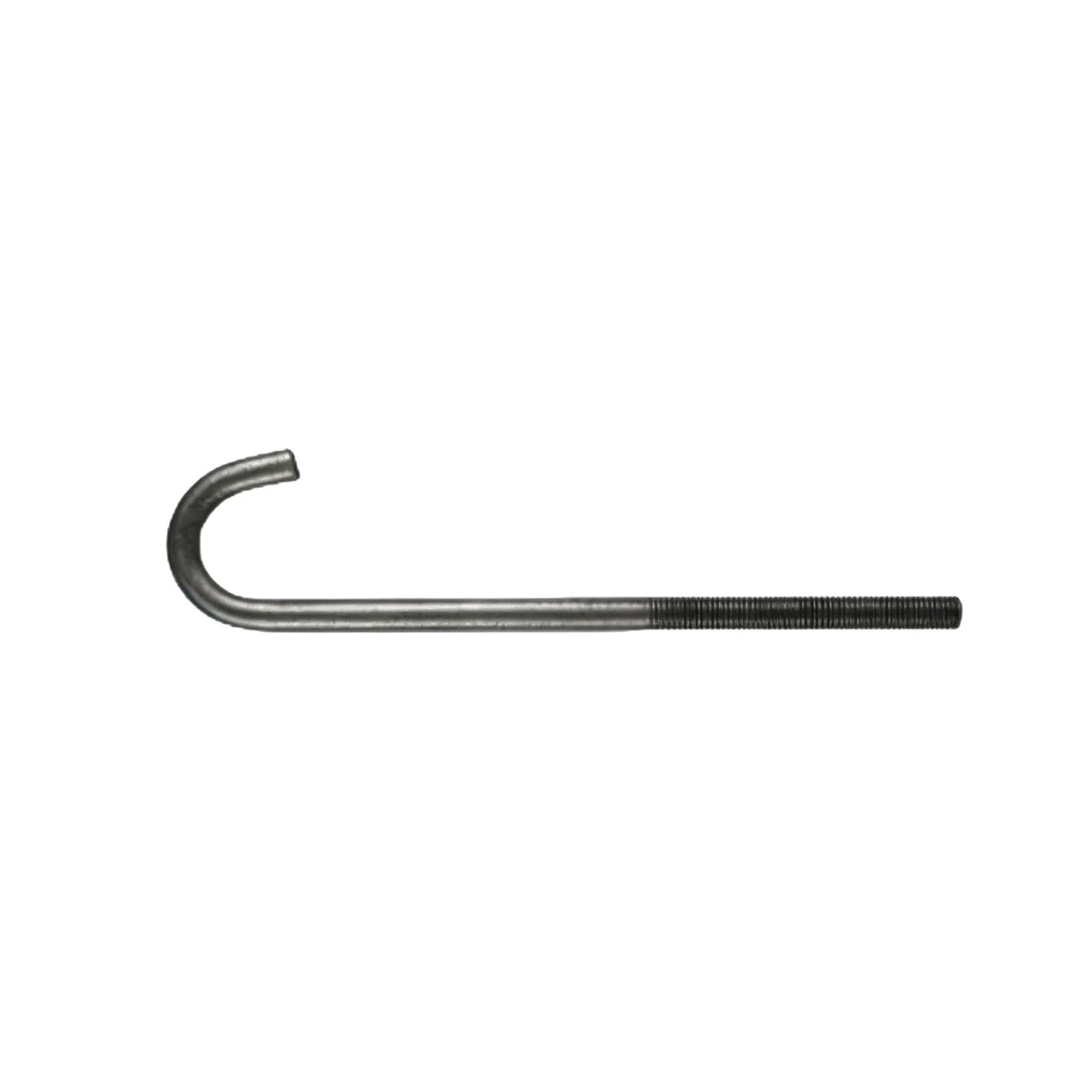
Direct answer: Correct screw length does not guarantee a watertight metal-roof connection. Self tapping roofing screws can leak because of incorrect washer compression, enlarged or stripped holes, insufficient thread engagement, panel movement, or an unsuitable coating-and-washer system. Buyers should diagnose the complete installed connection—including panel profile, support thickness, point type, washer condition, and exposure—rather than approving replacement screws by length alone.
This failure is most relevant to metal-roofing contractors, steel-structure fabricators, roofing-system suppliers, fastener distributors, project owners, maintenance teams, and OEM buyers. Before placing a repeat order, the buyer should compare the roof panel profile, support material, total connection stack, washer type, drill or tapping requirement, installation control, and environmental exposure. Wotu Fastener’s self tapping screw product category provides a starting point for reviewing head styles, surface treatments, diameters, lengths, packaging, and customization options, but final selection still requires project-specific confirmation.
Why Can Self Tapping Roofing Screws Leak Despite Correct Length?
Screw length answers only one part of the connection question: whether the fastener can pass through the roof panel and reach the support. It does not prove that the washer seals correctly, the hole remains round, the threads develop adequate holding force, or the connection can tolerate thermal movement and wind-induced panel vibration.
| Leak Mechanism |
Evidence the Buyer Should Inspect |
Risk if It Is Misdiagnosed |
| Incorrect washer compression |
Washer shape, visible gap, dishing, cracking, edge extrusion, off-center position, and panel indentation |
A longer replacement screw may repeat the same leak because the sealing interface remains uncontrolled. |
| Enlarged or stripped hole |
Hole diameter after screw removal, metal shavings, torn coating, thread damage, and movement around the fastener |
The screw may appear tight during installation but lose clamp load or allow water movement. |
| Insufficient thread engagement |
Support thickness, thread length below the panel, point length, substrate material, and pull-out evidence |
Excess overall length cannot compensate for threads that do not engage the structural support correctly. |
| Panel movement |
Fastener location, slotting, panel wave, lap condition, thermal cycling, wind exposure, and movement marks |
A connection that passes an initial water test may leak after repeated expansion and contraction. |
| Coating or material incompatibility |
Red rust, white corrosion products, coating damage, washer hardening, panel discoloration, and moisture retention |
Short-term sealing may hide a progressive corrosion problem that later damages both the screw and roof sheet. |
Common replacement mistake: Treating “same diameter and same length” as an equivalent specification. Head geometry, washer outside diameter, washer thickness, thread form, drill or tapping point, unthreaded point length, coating, and support thickness can change installation behavior even when the nominal size looks identical.
How Should Washer Compression Be Inspected?
The sealing washer is the first visible component to inspect, but appearance should be interpreted carefully. A washer that looks flat is not automatically correct. Under-driving can leave a small water path beneath the washer, while over-driving can dish the washer, squeeze the elastomer outward, damage the roof coating, deform the sheet around the hole, or strip the support.
Remove several leaking and non-leaking fasteners from comparable roof locations and compare them. The buyer or site technician should record:
- Whether the washer remained centered beneath the screw head
- Whether the washer edge is uniformly compressed around the full circumference
- Whether the elastomer is split, cut, hardened, swollen, or permanently distorted
- Whether the metal backing washer is cupped or tilted
- Whether the roof sheet is depressed around the hole
- Whether the fastener was installed perpendicular to the panel surface
- Whether leakage is concentrated at panel crests, valleys, laps, or penetrations
Where an EPDM or another elastomeric sealing washer is specified, the RFQ should identify the required washer construction rather than using the word “rubber” alone. The buyer should request the supplier’s dimensional proposal for the complete screw-and-washer assembly and approve representative installation samples in the actual panel and support combination.
Practical diagnostic lesson: A removed fastener often provides more useful evidence than the wet interior surface. Washer imprint, damaged threads, cut coating, metal chips, and hole shape can separate an installation problem from a product-selection problem.
How Do Overdriving and Enlarged Holes Create Leaks?
Overdriving can produce two failures at the same time. First, it may crush or displace the washer. Second, it may strip the formed thread in the steel support or enlarge the hole in a thin panel. Once the hole no longer controls the fastener, the installer may continue tightening because the screw still rotates, further damaging the sealing surface.
Hole enlargement can also result from a wandering point, an unsuitable point for the substrate, repeated removal and reinstallation, a tilted driver, excessive installation speed, panel movement, or an off-center fastener at a lap. The corrective action should be based on measured hole condition. Installing a longer screw through the same damaged hole does not automatically restore holding power.
| Observed Condition |
Likely Cause to Verify |
Procurement or Site Action |
| Washer deeply dished and panel depressed |
Excessive installation torque or uncontrolled driver setting |
Run an installation trial and define an acceptable washer-compression appearance for the crew. |
| Screw spins without increasing clamp load |
Stripped support thread or oversized hole |
Measure the hole and support thickness; approve an engineered repair instead of simply increasing length. |
| Metal chips remain beneath the washer |
Poor chip evacuation, unsuitable point, or no cleaning after drilling |
Review drilling performance, installation sequence, and roof-cleaning requirements. |
| Washer compressed on only one side |
Driver misalignment, sloped contact surface, or profile mismatch |
Correct installation angle and confirm whether the head and washer fit the roof profile. |
| Leak returns after a replacement screw is installed |
Unresolved panel movement, lap geometry, or damaged sheet around the hole |
Review the complete roof detail rather than treating the fastener as the only component. |
Installation control risk: One driver setting should not be copied across every project. Support thickness, steel grade, screw diameter, point geometry, coating friction, washer construction, and tool condition all influence the clamp load produced by the same nominal torque setting.
How Should Thread Engagement and the Connection Stack Be Verified?
Roofing buyers often specify a screw by total length while leaving the complete connection stack undefined. The correct review starts with the installed path from the screw head to the structural support.
The RFQ should show or list:
- Roof panel profile and whether fastening occurs at the crest, valley, or lap
- Panel material and panel thickness
- Insulation, spacer, bracket, clip, or thermal-break thickness
- Air gap or compressible layer in the connection
- Support material, support thickness, and support orientation
- Required thread engagement below the panel stack
- Point length that does not contribute to structural thread engagement
- Washer diameter, washer thickness, and sealing material
- Any required clearance for interior services or concealed components
The drill or tapping function must also match the support. A self-tapping screw normally requires an existing hole or an application in which its point and thread can form or cut the mating thread. A self-drilling screw includes a drill point intended to create the hole before the thread engages. Buyers should not rely on naming alone; they should confirm point capacity, support thickness, and the actual installation route.
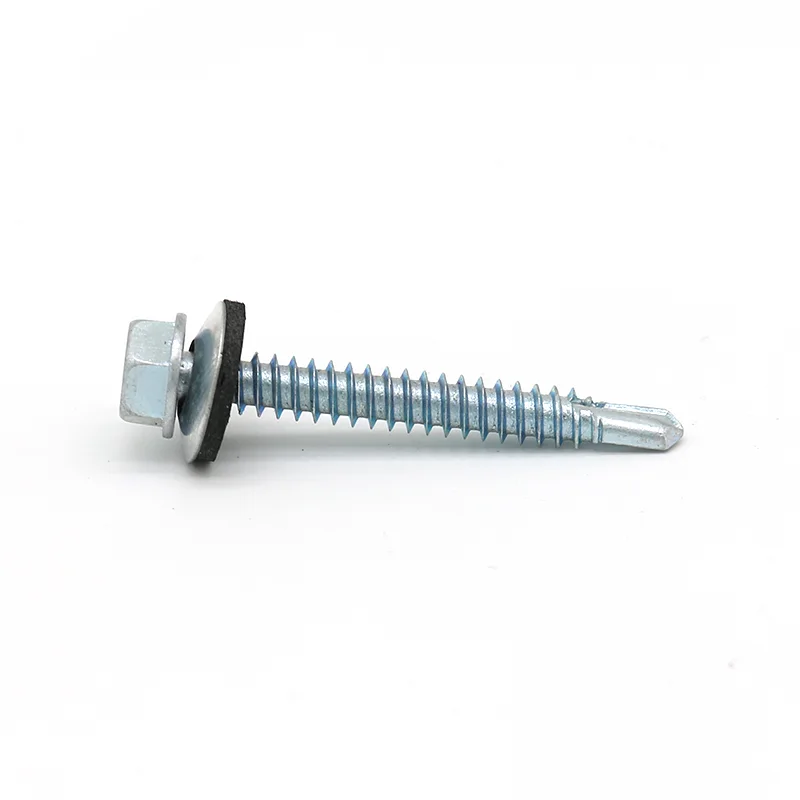
For metal-roof assemblies that require a sealing washer and direct drilling, the current product database includes a hex head self-drilling screw with bonded washer . The listed range covers mainstream diameters from 4.2 mm to 6.3 mm and lengths from 20 mm to 165 mm, with nonstandard length and drill-point customization available. These ranges are reference options, not an automatic approval for every roof support.
Frequently missed specification detail: The pointed or drilling section of a screw should not be counted as effective thread engagement. A screw may visibly protrude through the support while still providing less engaged thread length than the buyer assumed.
How Do Thermal Movement and Fastener Location Affect the Seal?
Metal roof panels expand and contract as temperature changes. Wind pressure and suction can add cyclic movement. If the fastener is misplaced, tilted, installed through an unsupported section, or used in a joint that requires movement accommodation, the washer can be worked repeatedly even when it was correctly compressed on the installation day.
Leak analysis should compare the pattern of failures across the roof:
- Do leaks occur mainly near panel ends, laps, ridges, gutters, or penetrations?
- Are failed screws concentrated on one roof slope or wind-exposed elevation?
- Do leaks appear after hot days, cold nights, storms, or seasonal temperature changes?
- Are panels visibly waving, oil-canning, or moving around the fasteners?
- Is the screw positioned consistently within the roof profile?
- Are adjacent panels and accessories restraining movement differently?
An installation that passes a short water test may still fail after months of movement. Sample approval should therefore include not only appearance and initial sealing but also the expected roof detail, fastening location, and maintenance plan.
Maintenance diagnosis caution: A leak that appears months after installation is not automatically evidence of washer aging. Thermal cycling may expose an initially marginal clamp condition, an oversized hole, panel restraint, or inconsistent fastener location.
How Should Coating and Environmental Exposure Be Reviewed?
The fastener surface treatment, roof-sheet material, washer construction, moisture exposure, chemicals, and coastal or industrial atmosphere should be reviewed together. Buyers should request coating information for the exact supplied fastener, not rely only on a generic catalog description.
Inspection should distinguish between corrosion on the screw head, corrosion at damaged coating areas, staining around metal chips, corrosion below the washer, and deterioration of the roof sheet itself. The selected coating also needs to remain compatible with installation: an unsuitable driver, socket, or handling process can damage the head coating before the roof is exposed.
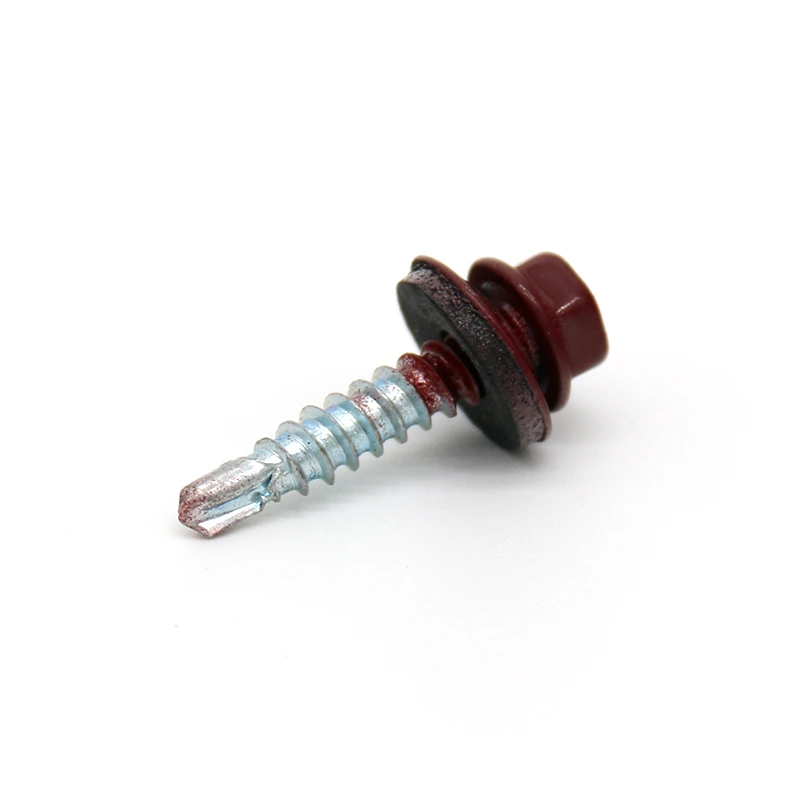
Wotu Fastener’s current product data includes a painted hex head self-drilling screw in ST5.5 and ST6.3 diameters, with listed lengths from 25 mm to 120 mm and steel-sheet drilling suitability stated as 2–5 mm. Buyers should still confirm the paint system, washer assembly, color, substrate, environment, and acceptance tests for the specific project.
Hidden corrosion cost: Leak complaints may begin with installation debris or coating damage rather than uniform corrosion of the screw. Metal chips left on the roof can corrode and stain the sheet, while damaged head coatings can become localized initiation points.
What Does a Representative Roofing Leak Scenario Look Like?
Scenario: Recurring leaks on a steel-frame warehouse roof. This is a representative application scenario based on common field conditions, not a claimed Wotu customer case.
Business Background: A metal-building contractor installed roof panels over steel purlins using washer-head screws selected mainly by nominal diameter and overall length. The initial installation passed a visual check.
Problem: Several months later, water marks appeared below panel laps and along one wind-exposed roof slope. The contractor ordered longer screws, but some repaired positions leaked again.
Cause: Inspection found inconsistent washer compression, several enlarged holes, metal chips beneath some washers, and insufficient engaged thread length at locations with thicker lap and spacer stacks. Panel movement increased the load on already marginal connections.
Solution: The contractor mapped the leak locations, removed representative fasteners, measured the full connection stack and support thickness, separated reusable holes from damaged holes, approved the washer-compression appearance through site trials, and revised the reorder specification to include point type, thread engagement, washer construction, coating, packaging, and inspection requirements.
Buyer Decision Value: The revised purchase decision compared repair reliability and installation control instead of unit price alone. This reduced repeated roof access, labor, replacement panels, interior damage, and disputes over whether the screw or installation process caused the failure.
What Should Buyers Compare Before Reordering Roofing Screws?
Price comparison should use the same technical and commercial scope. A lower unit price can create a higher installed cost when it excludes a suitable washer, controlled point geometry, consistent coating, packaging that protects the sealing surface, sample approval, inspection records, or nonstandard customization.
| Buyer Decision |
Low-Information Purchase |
Risk-Controlled Purchase |
| Specification basis |
Diameter and length only |
Panel profile, full stack, support thickness, point, thread, head, washer, coating, and environment |
| Sample approval |
Loose screw sample inspected by appearance |
Installation trial in representative panel and support, with approved compression and holding condition |
| Quality evidence |
General supplier statement |
Lot identification, dimensional inspection, coating confirmation, washer checks, and agreed acceptance method |
| Commercial comparison |
Price per thousand pieces |
Product, customization, sample, inspection, packing, freight, replacement risk, and installation productivity |
| Corrective action |
Replace every leaking screw with a longer one |
Classify washer, hole, thread, movement, and corrosion causes before selecting each repair method |
For installation-control context, buyers can also review Wotu’s self-drilling screw installation guidance . The field evidence and corrective-action checklist in this article should then be used to refine the reorder rather than duplicate the original order unchanged.
What Information Should the Corrective-Action RFQ Include?
A useful corrective-action RFQ should provide enough information for the supplier to evaluate the complete connection. Include:
- Roof panel material, profile, thickness, coating, and visible installation photos
- Support material, support thickness, and whether the screw enters steel, timber, or another substrate
- Cross-section or stack-up showing insulation, spacers, clips, laps, and air gaps
- Current screw diameter, length, head, point, thread, washer, and coating
- Removed-screw photos and measured hole condition from leaking and non-leaking locations
- Leak location map, timing, weather conditions, and any pattern across the roof
- Required quantity, forecast quantity, packaging, labeling, destination, and delivery target
- Required samples, installation trial, dimensional checks, coating confirmation, and acceptance criteria
- Any required nonstandard length, point, washer, surface treatment, or private-label packaging
The supplier should identify assumptions and exclusions in writing. MOQ, sample lead time, mass-production lead time, packaging method, available customization, and inspection scope should be confirmed for the proposed configuration rather than assumed from a general product page.
Frequently Asked Questions
Can a roofing screw leak even when it penetrates the steel purlin?
Yes. Visible penetration does not prove adequate thread engagement or washer sealing. The point length, support thickness, stripped-hole condition, installation angle, and washer compression must also be checked.
Does a longer self tapping roofing screw fix an enlarged hole?
Not necessarily. A longer screw may reach farther without restoring the damaged thread or sealing surface at the original hole. The hole diameter, support condition, and repair method should be evaluated before selecting a replacement.
How can buyers identify an overdriven roofing screw?
Common signs include a deeply dished washer, elastomer squeezed beyond the metal washer, panel indentation, damaged coating, a screw that continues spinning, or uneven compression around the washer.
Should every roofing screw use an EPDM washer?
The washer material and construction should match the roof system and exposure requirements. Buyers should state the required elastomer and backing-washer dimensions in the RFQ instead of assuming all sealing washers are equivalent.
What sample should be approved before a bulk roofing-screw order?
Approve the screw installed in representative roof panel and support materials. Check drilling or tapping behavior, washer compression, clamp condition, hole quality, thread engagement, coating damage, and removal evidence.
How should coating options be compared?
Compare the exact coating system, roof-sheet compatibility, exposure, head damage during installation, inspection method, and required project evidence. Do not compare coatings only by color or a generic corrosion claim.
What should a buyer send Wotu Fastener for a leak-related reorder review?
Send panel and support data, connection-stack dimensions, current fastener details, leak photos, removed-screw evidence, hole measurements, environment, required quantity, packaging, delivery target, and proposed acceptance checks.
Request a Roofing Fastener Configuration Review
Provide the roof panel profile and thickness, support material and thickness, complete connection stack, current screw and washer details, leak photos, removed-fastener evidence, required quantity, destination, packaging, and delivery target through Wotu Fastener’s contact and quotation page . The team can review available self-tapping or self-drilling configurations, identify missing RFQ data, discuss sample and customization requirements, and prepare a configuration-specific quotation with stated assumptions and exclusions.