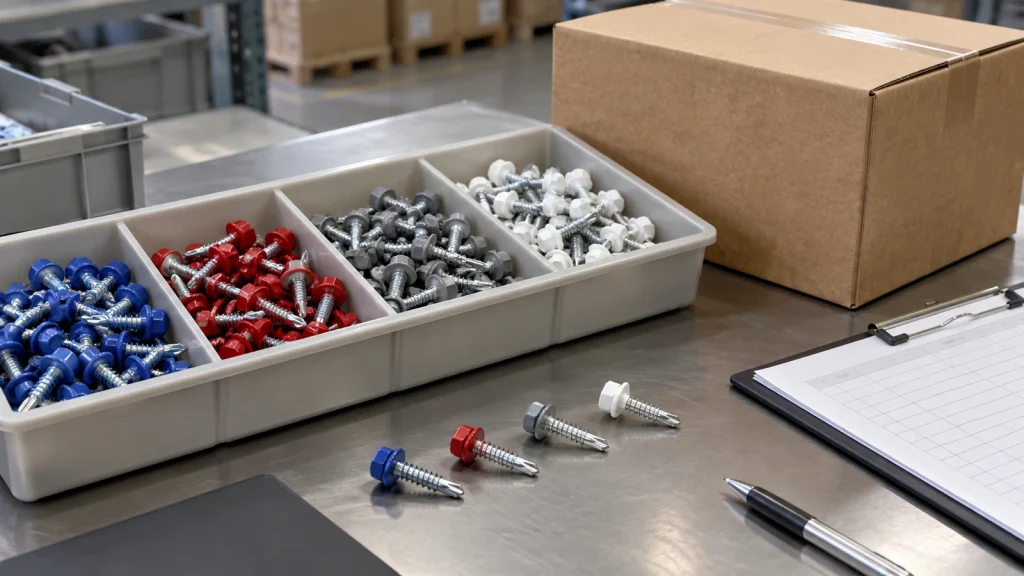
A self drilling screw is not the same as a self tapping screw. The drill point is intended to form its own entry hole in an appropriate material, while a self tapping screw normally relies on a prepared hole or a point designed mainly to form threads. That distinction affects installation time, the required driver setup and the material thickness the fastener can handle.
The hex head also differs from a cross or slotted head: it accepts a socket or nut setter and can provide positive engagement during installation. If the joint needs water resistance or a broader bearing surface, ask about a bonded washer or another head-and-washer arrangement rather than treating all hex head screws as interchangeable.
Start with the joint materials. State the material being drilled and the material receiving the threads, such as thin sheet, a heavier steel section or another compatible substrate. The drill point must suit the combined material thickness; a point that is too short may not penetrate fully, while an unsuitable point can create excessive resistance or a weak thread.
Choose the head and sealing arrangement for the load. A plain hex washer head may suit a dry, accessible joint. A flange or bonded washer can spread pressure and help protect a panel surface where sealing matters. Confirm the required socket size, head clearance and washer material before approving a sample.
Match the finish to the environment. Zinc-based finishes, specialty coatings and stainless options can behave differently in outdoor, humid or chemically exposed service. Do not select a coating by color alone. Confirm the base material, coating type, surface preparation and compatibility with the materials being joined, especially where galvanic corrosion could be a concern.
Check the installation and inspection method. Confirm the driver or socket arrangement, acceptable seating, thread engagement and any requirement for appearance or color matching. Before placing a larger order, send the supplier the material combination, total thickness, required length, head and washer style, finish, quantity and application conditions, then evaluate samples in the actual joint.