Direct Answer: Choose a hex thin nut when reduced nut height is genuinely required by the assembly or when the engineering design specifies it as part of a locking arrangement. Choose a standard hex nut when full nut height, normal thread engagement, and the specified load-bearing function are required. Buyers should compare nut height, thread pitch, bolt grade, finish, washer stack, wrench access, preload method, and locking strategy before ordering.
For fastener distributors, machinery builders, steel-structure fabricators, maintenance buyers, and OEM purchasing teams, thin and standard hex nuts can look interchangeable because the thread diameter may be identical. In practice, the nut height changes engaged thread length, wrenching surface, stack-up, and sometimes the intended function of the joint. A purchase description such as “M12 nut” is therefore not enough for a controlled B2B order.
Wotu Fastener supplies hex nuts and related nut products for industrial and project sourcing. Its product database includes standard hex nuts, thin nuts, flange nuts, thickened nuts, multiple surface treatments, and customized specifications. Final selection should still follow the project drawing, bolt specification, joint function, and acceptance requirements.
What Is the Practical Difference Between a Thin Nut and a Standard Hex Nut?
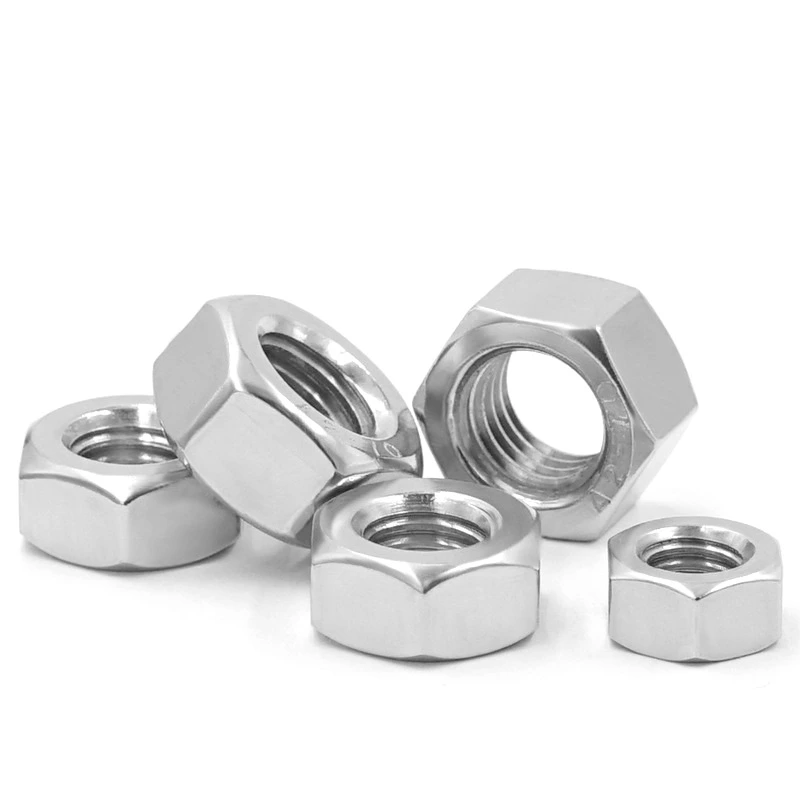
The most visible difference is nut height. A thin nut uses less axial space, while a standard hex nut provides a taller threaded body. That height difference changes thread engagement and can also change how the nut should be used within the assembly.
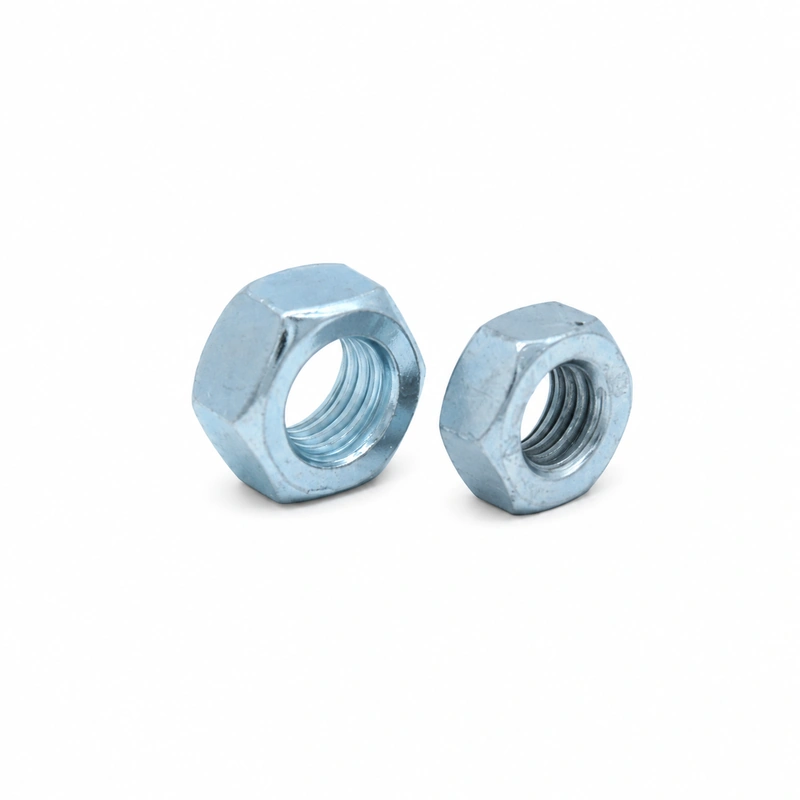
Wotu’s Hex Thin Nut is listed in M8–M64 standard sizes with zinc-plated finish, and the product record notes support for non-standard thread pitch and customized thickness. The company’s DIN934 Hex Nut range is listed in M6–M24 with metric coarse and fine thread options. Those records confirm available product families, not universal interchangeability.
| Buyer Decision |
Hex Thin Nut |
Standard Hex Nut |
| Axial space |
Relevant where reduced height is intentionally required |
Needs more axial space but follows normal full-height geometry |
| Thread engagement |
Reduced height requires verification against the joint requirement |
Provides the engagement associated with the specified standard nut form |
| Joint role |
May be used for low-profile or locking functions when approved |
Commonly used as the main nut where a normal hex nut is specified |
| Locking use |
Can be part of a jam-nut or double-nut arrangement |
Can also form part of a double-nut arrangement |
| Main RFQ risk |
Assuming same thread means same function |
Ignoring clearance or tool-access limits |
When Does a Space-Limited Assembly Actually Need a Thin Nut?
A thin nut becomes relevant when the assembly has a real height constraint: a cover must close over the fastener, a moving part passes close to the bolt end, a compact frame leaves little axial room, or total stack height is tightly controlled.
Before changing nut type, confirm available clearance, bolt projection, thread engagement, thread pitch, bolt grade, wrench/socket access, washer stack, and whether the nut is the main load-bearing nut or only part of a secondary locking arrangement.
Industry experience point: Many “space problems” are actually stack-up problems. Excessive bolt length, an unnecessary washer stack, or a wrong bracket thickness can create the interference. Changing only the nut may move the problem instead of solving it.
Can a Thin Nut Replace a Standard Nut Just Because the Thread Matches?
No. Matching diameter and pitch proves only that the nut can screw onto the bolt. It does not prove equivalent proof load, stripping resistance, wrenching behavior, or approval under the project specification.
If the drawing specifies a standard-height nut, substituting a thin nut should be handled as an engineering deviation rather than a purchasing shortcut.
Industry experience point: A substitution can pass hand assembly and still fail receiving inspection because nut height, standard designation, grade, finish, or joint role differs from the approved drawing.
How Should Buyers Evaluate Thread Engagement?
Thread engagement is the length over which the bolt and nut threads carry load together. A thinner nut naturally provides less axial engagement than a taller nut of the same thread size. Whether that is acceptable depends on the bolt and nut material, grade, thread tolerance, load, tightening method, and governing design requirement.
| RFQ Input |
Why It Matters |
Common Mistake |
| Thread diameter and pitch |
Confirms bolt compatibility |
Ordering M12 without confirming coarse or fine thread. |
| Nut height / standard |
Defines thin, standard, thickened, or another form |
Assuming every hex nut with the same thread is equivalent. |
| Bolt grade |
Lets the nut requirement be checked against the bolt system |
Buying nuts independently from the bolt strength basis. |
| Joint load basis |
Determines whether the nut form is appropriate |
Using a thin nut only because it fits the available space. |
| Tightening method |
Affects preload, inspection, and locking strategy |
Specifying a torque number without defining the complete joint. |
When Is a Thin Nut Used as a Jam Nut?
A thin nut can be used as part of a double-nut or jam-nut arrangement where the engineering design intentionally uses two nuts to resist relative movement. However, “add a thin nut” is not a complete locking specification.
The drawing or assembly instruction should state whether the thin nut is a secondary jam nut, a low-profile primary nut, part of a two-nut locking method, or used for positional adjustment. The tightening sequence and acceptance method should also be controlled by the project design.
Industry experience point: Double-nut assemblies often create inconsistent installation when the drawing shows two nuts but does not define nut order, tightening sequence, or inspection criteria.
How Do Bolt Projection and Wrench Access Affect the Choice?
Space limitation is not only about nut height. The installer also needs enough room to place a wrench or socket on the hex and apply the specified tightening method. A thin nut reduces stack height, but its smaller height can reduce wrenching surface.
Also check bolt projection beyond the nut. Excessive projection can interfere with covers or moving parts; insufficient projection can complicate inspection and assembly control.
Does Surface Finish Change the Purchase Decision?
Yes. Surface finish affects corrosion protection, friction behavior, appearance, and dimensional fit. Wotu’s nut database includes zinc-plated, black-oxide, hot-dip galvanized, stainless-steel, and other listed finish options across different nut products.
For projects using several nut forms, the GB and DIN Hex Nut Range provides a useful product reference across thick, thin, flange, and other categories.
Industry experience point: Nut prices should not be compared before finish is normalized. Zinc-plated, hot-dip galvanized, black-oxide, and stainless-steel supply scopes are not commercially equivalent.
What Should Buyers Verify for Vibration-Prone Assemblies?
Vibration does not automatically mean that a thin nut is the correct locking solution. The buyer should first define the failure mode: rotational loosening, loss of preload, joint settlement, thermal movement, or repeated disassembly.
Then verify the complete locking strategy, including nut form, preload method, washer or locking device, bolt grade, finish, and maintenance requirement.
Scenario: One OEM Uses the Same Thin Nut for Two Different Problems
Representative scenario — not a claimed customer case.
Business Background: An OEM is sourcing metric hex nuts for a compact machine. One joint sits below a moving cover with limited clearance. A second joint is exposed to vibration and uses a double-nut arrangement.
Problem: Purchasing proposes one thin-nut specification for both locations because the thread size is the same and a common part number would simplify inventory.
Cause: The RFQ treats thread size as the whole requirement and does not separate a packaging constraint from a locking requirement.
Solution: Engineering assigns the thin nut only where reduced height is needed and separately defines the approved double-nut arrangement for the vibration-prone joint. The RFQ lists thread pitch, nut standard/height, bolt grade, finish, washer stack, tightening method, quantity, and drawing revision for each line item.
Buyer Decision Value: The buyer avoids solving two different engineering problems with one low-profile part and can compare suppliers on one controlled specification.
How Should Buyers Compare Thin-Nut and Standard-Nut Quotes?
| Comparison Item |
Supplier Should Confirm |
Risk if Missing |
| Nut type |
Thin, standard, thickened, flange, or another specified form |
Different nut heights are quoted under one thread size. |
| Thread |
Diameter, pitch, and standard basis where required |
The nut fits one bolt batch but not another. |
| Material / grade |
Order-specific requirement |
Price differences reflect different mechanical bases. |
| Surface finish |
Exact coating or material finish |
Corrosion and friction behavior are not comparable. |
| Matching hardware |
Bolt, flat washer, spring washer, or other components |
The delivered set is incomplete. |
| Inspection |
Dimensions, thread, finish, marking, or order-specific records |
Receiving inspection lacks an agreed basis. |
| Packing |
Carton, pallet, labeling, and quantity-per-package requirements |
Equivalent unit prices hide different packing scopes. |
What Should the RFQ Include?
A useful RFQ should identify the application, bolt diameter and pitch, nut type, required standard or drawing, controlled nut height, bolt material/grade, finish, washer stack, axial clearance, wrench access, locking method, tightening requirement, quantity, inspection documents, packing, and destination.
If the assembly uses both thin and standard nuts, give each one a separate line item and drawing callout. Do not ask the supplier to decide which joint can accept reduced nut height without the engineering basis.
Frequently Asked Questions
Is a hex thin nut the same as a standard hex nut except for height?
Height is the most visible difference, but reduced height also changes thread engagement and may change the nut’s intended role. Verify the standard, grade, thread, finish, and joint function.
Can a thin nut be used as the main load-bearing nut?
Only when the approved design, standard, or drawing permits that use. It should not replace a specified standard nut simply to save space.
What is a jam nut?
A jam nut is a nut used as part of a locking arrangement with another nut. The locking function depends on the defined assembly and tightening method.
Should a thin nut always be used where vibration is present?
No. Vibration is a joint-design issue. The approved locking strategy may involve nut geometry, preload, washers, locking devices, or another method.
What Wotu thin-nut sizes are listed?
Wotu’s current Hex Thin Nut product record lists M8–M64 standard specifications and notes support for non-standard thread pitch and customized thickness.
Can Wotu supply different hex-nut families in one order?
Wotu’s product database includes thin nuts, DIN/GB hex nuts, flange nuts, thickened nuts, and multiple finish options. A mixed order should identify each specification, quantity, finish, and packing requirement separately.
What should buyers send before requesting a final quotation?
Send the assembly drawing, bolt specification, thread diameter and pitch, nut type/standard, clearance limits, grade/material, finish, locking method, washer stack, quantity, inspection requirements, packing, and destination.
Request a Nut Configuration and RFQ Review
For a thin-nut versus standard-nut quotation, send Wotu Fastener the assembly drawing, bolt specification, thread diameter and pitch, required nut height or standard, joint function, locking method, material/grade, finish, matching washers or bolts, quantity, inspection requirements, and packing needs through the Contact Us page. Wotu can review the available nut families, size and finish options, customization requirements, matching hardware, and export packing scope against the buyer’s controlled specification before order release.