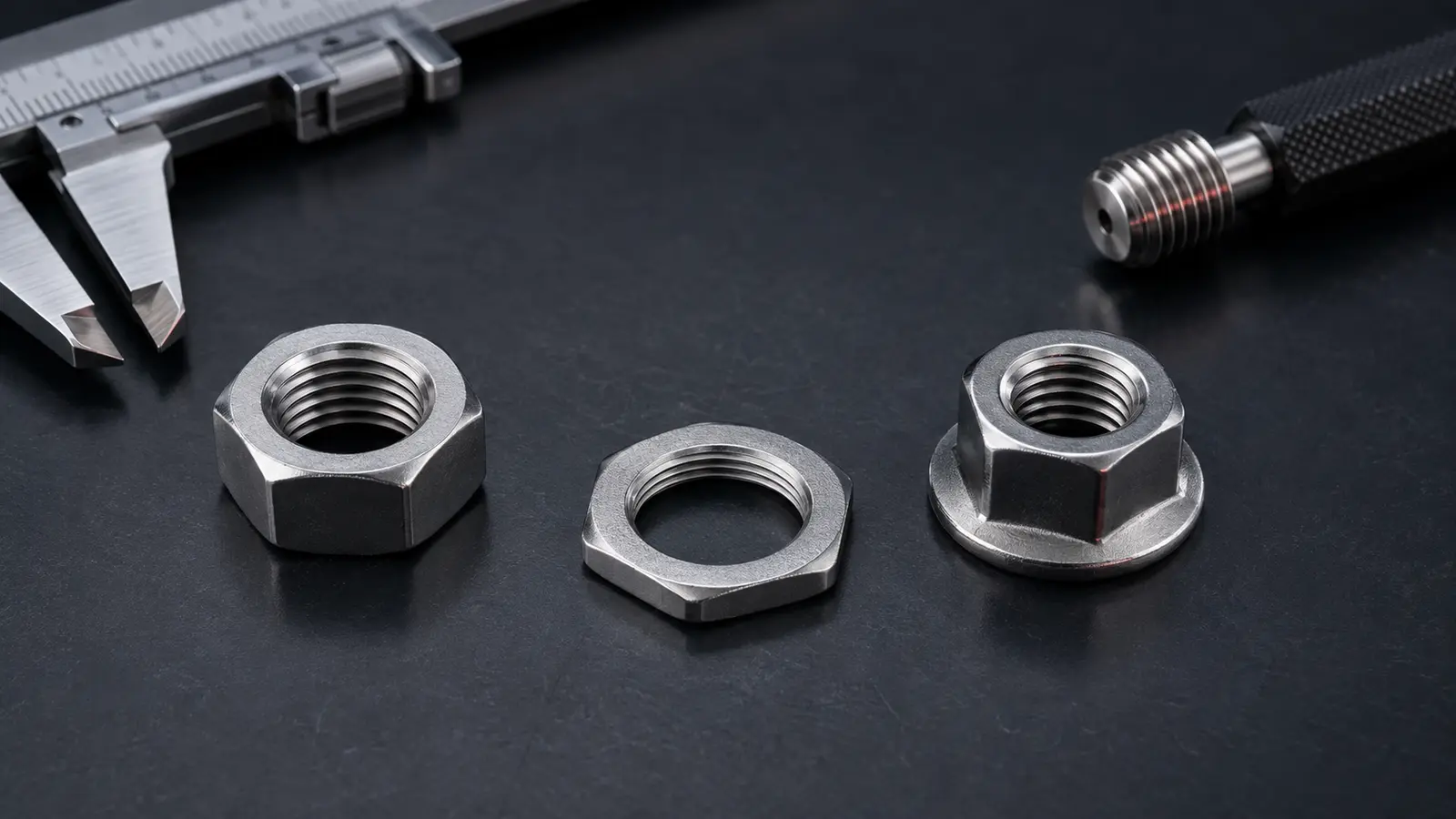
Direct Answer: Select a hex nut by the exact standard number and edition, thread diameter and pitch, nut style, property class, material, finish, mating bolt and acceptance method. “Chinese standard” or “German standard” alone is not a complete specification. Regular, thick, thin and flange nuts can differ in geometry and load behavior, so buyers should compare controlled dimensions and assembly requirements before approving a sample.
A nut can look correct in a sample tray and still cause trouble on the assembly line. Across-flats size, height, thread fit, washer arrangement, coating thickness and proof-load requirements all influence whether a nut fits the joint and whether incoming inspection can accept it. The practical task is therefore not to choose a national label. It is to convert the assembly into one unambiguous purchase specification.
Why Is the Standard Name Not Enough for a Purchase Order?
Standards are identifiers, not interchangeable descriptions. A drawing that says only “DIN nut,” “GB nut” or “standard hex nut” leaves the supplier to infer the document number, edition, dimensional series and performance requirement. That inference may be different from the buyer’s existing bolt, socket, washer or inspection gauge.
Start by separating four questions: Which document controls the geometry? Which requirement controls mechanical properties? Which thread system and tolerance apply? Which surface condition is required after manufacture? The answers should appear on the drawing, purchase order and inspection plan in the same language.
Wotu’s industrial nut range includes several hex nut forms, but a category name should never replace the project specification. Even when two products share a nominal thread such as M12, the buyer still needs to confirm pitch, nut height, width across flats, chamfer or flange form, property class and finish.
Which Nut Style Fits the Joint Function?
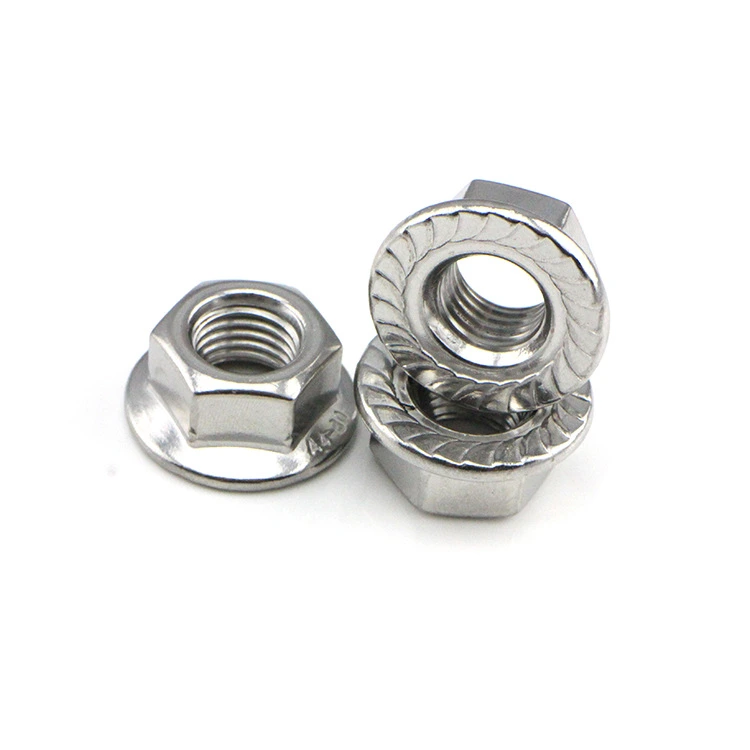
Regular hex nuts are the starting point for many general bolted joints because their geometry and load capability are defined as a normal nut style. They are not automatically suitable for every bolt grade or every space envelope. The mating bolt, required thread engagement and governing standard still decide the combination.
Thick or high nuts provide greater nut height, but greater height should not be treated as a universal strength upgrade. The selected standard, property class, material and heat treatment determine the actual performance. A nonstandard thickened nut also changes protrusion, tool access and package weight. Buyers should request a controlled drawing when “thick” is a project-specific dimension rather than a named standard style.
Thin nuts reduce axial space and may be used in locking arrangements with another nut. Their reduced height also means reduced loadability compared with a regular or high nut of comparable thread size. A thin nut should not silently replace a regular load-bearing nut because the envelope is tight. The hex thin nut product range is relevant when thickness, pitch and mating arrangement are deliberately specified.
Flange nuts add an integral bearing flange. The flange can distribute contact over a broader area and may simplify an assembly that would otherwise use a separate washer, but it changes the bearing surface, clearance and tightening interface. A flange nut is not a drop-in substitute where the drawing, washer stack, contact material or available diameter was designed for a regular nut. Buyers comparing Chinese-standard options can review the GB/T 6177.1 hex flange nut configuration as one defined product route.
How Should Buyers Compare Chinese and German Standard Options?
Put the two requested standards side by side at drawing level. Do not compare only nominal diameter. Check the exact edition required by the project because legacy drawings and current procurement documents may refer to different revisions. Where the buyer is replacing an existing part, measure the approved part and compare those results with the governing drawing rather than relying on a catalog photograph.
| Decision item |
What the buyer should freeze |
Risk if left open |
Useful evidence |
| Standard basis |
Exact standard number, edition and nut style |
Different geometry supplied under a broad family name |
Controlled drawing and order code |
| Thread |
Nominal diameter, pitch, direction and tolerance |
Nut starts but binds, strips or fails gauge inspection |
Thread gauge plan and mating-bolt check |
| Envelope |
Nut height, across-flats dimension, flange diameter and clearance |
Socket interference or insufficient installation space |
Dimensional report and assembly trial |
| Mechanical requirement |
Material and property class compatible with the joint design |
Unverified bolt-nut combination or thread stripping risk |
Required certificate and agreed test record |
| Surface condition |
Finish, coating requirement and post-coating thread acceptance |
Fit changes, mixed appearance or inadequate environmental suitability |
Finish declaration, thickness method and functional gauge result |
| Lot acceptance |
Sampling, critical dimensions, tests and traceability fields |
Disputes after arrival because “pass” was never defined |
Approved inspection plan and lot documents |
The DIN 934 hex nut product page and the Chinese and German standard hex nut range can help buyers identify available product routes. The final order, however, should state the exact standard and acceptance criteria rather than combine several alternatives in one line item.
Which Specifications Most Often Cause Supplier–Buyer Mismatches?
Thread pitch is omitted. A nominal metric diameter does not always identify a unique pitch. If fine and coarse threads are both possible, the pitch belongs in the purchase description and on the drawing. A physical mating-bolt sample can support validation, but it should not be the only definition.
“Thick nut” is used as an informal name. Different teams may use “thick,” “high,” “heavy” or “thickened” for different geometries. Specify the standard style or provide the nut height and other controlled dimensions. Otherwise a supplier may quote a technically plausible part that cannot enter the buyer’s socket or recess.
Finish is selected independently from fit. Coating is not only a color choice. The coating system and its thickness can affect threads and bearing surfaces. State whether dimensions and functional thread acceptance apply before or after coating, and define any lubrication or torque validation required by the application owner.
Nut class is copied from the bolt without checking the governing rule. The correct pairing should be determined from the applicable design and mechanical-property standard, not from visual similarity or an assumption that matching numbers always mean compatibility.
Sample approval covers appearance only. A golden sample is useful for finish and workmanship, but it cannot replace gauges, dimensional records or agreed mechanical tests. The buyer should identify critical-to-function characteristics before the sample is made.
Packaging creates mixed-lot risk. Similar-looking regular, thin and flange nuts can be confused after bulk packing. Labels should make the part number, standard, size, pitch, finish, quantity and lot identity easy to reconcile with the packing list.
What Should the Buyer Verify on Samples and Production Lots?
Sample verification should reproduce the intended assembly, not merely confirm that the nut turns on one loose bolt. Check hand-start behavior, functional thread gauging, wrench or socket access, contact with the washer or flange surface, required thread protrusion and any interference with nearby components. If tightening behavior is safety- or performance-critical, the project engineer should define a representative joint test using the actual mating materials and installation method.
For mass production, convert that learning into an inspection plan. Mark each characteristic as supplier-controlled, buyer-inspected or validated by the application owner. State the sampling rule and document format before production. When a result is outside the agreed limit, the disposition path should identify whether the lot is held, sorted, reworked or rejected. This avoids negotiating acceptance after goods arrive.
A useful pre-shipment file may include the purchase specification, approved drawing, lot identification, dimensional results, functional gauge status, agreed material or mechanical-property documentation and packaging photographs. The exact package depends on the order; buyers should request only the evidence needed to support their acceptance plan.
How Do Cost Decisions Change Across Nut Styles?
The lowest piece price is not always the lowest installed cost. A flange nut may remove a separate washer in an approved joint, but only if the bearing interface and assembly method permit that change. A thin nut may solve a space problem, yet it may require a second nut or a different locking strategy. A custom thick nut may match an old assembly, while a standard part could reduce sourcing complexity if the design can be formally updated.
Compare the complete joint and process: component count, installation time, tool access, inspection steps, risk of line-side mixing, packaging, replacement availability and engineering approval. Any redesign should be validated by the responsible engineer. Procurement can expose the trade-off, but should not authorize a functional substitution solely to reduce unit price.
Representative Scenario: Replacing a Mixed Nut Specification
Representative scenario — not a claimed customer case.
Business Background: A steel-component distributor receives one RFQ line described as “M16 DIN/GB thick nut, galvanized.” The end user also sends a regular hex nut from an older assembly.
Problem: Quotations are not comparable. Some suppliers price a regular DIN-style nut, others a GB-style thickened nut, and the proposed coatings differ.
Cause: The RFQ combines two standards, an informal style name and a generic finish without defining height, pitch, property class or post-coating thread acceptance.
Solution: The distributor asks the end user to approve one standard and edition or a controlled drawing. The revised RFQ states the nut height, across-flats dimension, thread pitch, material/property requirement, coating specification, functional gauge requirement and packaging label. One assembly sample is checked with the actual bolt and installation socket before the production lot is released.
Buyer Decision Value: The revised specification turns several plausible quotations into comparable offers and reduces the chance of receiving a nut that is dimensionally valid but unusable in the existing joint.
What Information Should a Hex Nut RFQ Include?
- Exact standard number and edition, or an approved drawing with revision level
- Nut style: regular, high or thick, thin, flange, or a defined custom form
- Nominal thread diameter, pitch, direction and tolerance requirement
- Material and property class required by the joint design
- Surface finish, coating requirement, color if relevant and post-coating acceptance method
- Mating bolt standard, grade, finish and any washer or bearing-surface arrangement
- Critical dimensions, test requirements, sampling plan and documents required with the lot
- Order quantity, packing unit, label fields, pallet requirement and private-label requirement if applicable
When these details are not yet fixed, send the application drawing and current mating hardware for a specification review. Wotu supports bulk fastener supply by standard, material, coating, size and packaging. Buyers can use the fastener RFQ contact channel to submit the controlled information needed for a comparable quotation.
Frequently Asked Questions About Hex Nut Selection
Can a DIN hex nut replace a GB hex nut with the same metric thread?
Not automatically. Confirm the exact standards and editions, thread pitch, dimensions, property class, finish and assembly clearance. The same nominal diameter does not prove complete interchangeability.
When should a buyer specify a thin nut?
A thin nut can fit a restricted axial envelope or serve in a defined locking arrangement. Because thin nuts have reduced loadability compared with regular or high nuts, the joint designer should approve their role.
Does a thicker nut always provide a stronger joint?
No. Nut height is only one variable. Material, property class, thread engagement, mating bolt, manufacturing quality and the applicable standard determine the verified performance.
Can a flange nut replace a nut and washer?
Only after the bearing area, contact material, clearance, tightening method and joint requirements are checked. The flange changes the interface and may not reproduce the function of the original washer.
Should coated nuts be inspected before or after coating?
The purchase specification should state the required condition for dimensional and functional acceptance. Post-coating thread fit is especially important when coating thickness can influence assembly.
What is the most useful nut sample test?
A representative assembly trial with the actual mating bolt, washer arrangement and tool is highly informative. It should complement, not replace, dimensional inspection, thread gauges and any specified mechanical tests.
What must appear on bulk-pack labels?
At minimum, labels should support identification against the purchase order: part number, standard, size and pitch, finish, quantity and lot identity. Add buyer-specific fields only when agreed.