Metal vs Wood Drill Bits: Selection Guide for Custom Projects | Hebei Wotu Fastener Manufacturing Co., Ltd.

Metal vs Wood Drill Bits: Selection Guide for Custom Projects

Choosing between metal and wood drilling options is not just a tooling question when a project needs consistent specifications across batches. For a project engineer, the safer starting point is to define material use, hole requirements, finish expectations, and any brand or packaging customization before requesting samples.

This page helps you review Drill Bits For Metal Vs Wood with a risk-reduction mindset, so technical details, sample confirmation, and project consistency can be discussed clearly with the supplier.

Hot Selling Product

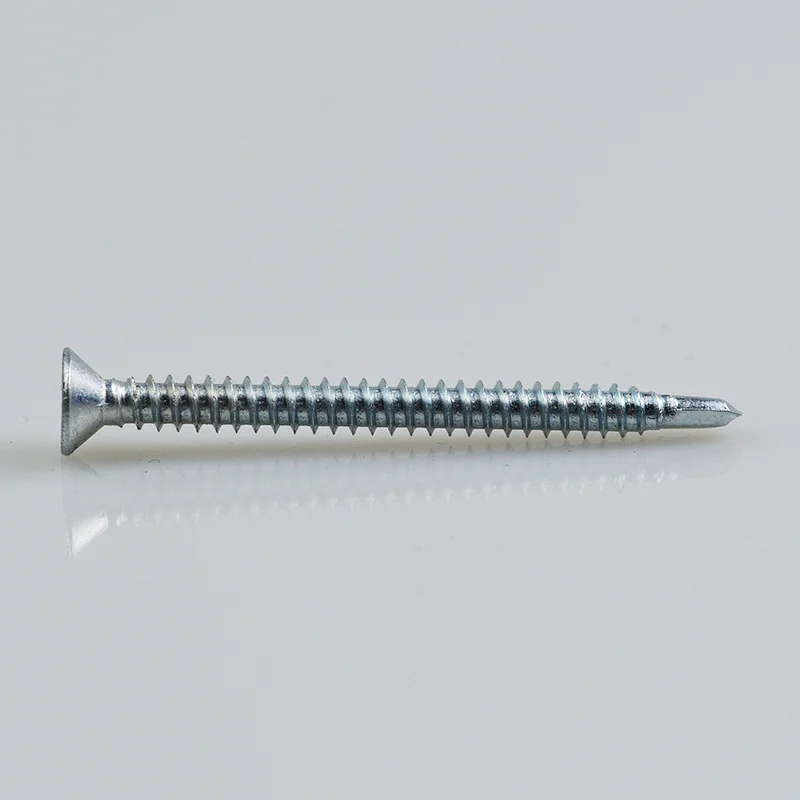
Countersunk Head Blue-White Zinc Plated Self-Drilling Screw (Chinese National Standard: Phillips Countersunk Head Self-Drilling And Self-Tapping Screw GB/T15856.2-2002)

Countersunk Head Blue-White Zinc Plated Self-Drilling Screw (Chinese National Standard: Phillips Countersunk Head Self-Drilling And Self-Tapping Screw GB/T15856.2-2002)

Brand: Hengzuan Surface: blue and white zinc plated, can be customized color zinc plated, black oxide plated Specifications: Comply with GB/T15856.2-2002 Chinese national standard, in stock ST4.2/ST4.8/ST5.5 full range of specifications, length 13mm~75mm optional, supports customized nonstandard rod lengths; drilling adaptation plate thickness 0.7~6mm Packaging: 25kg export cartons, full pallets wrapped with film, supports neutral export packaging, customer private-label customization

Read More
Blue-White Zinc Plated Winged Countersunk Head Self-Drilling Screw

Blue-White Zinc Plated Winged Countersunk Head Self-Drilling Screw

Brand: Hengzuan Surface: blue and white zinc plated, optional color zinc plated, black oxide treatment Specifications: in stock ST3.5/ST4.2/ST4.8 mainstream specifications, rod length 16~50mm full size range, supports nonstandard length customization, suitable for drilling steel sheets 2~5mm Packaging: 25kg cartons, full pallets packed on wooden pallets, support neutral packaging, private-label customization

Read More
Countersunk Head Blue Zinc Self-Drilling Screw

Countersunk Head Blue Zinc Self-Drilling Screw

Brand: Hengzuan Surface: blue and white zinc plated, can be customized color zinc plated, black oxide plated Specifications: in stock 3.5/3.9/4.2/4.8/5.5 mainstream wire diameter, rod length 13mm~75mm full size range, nonstandard length can be customized as needed Packaging: 25kg export cartons, full wooden pallets wrapped with film, supports neutral export packaging, private-label customization

Read More
Black Phosphated Winged Countersunk Head Self-Drilling Screw

Black Phosphated Winged Countersunk Head Self-Drilling Screw

Brand: Hengzuan Surface: high temperature black phosphated anti-rust treatment, blue zinc, color zinc plated coating can be replaced as needed Specifications: in stock ST3.5/ST4.2/ST4.8 common specifications, rod length 16mm~50mm, complete, supports nonstandard size customization, suitable for drilling steel sheets 2~5mm Packaging: 25kg cartons, whole wooden pallets, support neutral packaging, private-label customization

Read More

How To Compare drill bits for metal vs wood Options

Product Guide

The related product list helps you compare Drill Bits For Metal Vs Wood by actual product direction rather than keyword wording alone. Check whether each product supports custom specification confirmation, then use the table below to prepare a clearer RFQ.

Criterion What To Check Why It Matters Buyer Tip
Material match Metal or wood substrate Avoids wrong bit geometry Confirm sample material grade
Hole spec Diameter, depth, tolerance Controls fit consistency List drawings before quote
Coating need Heat, wear, corrosion risk Reduces jobsite failures Match coating to use case
Shank type Chuck and tool compatibility Prevents installation delays Verify tool model early
Brand customization Marking and packaging needs Keeps project batches traceable Approve labels with samples

How To Choose drill bits for metal vs wood Supplier

Drill Bits For Metal Vs Wood mainly differ by the material they are designed to cut, the point geometry, flute design, hardness, and expected drilling condition. Metal drilling usually requires bits suited for harder surfaces and heat control, while wood drilling often focuses on clean entry, chip removal, and reduced splitting.

For B2B sourcing, the practical answer is to confirm the application first, then match the bit type, size range, coating or finish, packaging, branding needs, sample process, and quality checks before approving a purchase order.

Begin with a specification checklist. Identify the base material, hole diameter, drilling depth, equipment type, production environment, and whether the item will be used for metal, wood, or mixed project conditions. This reduces the risk of receiving a general recommendation that does not fit the actual application.

For custom specification confirmation, share drawings, sample photos, target packaging style, logo requirements, and any market or project standards that affect the final product. If brand customization is important, ask how artwork, labeling, packaging units, and batch consistency will be confirmed before bulk production.

Request samples or pre-production confirmation when the order involves new sizes, mixed assortments, or customized packaging. Ask what technical details can be checked, such as dimensions, surface treatment, appearance, packing method, and basic inspection records.

When comparing supplier responses, look beyond the unit price. A reliable sourcing discussion should include application fit, available custom options, lead time expectations, inspection steps, after-sales communication, and how future repeat orders will stay consistent with the approved sample.

Criteria Importance Description Example Options
Material focus High Defines bit geometry and durability needs. Steel plate vs timber panel
Tip design High Affects entry accuracy and cutting behavior. Split point vs brad point
Chip removal Medium Controls heat, clogging, and hole cleanliness. Metal swarf vs wood chips
Custom marking Medium Supports brand and project identification. Logo, size, batch code
Sample checklist High Reduces mismatch before project approval. Size, shank, coating, pack

Top Product Matches

Recommended Products

Top product matches should be reviewed by fit, specification clarity, customization readiness, and how well they support buyer risk reduction. Use these factors to shortlist practical options before contacting the supplier.

Top Selling Product Selection Factors

Application fit Confirm metal vs wood use
Sample approval Check before bulk order
Specification clarity Use drawings and tolerances
Custom branding Align marking and packaging
After-sales support Clarify response process

Blog Articles / Reviews

Rust Prevention Tips for Self-Drilling Screws

Rust Prevention Tips for Self-Drilling Screws

As we all know, the simplest way to prevent self-drilling screws from rusting is to properly isolate the screws from moisture-containing and humid environments. This can be achieved through selective application of protective coatings and sealants, or by purchasing specially formulated rust-resistant or rust-proof screws. This is why many businesses and households have rust prevention […]

Oxidation Treatment Specifications for Self-Drilling Screw Fasteners

Oxidation Treatment Specifications for Self-Drilling Screw Fasteners

The surface treatment of self-drilling screws requires specific procedures. What manufacturing processes are generally used for surface treatment? Hebei Wotu Fastener Manufacturing Co., Ltd. will explain oxidation treatment below. The surface treatment of self-drilling screws requires specific procedures. What manufacturing processes are generally used for surface treatment? Hebei Wotu Fastener Manufacturing Co., Ltd. will explain […]

National Standards for Self-Drilling Screws – Fasteners

National Standards for Self-Drilling Screws – Fasteners

When using fasteners, are you familiar with the standards governing them? Today, Hebei Wotu Fastener Manufacturing Co., Ltd. will discuss the national standards for fasteners with you. Let’s take a look. 1. Standards for Fastener Product Dimensions: These specifically define the basic dimensions of the product; for threaded products, this also includes the basic dimensions […]

Wotu Discusses Improving Installation Techniques for Self-Drilling Screws

Wotu Discusses Improving Installation Techniques for Self-Drilling Screws

As we all know, self-drilling screws are now widely used in various fields, such as construction, road construction, power construction, factory construction, and equipment fixing. Since they are pre-embedded in concrete structures and are considered pre-installed fasteners, the technical quality of this concealed project is particularly important. Over the years, these manufacturers have gradually established […]

A manufacturer of hexagonal self-drilling screws discusses their performance standards.

A manufacturer of hexagonal self-drilling screws discusses their performance standards.

Hebei Wotu Fastener Manufacturing Co., Ltd., founded in the 1990s, is located in Yongnian District, Handan City, Hebei Province, known as the “Hometown of Fasteners.” 1. Core Hardness: Standard: HRC32-40. Our products are measured at HRC31.7-39.0. 2. Surface Hardness: Standard: HV600-700. Our products are measured at approximately HV620. 3. Hardened Layer: 4#-6#: 0.05-0.18mm; 8#-12#: 0.10-0.23mm; […]

Recent buyer-style feedback can help you frame practical questions about samples, application fit, technical details, customization, and after-sales support before sending a formal inquiry.

Morgan L. Pierce July 21, 2026
I used the tag page to separate metal drilling needs from wood work before sending our maintenance team a cleaner sourcing note.
Riley K. Morgan July 12, 2026
The drill bits for metal vs wood topic helped me frame questions about bit type, material contact, and job conditions without overloading the inquiry.
Avery P. Collins June 27, 2026
I referenced this page while comparing shop tooling notes, and it clarified why our metal and wood drilling requests should not be combined.
Jordan M. Ellis June 18, 2026
This gave me practical language for explaining whether our project involved steel fixtures or timber components when discussing drill bit requirements.

Frequently Asked Questions

How should a project engineer compare Drill Bits For Metal Vs Wood before confirming samples?

Start with the base material, hole diameter, depth, tolerance, and tool type. Metal bits usually need stronger cutting geometry and heat control, while wood bits prioritize chip clearance and clean edges.

What sample details should be requested for Drill Bits For Metal Vs Wood in a custom specification review?

Request drawings or size lists, shank type, coating or surface treatment, flute design, point angle, packaging layout, and marking requirements. These details help align samples with project documentation and brand customization needs.

Which technical differences matter most when selecting Drill Bits For Metal Vs Wood for one project?

Key differences include tip design, hardness, flute shape, and heat resistance. Metal drilling requires durability against friction, while wood drilling needs fast chip removal and reduced tear-out around the entry and exit holes.

How can quality checks reduce risk when comparing Drill Bits For Metal Vs Wood?

Quality checks may review dimensions, surface finish, marking accuracy, shank consistency, and drilling performance on the intended material. For custom projects, checking sample consistency before batch confirmation helps avoid mismatched site or kit requirements.

When are customized Drill Bits For Metal Vs Wood useful for brand consistency?

Customization is useful when a project requires consistent packaging, logo marking, kit configuration, or specific size combinations. It helps engineers match tools with installation procedures, maintenance kits, or branded project supply packages.

What after-sales information should be clarified for Drill Bits For Metal Vs Wood?

Clarify how technical feedback, nonconforming sample review, replacement discussion, and specification updates are handled. This supports project continuity if application conditions change or if field users report performance differences between materials.

Leave Your Message

Send your material type, size requirements, quantity range, branding needs, packaging expectations, and sample request details so the supplier can review your project more accurately.