Self Drilling And Self Tapping Screws Selection Guide | Hebei Wotu Fastener Manufacturing Co., Ltd.

Self-Drilling and Self-Tapping Screws

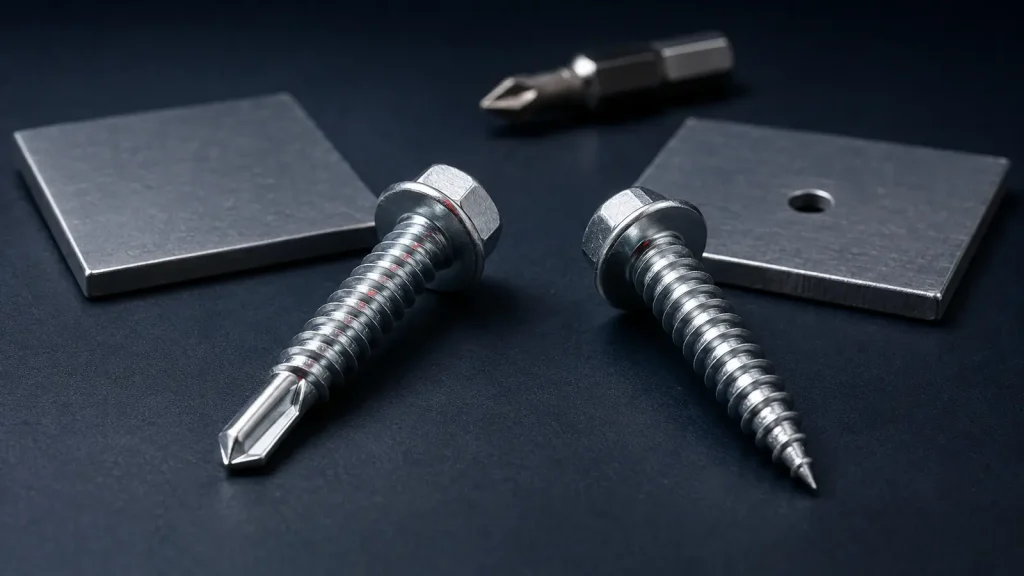
Self drilling and self tapping screws are often considered together, but they solve different assembly problems. The main decision is whether the fastener must create its own hole in the material or only form threads in a prepared hole.

For metal panels, frames, brackets, roofing sheets, timber connections, and pre-drilled assemblies, the right choice affects installation speed, thread holding, surface damage, and rework. The material stack-up, hole condition, head style, point type, coating, and required clamping all matter before a buyer confirms an order.

Related Products

Countersunk Head Blue-White Zinc Plated Self-Drilling Screw (Chinese National Standard: Phillips Countersunk Head Self-Drilling And Self-Tapping Screw GB/T15856.2-2002)

Countersunk Head Blue-White Zinc Plated Self-Drilling Screw (Chinese National Standard: Phillips Countersunk Head Self-Drilling And Self-Tapping Screw GB/T15856.2-2002)

Brand: Hengzuan Surface: blue and white zinc plated, can be customized color zinc plated, black oxide plated Specifications: Comply with GB/T15856.2-2002 Chinese national standard, in stock ST4.2/ST4.8/ST5.5 full range of specifications, length 13mm~75mm optional, supports customized nonstandard rod lengths; drilling adaptation plate thickness 0.7~6mm Packaging: 25kg export cartons, full pallets wrapped with film, supports neutral export packaging, customer private-label customization

Read More
Blue-White Zinc Plated Pan Head With Pad Self-Tapping Screw

Blue-White Zinc Plated Pan Head With Pad Self-Tapping Screw

Brand: Hengzuan Surface: blue and white zinc plated Specifications: in stock ST4.2/ST4.8full range of specifications, length 13~50mm in stock, support nonstandard length customization Packaging: 25kg cartons, solid wood packaging, support neutral packaging, private-label customization

Read More
Blue-White Zinc Plated Winged Countersunk Head Self-Drilling Screw

Blue-White Zinc Plated Winged Countersunk Head Self-Drilling Screw

Brand: Hengzuan Surface: blue and white zinc plated, optional color zinc plated, black oxide treatment Specifications: in stock ST3.5/ST4.2/ST4.8 mainstream specifications, rod length 16~50mm full size range, supports nonstandard length customization, suitable for drilling steel sheets 2~5mm Packaging: 25kg cartons, full pallets packed on wooden pallets, support neutral packaging, private-label customization

Read More
Hex Head Self-Drilling Screw With Bonded Washer

Hex Head Self-Drilling Screw With Bonded Washer

Brand: Hengzuan Surface: blue and white zinc plated, color zinc plated can be customized on request Specifications: in stock 4.2/4.8/5.5/6.3mm mainstream wire diameter, length 20mm~165mm full range of specifications, nonstandard rod length, drill point size can be customized Packaging: 25kg export cartons, full pallets wrapped with film, supports neutral export packaging, customer private-label customization

Read More
Wafer Head Self-Drilling Screw

Wafer Head Self-Drilling Screw

Brand: Hengzuan Surface: blue and white zinc plated, can be customized color zinc plated, black oxide plated Specifications: Comply with GB/T15856.2 Chinese national standard, in stock ST3.5/ST4.2/ST4.8/ST5.5 mainstream wire diameter, rod length 13mm~50mm full range of specifications, nonstandard length customization on demand, drilling applicable plate thickness 2~5mm Packaging: 25kg export cartons, full pallets wrapped with film, supports neutral export packaging, private-label customization

Read More

Choosing screws by hole condition, material, and joint design

Selection criteria

Useful selection starts with the assembly conditions: base material, total thickness, pilot-hole requirement, head clearance, installation tool, and corrosion exposure. These details are more important than choosing a generic screw name because they determine whether the fastener can drill, tap, clamp, and remain secure in service.

Criterion What To Check Why It Matters Buyer Tip
Drilling point versus tapping thread Confirm whether the screw must drill its own hole or only form threads in an existing hole. Self-drilling screws reduce a separate drilling step, while self-tapping screws still need the correct pilot hole in many assemblies. Ask: Is the joint going into un-drilled metal, or will the hole be punched or drilled before fastening?
Base material and stack-up List every layer the screw passes through, including metal sheet, wood, plastic, bracket, washer, or panel coating. The point style, thread form, and length must suit the full grip thickness, not just the top material. Ask: What are the materials and thicknesses from the screw head side to the final engaged layer?
Pilot hole and thread engagement For self-tapping screws, define the pilot hole size and the minimum thread engagement needed in the receiving material. A hole that is too large can strip; a hole that is too small can split material, distort threads, or increase driving torque. Ask: What pilot hole diameter will be used, and how many threads need full engagement in the base material?
Head style and drive access Match the head shape and drive recess to the tool, clearance, and required bearing surface. Hex washer heads suit high tool contact and exposed fastening; pan, wafer, or countersunk heads may fit panels or flush surfaces better. Ask: Will the screw be installed with an impact driver, socket, or bit, and does the head need to sit flush?
Finish and service environment Specify indoor, outdoor, damp, corrosive, or dissimilar-metal contact conditions before choosing a coating or material. The wrong finish can lead to early corrosion or staining, while over-specifying may add cost without improving the joint. Ask: What environment will the fastener see after installation, and is corrosion appearance or structural holding more critical?

Key decisions before specifying self drilling or self tapping screws

A self drilling screw has a drill-shaped point that cuts the hole and forms the thread in one operation. It is usually chosen for metal-to-metal or metal-to-light-gauge applications where reducing drilling steps is important. A self tapping screw forms or cuts threads after a hole already exists, so the pilot hole size and material thickness become part of the fastening design.

The practical difference matters because a wrong match can strip the thread, leave weak engagement, break the point, or slow installation. If the material is already punched, drilled, or molded, a self tapping screw may give better control. If the job site or production line needs fastening without a separate drilling step, a self drilling screw may be the better starting point.

Start with the joint, not the screw name. Confirm the materials being joined, their thickness, and whether the screw passes through one layer before gripping another. Thin sheet, structural steel, timber, plastic, and sandwich panels do not behave the same, and the wrong point or thread form can either fail to bite or damage the receiving material.

Decide how the hole will be made. Self drilling screws can reduce operations, but the drilling point must suit the substrate and depth of the stack. Self tapping screws depend on the pilot hole, so an oversized hole weakens thread engagement while an undersized hole can increase driving torque or cause breakage. For repeat production, define the hole process clearly instead of leaving it to operators.

Match the head, drive, washer, and surface finish to the application. Hex washer heads are common where installers need high drive control; countersunk heads suit flush surfaces; pan or wafer heads may fit lighter assemblies. For exposed, damp, painted, or outdoor environments, ask which coating is appropriate for the base material and the contact metals involved.

Avoid ordering by length alone. Buyers should specify diameter or gauge, length, head style, drive type, point type, thread style, material, finish, and packing requirement. For an inquiry to Hebei Wotu Fastener Manufacturing Co., Ltd., share drawings, photos, or a sample description and confirm whether the screw is expected to drill its own hole or fasten into a prepared one.


Criteria Importance Description Example Options
Hole condition Usually the first decision Self drilling screws are selected when the fastener must make its own hole. Self tapping screws are selected when a hole already exists and the screw must form or cut the thread. A metal sheet fixed to an undrilled steel support may call for a self drilling screw; a punched bracket may suit a self tapping screw.
Material stack-up and thickness Critical for point selection and thread engagement The fastener must pass through the top layer and grip the receiving layer securely. Total thickness, base material, and unsupported gaps all affect the correct screw type. Thin sheet over a light metal frame is a different fastening problem from a timber connection or a thick pre-drilled steel part.
Installation speed versus control Depends on site or production priorities Self drilling screws can reduce operations by combining drilling and fastening. Pre-drilling with self tapping screws can improve hole placement and consistency where alignment is important. Field installation may favor fewer steps, while a repeat production line may prefer prepared holes for controlled assembly.
Head, drive, and washer style Important for clamping, access, and finished appearance The head and drive affect tool engagement, surface clearance, sealing, and how the load is spread. The choice should fit the assembly rather than follow a generic screw name. A hex washer head may be useful for strong tool engagement, while a countersunk head may be chosen where a flush surface is needed.
Finish and service environment Important where moisture, coating compatibility, or appearance matters Surface finish should be matched to the base material, exposure conditions, and any contact with other metals or coatings. Buyers should confirm the intended environment before finalizing the specification. An indoor bracket and an exposed roofing or cladding application may need different finish considerations.

Product Selection

Related Options

For a roofing sheet, cladding panel, metal frame, or pre-drilled bracket, the priority may be fast installation, controlled thread engagement, a sealed washer, or a low-profile head. Compare screw options against the actual joint and installation method rather than treating self drilling and self tapping screws as interchangeable.

Blog Articles / Reviews

What Is the Difference Between Self Drilling and Self Tapping Screws?

What Is the Difference Between Self Drilling and Self Tapping Screws?

Direct Answer: A self-drilling screw has a drill-shaped point that creates a hole and then forms mating threads in a suitable material. A self-tapping screw forms or cuts mating threads but may require a correctly sized pilot hole. Selection depends on substrate type and thickness, joint stack, point geometry, installation tool, finish and application testing—not […]

National Standards for Self-Drilling Screws – Fasteners

National Standards for Self-Drilling Screws – Fasteners

When using fasteners, are you familiar with the standards governing them? Today, Hebei Wotu Fastener Manufacturing Co., Ltd. will discuss the national standards for fasteners with you. Let’s take a look. 1. Standards for Fastener Product Dimensions: These specifically define the basic dimensions of the product; for threaded products, this also includes the basic dimensions […]

The Concept of Hexagonal Self-Drilling Screws and High-Pressure Standard Parts

The Concept of Hexagonal Self-Drilling Screws and High-Pressure Standard Parts

Hexagonal self-drilling screws, manufactured by Hebei Wotu Fastener Manufacturing Co., Ltd., operate under a modern enterprise system and strictly manage according to the ISO9001:2015 quality system. The company uses “Wotu” as its registered trademark. The term “standard parts” in China is a shorthand for “standard fasteners,” a narrow definition. High- and medium-pressure standard parts refer […]

Frequently Asked Questions

Which screw type is better for fastening metal sheet to a steel frame?

A self drilling screw is often the practical choice if the hole is not already made, because the drill point can cut through the sheet and into the frame before forming the thread. The point length and drilling capacity still need to match the total thickness, otherwise installation can be slow or the point can fail before the thread engages.

Can a self tapping screw be used without a pilot hole?

Usually no. A self tapping screw is designed to form or cut threads in an existing hole, so the pilot hole diameter is part of the joint design. If the hole is missing, too small, or too large, the result can be high driving torque, stripped threads, poor holding, or cracked material.

Is self drilling always faster than self tapping?

Not always. Self drilling can save a separate drilling step, but it may not be faster if the material is thick, hard, already punched, or better controlled with a prepared hole. In production, a pre-drilled or punched hole with a self tapping screw can give more consistent alignment and thread engagement.

What details should be provided before asking for a quote?

Provide the materials being joined, total material thickness, whether the hole is pre-drilled, required screw length and diameter if known, head and drive style, surface finish, washer requirement, and packing preference. A drawing, photo, or sample description helps avoid confusion between a drilling point and a tapping thread.

What is a common mistake when choosing these fasteners?

A common mistake is choosing only by length and ignoring the hole condition, point style, and receiving material thickness. A screw can be long enough but still fail if the drill point is too short, the pilot hole is wrong, or the thread does not fully engage the base material.

Leave Your Message

Send the material being fastened, total thickness or drawing, and whether the hole is pre-drilled or must be made by the screw. Include the preferred head style, finish, and packing requirement if already known.