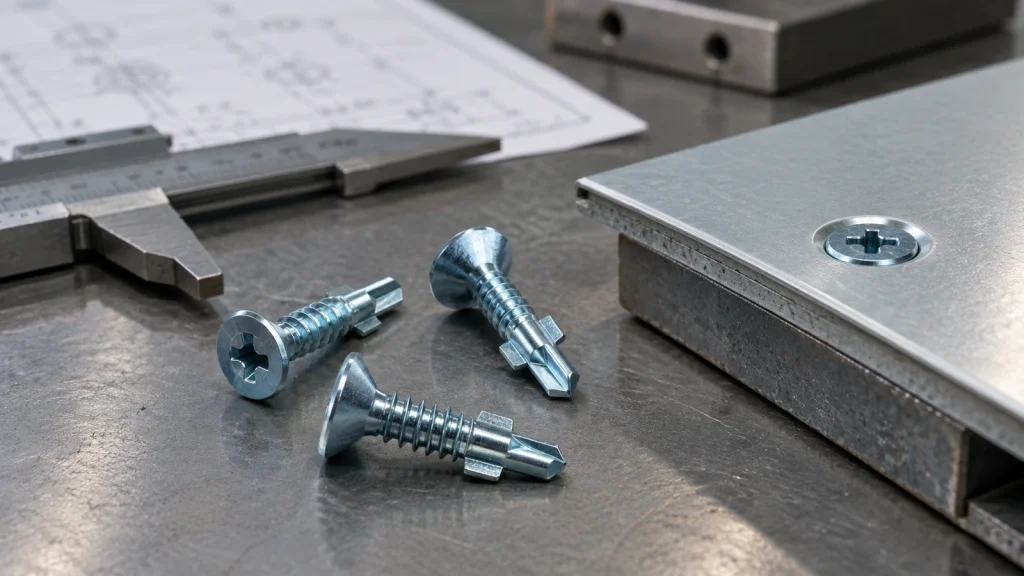
The practical distinction is between self-drilling screws and self-tapping screws. Self-drilling screws have a drill point that creates the hole and forms the mating thread in one operation. Self-tapping screws form or cut threads but usually need a prepared hole, especially in metal. Choosing the wrong type can slow the job, damage panels, or leave weak engagement.
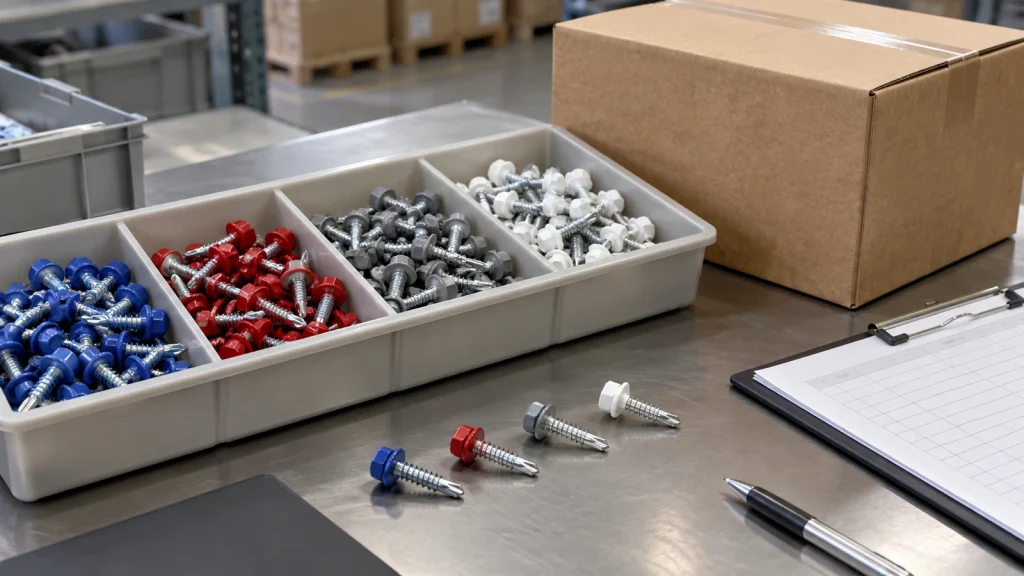
Head style also matters. Hex washer heads are common where installers need strong drive contact and sealing washer options. Winged self-drilling screws are often considered for fastening wood to metal because the wings clear the wood before the point drills the steel. Colored nylon or coated heads may be chosen for visible roofing or cladding, but the buyer should confirm color match, coating, washer type, and environmental exposure before ordering.
Start with the material stack, not the screw name. Confirm what the screw must pass through first, what it must finally thread into, and whether the joint is metal-to-metal, wood-to-metal, or panel-to-frame. The drill point must suit the base material, while the thread length must give reliable engagement without leaving an unthreaded section in the wrong place.
Match the head and washer to the application. A hex washer head gives positive driving and is common for roofing and sheet metal work. A sealing washer can help where weather exposure is part of the job, but washer material and seating pressure need to suit the panel surface. For visible assemblies, color-coated or nylon head options should be checked for finish consistency and installation durability.
Coating choice is a trade-off between appearance, corrosion resistance, handling, and cost. Zinc-plated, Dacromet-style, painted, and other finishes may be discussed for different environments, but the best choice depends on indoor or outdoor use, contact with moisture, and the surrounding materials. Avoid choosing only by surface color; ask what corrosion protection and finish control are actually being supplied.
A useful next step is to send the screw size or target hole/fastening requirement, base material, total material thickness, head style, coating or color requirement, and expected application environment. If the inquiry is really for an installation tool rather than fasteners, say so clearly so the response can focus on driver compatibility instead of screw selection.