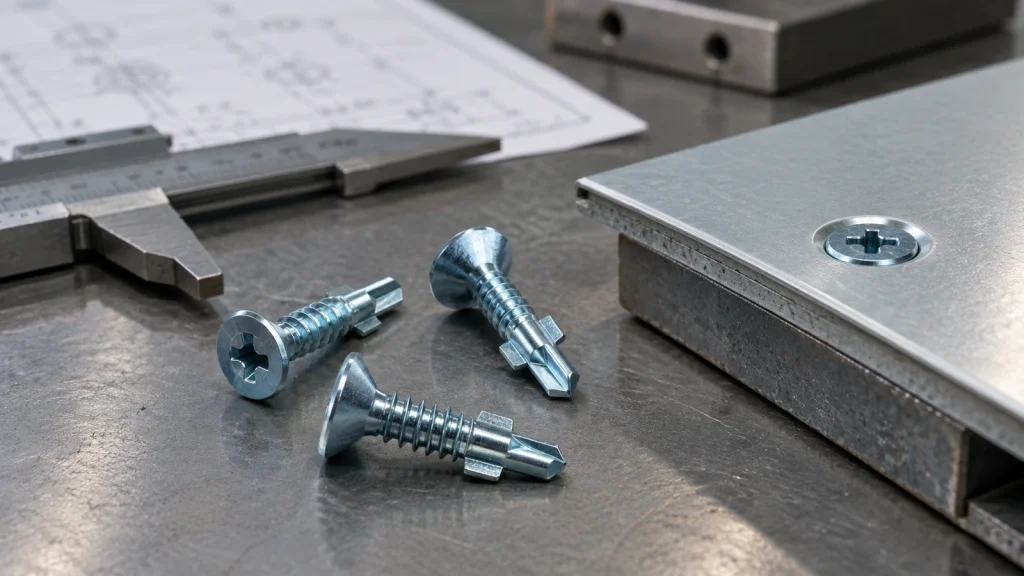
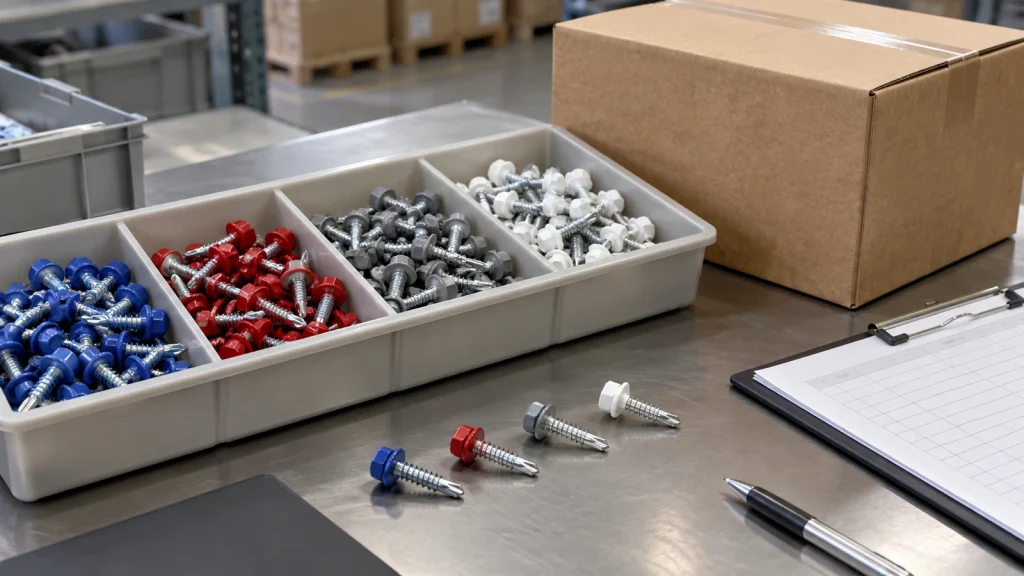
| Material stack and point style |
Critical because the point must start reliably through the hardest layer without causing poor engagement in the wood. |
Identify whether the screw passes through wood only, wood and sheet metal, or a clearance layer before entering the base material. A heavier drill point may help with metal, while a sharper or less aggressive point may be preferable for wood-only work. |
A wood-to-light-gauge-metal assembly may need a point suited to the metal layer and threads that still clamp the wood. |
| Thread form and engagement |
High because thread geometry affects pull-in, holding power, splitting risk, and performance in different wood types. |
Match the thread to softwood, hardwood, board, or a mixed-material assembly. Avoid assuming that a screw that drives quickly will provide the best grip or clamp in every timber or panel. |
Coarser threads may suit softer wood, while a denser material may require a different thread choice or a prepared hole. |
| Head and drive |
High because the head controls seating and the drive affects installation control and rework. |
Select a head that fits the required surface finish and clamping action, then pair it with a drive recess compatible with the installation tool. A mismatched drive can slip, damage the recess, or leave the head poorly seated. |
A countersunk or bugle head may be considered for board or timber surfaces, while a hex head may suit socket-driven fastening. |
| Coating and service environment |
Important because moisture, outdoor exposure, treated timber, and contact with other metals can change the corrosion risk. |
Specify the intended environment and the materials in contact with the screw before choosing a coating or finish. Indoor dry use and exterior or humid applications should not be treated as the same requirement. |
A fastener for exterior timber needs a coating discussion that would be less central for a dry indoor assembly. |
| Installation and order details |
Important because tool access, clearance, length, packing, and repeatability affect the total installation result. |
Confirm the screw length and diameter range, the thickness of each layer, the installation tool, preferred drive, finish, and packing format. A trial fit can reveal excessive pull-through, splitting, poor clamping, or an unsuitable point before a larger order. |
For repeated panel assembly, specify the material stack and tool type rather than ordering a general-purpose size based only on overall length. |