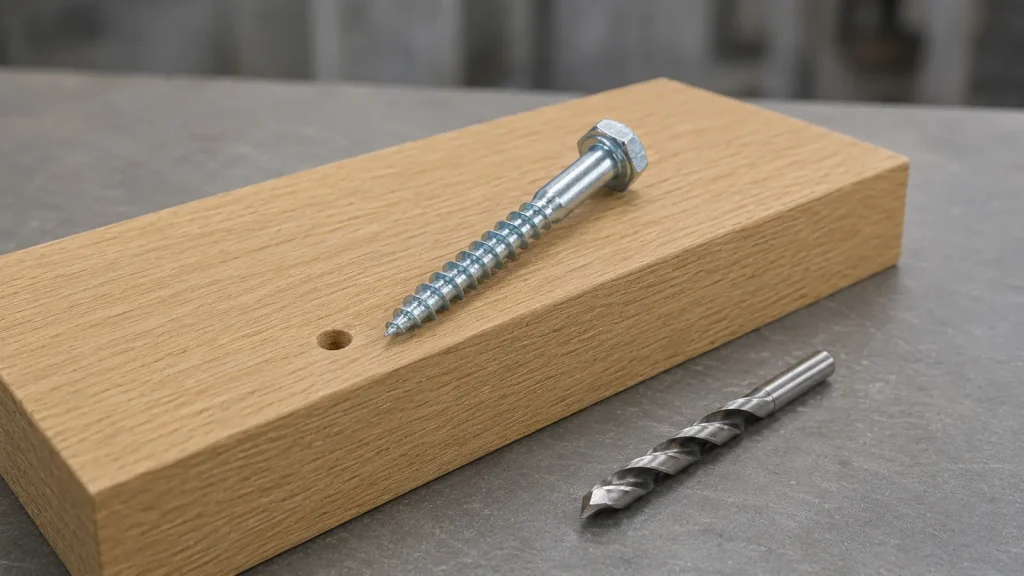
The main distinction is between bits that remove material along an axis and bits that cut while moving across the workpiece. Drill and boring bits create holes, while router bits form edges, slots, rebates, and decorative profiles. Choosing the wrong type can produce poor surface quality, inaccurate dimensions, or a tool that does not fit the machine.
Material also matters. Solid hardwood, softwood, plywood, MDF, and laminated board can place different demands on the cutting edge. A bit intended for one material may not provide the same cut quality or service life in another, so confirm the recommended application before ordering.
Start with the operation. State whether the bit will drill a through-hole, make a blind hole, cut a groove, trim an edge, or create a profile. For drilling, hole diameter and depth are central; for routing, the profile, cutting depth, and required finish matter more.
Match the machine connection. Confirm the tool type, chuck or collet arrangement, shank form, and available clearance. A bit with the wrong shank or overall length is not a practical substitute, even if its cutting diameter appears suitable.
Choose the cutting material and geometry for the workpiece. Ask whether the bit is intended for softwood, hardwood, plywood, MDF, coated panels, or mixed production. Tooth form, flute design, edge sharpness, and any coating affect chip removal, tear-out, heat, and expected edge life. Do not assume that a general-purpose wood bit is suitable for abrasive boards or laminated surfaces.
Freeze the application details before requesting a quotation. Send the workpiece material, operation, required cut or hole, machine connection, and expected order pattern. Ask the supplier to confirm the bit type, compatible machine, available material or coating options, and any recommended operating guidance for that application.