The main distinction is between the sheet price and the installed roof cost. A supplier may quote per sheet, per square area or by weight, but the roof still needs overlaps, ridge and edge details, wastage, screws, washers and delivery handling for 12 feet lengths.
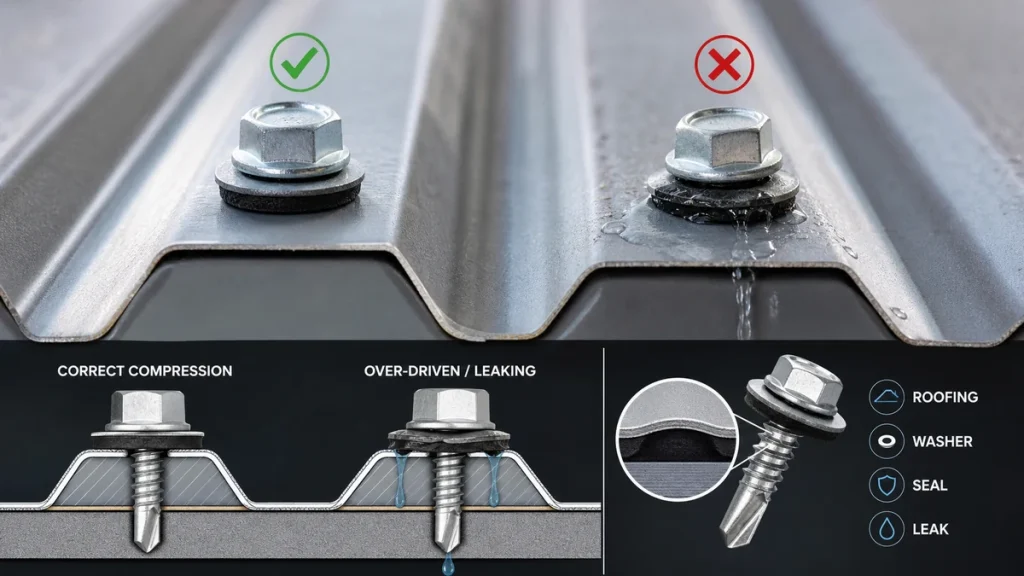
For metal roofing, the screw specification matters because steel purlins and timber supports need different thread designs. Washer quality, drilling point, screw length and corrosion protection can influence leakage risk and service life, so they should be checked alongside the roofing sheet quote rather than added as an afterthought.
Start with the roof build-up, not just the sheet length. Confirm the sheet profile, material, coating finish, thickness, color requirement and effective cover width after side laps. Two sheets with the same 12 feet length can cover different areas and need different fixing positions.
Check the support structure before selecting screws. Metal panels fixed to steel purlins usually need self-drilling or self-tapping screws matched to steel thickness, while timber fixing needs a thread that holds securely in wood. Using the wrong screw type can cause poor grip, over-driving, washer damage or leaks.
Ask how the quote handles accessories and waste. End laps, side laps, roof pitch, wind exposure, ridge caps, flashings and edge trims all affect the actual quantity. A mistake many buyers make is comparing only the visible sheet price while ignoring the fasteners and accessories required to finish the roof.
A practical next step is to send the roof size, sheet profile, support material and installation environment with the inquiry. If corrosion resistance, coastal exposure or heavy rain is a concern, mention it early so the screw coating and washer choice can be discussed before ordering.