Difference Between Metal Drill Bit And Wood Drill Bit Sourcing | Hebei Wotu Fastener Manufacturing Co., Ltd.

Difference Between Metal Drill Bit And Wood Drill Bit

Use this page to evaluate Difference Between Metal Drill Bit And Wood Drill Bit from the perspective of new product line development. It brings together related products, practical selection checks, and buyer questions so your inquiry can be more specific from the beginning.

For a product development team, the most useful starting point is quality inspection points and documentation. Review the product matches, comparison notes, FAQs, and recent buyer-style feedback before sending final requirements.

Hot Selling Product

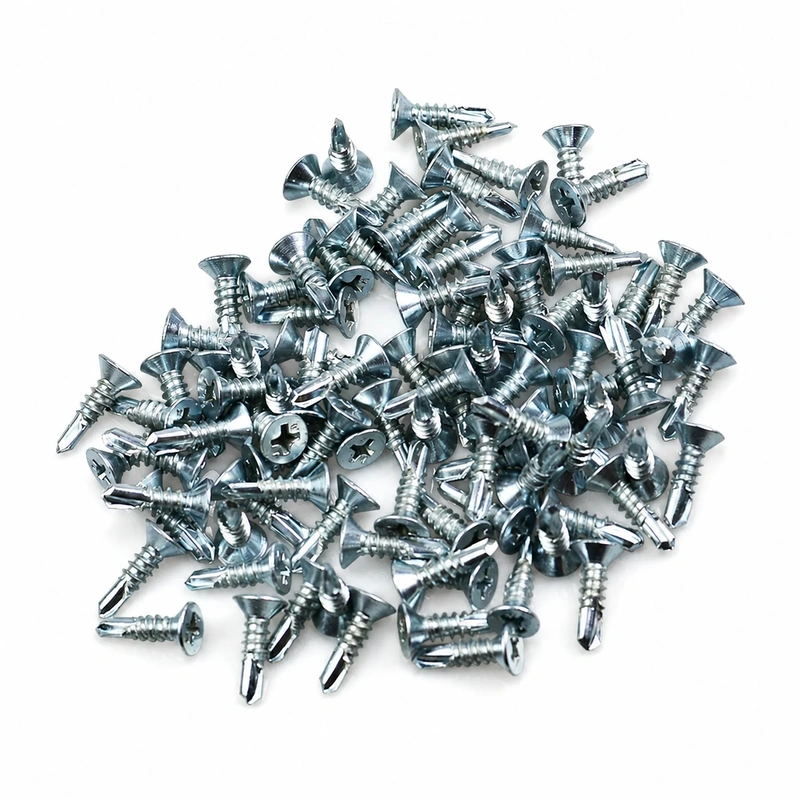
Countersunk Head Blue-White Zinc Plated Self-Drilling Screw (Chinese National Standard: Phillips Countersunk Head Self-Drilling And Self-Tapping Screw GB/T15856.2-2002)

Countersunk Head Blue-White Zinc Plated Self-Drilling Screw (Chinese National Standard: Phillips Countersunk Head Self-Drilling And Self-Tapping Screw GB/T15856.2-2002)

Brand: Hengzuan Surface: blue and white zinc plated, can be customized color zinc plated, black oxide plated Specifications: Comply with GB/T15856.2-2002 Chinese national standard, in stock ST4.2/ST4.8/ST5.5 full range of specifications, length 13mm~75mm optional, supports customized nonstandard rod lengths; drilling adaptation plate thickness 0.7~6mm Packaging: 25kg export cartons, full pallets wrapped with film, supports neutral export packaging, customer private-label customization

Read More
Countersunk Head Blue Zinc Self-Drilling Screw

Countersunk Head Blue Zinc Self-Drilling Screw

Brand: Hengzuan Surface: blue and white zinc plated, can be customized color zinc plated, black oxide plated Specifications: in stock 3.5/3.9/4.2/4.8/5.5 mainstream wire diameter, rod length 13mm~75mm full size range, nonstandard length can be customized as needed Packaging: 25kg export cartons, full wooden pallets wrapped with film, supports neutral export packaging, private-label customization

Read More
Black Phosphated Winged Countersunk Head Self-Drilling Screw

Black Phosphated Winged Countersunk Head Self-Drilling Screw

Brand: Hengzuan Surface: high temperature black phosphated anti-rust treatment, blue zinc, color zinc plated coating can be replaced as needed Specifications: in stock ST3.5/ST4.2/ST4.8 common specifications, rod length 16mm~50mm, complete, supports nonstandard size customization, suitable for drilling steel sheets 2~5mm Packaging: 25kg cartons, whole wooden pallets, support neutral packaging, private-label customization

Read More
Blue-White Zinc Plated Winged Countersunk Head Self-Drilling Screw

Blue-White Zinc Plated Winged Countersunk Head Self-Drilling Screw

Brand: Hengzuan Surface: blue and white zinc plated, optional color zinc plated, black oxide treatment Specifications: in stock ST3.5/ST4.2/ST4.8 mainstream specifications, rod length 16~50mm full size range, supports nonstandard length customization, suitable for drilling steel sheets 2~5mm Packaging: 25kg cartons, full pallets packed on wooden pallets, support neutral packaging, private-label customization

Read More
Wafer Head Self-Drilling Screw

Wafer Head Self-Drilling Screw

Brand: Hengzuan Surface: blue and white zinc plated, can be customized color zinc plated, black oxide plated Specifications: Comply with GB/T15856.2 Chinese national standard, in stock ST3.5/ST4.2/ST4.8/ST5.5 mainstream wire diameter, rod length 13mm~50mm full range of specifications, nonstandard length customization on demand, drilling applicable plate thickness 2~5mm Packaging: 25kg export cartons, full pallets wrapped with film, supports neutral export packaging, private-label customization

Read More

How To Compare difference between metal drill bit and wood drill bit Options

Product Review Guide

The related product list helps you compare Difference Between Metal Drill Bit And Wood Drill Bit by actual product direction rather than keyword wording alone. Check whether each product supports new product line development, then use the table below to prepare a clearer RFQ.

Criterion What To Check Why It Matters Buyer Tip
Tip geometry Metal: split/point tip; wood: brad or spur tip Controls centering and entry quality Request tip drawings in RFQ
Cutting edge Metal bits have tougher cutting lips; wood bits clear fibers Wrong edge causes burrs or tear-out Ask for sample hole photos
Material grade Confirm HSS, carbon steel, coating, or carbide option Material affects wear and inspection limits List target workpiece material
Chip removal Compare flute depth and helix style Metal chips and wood chips clear differently Include drilling speed range
QC documents Ask for size report, hardness, coating, and sample approval Supports new line release Attach inspection checklist

How To Choose difference between metal drill bit and wood drill bit Supplier

The Difference Between Metal Drill Bit And Wood Drill Bit is mainly in cutting geometry, material suitability, and the workpiece each bit is designed to handle. Metal drill bits are generally selected for harder materials, while wood drill bits are shaped for cleaner entry and chip removal in wood-based applications.

For sourcing decisions, compare the required hole size, drilling material, tolerance needs, surface finish expectations, and sample test results. These details help suppliers confirm whether a standard item is suitable or whether related tooling or fastener specifications should be reviewed together.

Start the RFQ by explaining the application scenario. A product development team should state whether the bit is for metal parts, timber, panels, installation kits, or a mixed-material assembly. This helps the supplier understand why you are comparing the Difference Between Metal Drill Bit And Wood Drill Bit and what performance checks matter most.

Prepare technical details before asking for price. Include diameter, length, shank type, material to be drilled, expected drilling depth, quantity range, packaging needs, and any sample reference. If the drill bit is part of a fastening solution, also share the screw, anchor, or component it will be used with.

For quality review, ask what can be checked before shipment, such as size consistency, appearance, marking, packaging condition, and sample confirmation. Documentation needs should be clear early, especially if your internal approval process requires photos, inspection notes, or batch information.

When comparing supplier replies, look beyond unit price. A useful response should clarify product differences, confirm whether samples are available, explain quotation conditions, and identify any technical limits. This makes supplier shortlisting easier for custom projects and new product line planning.


Criteria Importance Description Example Options
Tip geometry High Defines material entry and cutting behavior. Split point for metal; brad point for wood
Material hardness High Affects wear resistance and tool life. HSS for metal drilling; carbon steel for wood use
Chip removal Medium Controls heat, clogging, and hole quality. Spiral flute for metal; wide flute for wood
Inspection focus High Confirms dimensions and visible defects. Diameter, runout, edge finish
RFQ documentation Medium Aligns supplier quotations and samples. Drawing, material, coating, test method

Top Product Matches

Recommended Products

Top product matches should be reviewed by fit, specification clarity, customization readiness, and how well they support quality review. Use these factors to shortlist practical options before contacting the supplier.

Top Selling Product Selection Factors

Specification clarity Needed for RFQ accuracy
Sample confirmation Verifies hole quality
Material match Reduces wear risk
Inspection records Supports quality review
Supplier comparison Check documents and lead time

Blog Articles / Reviews

National Standards for Self-Drilling Screws – Fasteners

National Standards for Self-Drilling Screws – Fasteners

When using fasteners, are you familiar with the standards governing them? Today, Hebei Wotu Fastener Manufacturing Co., Ltd. will discuss the national standards for fasteners with you. Let’s take a look. 1. Standards for Fastener Product Dimensions: These specifically define the basic dimensions of the product; for threaded products, this also includes the basic dimensions […]

The Concept of Hexagonal Self-Drilling Screws and High-Pressure Standard Parts

The Concept of Hexagonal Self-Drilling Screws and High-Pressure Standard Parts

Hexagonal self-drilling screws, manufactured by Hebei Wotu Fastener Manufacturing Co., Ltd., operate under a modern enterprise system and strictly manage according to the ISO9001:2015 quality system. The company uses “Wotu” as its registered trademark. The term “standard parts” in China is a shorthand for “standard fasteners,” a narrow definition. High- and medium-pressure standard parts refer […]

A manufacturer of hexagonal self-drilling screws discusses their performance standards.

A manufacturer of hexagonal self-drilling screws discusses their performance standards.

Hebei Wotu Fastener Manufacturing Co., Ltd., founded in the 1990s, is located in Yongnian District, Handan City, Hebei Province, known as the “Hometown of Fasteners.” 1. Core Hardness: Standard: HRC32-40. Our products are measured at HRC31.7-39.0. 2. Surface Hardness: Standard: HV600-700. Our products are measured at approximately HV620. 3. Hardened Layer: 4#-6#: 0.05-0.18mm; 8#-12#: 0.10-0.23mm; […]

What are the standard dimensions of a universal hexagonal self-drilling screw?

What are the standard dimensions of a universal hexagonal self-drilling screw?

Self-drilling screws, also known as “drill screws,” “self-drilling screws,” or “dovetail screws,” are classified into different types based on their application, material, and shape. A standard 6mm self-drilling screw has a flatness of 9.38mm or 9.8mm. A hexagonal self-drilling screw with dimensions 4.5*14*25 means the screw size is 4.5mm, the screw length is 25mm, and […]

Choosing the Right Material for Self-Drilling Screws and Its Maintenance Requirements

Choosing the Right Material for Self-Drilling Screws and Its Maintenance Requirements

Self-drilling screws are fundamental mechanical components with high demand. They are typically used in bolts, screws, rivets, etc., for safety or in harsh environments or other hazardous conditions where temperature effects are not a concern. Common materials for self-drilling screws include carbon steel, low-alloy steel, and non-ferrous metals. However, in specific applications, fastener materials need […]

Buyer feedback on this page focuses on common review situations, including checking product specifications, comparing related products, planning custom projects, and evaluating supplier communication before an RFQ.

Priya K. Raman July 21, 2026
I used the page to separate metal drill bit point geometry from wood drill bit cutting needs before drafting a clearer sourcing note.
Caleb J. Turner July 18, 2026
I was comparing bits for mixed workshop applications, and the explanation helped me ask better questions about flute design, tip style, and intended material.
Nadia L. Brooks July 12, 2026
I needed simple wording for our internal request, and this clarified why a wood bit and metal bit should not be specified interchangeably.
Marcus E. Hall July 6, 2026
I referenced the tag page while preparing an RFQ, especially to distinguish chip removal expectations for wood drilling from cleaner entry needs in metal.

Frequently Asked Questions

What quotation details should we provide when reviewing the Difference Between Metal Drill Bit And Wood Drill Bit for a new product line?

Include target material, hole diameter range, shank type, coating preference, tolerance needs, expected testing method, packaging concept, and forecast usage. These details help suppliers quote comparable drill bit options for product development review.

How should a product development team compare metal drill bits and wood drill bits before RFQ release?

Compare tip geometry, flute design, hardness, coating, heat resistance, and chip removal behavior. Metal bits usually require higher wear resistance, while wood bits prioritize clean entry, fast cutting, and reduced splintering.

What sample confirmation points matter for the Difference Between Metal Drill Bit And Wood Drill Bit?

Check sample diameter accuracy, cutting edge finish, tip symmetry, shank fit, surface treatment consistency, and drilling performance in intended materials. Record test results with photos or inspection sheets before confirming the final specification.

Which technical specifications should be documented for custom drill bit development?

Document material grade, overall length, working length, point angle, flute form, shank dimensions, coating or surface finish, hardness range, and applicable test conditions. Clear specifications reduce misunderstanding during sampling and mass production review.

What quality checks are useful when inspecting metal and wood drill bits from suppliers?

Useful checks include dimensional measurement, visual inspection for burrs or cracks, hardness testing where relevant, coating uniformity review, concentricity check, and controlled drilling trials. Results should be linked to approved drawings or samples.

What after-sales support should be discussed for drill bit quality issues?

Discuss how nonconforming samples are reported, what evidence is required, how root-cause analysis is handled, and how corrective actions are documented. For B2B projects, written feedback loops support future specification improvement.

Leave Your Message

Send your application details, size requirements, quantity range, destination, and sample needs. Clear technical information helps the supplier respond with a more accurate quotation and relevant quality confirmation points.