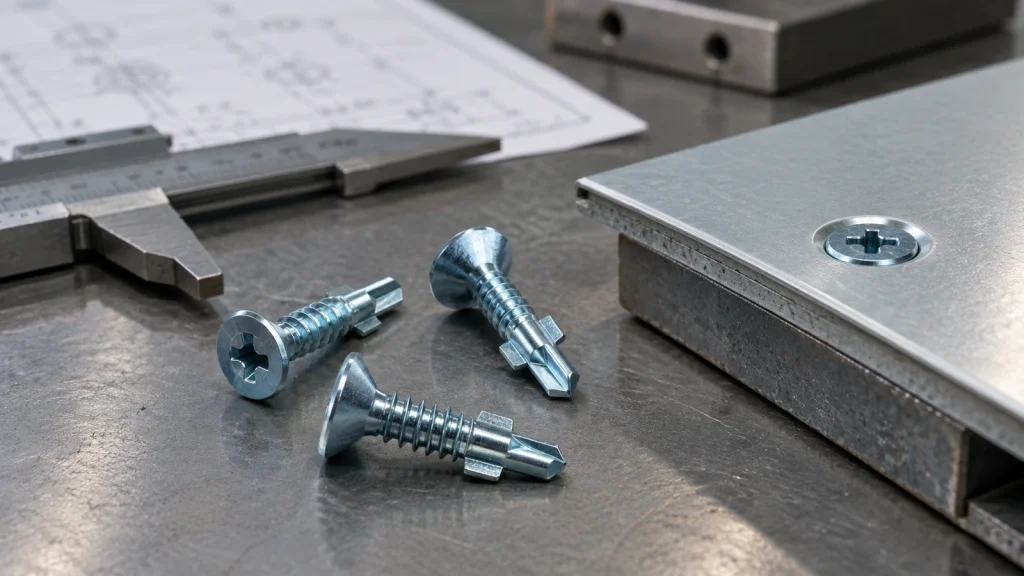
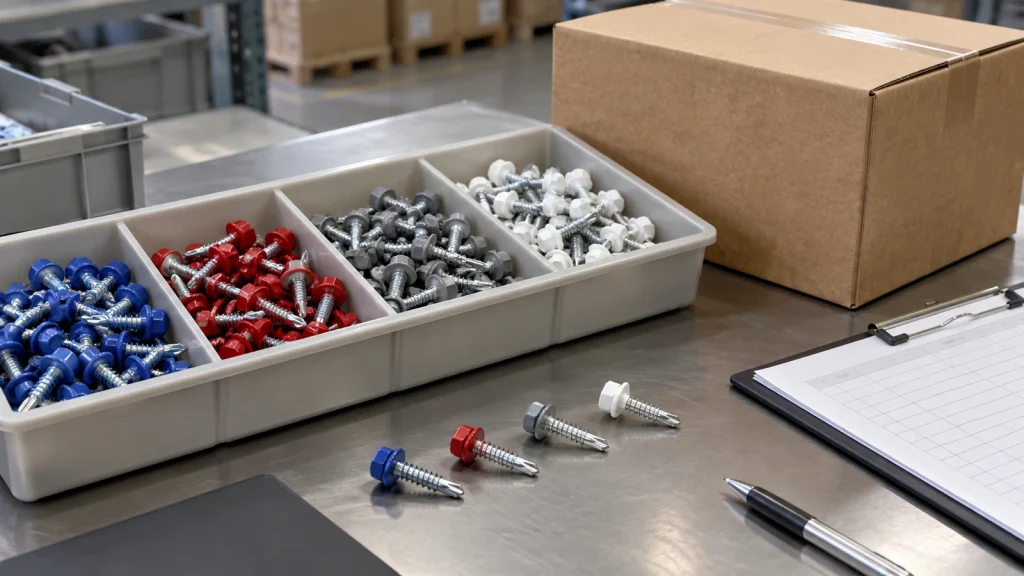
| Bit type for the material being drilled |
Match the drill bit style to the workpiece, such as metal sheet, structural steel, wood, plastic, or masonry. |
A bit that suits the wrong material can wander, overheat, dull quickly, or leave a poor hole for the fastener. |
What material and thickness will the bit drill before the screw or bolt is installed? |
| Hole size versus fastener requirement |
Confirm the required pilot hole or clearance hole diameter for the fastener being used. |
An undersized hole can split material or overload the fastener; an oversized hole can reduce thread engagement or clamping strength. |
Is the hole meant for thread forming, clearance, countersinking, or a pre-drilled assembly? |
| Drill point geometry and centering |
Look at the point style, cutting lips, and whether the bit is suitable for starting cleanly without excessive walking. |
Poor centering affects hole position, especially on metal panels, brackets, and visible assemblies. |
Will the bit start on a flat surface, a curved surface, or through a punched location? |
| Coating and corrosion conditions |
Ask whether the bit or drilling fastener needs a surface treatment suited to storage, jobsite moisture, or outdoor exposure. |
Coating affects rust resistance and can also influence heat build-up and service life during repeated drilling. |
Will the drilled joint be used indoors, outdoors, or in a humid or corrosive environment? |
| Compatibility with drill speed and tooling |
Confirm the intended drill driver, speed range, chuck fit, and whether the application uses hand tools or production equipment. |
Even a suitable bit can fail early if used with the wrong speed, excessive pressure, or unstable tooling. |
What tool will drive the bit, and is the job occasional installation or repeated production drilling? |