Drilling Stainless Steel Fastening Choices | Hebei Wotu Fastener Manufacturing Co., Ltd.

Drilling stainless steel for reliable fastening

Drilling stainless steel requires the right cutting tool, steady pressure and enough lubrication to prevent work-hardening. The main decision is whether you need to make a clean hole for a separate fastener or use a self-drilling screw that creates its own opening during installation.

For stainless sheet, plate or assemblies, choose the drilling method according to the material grade, thickness and final joint. A suitable approach reduces wandering, excess heat, damaged threads and premature tool wear.

Related Products

Blue-White Zinc Plated Winged Countersunk Head Self-Drilling Screw

Blue-White Zinc Plated Winged Countersunk Head Self-Drilling Screw

Brand: Hengzuan Surface: blue and white zinc plated, optional color zinc plated, black oxide treatment Specifications: in stock ST3.5/ST4.2/ST4.8 mainstream specifications, rod length 16~50mm full size range, supports nonstandard length customization, suitable for drilling steel sheets 2~5mm Packaging: 25kg cartons, full pallets packed on wooden pallets, support neutral packaging, private-label customization

Read More
Wafer Head Self-Drilling Screw

Wafer Head Self-Drilling Screw

Brand: Hengzuan Surface: blue and white zinc plated, can be customized color zinc plated, black oxide plated Specifications: Comply with GB/T15856.2 Chinese national standard, in stock ST3.5/ST4.2/ST4.8/ST5.5 mainstream wire diameter, rod length 13mm~50mm full range of specifications, nonstandard length customization on demand, drilling applicable plate thickness 2~5mm Packaging: 25kg export cartons, full pallets wrapped with film, supports neutral export packaging, private-label customization

Read More
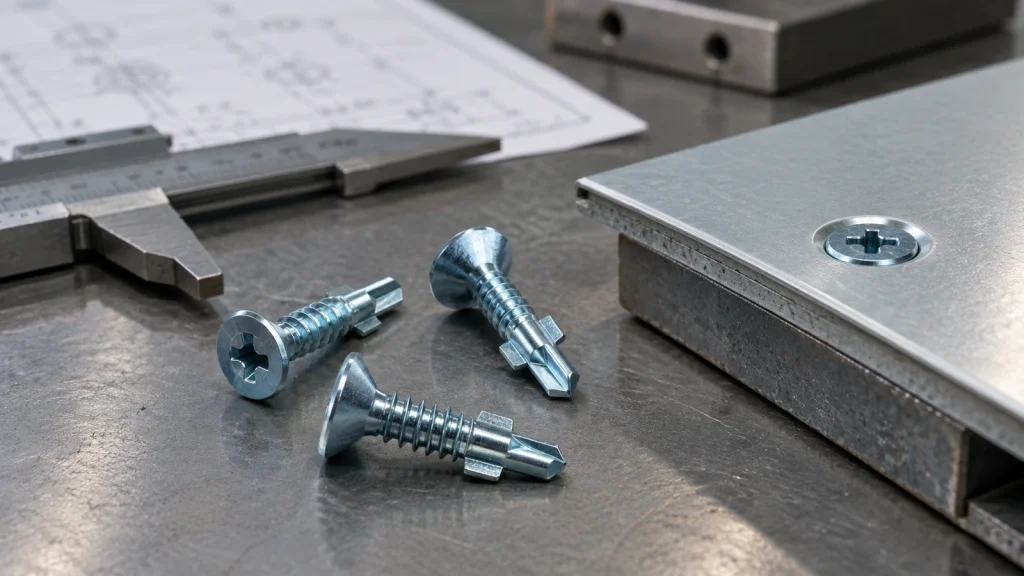
Countersunk Head Blue-White Zinc Plated Self-Drilling Screw (Chinese National Standard: Phillips Countersunk Head Self-Drilling And Self-Tapping Screw GB/T15856.2-2002)

Countersunk Head Blue-White Zinc Plated Self-Drilling Screw (Chinese National Standard: Phillips Countersunk Head Self-Drilling And Self-Tapping Screw GB/T15856.2-2002)

Brand: Hengzuan Surface: blue and white zinc plated, can be customized color zinc plated, black oxide plated Specifications: Comply with GB/T15856.2-2002 Chinese national standard, in stock ST4.2/ST4.8/ST5.5 full range of specifications, length 13mm~75mm optional, supports customized nonstandard rod lengths; drilling adaptation plate thickness 0.7~6mm Packaging: 25kg export cartons, full pallets wrapped with film, supports neutral export packaging, customer private-label customization

Read More
Countersunk Head Blue Zinc Self-Drilling Screw

Countersunk Head Blue Zinc Self-Drilling Screw

Brand: Hengzuan Surface: blue and white zinc plated, can be customized color zinc plated, black oxide plated Specifications: in stock 3.5/3.9/4.2/4.8/5.5 mainstream wire diameter, rod length 13mm~75mm full size range, nonstandard length can be customized as needed Packaging: 25kg export cartons, full wooden pallets wrapped with film, supports neutral export packaging, private-label customization

Read More

Fasteners and tools for stainless-steel joints

Product selection

Relevant product choices include cutting tools, pilot-hole solutions and self-drilling or self-tapping fasteners. Compare point design, material compatibility, thread form, head style, corrosion considerations and the thickness of every layer in the joint before selecting an item.

Criterion What To Check Why It Matters Buyer Tip
Stainless steel grade and combined material State the stainless grade, mating material, and total material thickness in the application brief. Austenitic and harder stainless grades can behave differently during drilling, while contact with another metal can affect corrosion risk. Ask, “Which stainless grade and material combination has this screw been evaluated for?”
Drill-point design and drilling capacity Verify that the point is intended for the required stainless thickness and does not rely on a separate pilot hole. An unsuitable point may fail to penetrate, create excess heat, or damage the hole before the threads engage. Ask for a sample or application trial using the actual stainless grade and thickness.
Fastener material and surface finish Compare the screw material and finish with the stainless substrate and the surrounding exposure conditions. Material mismatch can increase galvanic-corrosion concerns, while a finish chosen for another environment may not provide the required protection. Ask, “Is the fastener material compatible with this stainless assembly and service environment?”
Thread engagement and joint design Confirm the screw length, thread form, clamping range, and whether the joint is metal-to-metal or includes another layer. The point must pass through the material while enough thread remains engaged to hold the joint securely without excessive protrusion. Send a section sketch showing material layers and ask the supplier to confirm the suitable screw length and thread arrangement.

Choose the drilling method for the grade and joint

A self-drilling screw is convenient when its drill point is suitable for the stainless material and the total thickness of the joint. It can reduce separate drilling steps, but the point still needs to cut the material effectively without excessive heat or pressure.

A pilot hole is often the more controllable option when the stainless is thicker, harder, highly visible, or being prepared for a precision fastener. It gives you more control over hole size and thread engagement, although it adds an operation and requires accurate alignment.

Start with the stainless grade and thickness rather than choosing a drill or screw by appearance. Stainless alloys behave differently during cutting, and forcing a dull tool against the surface can harden the work area instead of removing material cleanly.

Match the tool or fastener point to the joint. For a stainless-to-stainless connection, consider whether the selected fastener can form the hole and threads without binding. For stainless over carbon steel, aluminium or another substrate, the lower layer can change the required point style, length and thread form.

Control heat and friction with a suitable cutting lubricant, firm alignment and a steady feed. Avoid letting the tool rub without cutting, and do not reuse a tool that has become blunt or overheated. After drilling, remove burrs and check that the fastener seats correctly without damaging the surrounding surface.

For an enquiry, provide the stainless grade if known, the material thickness or combined joint thickness, and whether you need a drilled hole, a self-drilling fastener or a finished threaded connection. A drawing or clear description of the mating materials can resolve fit questions faster than a product name alone.

Criteria Importance Description Example Options
Pilot drilling versus self-drilling fastening High for installation time and hole quality Pilot drilling adds a separate step but improves control over hole position and diameter. Self-drilling screws can reduce operations, but the point must be matched to the stainless material and combined thickness. A visible stainless panel may justify pilot drilling for a cleaner hole, while a repetitive sheet-metal joint may favor a suitable self-drilling screw.
Stainless grade and hardness Critical for tool life and fastening reliability Different stainless alloys cut differently. If the material is harder or prone to work-hardening, the selected drill, screw point and installation method need more careful matching. An enquiry that states the stainless grade gives the supplier a better basis for recommending a point type or pilot-hole approach.
Total joint thickness Essential for choosing point length and thread engagement The fastener or drill must pass through all relevant layers without losing cutting action too early. Thickness also affects torque, heat buildup and whether the final threads form correctly. A stainless sheet fixed over a backing layer should be specified by the thickness of each layer, not only the top sheet.
Heat control during drilling Important for avoiding work-hardening and damaged tools Stainless needs a cutting action rather than rubbing. Lubrication, steady alignment and a suitable speed-feed combination help reduce heat and prevent premature tool wear. If the tool squeals, discolors or stops producing chips, the process may be generating heat instead of cutting cleanly.
Final joint requirement High when strength, appearance or corrosion exposure matters A clearance hole, a threaded hole and a self-drilled fastening are different outcomes. The correct choice depends on whether the fastener must clamp, tap its own thread, resist exposure or leave a finished visible surface. A hidden bracket joint may prioritize speed and clamp load, while an exposed stainless cover may prioritize a clean seat and compatible finish.

Product Selection

Related Options

For maintenance work, sheet-metal assembly and stainless panels, the main priority is a reliable match between the drilling point or pilot hole and the actual joint materials. Compare candidate products against the grade, thickness, access and required finish of your application rather than treating one screw or tool type as universal.

Blog Articles / Reviews

What is the Importance of High-Quality Self-Drilling Screws in Prefabricated Steel Structure Projects?

What is the Importance of High-Quality Self-Drilling Screws in Prefabricated Steel Structure Projects?

While the quantity of self-drilling screws used in prefabricated steel structure projects isn’t large, the quality requirements are still very high. Why are high-quality self-drilling screws necessary? High-quality self-drilling screws are absolutely essential. The function of self-drilling screws in prefabricated steel structure projects is to secure and lock the prefabricated steel panels to prevent them […]

What Should an RFQ Include When Sourcing Dacromet Hex Head Self-Drilling Screw?

What Should an RFQ Include When Sourcing Dacromet Hex Head Self-Drilling Screw?

When sourcing dacromet hex head self drilling screw, a complete RFQ should define the application, screw configuration, coating requirement, dimensions, and supplier confirmation requirements. Buyers often receive different quotations because suppliers may interpret coating, size, drilling capability, or packaging scope differently. Before preparing a project inquiry, buyers can review the available fastener product categories to […]

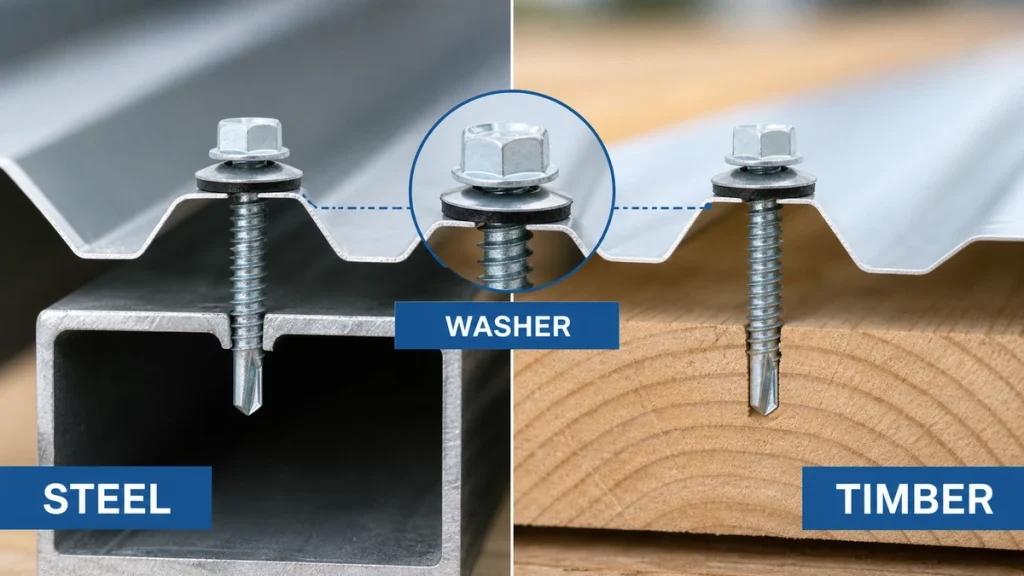
Which Self-Tapping Roofing Screw Specification Fits Metal Panels on Steel or Timber?

Which Self-Tapping Roofing Screw Specification Fits Metal Panels on Steel or Timber?

The correct self-tapping roofing screw depends on the complete panel-and-substrate stack-up. Steel supports typically require a point and thread matched to the support thickness and any pilot-hole requirement; timber supports require a wood-appropriate thread and sufficient embedment. In both cases, buyers must define diameter, length, head, sealing washer, material or coating, environment, pull-out requirements, and […]

What Is the Difference Between Self Drilling and Self Tapping Screws?

What Is the Difference Between Self Drilling and Self Tapping Screws?

Direct Answer: A self-drilling screw has a drill-shaped point that creates a hole and then forms mating threads in a suitable material. A self-tapping screw forms or cuts mating threads but may require a correctly sized pilot hole. Selection depends on substrate type and thickness, joint stack, point geometry, installation tool, finish and application testing—not […]

What RFQ Details Matter When Ordering Blue Zinc Winged Self-Drilling Screws?

What RFQ Details Matter When Ordering Blue Zinc Winged Self-Drilling Screws?

When ordering a blue zinc self drilling screw with a winged, countersunk configuration, diameter and length are not enough to define the application. The RFQ should identify the materials being connected, upper-material thickness, steel-substrate thickness, total material stack, required countersunk seating, screw diameter, total length, drill-point condition, wing geometry, surface treatment, installation method, quantity and […]

Frequently Asked Questions

Can a self-drilling screw be used directly in stainless steel?

Sometimes, but only if the drill point is suitable for the stainless grade and the total material thickness. Stainless resists cutting and can work-harden, so a screw that works in mild steel may fail, overheat or leave a poor thread in stainless.

When is a pilot hole better than a self-drilling fastener?

A pilot hole is usually better when hole accuracy, surface finish or consistent thread engagement matters. It also gives more control in thicker stainless or in assemblies where the fastener must align with another part.

Is stainless steel drilled the same way as carbon steel?

No. Stainless generally needs sharper tooling, steadier feed and better heat control because rubbing can harden the surface. Treating it like ordinary carbon steel often leads to dull tools, oversized holes or fasteners that bind before seating.

What details should I provide before asking for a screw or drilling recommendation?

Provide the stainless grade if known, each layer thickness, the mating material, the required head style and whether the joint is exposed to moisture or weather. A drawing, photo or section sketch is useful when the screw must pass through multiple layers.

What causes a drill bit or screw point to burn out in stainless?

Common causes include low cutting pressure, high speed, poor lubrication, a blunt cutting edge or a point style that is not suited to the material. Once the surface work-hardens, the next tool has a harder job and may fail even faster.

Leave Your Message

Tell us the stainless grade if known, the thickness or combined thickness to drill, and whether the application needs a pilot hole, self-drilling screw or threaded fastening.