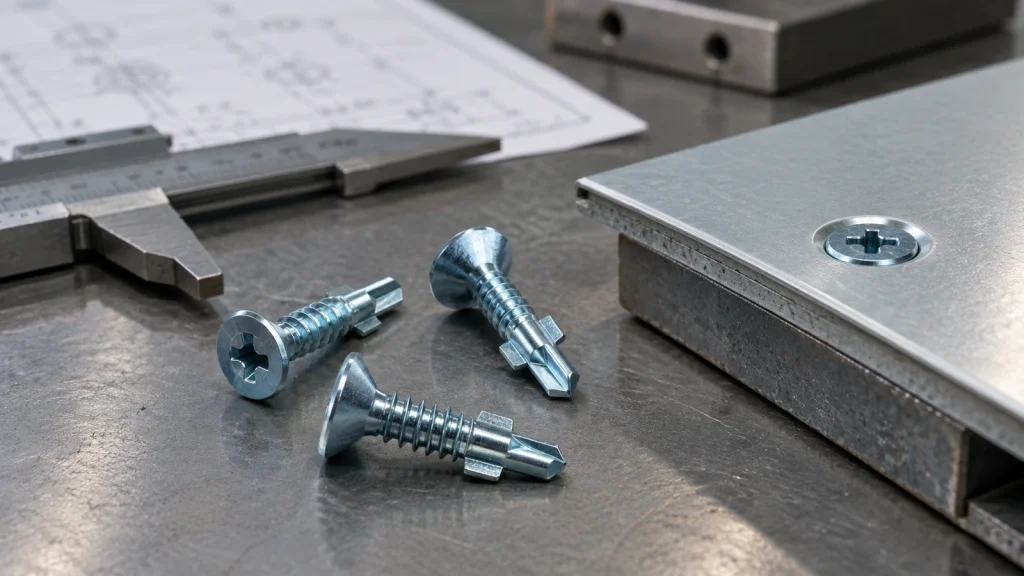
The most important distinction is between screw length and usable fastening length. Overall length may include the head, while the working portion must pass through the attached material and still form reliable threads in the supporting section. A longer screw is not automatically better: excess penetration can interfere with the assembly or create an unsuitable exposed point.
Also confirm what “HP” means in the relevant product range. It may identify a series, design, or application rather than a universal sizing standard. Ask the supplier to identify the exact diameter, length convention, head and washer configuration, drill-point range, and compatible substrate for each chart entry.
Start with the materials and total thickness. State the material being attached, the supporting material, and the combined thickness the screw must pass through. Thin sheet, heavier-gauge steel, wood-backed panels, and pre-drilled assemblies can require different point and thread designs even when the visible screw length appears similar.
Compare the full configuration, not just the size line. A hex washer head, pan head, sealing washer, winged design, or other configuration changes the clamping area, clearance, appearance, and sealing behavior. Check the head diameter, drive type, washer material, and coating alongside the nominal diameter and length.
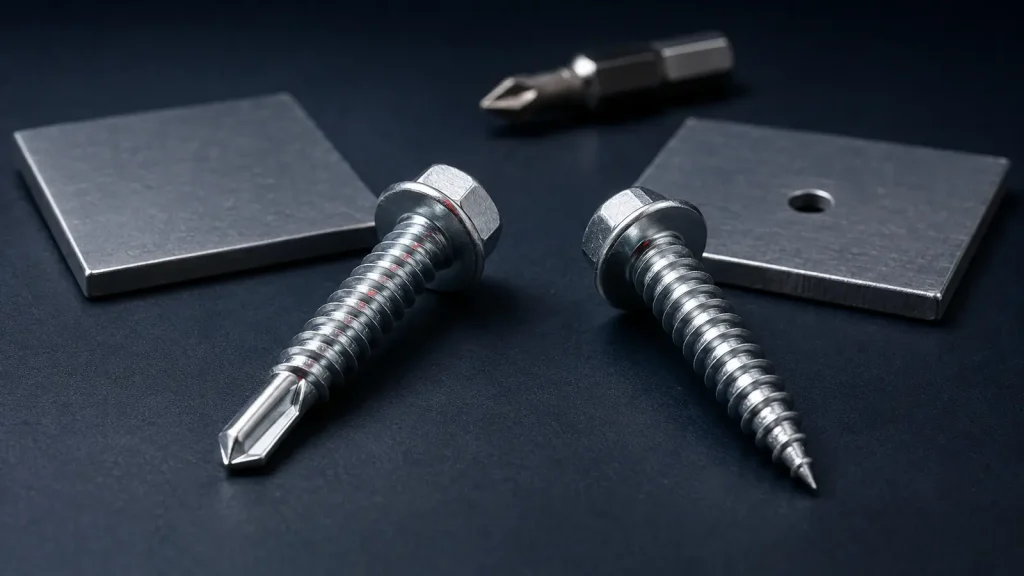
Match the drill point to the support material. Self-drilling screws are selected partly by the thickness and type of material their point must penetrate. Do not substitute a size from a chart without confirming its drilling range, thread form, and required installation method. For exposed or damp applications, ask whether the stated finish is suitable for the service environment and for contact with the materials being joined.
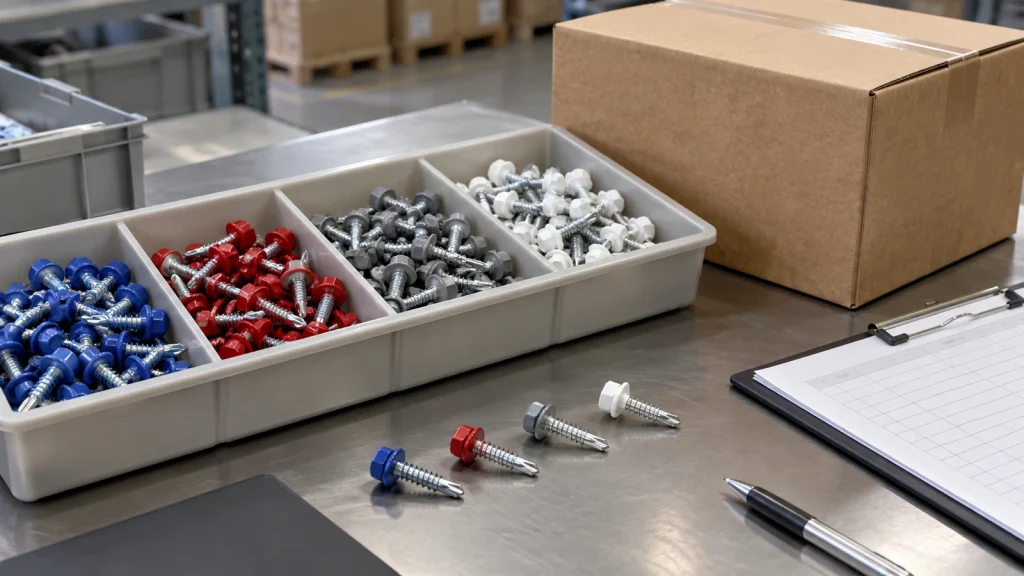
Send a clear enquiry before ordering. Provide the exact material stack and thickness, intended use, preferred head or washer style, finish or corrosion requirement, and the quantity or packaging basis you need quoted. Request a dimensioned drawing or chart for the proposed HP series so you can compare length measurement, point style, and tolerances consistently.