HP Self-Drilling Screws | Hebei Wotu Fastener Manufacturing Co., Ltd.

HP self-drilling screws for metal fastening

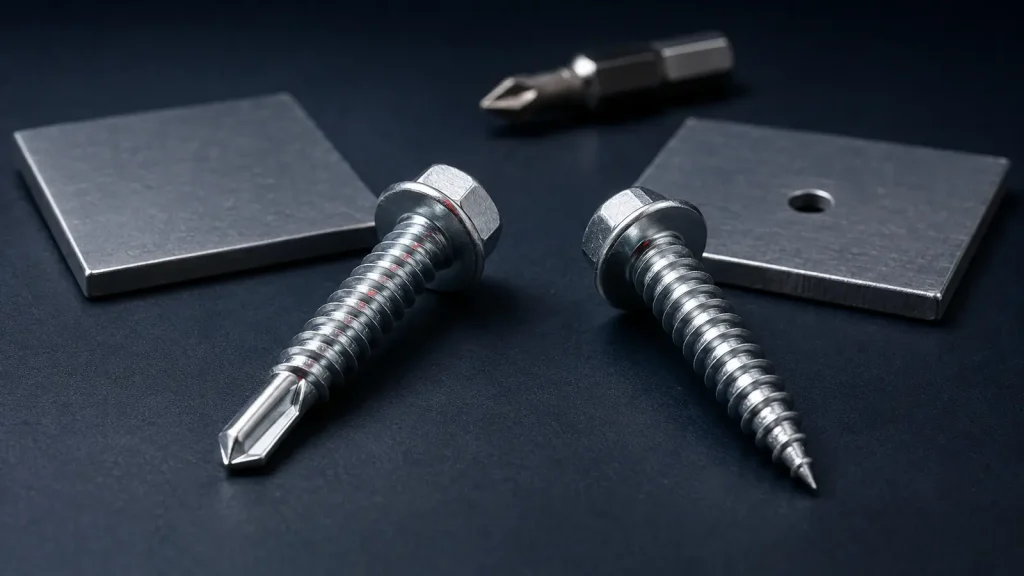
An HP self-drilling screw is usually considered for fastening sheet metal, light steel framing, roofing panels, brackets, or other assemblies where the screw must drill its own pilot hole and form threads in one operation. The main decision is not only the screw size; it is whether the drill point, head style, thread, washer, and coating match the materials being joined.

If “HP” refers to a specific head, point, coating, or buyer standard in your project, confirm that meaning early. The same phrase can be used differently across drawings and purchase lists, and a small mismatch can affect drilling speed, clamp force, appearance, and corrosion resistance.

Related Products

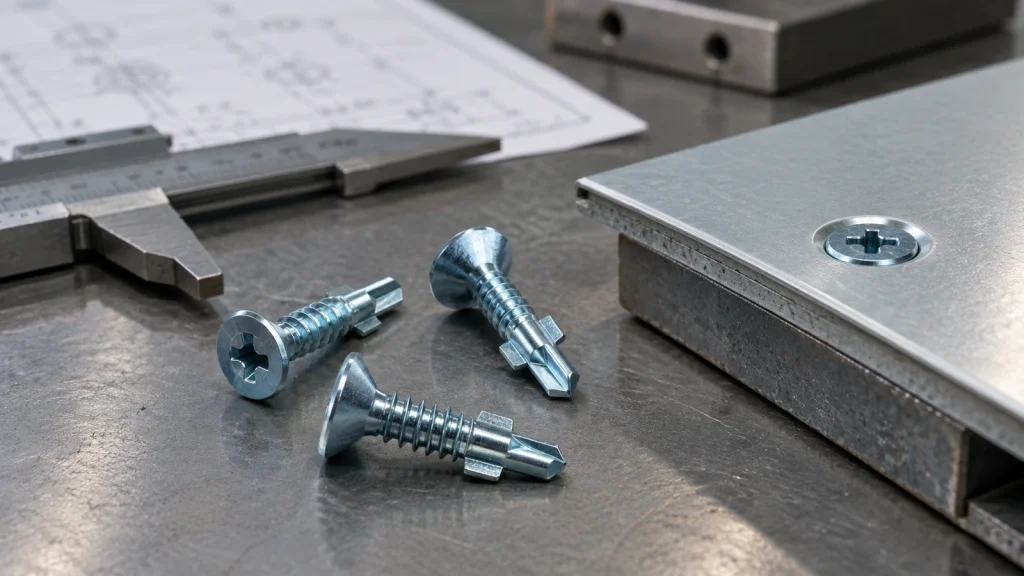
Black Phosphated Winged Countersunk Head Self-Drilling Screw

Black Phosphated Winged Countersunk Head Self-Drilling Screw

Brand: Hengzuan Surface: high temperature black phosphated anti-rust treatment, blue zinc, color zinc plated coating can be replaced as needed Specifications: in stock ST3.5/ST4.2/ST4.8 common specifications, rod length 16mm~50mm, complete, supports nonstandard size customization, suitable for drilling steel sheets 2~5mm Packaging: 25kg cartons, whole wooden pallets, support neutral packaging, private-label customization

Read More
Countersunk Head Blue-White Zinc Plated Self-Drilling Screw (Chinese National Standard: Phillips Countersunk Head Self-Drilling And Self-Tapping Screw GB/T15856.2-2002)

Countersunk Head Blue-White Zinc Plated Self-Drilling Screw (Chinese National Standard: Phillips Countersunk Head Self-Drilling And Self-Tapping Screw GB/T15856.2-2002)

Brand: Hengzuan Surface: blue and white zinc plated, can be customized color zinc plated, black oxide plated Specifications: Comply with GB/T15856.2-2002 Chinese national standard, in stock ST4.2/ST4.8/ST5.5 full range of specifications, length 13mm~75mm optional, supports customized nonstandard rod lengths; drilling adaptation plate thickness 0.7~6mm Packaging: 25kg export cartons, full pallets wrapped with film, supports neutral export packaging, customer private-label customization

Read More
Countersunk Head Blue Zinc Self-Drilling Screw

Countersunk Head Blue Zinc Self-Drilling Screw

Brand: Hengzuan Surface: blue and white zinc plated, can be customized color zinc plated, black oxide plated Specifications: in stock 3.5/3.9/4.2/4.8/5.5 mainstream wire diameter, rod length 13mm~75mm full size range, nonstandard length can be customized as needed Packaging: 25kg export cartons, full wooden pallets wrapped with film, supports neutral export packaging, private-label customization

Read More
Wafer Head Self-Drilling Screw

Wafer Head Self-Drilling Screw

Brand: Hengzuan Surface: blue and white zinc plated, can be customized color zinc plated, black oxide plated Specifications: Comply with GB/T15856.2 Chinese national standard, in stock ST3.5/ST4.2/ST4.8/ST5.5 mainstream wire diameter, rod length 13mm~50mm full range of specifications, nonstandard length customization on demand, drilling applicable plate thickness 2~5mm Packaging: 25kg export cartons, full pallets wrapped with film, supports neutral export packaging, private-label customization

Read More

Selecting an HP self-drilling screw for your assembly

Selection criteria

For HP self-drilling screws, compare the application material, drill point, thread form, head style, washer option, coating, and packaging. These details are more useful than a simple size request because they determine whether the screw drills cleanly, seats properly, and resists the working environment.

Criterion What To Check Why It Matters Buyer Tip
Meaning of “HP” in the screw description Ask the supplier to define HP on the drawing, quotation, or packing label rather than relying on shorthand. HP can be used differently by buyers and sellers, so the wrong interpretation may lead to the wrong head style, point type, or application fit. Can you confirm what HP means for this self drilling screw and send a matching drawing or sample photo?
Drill point matched to the base material Confirm the material being drilled, the sheet thickness range, and whether the screw must drill through one layer or multiple layers. A drill point that is too light may burn or fail to cut; one that is too aggressive can oversize the hole and reduce thread holding. What drill point type do you recommend for our exact metal thickness and layer combination?
Head style and driving method Verify the head form, recess or hex drive, washer requirement, and tool access in the assembly. The head controls clamping area, installation speed, tool engagement, and whether the screw sits flush or remains exposed. Should this order use a hex washer head, pan head, countersunk head, or another head style for our installation tool?
Thread form for holding strength Compare thread diameter, thread pitch, length of threaded section, and engagement depth in the receiving material. Thread geometry affects pull-out resistance, stripping risk, and how securely the screw clamps metal, wood, or composite layers. Can you match the thread specification to our substrate instead of quoting only the overall screw size?
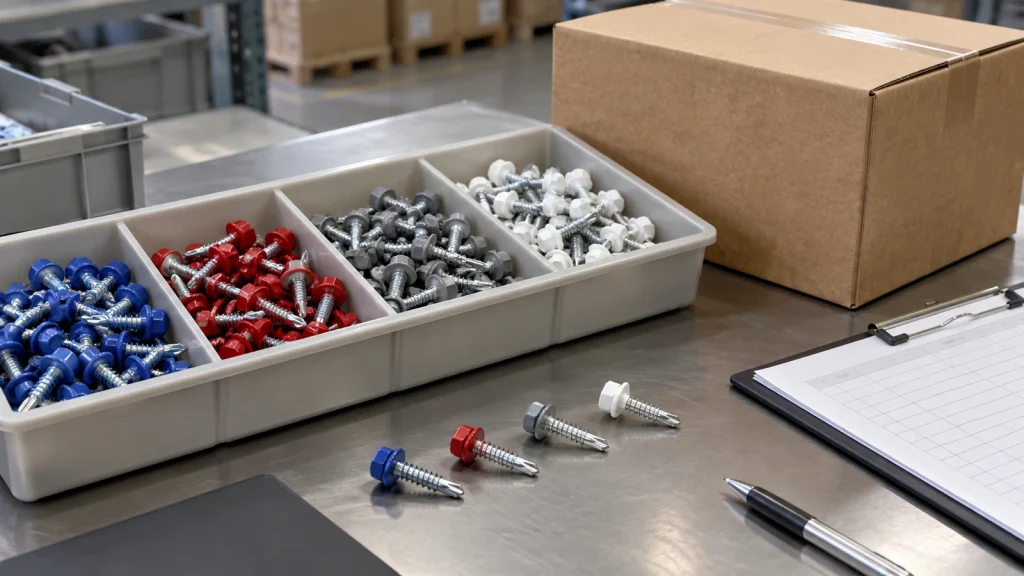
Surface coating for the service environment State whether the screw will be used indoors, outdoors, near moisture, or with treated materials, then confirm the coating and finish color. Coating choice affects corrosion resistance, appearance, and compatibility with the parts being fastened. Which coating do you suggest for our exposure conditions, and can you confirm the finish in the quotation?

Key choices before ordering self-drilling screws

The practical distinction is between a self-drilling screw and a self-tapping screw. A self-drilling screw has a drill-shaped point that cuts through the workpiece before the threads engage. A self-tapping screw forms or cuts threads after a pilot hole or prepared hole is already present. Choosing the wrong type can slow installation, damage thin material, or leave the joint with poor pull-out resistance.

For metal-to-metal work, check the total drilling thickness, the hardness of the base material, and the expected installation method. For metal-to-wood or panel-to-structure work, the buyer should also confirm whether wings, sealing washers, painted heads, or corrosion-resistant finishes are needed.

Start with the joint, not the screw name. State the top sheet material, base material, approximate thickness range, and whether the screw must pass through insulation, timber, roofing sheet, purlin, bracket, or light-gauge steel. This information changes the drill point type, thread length, and whether a washer or special head is useful.

Choose the head style around access and load. Hex washer heads suit power driving and higher bearing area. Pan, wafer, or countersunk heads may suit visible assemblies or parts that need a lower profile. If the fastener is exposed outdoors, a bonded washer, coating choice, and head finish matter as much as the thread.

Do not treat coating as a cosmetic detail. Zinc plating, color finishes, Dacromet-style coatings, and other surface treatments serve different environments and appearance requirements. Ask what coating is available for the required size and head style, and whether the finish must match other components in the assembly.

A useful inquiry should include the drawing or sample reference, diameter and length, head type, point type if known, coating or color, washer requirement, packaging preference, estimated quantity, and application material. If the term “HP self-drilling screw” comes from an existing bill of materials, share that wording exactly and ask Hebei Wotu Fastener Manufacturing Co., Ltd. to confirm the matching specification before ordering.

Criteria Importance Description Example Options
Self-drilling versus self-tapping Critical for installation method Self-drilling screws create their own hole and thread in one operation. Self-tapping screws form threads after a hole already exists, so they may not work efficiently in unprepared metal. For sheet metal fixed directly to light steel, a self-drilling screw may reduce the need for separate drilling.
Drill point and material thickness High impact on drilling performance The point must suit the combined thickness and hardness of the materials. An unsuitable point can burn, walk, break, or fail to complete the hole cleanly. A screw used through thin sheet into a steel support needs a point selected for that full drilling stack, not just the top sheet.
Head style Important for seating, access, and appearance Different heads suit different assemblies. Hex washer heads are practical for power driving, while lower-profile heads may be preferred where clearance or finished appearance matters. A visible panel may need a lower-profile or color-matched head, while a structural bracket may favor tool grip and bearing area.
Washer and sealing requirement Important for exposed or panel applications A bonded washer can help spread load and seal around the hole in certain sheet or roofing applications. It may be unnecessary in dry interior metal-to-metal assemblies. An outdoor panel fixing may call for a sealing washer, while an internal bracket connection may not.
Coating and finish Important for corrosion resistance and appearance Coating choice should reflect the environment, contact materials, and visual requirements. Finish availability should be checked for the required size, head, and washer combination. An exposed fastener may need a corrosion-resistant coating and matching head color, while an indoor assembly may use a simpler finish.

Product Selection

Related Options

The right self-drilling screw for a roofing panel is not always the right choice for steel framing, brackets, or interior sheet-metal work. Match the fastener to the installed joint first: exposed assemblies may need sealing and corrosion resistance, while production assembly may place more value on consistent drilling, drive stability, and head clearance.

Blog Articles / Reviews

What Should an RFQ Include When Sourcing Dacromet Hex Head Self-Drilling Screw?

What Should an RFQ Include When Sourcing Dacromet Hex Head Self-Drilling Screw?

When sourcing dacromet hex head self drilling screw, a complete RFQ should define the application, screw configuration, coating requirement, dimensions, and supplier confirmation requirements. Buyers often receive different quotations because suppliers may interpret coating, size, drilling capability, or packaging scope differently. Before preparing a project inquiry, buyers can review the available fastener product categories to […]

What Is the Difference Between Self Drilling and Self Tapping Screws?

What Is the Difference Between Self Drilling and Self Tapping Screws?

Direct Answer: A self-drilling screw has a drill-shaped point that creates a hole and then forms mating threads in a suitable material. A self-tapping screw forms or cuts mating threads but may require a correctly sized pilot hole. Selection depends on substrate type and thickness, joint stack, point geometry, installation tool, finish and application testing—not […]

What RFQ Details Matter When Ordering Blue Zinc Winged Self-Drilling Screws?

What RFQ Details Matter When Ordering Blue Zinc Winged Self-Drilling Screws?

When ordering a blue zinc self drilling screw with a winged, countersunk configuration, diameter and length are not enough to define the application. The RFQ should identify the materials being connected, upper-material thickness, steel-substrate thickness, total material stack, required countersunk seating, screw diameter, total length, drill-point condition, wing geometry, surface treatment, installation method, quantity and […]

What Should Buyers Confirm When Ordering Color Nylon Head Hex Self-Drilling Screws?

What Should Buyers Confirm When Ordering Color Nylon Head Hex Self-Drilling Screws?

When ordering a chinese standard color nylon head hex self drilling screw, the RFQ should define more than a color name. Buyers should confirm the exact color reference, nylon head or cap configuration, base screw diameter and length, steel-sheet condition, metallic screw finish, visible-face requirement, color approval method, batch-consistency check and packaging or SKU separation. […]

Rust Prevention Tips for Self-Drilling Screws

Rust Prevention Tips for Self-Drilling Screws

As we all know, the simplest way to prevent self-drilling screws from rusting is to properly isolate the screws from moisture-containing and humid environments. This can be achieved through selective application of protective coatings and sealants, or by purchasing specially formulated rust-resistant or rust-proof screws. This is why many businesses and households have rust prevention […]

Frequently Asked Questions

Is this type of screw suitable for metal-to-metal fastening?

It can be suitable if the drill point and thread are matched to the total metal thickness and base material. Confirm the top sheet, supporting steel thickness, and installation tool so the screw can drill cleanly without stripping or failing to seat.

How is it different from a self-tapping screw?

A self-drilling screw has a drill point that creates its own hole before the threads engage. A self-tapping screw usually needs a pilot hole or prepared hole, so it is not a direct substitute in applications where drilling and fastening must happen in one step.

Does the head style matter as much as the screw size?

Yes. A hex washer head gives good drive engagement and bearing area, while pan, wafer, or countersunk heads may be chosen for clearance or appearance. The head must suit the tool access, surface contact area, and whether the installed screw will remain visible.

What is a common ordering mistake with these screws?

A common mistake is ordering by diameter and length only. The drill point, thread length, washer, coating, and head style can change how the screw performs, even when the basic size looks correct.

What should be confirmed if “HP” appears on a drawing or purchase list?

Ask what “HP” means in that specific document before placing the order. It may refer to a head style, point type, coating, internal code, or previous supplier description, and assuming the meaning can lead to a mismatched fastener.

What details should be sent for a quotation?

Send the diameter, length, head type, point type if known, coating or color, washer requirement, quantity, packaging preference, and the materials being joined. A drawing, photo, or sample reference is useful when the fastener must match an existing part.

Leave Your Message

Send the screw size or drawing, the materials and thicknesses being joined, and the required head, washer, coating, quantity, and packaging. If “HP” refers to a specific internal standard or previous supplier code, include that reference so the specification can be checked.