Hss Drill Bit Set Selection Guide | Hebei Wotu Fastener Manufacturing Co., Ltd.

HSS Drill Bit Set Selection

An HSS drill bit set is a practical choice for routine drilling in common metals, plastics and wood, provided the bit geometry and size range match the job. The main decision is not the number of pieces in the case; it is whether the set covers your materials, drill type and hole sizes without adding bits you will not use.

For a purchasing enquiry, specify the workpiece material, required hole-size range, shank or chuck compatibility and expected use. Also confirm the HSS grade, coating, point design, packaging and any inspection or documentation requirements with Hebei Wotu Fastener Manufacturing Co., Ltd.

Related Products

Blue-White Zinc Plated Winged Countersunk Head Self-Drilling Screw

Blue-White Zinc Plated Winged Countersunk Head Self-Drilling Screw

Brand: Hengzuan Surface: blue and white zinc plated, optional color zinc plated, black oxide treatment Specifications: in stock ST3.5/ST4.2/ST4.8 mainstream specifications, rod length 16~50mm full size range, supports nonstandard length customization, suitable for drilling steel sheets 2~5mm Packaging: 25kg cartons, full pallets packed on wooden pallets, support neutral packaging, private-label customization

Read More
Black Phosphated Winged Countersunk Head Self-Drilling Screw

Black Phosphated Winged Countersunk Head Self-Drilling Screw

Brand: Hengzuan Surface: high temperature black phosphated anti-rust treatment, blue zinc, color zinc plated coating can be replaced as needed Specifications: in stock ST3.5/ST4.2/ST4.8 common specifications, rod length 16mm~50mm, complete, supports nonstandard size customization, suitable for drilling steel sheets 2~5mm Packaging: 25kg cartons, whole wooden pallets, support neutral packaging, private-label customization

Read More
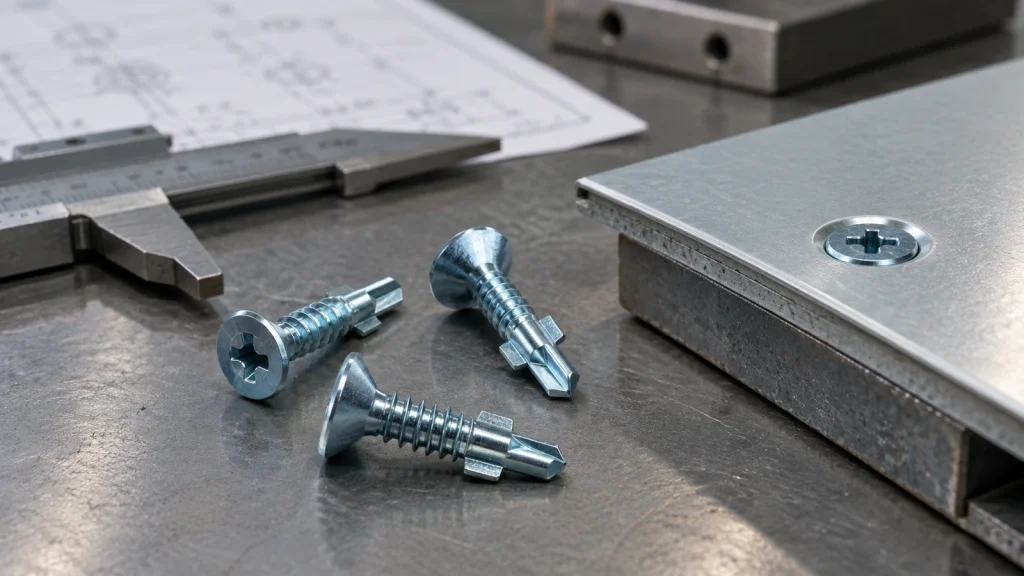
Countersunk Head Blue-White Zinc Plated Self-Drilling Screw (Chinese National Standard: Phillips Countersunk Head Self-Drilling And Self-Tapping Screw GB/T15856.2-2002)

Countersunk Head Blue-White Zinc Plated Self-Drilling Screw (Chinese National Standard: Phillips Countersunk Head Self-Drilling And Self-Tapping Screw GB/T15856.2-2002)

Brand: Hengzuan Surface: blue and white zinc plated, can be customized color zinc plated, black oxide plated Specifications: Comply with GB/T15856.2-2002 Chinese national standard, in stock ST4.2/ST4.8/ST5.5 full range of specifications, length 13mm~75mm optional, supports customized nonstandard rod lengths; drilling adaptation plate thickness 0.7~6mm Packaging: 25kg export cartons, full pallets wrapped with film, supports neutral export packaging, customer private-label customization

Read More
Hex Head Self-Drilling Screw

Hex Head Self-Drilling Screw

Brand: Hengzuan Surface: color zinc plated Specifications: ST4.2/ST4.6/ST4.8/ST5.5/ST6.3, length 80mm~165mm in stock Packaging: 25kg cartons, packed in whole pallets, supports neutral private-label

Read More
White Zinc Plated Hex Head Self-Drilling Screw

White Zinc Plated Hex Head Self-Drilling Screw

Brand: Hengzuan Surface: blue and white zinc plated, optional black oxide, color zinc plated coating Specifications: in stock 4.2/4.8/5.5/6.3mm wire diameter, length 16mm~165mm full size range, supports nonstandard customized rod length Packaging: 25kg export cartons, full-container wooden pallets wrapped with film, supports neutral packaging, private-label customization

Read More

Compare HSS sets by material, geometry and tool fit

HSS drill bit set selection

When comparing an HSS drill bit set, review the HSS material designation, point and flute geometry, coating, size coverage, shank compatibility, overall length, case protection and marking quality. These details determine whether the set fits repetitive production work, workshop maintenance or occasional general drilling.

Criterion What To Check Why It Matters Buyer Tip
Bit material and heat treatment Confirm whether the set uses standard HSS or a stated alloy such as cobalt-bearing HSS, and ask for the applicable material description. The bit material affects heat resistance, edge life and suitability for drilling mild steel, stainless steel or other harder metals. Which workpiece materials and drilling conditions is this set intended to handle?
Diameter range and size increments Compare the included diameters with the hole sizes required for your fasteners, clearance holes or pilot holes; check the actual size marking on each bit. A broad-looking set may still omit the sizes your assembly needs, while uneven increments can require additional individual bits. Can you provide the complete diameter list and identify any sizes that are not included?
Point geometry and shank design Verify the point angle or point style, flute form and shank shape, including whether the larger bits fit the intended drill chuck. Point geometry influences starting accuracy and cutting behavior, while shank compatibility affects setup and slippage during use. Which drill types and chuck sizes are compatible with every bit in the set?
Marking, case layout and replacement control Check that each bit has a readable size marking and that the case holds bits securely without mixing adjacent sizes. Clear identification reduces selection errors and lost time, especially when operators use the set repeatedly or need to replace individual bits. How are sizes marked, and can matching replacement bits be ordered later?

Select the right size range for your drilling work

The important distinction is between a general-purpose HSS set and a set designed for a particular material or drilling method. A general-purpose set suits varied maintenance work, while a metal-focused set may use a coating or point geometry intended to improve cutting consistency in a narrower application.

This matters because a large set with unsuitable geometry can perform worse than a smaller, better-matched set. Check the material being drilled, whether the tools will be used in a hand drill or drill press, and whether the available shanks fit the intended chuck before comparing piece counts.

Match the bits to the workpiece. Mild steel, stainless steel, aluminium, plastics and wood place different demands on cutting edges and point geometry. If one set must cover several materials, ask which applications the supplier considers suitable and whether the bits are general-purpose or optimised for a specific material.

Choose the size range by actual jobs. A broad assortment can reduce separate purchases, but it may increase unused sizes and replacement cost. List the hole sizes used most often, then check the included increments, spare-bit availability and how clearly each size is marked.

Check the tool interface and handling details. Confirm the shank form, chuck compatibility, bit length, case layout and whether the set is intended for manual or stationary drilling. A bit that fits the material but not the equipment is not a useful purchase. Avoid comparing sets only by total quantity or case appearance.

Send a precise enquiry next. Include the workpiece materials, required sizes, drill or machine type, preferred coating or finish if relevant, set quantity, packaging needs and destination. Ask the supplier to confirm the available configuration and any inspection documents before placing an order.

Criteria Importance Description Example Options
Material suitability High importance because cutting behaviour and tool life depend on the workpiece. Compare a general-purpose HSS configuration with one intended for a narrower material range. Check suitability for the metals, plastics or wood that will actually be drilled. A maintenance set for mixed materials may be more practical than a metal-focused set when the job mix changes frequently.
Size coverage and increments High importance because unused sizes add cost while missing common sizes require separate purchases. Review the hole sizes used most often, the spacing between included sizes and whether individual replacement bits can be obtained. A compact set covering frequently used workshop sizes may be preferable to a larger assortment with many rarely used pieces.
Point and flute geometry High importance because geometry affects starting, chip removal and suitability for the drilling method. Ask whether the bits are general-purpose or designed for a particular material, and whether the configuration suits hand drilling or a drill press. A set selected for routine sheet-metal work should not be judged by the same criteria as one intended for varied maintenance drilling.
Shank and equipment compatibility Essential because a bit that does not fit the chuck or machine cannot be used safely or efficiently. Confirm the shank form, bit length and chuck compatibility before comparing coatings, packaging or piece counts. A set with suitable sizes is still unsuitable if its shanks do not match the available drill or chuck.
Coating, marking and storage Important for identification, handling and consistent replacement during regular use. Compare the relevant coating or finish, readable size markings, case layout and protection against loss or damage. These features support workflow but do not replace correct material matching. A clearly marked case can reduce selection errors in a maintenance workshop, even when two sets contain similar sizes.

Blog Articles / Reviews

What Should an RFQ Include When Sourcing Dacromet Hex Head Self-Drilling Screw?

What Should an RFQ Include When Sourcing Dacromet Hex Head Self-Drilling Screw?

When sourcing dacromet hex head self drilling screw, a complete RFQ should define the application, screw configuration, coating requirement, dimensions, and supplier confirmation requirements. Buyers often receive different quotations because suppliers may interpret coating, size, drilling capability, or packaging scope differently. Before preparing a project inquiry, buyers can review the available fastener product categories to […]

What Is the Difference Between Self Drilling and Self Tapping Screws?

What Is the Difference Between Self Drilling and Self Tapping Screws?

Direct Answer: A self-drilling screw has a drill-shaped point that creates a hole and then forms mating threads in a suitable material. A self-tapping screw forms or cuts mating threads but may require a correctly sized pilot hole. Selection depends on substrate type and thickness, joint stack, point geometry, installation tool, finish and application testing—not […]

What RFQ Details Matter When Ordering Blue Zinc Winged Self-Drilling Screws?

What RFQ Details Matter When Ordering Blue Zinc Winged Self-Drilling Screws?

When ordering a blue zinc self drilling screw with a winged, countersunk configuration, diameter and length are not enough to define the application. The RFQ should identify the materials being connected, upper-material thickness, steel-substrate thickness, total material stack, required countersunk seating, screw diameter, total length, drill-point condition, wing geometry, surface treatment, installation method, quantity and […]

What Should Buyers Confirm When Ordering Color Nylon Head Hex Self-Drilling Screws?

What Should Buyers Confirm When Ordering Color Nylon Head Hex Self-Drilling Screws?

When ordering a chinese standard color nylon head hex self drilling screw, the RFQ should define more than a color name. Buyers should confirm the exact color reference, nylon head or cap configuration, base screw diameter and length, steel-sheet condition, metallic screw finish, visible-face requirement, color approval method, batch-consistency check and packaging or SKU separation. […]

Rust Prevention Tips for Self-Drilling Screws

Rust Prevention Tips for Self-Drilling Screws

As we all know, the simplest way to prevent self-drilling screws from rusting is to properly isolate the screws from moisture-containing and humid environments. This can be achieved through selective application of protective coatings and sealants, or by purchasing specially formulated rust-resistant or rust-proof screws. This is why many businesses and households have rust prevention […]

Frequently Asked Questions

Can one HSS drill bit set handle steel, aluminium, plastic and wood?

A general-purpose set may suit occasional work across these materials, but the same point and flute design will not be ideal for every application. If one set must cover several materials, confirm the intended material range and use suitable speed, feed and cutting practice for each workpiece.

Is a coated set always better than an uncoated HSS set?

No. A coating can be useful for particular materials or repeated drilling, but it does not compensate for unsuitable geometry, poor tool fit or incorrect use. Compare the coating with the workpiece, drilling frequency and maintenance requirements rather than treating it as a universal performance guarantee.

Do more pieces mean a better drill bit set?

Not necessarily. A larger assortment may contain sizes that are rarely used, while a smaller set can provide better coverage of the holes your team actually drills. Check the included sizes, increments, marking quality and availability of replacement bits before comparing piece counts.

What should I include when requesting a quotation?

State the workpiece materials, required hole-size range, preferred size increments, drill or chuck type, set quantity and packaging requirements. Also ask the supplier to confirm the HSS designation, point and flute geometry, coating or finish, bit lengths and any inspection documents available for the proposed configuration.

When might a specialist bit set be preferable to a general-purpose set?

Choose a specialist configuration when the work involves one demanding material, repeated production drilling or a narrow range of critical hole sizes. A general-purpose set is usually more flexible for maintenance and mixed workshop tasks, but a focused set may reduce compromises in geometry and size selection.

Leave Your Message

Tell us the materials you drill, the required hole-size range and the drill or chuck type. Include your preferred set quantity and packaging requirements if you have them.