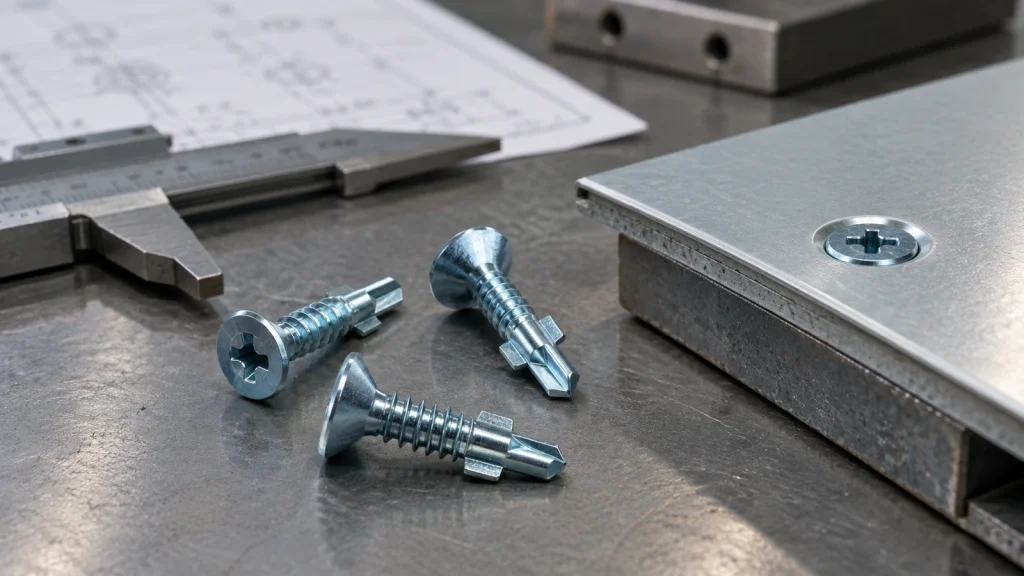
The key distinction is between a self drilling screw and a self tapping screw. A self drilling screw has a drill-point tip that makes its own hole in suitable material; a self tapping screw forms or cuts threads but may still need a pre-drilled hole. That difference matters on site because it affects installation speed, tool load, hole quality and the risk of damaging coated panels or thin sheet.
Buyers also need to separate the screw’s drill point from the drive bit used in the tool. The drill point belongs to the screw. The drive bit is the hex, Phillips, square or other tool insert that turns the screw. If an inquiry says “self drilling screw bit,” clarify whether you mean the screw tip design, the driver bit size, or a complete self drilling screw specification.
Start with the materials being joined. Thin sheet-to-sheet work, steel frame fastening, roofing panel installation and timber-to-metal fixing place different demands on the drill point and thread. A screw that drills quickly in light sheet may not hold well in a thicker steel member, while an oversized or aggressive point can leave a poor thread in thin material.
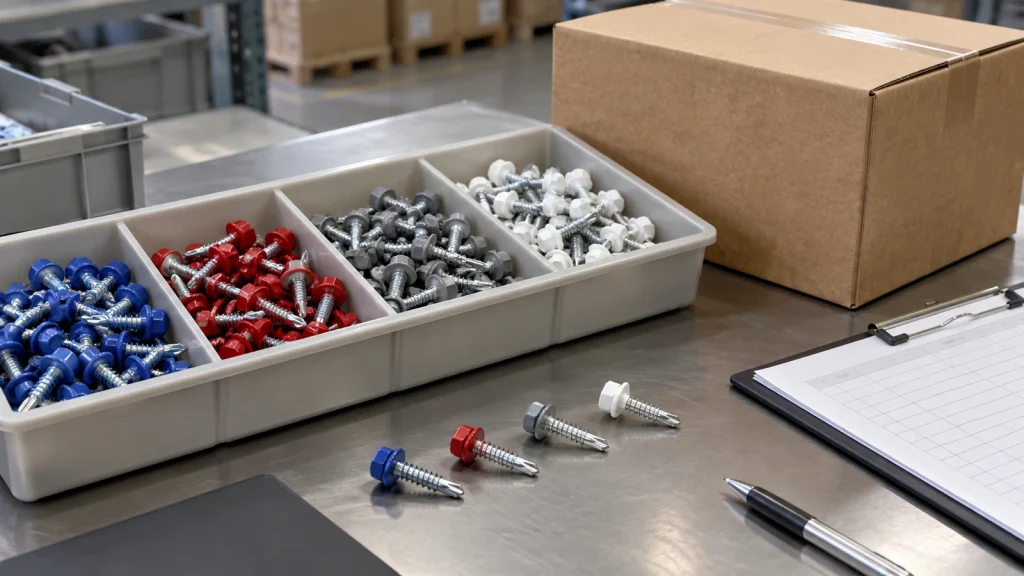
Match the head and drive to the installation method. Hex washer heads are common where installers need strong tool engagement and a sealing washer. Countersunk or pan heads suit different seating requirements. Confirm the drive style as well as the driver bit size, because cam-out or poor engagement can damage the coating and reduce assembly consistency.
Choose coating and washer details for the environment, not just appearance. Zinc, color finishes, Dacromet-type coatings and nylon or bonded washers may be considered for different exposure conditions and panel colors. The practical question is where the screw will be used: indoor dry assembly, exterior cladding, roofing, humid storage, or contact with treated timber or dissimilar metals.
Avoid sending only a screw name. For a useful reply, provide screw diameter, length, head type, drive type, coating, washer requirement, material stack, approximate thickness range, packing preference and quantity. If you are replacing an existing fastener, a drawing, photo or sample description will reduce the chance of matching the wrong drill point or head style.