Self Tapping Self Drilling Screws Selection Guide | Hebei Wotu Fastener Manufacturing Co., Ltd.

Self-Tapping and Self-Drilling Screws

Self-tapping and self-drilling screws are selected by the materials being joined, the need for a pilot hole, and the level of thread engagement required. The right screw can reduce preparation work and produce a secure connection in sheet metal, metal-to-wood assemblies, panels, roofing applications, and pre-drilled parts.

The key decision is not simply screw length. Buyers also need to match the point style, thread form, head and washer arrangement, finish, and corrosion conditions to the assembly.

Related Products

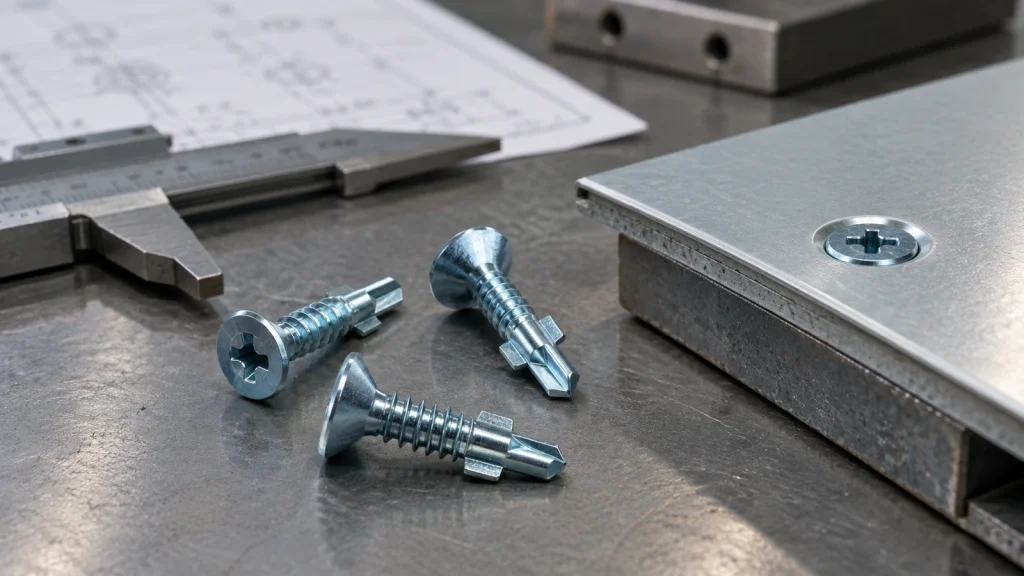
Countersunk Head Blue-White Zinc Plated Self-Drilling Screw (Chinese National Standard: Phillips Countersunk Head Self-Drilling And Self-Tapping Screw GB/T15856.2-2002)

Countersunk Head Blue-White Zinc Plated Self-Drilling Screw (Chinese National Standard: Phillips Countersunk Head Self-Drilling And Self-Tapping Screw GB/T15856.2-2002)

Brand: Hengzuan Surface: blue and white zinc plated, can be customized color zinc plated, black oxide plated Specifications: Comply with GB/T15856.2-2002 Chinese national standard, in stock ST4.2/ST4.8/ST5.5 full range of specifications, length 13mm~75mm optional, supports customized nonstandard rod lengths; drilling adaptation plate thickness 0.7~6mm Packaging: 25kg export cartons, full pallets wrapped with film, supports neutral export packaging, customer private-label customization

Read More
Blue-White Zinc Plated Pan Head With Pad Self-Tapping Screw

Blue-White Zinc Plated Pan Head With Pad Self-Tapping Screw

Brand: Hengzuan Surface: blue and white zinc plated Specifications: in stock ST4.2/ST4.8full range of specifications, length 13~50mm in stock, support nonstandard length customization Packaging: 25kg cartons, solid wood packaging, support neutral packaging, private-label customization

Read More
Blue-White Zinc Plated Winged Countersunk Head Self-Drilling Screw

Blue-White Zinc Plated Winged Countersunk Head Self-Drilling Screw

Brand: Hengzuan Surface: blue and white zinc plated, optional color zinc plated, black oxide treatment Specifications: in stock ST3.5/ST4.2/ST4.8 mainstream specifications, rod length 16~50mm full size range, supports nonstandard length customization, suitable for drilling steel sheets 2~5mm Packaging: 25kg cartons, full pallets packed on wooden pallets, support neutral packaging, private-label customization

Read More
Hex Head Self-Drilling Screw With Bonded Washer

Hex Head Self-Drilling Screw With Bonded Washer

Brand: Hengzuan Surface: blue and white zinc plated, color zinc plated can be customized on request Specifications: in stock 4.2/4.8/5.5/6.3mm mainstream wire diameter, length 20mm~165mm full range of specifications, nonstandard rod length, drill point size can be customized Packaging: 25kg export cartons, full pallets wrapped with film, supports neutral export packaging, customer private-label customization

Read More
Wafer Head Self-Drilling Screw

Wafer Head Self-Drilling Screw

Brand: Hengzuan Surface: blue and white zinc plated, can be customized color zinc plated, black oxide plated Specifications: Comply with GB/T15856.2 Chinese national standard, in stock ST3.5/ST4.2/ST4.8/ST5.5 mainstream wire diameter, rod length 13mm~50mm full range of specifications, nonstandard length customization on demand, drilling applicable plate thickness 2~5mm Packaging: 25kg export cartons, full pallets wrapped with film, supports neutral export packaging, private-label customization

Read More

Compare screw points, threads, heads, and finishes

Screw selection criteria

Compare self-tapping and self-drilling screw options by point design, thread profile, diameter and length, head and drive style, washer requirements, base material, finish, and the actual thickness stack-up. The product information should also make clear whether the screw is intended for a pilot hole, direct drilling, metal-to-metal work, metal-to-wood work, or a weather-exposed joint.

Criterion What To Check Why It Matters Buyer Tip
Drill-point style and tapping action Confirm whether the screw has a drill point for making its own hole or a tapping point intended for a prepared pilot hole. A self-drilling point can reduce separate drilling in suitable sheet materials, while a self-tapping screw may need the correct pilot hole to form clean threads. Ask, “Is this point designed for my material and thickness, or should we specify a pilot-hole size?”
Base material and thickness range Match the screw design to the materials being joined, such as metal-to-metal, metal-to-wood, or a pre-drilled assembly, and confirm the applicable thickness range. Thread form and drilling capacity affect bite, hole formation, pull-out resistance, and the risk of damaging the joint. Send the material types and thicknesses for every layer and ask which screw design is recommended for that stack-up.
Length and thread engagement Measure the total joint thickness, then check how much thread will engage the supporting material without leaving an unsuitable projection. A screw that is too short may not hold securely; excessive length can interfere with components behind the assembly or create an unwanted exposed point. Ask for the recommended length based on the full material stack, washer or seal thickness, and required thread engagement.
Head, washer, and sealing arrangement Compare the head shape, drive recess, bearing surface, and any separate or bonded washer with the joint surface and sealing requirement. These features control access for installation, clamp distribution, surface damage, and resistance to water entry in exposed joints. Ask whether the head and washer combination suits a dry structural joint, an overlap joint, or a weather-exposed application.
Material and surface finish Confirm the screw material and coating or finish, then compare them with the joint environment and any risk of galvanic or corrosion problems. The fastener must remain compatible with the joined materials and exposure conditions; a finish selected only for appearance may not suit the application. Ask, “Which material and finish are recommended for our joined metals, moisture exposure, and expected service environment?”

Choose the right screw for the joint and installation method

A self-drilling screw has a drill-shaped point that can pierce suitable material before forming its own threads. A self-tapping screw forms or cuts threads in a prepared hole or an opening made by another process, so it may be the better choice when the assembly already has pilot holes or when drilling control matters.

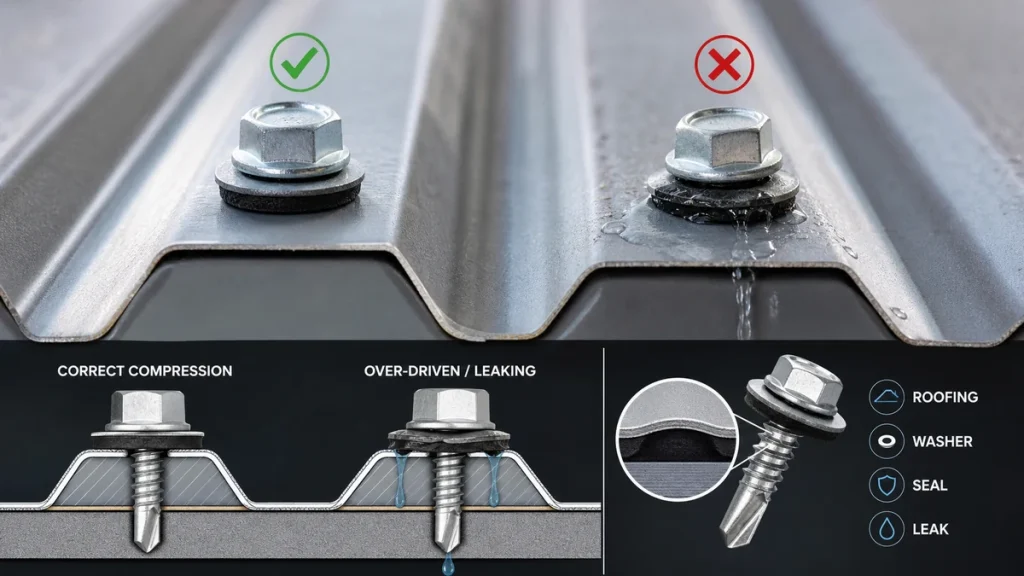
For metal-to-metal work, compare the point with the combined material thickness and hardness. For metal-to-wood work, check thread engagement and the head's bearing area. In roofing or weather-exposed assemblies, the sealing washer and coating are as important as the thread because a correctly sized screw can still allow water entry if the sealing arrangement is unsuitable. See the practical comparison of self-drilling and self-tapping screws for different assemblies.

Start with the joint. Identify the materials on both sides, their thicknesses, and whether the assembly is solid, hollow, pre-drilled, or covered by a panel. A self-drilling point can save a separate drilling step, but it is not automatically suitable for every thickness or material combination. If holes are already specified, a self-tapping screw with the correct thread and pilot-hole fit may provide more predictable assembly.

Match length to engagement, not appearance. The screw must pass through the first material and develop useful thread engagement in the supporting material without creating unwanted interference. A longer screw is not always stronger; excess projection can obstruct moving parts, damage concealed components, or complicate sealing. For a specific size such as 1 1/2 inches, confirm the material stack-up and pilot-hole or thread-engagement requirement rather than ordering by length alone.

Choose the head, drive, and finish for the application. A pan, hex washer, countersunk, or other head style changes bearing area, clearance, appearance, and installation access. Roofing and exterior joints may need a compatible sealing washer and corrosion-resistant finish. Avoid specifying a coating by color alone; confirm the intended environment, base material compatibility, and whether the finish is suitable for contact with the joined materials.

Prevent avoidable installation problems. Excessive driving force can damage the threads, strip the drive, deform thin sheet, or compromise a washer. Too little engagement can leave the joint loose. Before requesting a quotation, send a simple joint description, material thicknesses, hole condition, required head or washer style, finish or exposure condition, and estimated quantity. This gives the supplier enough context to confirm a suitable configuration instead of quoting a screw based only on its nominal length.

Criteria Importance Description Example Options
Point type Usually the first technical decision The point determines whether the screw can drill its own hole or needs a prepared opening. A drill point saves a drilling step, while a tapping point depends on a suitable pilot hole or existing opening. A metal sheet fixed to a steel support may call for a drill point; a punched bracket may use a self-tapping screw in the existing hole.
Material stack-up Critical for fit and joint strength The combined thickness and hardness of the materials affect drilling, thread formation, and usable engagement. Ordering by screw length alone can lead to weak grip or unwanted projection. A thin cover sheet over a thicker base needs enough thread engagement in the base, not just enough length to pass through both layers.
Head, drive, and washer Important for installation and surface performance The head controls bearing area and clearance, the drive affects tool engagement, and the washer may be needed for sealing or load distribution. These features should match the surface shape and assembly access. A hex washer head may suit tool access on panels, while a countersunk head may be chosen where a flush surface is required.
Finish and exposure Important when corrosion or appearance matters The finish should be chosen for the service environment and material compatibility, not only for color. Outdoor, humid, or mixed-metal assemblies may need closer review than indoor dry applications. A coated screw for an exterior panel should be checked against weather exposure and the material it contacts.
Installation method Affects consistency and failure risk Driver speed, pressure, alignment, and torque control can change the final joint. Overdriving can strip threads, deform thin sheet, or damage a sealing washer. For repeated assembly work, confirm the screw type together with the intended tool setup and pilot-hole condition.

Product Selection

Related Options

For a sheet-metal enclosure, panel assembly, or roof-related joint, the main priority is a screw that matches the material stack-up and provides the required thread engagement without compromising the surface or seal. Compare individual options against that use case rather than treating self-tapping and self-drilling descriptions as interchangeable.

Blog Articles / Reviews

What Is the Difference Between Self Drilling and Self Tapping Screws?

What Is the Difference Between Self Drilling and Self Tapping Screws?

Direct Answer: A self-drilling screw has a drill-shaped point that creates a hole and then forms mating threads in a suitable material. A self-tapping screw forms or cuts mating threads but may require a correctly sized pilot hole. Selection depends on substrate type and thickness, joint stack, point geometry, installation tool, finish and application testing—not […]

How Should Buyers Evaluate Self Tapping Screws for Project Procurement?

How Should Buyers Evaluate Self Tapping Screws for Project Procurement?

#4 self tapping screws should not be purchased from the “#4” designation alone. For a usable B2B specification, the buyer still needs the actual screw diameter, thread form or pitch, overall length, substrate, pilot-hole condition, head and drive style, material, surface finish and quantity. This matters because suppliers may use different naming systems. Wotu Fastener’s […]

Why Do Self-Tapping Roofing Screws Leak Even When the Screw Length Looks Correct?

Why Do Self-Tapping Roofing Screws Leak Even When the Screw Length Looks Correct?

Direct answer: Correct screw length does not guarantee a watertight metal-roof connection. Self tapping roofing screws can leak because of incorrect washer compression, enlarged or stripped holes, insufficient thread engagement, panel movement, or an unsuitable coating-and-washer system. Buyers should diagnose the complete installed connection—including panel profile, support thickness, point type, washer condition, and exposure—rather than […]

What RFQ Details Matter When Ordering Blue Zinc Winged Self-Drilling Screws?

What RFQ Details Matter When Ordering Blue Zinc Winged Self-Drilling Screws?

When ordering a blue zinc self drilling screw with a winged, countersunk configuration, diameter and length are not enough to define the application. The RFQ should identify the materials being connected, upper-material thickness, steel-substrate thickness, total material stack, required countersunk seating, screw diameter, total length, drill-point condition, wing geometry, surface treatment, installation method, quantity and […]

Frequently Asked Questions

Can one screw be both self-tapping and self-drilling?

Yes. A self-drilling screw normally also forms its own mating thread after the drill point creates the hole. The important detail is whether the drill point suits the material thickness and whether the thread has enough engagement in the supporting material.

When is a pre-drilled self-tapping screw better than a drill-point screw?

A self-tapping screw can be the better choice when the hole position, hole diameter, or surface finish must be controlled before assembly. It is also useful when the parts are already punched, drilled, or aligned in a fixture and the buyer wants predictable thread forming rather than on-the-spot drilling.

What causes a screw to feel tight but still make a weak joint?

The screw may be gripping only the top sheet, bottoming out, or failing to develop enough thread engagement in the base material. A high driving torque does not always mean a strong connection; the material stack-up, pilot hole, thread form, and length all need to work together.

Are roofing screws selected only by length and washer size?

No. Length and washer size matter, but the sealing washer material, head style, coating, panel profile, and installation pressure also affect leakage risk. A screw that is long enough can still leak if the washer is over-compressed, under-compressed, or mismatched to the surface.

What information should be sent for a practical quotation?

Send the materials being joined, thickness of each layer, whether the hole is pre-drilled or must be drilled by the screw, and the preferred head, drive, washer, finish, and quantity. If the application is exposed to weather or chemicals, state that condition so the finish and sealing choice can be checked.

Leave Your Message

For an accurate inquiry, please provide the materials and thicknesses being joined, whether the parts are pre-drilled or require direct drilling, and the required head, washer, finish, or approximate quantity.