

Dowel Pins for Accurate Part Location | Hebei Wotu Fastener Manufacturing Co., Ltd.
Dowel pins for accurate part location
Dowel pins locate two parts in the same position every time they are assembled. The main purchase decision is not only pin diameter and length, but the fit between the pin, the mating holes and the way the joint will be serviced later.
For fixtures, dies, machine parts and precision housings, a dowel pin can carry alignment loads that ordinary bolts should not be asked to control. The right pin helps prevent shift, repeat assembly error and premature wear around the joint.
Fit, material and installation choices that affect dowel pin performance
The first practical distinction is between a locating pin and a fastening bolt. A bolt clamps parts together; a dowel pin controls position. If the design relies on bolts alone for accurate alignment, the holes can wear, the parts can move under side load, and reassembly may not return to the same datum.
Fit is where many dowel pin problems start. A press fit gives firm location but is harder to remove and can damage soft materials if the hole is poorly prepared. A slip fit allows easier assembly and service, but it needs another feature to retain the pin or control movement. Confirm the hole tolerance and the service method before choosing the pin style.
Start with the function of the pin. If it is only a repeat-location feature, straight solid dowel pins are often considered. If the joint needs easier installation into less precise holes, a spring-type or slotted style may be more forgiving, but it may not provide the same rigid location as a ground solid pin.
Match the material and surface finish to the working environment. Carbon steel, alloy steel and stainless options serve different needs for strength, wear resistance and corrosion exposure. If the pin will be removed regularly, ask about chamfer quality, surface condition and whether the selected material is suitable for repeated handling without galling or hole damage.
Avoid choosing diameter from the pin alone. The mating hole process matters just as much: drilled, reamed and bored holes can produce very different fits. A common mistake is ordering pins before the drawing specifies whether the assembly needs interference, transition or clearance fit at each side of the joint.
For an inquiry, share the pin diameter, length, material preference, fit requirement and application. If the drawing includes tolerance, chamfer, hardness or finish notes, include those details as well. If they are not yet decided, ask Hebei Wotu Fastener Manufacturing Co., Ltd. which details they need to confirm before quoting or recommending an alternative.
| Criteria | Importance | Description | Example Options |
|---|---|---|---|
| Fit between pin and hole | Critical for alignment and serviceability | The fit controls whether the pin locks into place, slides for disassembly or risks looseness during use. Hole preparation is as important as pin diameter. | A press fit may suit a permanent locating feature; a slip fit may suit a cover or fixture plate that is removed often. |
| Pin style | Important for accuracy, installation and tolerance forgiveness | Solid pins generally provide firm, accurate location. Spring or slotted styles can be easier to install in less precise holes but may not give the same rigid datum. | A precision machine housing may use a solid locating pin, while a lighter assembly may accept a spring-type pin. |
| Material choice | Depends on load, wear and exposure conditions | Material affects strength, corrosion resistance and how the pin behaves during repeated assembly. The mating material should also be considered to avoid hole damage or galling. | A dry indoor fixture may have different material needs from equipment exposed to moisture or cleaning fluids. |
| End shape and chamfer | Useful for assembly speed and hole protection | Chamfers and end condition affect how easily the pin starts in the hole and whether it marks the mating component during installation or removal. | A lead-in chamfer can help operators assemble parts without shaving the hole edge. |
| Drawing tolerances and finish notes | Often decide whether a quoted part is suitable | Tolerance, hardness and surface finish notes can separate a general pin from one suitable for precise location. Missing drawing notes may lead to the wrong fit even when the nominal size is correct. | Two pins with the same diameter and length may not perform the same if one requires a tighter tolerance or smoother finish. |
Product Selection
Related Options
For a precision fixture or machine housing, the priority is repeatable location rather than simple fastening. In that case, the better choice is the dowel pin style and fit that hold alignment through assembly, use and maintenance without damaging the mating holes.







Blog Articles / Reviews
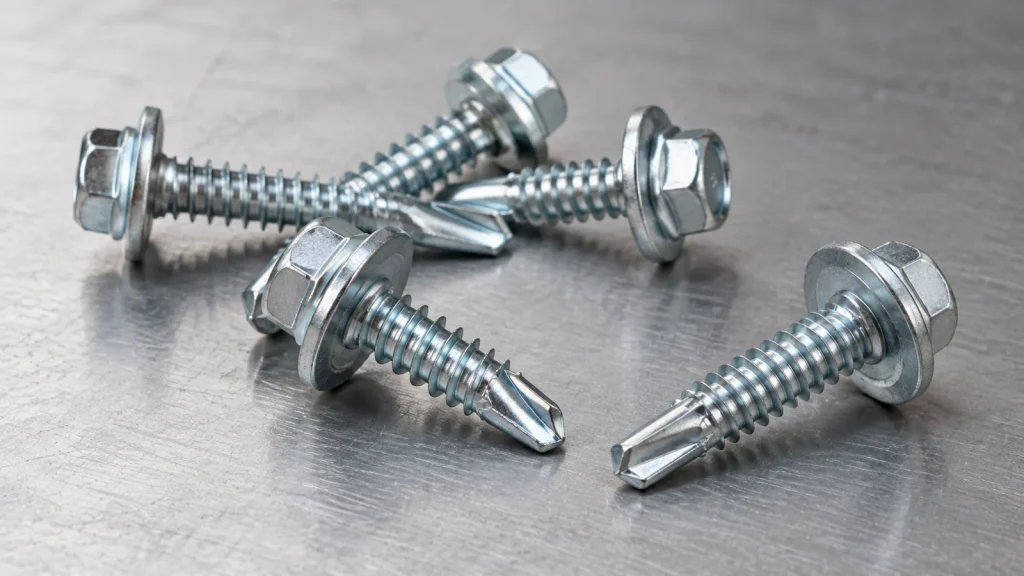
Hex Head Self-Drilling Screws with Cup Washers: Choosing Drill Point and Length
Choosing a hex head self-drilling screw with a cup washer requires more than selecting ST5.5 or ST6.3 and a nominal length. The drilling point must suit the steel it penetrates; the threaded section must engage the intended supporting material; and the head-and-washer assembly must seat correctly on the outer panel. A screw’s drilling capacity is […]

What Is a Fastener? Types, Functions and Industrial Uses
A fastener is a hardware component that mechanically joins or secures parts. Common examples include screws, bolts, nuts and rivets; washers are supporting components used in many fastening assemblies. Some connections can be dismantled by removing threaded fasteners, while others, such as riveted joints, normally require the fastener to be destroyed during removal. In industrial […]
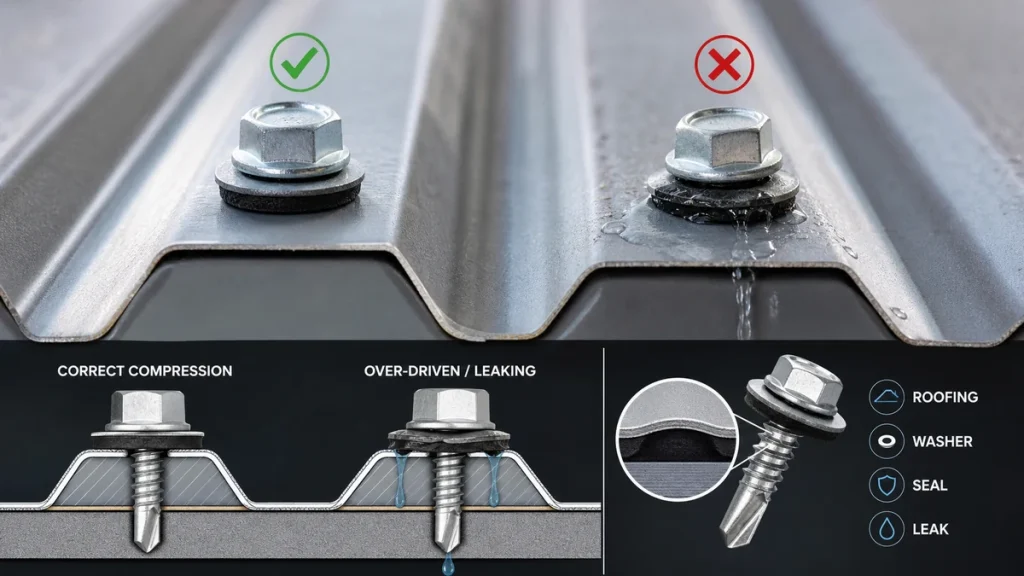
Why Do Self-Tapping Roofing Screws Leak Even When the Screw Length Looks Correct?
Direct answer: Correct screw length does not guarantee a watertight metal-roof connection. Self tapping roofing screws can leak because of incorrect washer compression, enlarged or stripped holes, insufficient thread engagement, panel movement, or an unsuitable coating-and-washer system. Buyers should diagnose the complete installed connection—including panel profile, support thickness, point type, washer condition, and exposure—rather than […]

A manufacturer of hexagonal self-drilling screws discusses their performance standards.
Hebei Wotu Fastener Manufacturing Co., Ltd., founded in the 1990s, is located in Yongnian District, Handan City, Hebei Province, known as the “Hometown of Fasteners.” 1. Core Hardness: Standard: HRC32-40. Our products are measured at HRC31.7-39.0. 2. Surface Hardness: Standard: HV600-700. Our products are measured at approximately HV620. 3. Hardened Layer: 4#-6#: 0.05-0.18mm; 8#-12#: 0.10-0.23mm; […]
Frequently Asked Questions
Should the pin be a press fit or a slip fit?
Choose a press fit when the pin must stay firmly in one component and provide rigid location. Choose a slip fit where the assembly must come apart regularly, but make sure the design still controls retention and movement.
Can bolts replace locating pins in an assembly?
Bolts are mainly for clamping force, not precise location. If side load or repeat alignment matters, dowel pins usually provide a more reliable datum while the bolts hold the parts together.
Are solid pins and spring pins interchangeable?
Not always. A solid ground pin is usually preferred for accurate, rigid location, while a spring or slotted pin can tolerate less precise holes and easier installation but may give less exact positioning.
What information should be sent with an enquiry?
Share the diameter, length, material preference, finish, quantity and the intended fit if known. A drawing is best because tolerance, chamfer, hardness and hole details can change the suitable pin choice.
What is a common mistake when specifying these parts?
A common mistake is selecting only the pin size without defining the hole tolerance. The same nominal pin can behave very differently in a drilled, reamed or bored hole, so the mating part should be considered at the same time.
Leave Your Message
Send the pin diameter and length, material or finish preference, and whether the pin needs a press fit, slip fit or removable assembly.