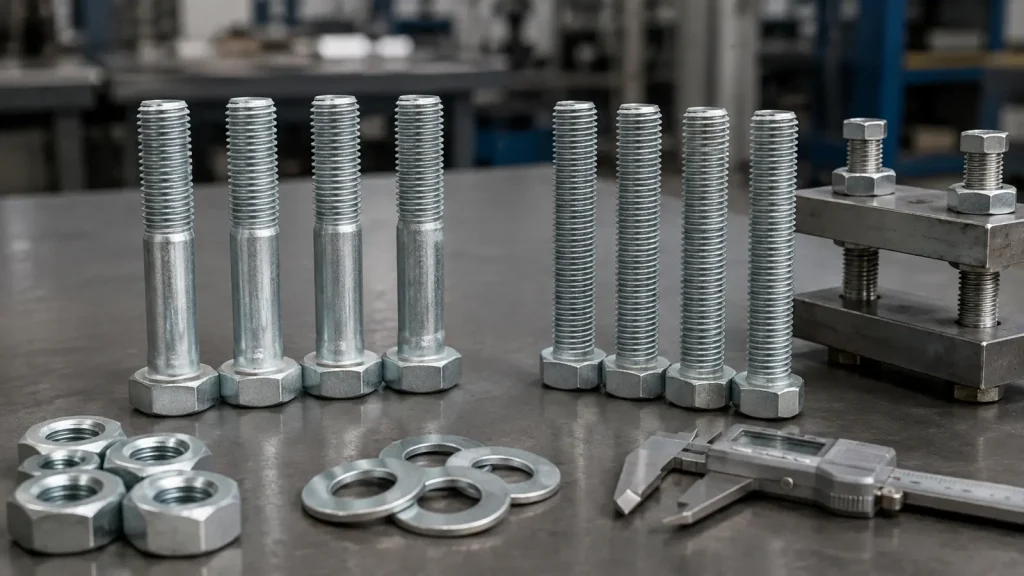
The main practical choice is between a fully threaded M6 bolt and a partially threaded bolt. Full thread gives more adjustment over a short clamped joint, while partial thread can leave an unthreaded shank across part of the joint. The correct option depends on the grip length and how the joint is designed.
Head style also matters. A standard hex head suits access for a wrench, while a low-clearance, socket, countersunk or other head may be needed for a particular assembly. Confirm the available tool access and the required bearing surface before placing an order.
Start with the joint dimensions. Specify the M6 bolt length from the underside of the head, the total material thickness being clamped, and whether a washer or nut is included in that stack. A bolt that is too short may not engage the nut properly; one that is too long can interfere with nearby parts or leave unnecessary exposed thread.
Choose the thread and standard from the mating component, not from the bolt description alone. Confirm the pitch, thread form, head dimensions and any applicable standard on the drawing or existing fastener. Do not assume that every 6mm bolt has the same thread or head geometry.
Material and surface finish should reflect the environment. Consider indoor or outdoor exposure, moisture, chemicals, temperature and contact with dissimilar metals. A coated steel bolt, stainless option or plain finish can involve different corrosion, galling, strength and cost trade-offs, so confirm compatibility with the nut and washers.
Before requesting a quotation, send the required quantity, bolt standard or drawing, length, thread requirement, head style, material or finish and intended application. If the specification is incomplete, ask the manufacturer to confirm the M6 interpretation and provide the matching nut and washer requirements before comparing offers.