Choose the thread series before choosing the supplier. Coarse threads are commonly considered for general assembly and may be more tolerant of handling or contamination, while fine threads can suit applications that need finer adjustment or more engagement in a given length. The correct choice depends on the existing tapped hole, drawing, or mating hardware.
Also verify what “1 inch” means on your drawing. It may identify the nominal thread diameter, while the required bolt length, head style, nut height, and wrench size remain separate dimensions. A bolt that has the right diameter but the wrong thread series or grip length will not make a suitable replacement.
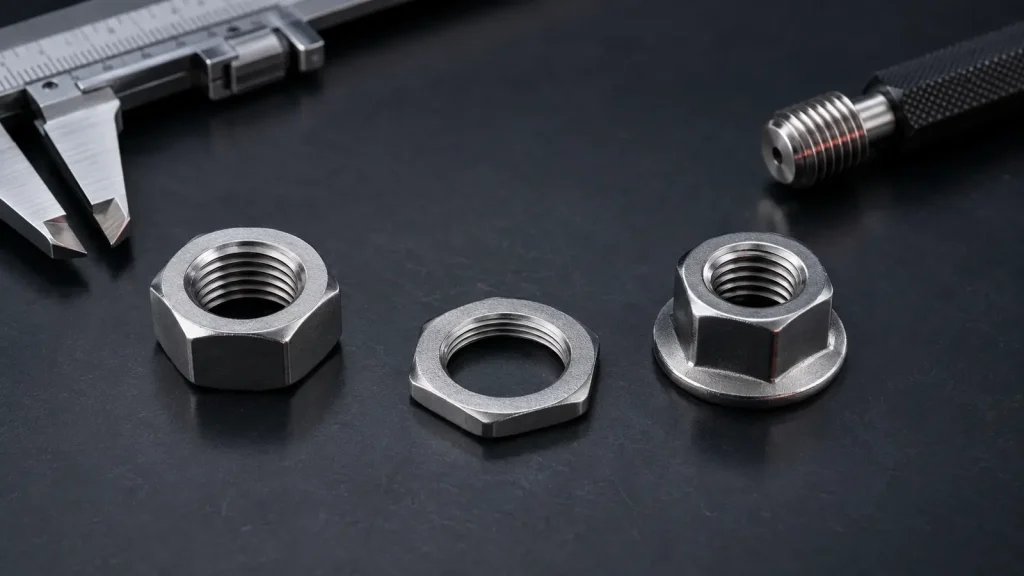
Match the thread details. State the nominal diameter, thread series, and whether the assembly uses a standard or special nut. Do not combine a bolt and nut simply because both are described as 1 inch; their thread form and pitch must match. If the part replaces an existing fastener, send a drawing or clear thread information rather than relying only on a visual comparison.
Check length and joint fit. Specify the required grip length, the thickness of the parts being joined, washer use, and any clearance around the head and nut. A bolt that is too short may not provide adequate engagement, while excessive length can interfere with nearby components or create an installation problem.
Choose material and finish for the service. Consider the joint load, vibration, moisture, chemicals, temperature, and contact with dissimilar metals. Higher strength is not automatically the best choice if the mating parts, tightening method, or corrosion conditions require a different material or finish. Ask what material and surface treatment can be supplied for the intended environment.
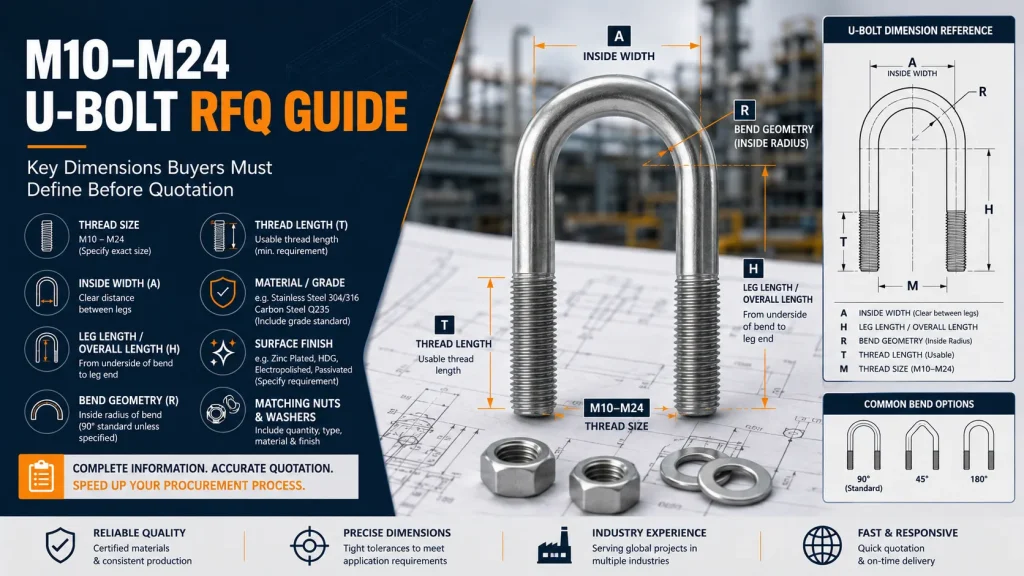
Send a precise enquiry. Include the quantity, thread specification, bolt length, head style, nut type, washer requirement, material or strength requirement, finish, and delivery destination. If any detail is unknown, provide the application, an existing sample, or a drawing and ask which specification should be confirmed before production.