| Bolt and nut form for the joint |
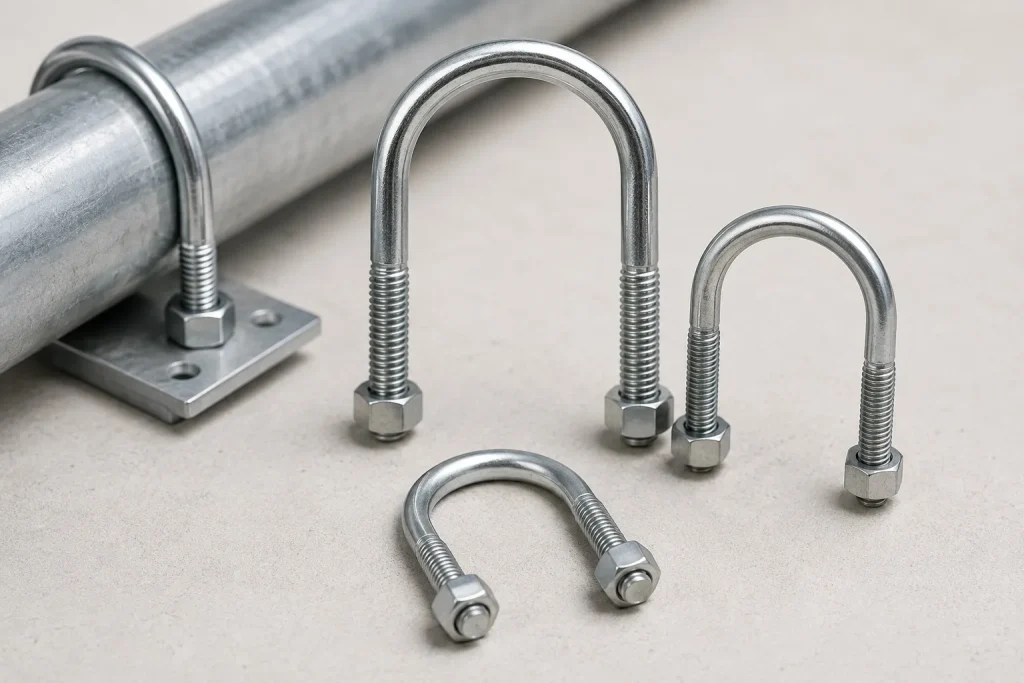
Match the fastener form to the assembly: hex bolt with hex nut for general clamping, U-bolt for pipe or round supports, anchor bolt for concrete fixing, and self-tapping screw where no mating nut is used. |
The wrong form can leave poor bearing area, misaligned load paths, or no practical way to tighten and inspect the joint. |
Ask: What is being clamped or fixed, and does the joint need a through-bolt with nut, a shaped bolt, or a thread-forming fastener? |
| Thread standard and mating fit |
Confirm the thread system, diameter, pitch, tolerance class, and whether the nut must match a Chinese, German, or other specified standard. |
A bolt and nut may look compatible but still bind, loosen, or fail inspection if the thread pitch or standard is wrong. |
Ask: Can you provide the drawing, standard number, or a sample part so the bolt thread and nut thread are matched before production? |
| Nut height and clearance around the joint |
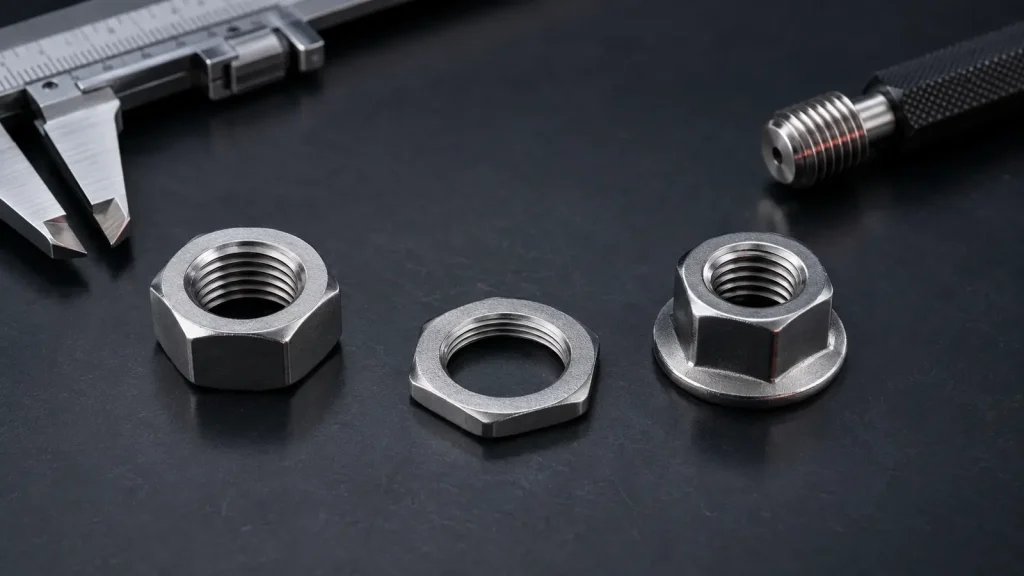
Compare standard hex nuts, thin hex nuts, lock nuts, washers, and available wrench space around the assembly. |
A thin nut may fit tight spaces but usually offers less thread engagement than a standard nut, while a taller or locking nut may need more clearance. |
Ask: How much vertical space is available after the bolt passes through the parts, washer, and nut? |
| Bolt length, engagement, and grip length |
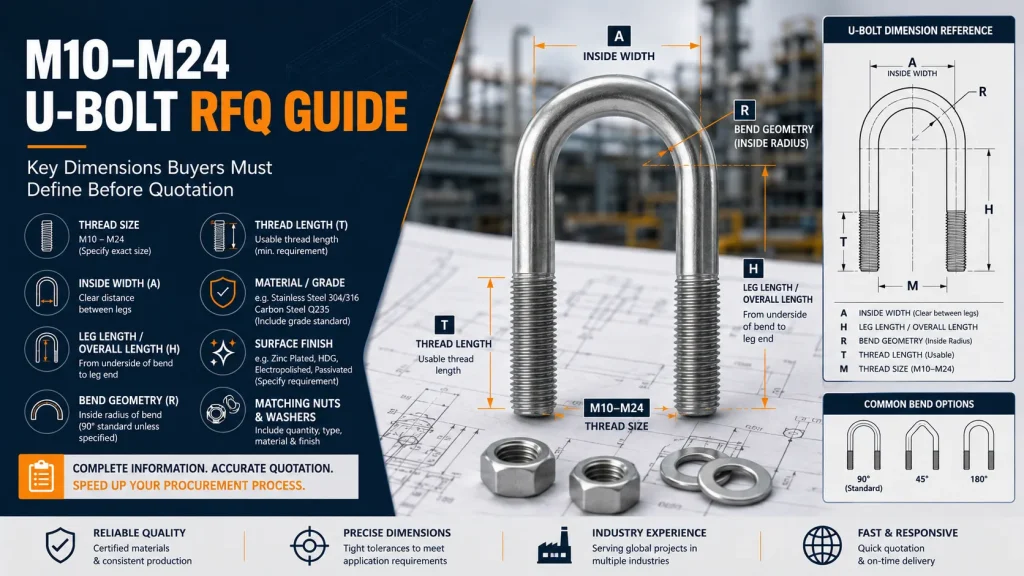
Separate total bolt length from usable thread length, unthreaded shank length, clamped material thickness, washer stack, and expected thread protrusion past the nut. |
Too short a bolt may not fully engage the nut; too long a bolt can interfere with nearby parts or waste material. |
Ask: What is the full stack thickness, including coatings, washers, brackets, and any compression allowance? |
| Surface finish and service environment |
Specify the finish needed for the environment, such as indoor dry use, outdoor exposure, pipe support, or contact with dissimilar materials. |
Finish affects corrosion resistance, thread fit, appearance, and the consistency of tightening, especially on assemblies exposed to moisture or vibration. |
Ask: Will the bolt and nut be used indoors, outdoors, in a damp area, or near chemicals or salt exposure? |