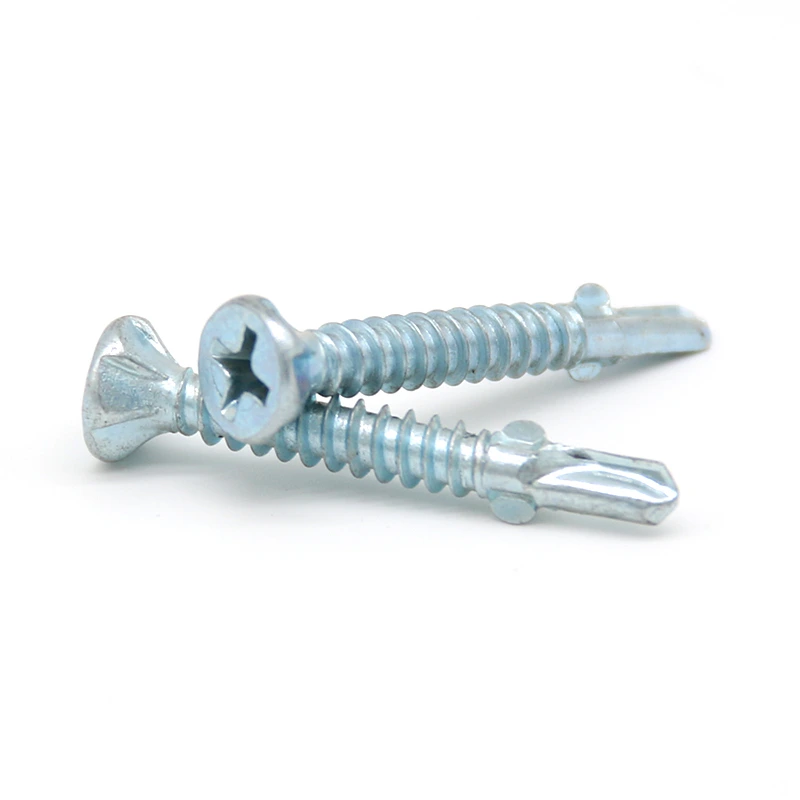
| Fastener type and joint design |
Match the fastener to the materials being joined, the hole condition, and whether the part needs a screw, bolt, nut, washer, anchor, or self-drilling screw. |
The wrong type can strip, loosen, crack the base material, or add unnecessary installation steps. |
Ask: What materials and thicknesses will the fastener join, and is pre-drilling allowed? |
| Thread form and point style |
Confirm the thread pitch, thread length, point type, and whether the fastener must cut, form, or engage an existing thread. |
Thread and point geometry affect starting, pull-out resistance, installation speed, and the risk of damaging the mating part. |
Ask: Should the fastener drill its own hole, tap into metal, grip wood, or assemble into a nut or threaded insert? |
| Material and surface treatment |
Review the base material and finish, such as zinc plating, oxidation treatment, or another coating suitable for the environment. |
Material and coating influence corrosion resistance, appearance, friction during tightening, and long-term service life. |
Ask: Will the fastener be used indoors, outdoors, in damp conditions, or near chemicals? |
| Standard, dimensions, and tolerances |
Verify the applicable standard, nominal diameter, length, head style, drive type, and any tolerance requirements before ordering. |
Small differences in head, drive, or length can stop assembly, interfere with tooling, or change clamping performance. |
Ask: Do you need a specific national or project standard, or can an equivalent specification be reviewed? |
| Installation method and tooling |
Check the required driver bit, wrench, torque approach, access space, and whether manual or powered installation will be used. |
A fastener that looks correct on paper may fail in production if the tool slips, the head cams out, or the joint cannot be reached. |
Ask: What tools will installers use, and are there limits on tightening torque or installation speed? |