Grub Screw Size Chart | Hebei Wotu Fastener Manufacturing Co., Ltd.

Grub Screw Size Chart for Thread, Length, and Point Selection

Grub screw size selection usually comes down to three linked choices: thread size, length, and point style. A size chart is useful only if it matches the assembly you are locking, adjusting, or locating, such as a shaft collar, pulley hub, handle, gear, fixture, or small mechanical component.

The right grub screw should provide enough thread engagement without bottoming out, hold the mating part without damaging it more than necessary, and fit the available hex socket or drive access. For an inquiry to Hebei Wotu Fastener Manufacturing Co., Ltd., the key is to define the standard, material, finish, point type, and quantity instead of asking for “standard sizes” alone.

Related Products

7-letter, 9-letter L-shaped anchor bolt (Chinese national standard GB/T799-1988 embedded anchor screw)

7-letter, 9-letter L-shaped anchor bolt (Chinese national standard GB/T799-1988 embedded anchor screw)

Brand: Wotu Surface: Natural black oxide treatment, customized hot-dip galvanized, zinc plated as required Specifications: Follow Chinese national standard GB/T799-1988, in stock M12-M48, total length 120mm~1500mm, nonstandard customized diameter, bending length, total screw length available Matching: Nuts, flat washers and spring washers of the same specification can be supplied in complete sets. Packaging: Bundling and packaging, using wooden pallets and film-wrapped export packaging in large quantities

Read More
Countersunk Head Blue-White Zinc Plated Self-Drilling Screw (Chinese National Standard: Phillips Countersunk Head Self-Drilling And Self-Tapping Screw GB/T15856.2-2002)

Countersunk Head Blue-White Zinc Plated Self-Drilling Screw (Chinese National Standard: Phillips Countersunk Head Self-Drilling And Self-Tapping Screw GB/T15856.2-2002)

Brand: Hengzuan Surface: blue and white zinc plated, can be customized color zinc plated, black oxide plated Specifications: Comply with GB/T15856.2-2002 Chinese national standard, in stock ST4.2/ST4.8/ST5.5 full range of specifications, length 13mm~75mm optional, supports customized nonstandard rod lengths; drilling adaptation plate thickness 0.7~6mm Packaging: 25kg export cartons, full pallets wrapped with film, supports neutral export packaging, customer private-label customization

Read More
Countersunk Head Blue Zinc Self-Drilling Screw

Countersunk Head Blue Zinc Self-Drilling Screw

Brand: Hengzuan Surface: blue and white zinc plated, can be customized color zinc plated, black oxide plated Specifications: in stock 3.5/3.9/4.2/4.8/5.5 mainstream wire diameter, rod length 13mm~75mm full size range, nonstandard length can be customized as needed Packaging: 25kg export cartons, full wooden pallets wrapped with film, supports neutral export packaging, private-label customization

Read More

Grub screw size and point selection

Size and specification notes

When comparing grub screw options, look beyond the diameter column in the chart. Confirm the thread form, available length range, socket or drive style, point geometry, material, surface finish, and tolerance expectations. A sample, drawing, or existing fastener callout can prevent costly mismatch in small mechanical assemblies.

Criterion What To Check Why It Matters Buyer Tip
Thread size and pitch Confirm the nominal thread, pitch, and standard used, such as metric coarse, metric fine, UNC, or UNF. A grub screw can look close in diameter but still fail to enter the tapped hole if the pitch or thread form is wrong. What thread standard and pitch does the mating tapped hole use?
Overall length Compare the listed screw length with the available thread depth and the required engagement in the part. Too short may not hold the component securely; too long may bottom out, protrude, or interfere with nearby parts. Should the screw sit flush, below the surface, or project for later adjustment?
Point style Specify the end form, such as cup point, cone point, flat point, dog point, or knurled cup point. The point controls how the screw grips the shaft or mating surface and whether it leaves a mark. Is the screw locking a permanent position, allowing adjustment, or pressing against a finished surface?
Drive type and socket size Match the drive style and hex socket size to the assembly tool and access space. Small grub screws are easy to strip if the wrong key size is used or if there is poor tool access. What tool will be used during assembly and maintenance, and is there enough clearance to turn it?
Material and surface finish Confirm the base material and finish needed for the assembly environment, not only the size shown in a chart. Size determines fit, but material and finish affect corrosion resistance, strength, and compatibility with the mating part. Will the grub screw be used indoors, outdoors, near moisture, or against a dissimilar metal?

Using a grub screw size chart for real assemblies

A grub screw size chart normally shows the nominal thread diameter and pitch, then available lengths for each thread. Metric examples are usually written as M3, M4, M5, M6, and so on, while inch sizes use numbered or fractional thread designations. Length is measured differently from many headed screws because a grub screw has no head; the stated length normally refers to the full body length from end to end.

The important distinction is that diameter controls thread strength and tapped-hole compatibility, while length controls engagement and clearance. A larger diameter is not automatically better if the hub wall is thin, and a longer screw can fail the assembly if it protrudes, bottoms in a blind hole, or interferes with a shaft.

Start with the thread standard already used in the part. Mixing metric and inch grub screws can look close at small sizes but damage the internal thread under load. If the mating component is already tapped, confirm the thread callout from the drawing, gauge, or sample part before choosing from a size chart.

Choose length from the actual assembly depth, not from a generic table. For a shaft collar or pulley hub, the screw should engage enough thread in the hub and reach the shaft properly, while leaving safe clearance at the outer face and inner bore. Blind holes need extra care because a screw that bottoms out may feel tight without applying real clamping force.

Point style changes how the screw holds. A cup point bites into the mating surface and is common for permanent or semi-permanent holding. A cone point can locate into a drilled seat. A flat point spreads contact and reduces surface damage. A dog point can align or locate parts where repeatable positioning matters. The wrong point can either slip under vibration or mark a shaft that later needs to move smoothly.

Before requesting a quote, prepare the nominal thread, length, point style, material, finish, drive type, and any applicable standard or drawing. If the application sees vibration, outdoor exposure, repeated adjustment, or contact with a finished shaft, mention that too; those details can change the recommended point, coating, or material.

Criteria Importance Description Example Options
Thread standard Critical for fit and thread protection Match the screw to the tapped hole's diameter, pitch, and measurement system. Metric and inch threads that appear close can still be incompatible. A metric callout such as M5 must not be substituted with a similar-looking inch thread without confirming the mating thread.
Body length Determines usable engagement and assembly clearance The selected length must reach the contact surface while leaving enough thread engagement and avoiding the bottom of a blind hole or interference with internal parts. A shorter option may suit a thin hub, while a longer option may be appropriate only when the tapped depth and internal clearance have been checked.
Point geometry Controls holding action and surface marking Cup, cone, flat, and dog points suit different contact conditions. More aggressive points can improve bite but may damage a shaft or make later adjustment difficult. A cup point can suit a fixed pulley hub; a flat point may be preferable where the contact surface should remain less marked.
Material and finish Affects durability and compatibility with the working environment Consider moisture, exposure, repeated adjustment, contact with other metals, and the required balance between strength, corrosion resistance, and surface protection. Confirm the available material and finish for the specified size. An indoor fixture and an exposed mechanical assembly may require different material or finish decisions even when the thread and length are identical.
Drive access Determines whether the screw can be installed and adjusted in the available space Check the socket or drive style against the tool access around the hub, collar, or fixture. A suitable thread and point will still be impractical if the tool cannot reach or turn the drive. A recessed hex socket may work where an external drive cannot reach, provided the installation tool has enough clearance.

Blog Articles / Reviews

How to Specify Countersunk Head Cross Thick Thread Fiberboard Screws for Furniture Assembly Projects

How to Specify Countersunk Head Cross Thick Thread Fiberboard Screws for Furniture Assembly Projects

Fiberboard screws are selected based on more than screw size alone. For furniture assembly and board-based applications, buyers need to match the screw structure with the characteristics of fiberboard, MDF, and similar engineered wood materials. A suitable specification should consider thread design, head style, screw length, diameter, installation method, and application requirements. For buyers sourcing […]

What Should an RFQ Include When Sourcing Dacromet Hex Head Self-Drilling Screw?

What Should an RFQ Include When Sourcing Dacromet Hex Head Self-Drilling Screw?

When sourcing dacromet hex head self drilling screw, a complete RFQ should define the application, screw configuration, coating requirement, dimensions, and supplier confirmation requirements. Buyers often receive different quotations because suppliers may interpret coating, size, drilling capability, or packaging scope differently. Before preparing a project inquiry, buyers can review the available fastener product categories to […]

How Should Buyers Evaluate Self Tapping Screws for Project Procurement?

How Should Buyers Evaluate Self Tapping Screws for Project Procurement?

#4 self tapping screws should not be purchased from the “#4” designation alone. For a usable B2B specification, the buyer still needs the actual screw diameter, thread form or pitch, overall length, substrate, pilot-hole condition, head and drive style, material, surface finish and quantity. This matters because suppliers may use different naming systems. Wotu Fastener’s […]

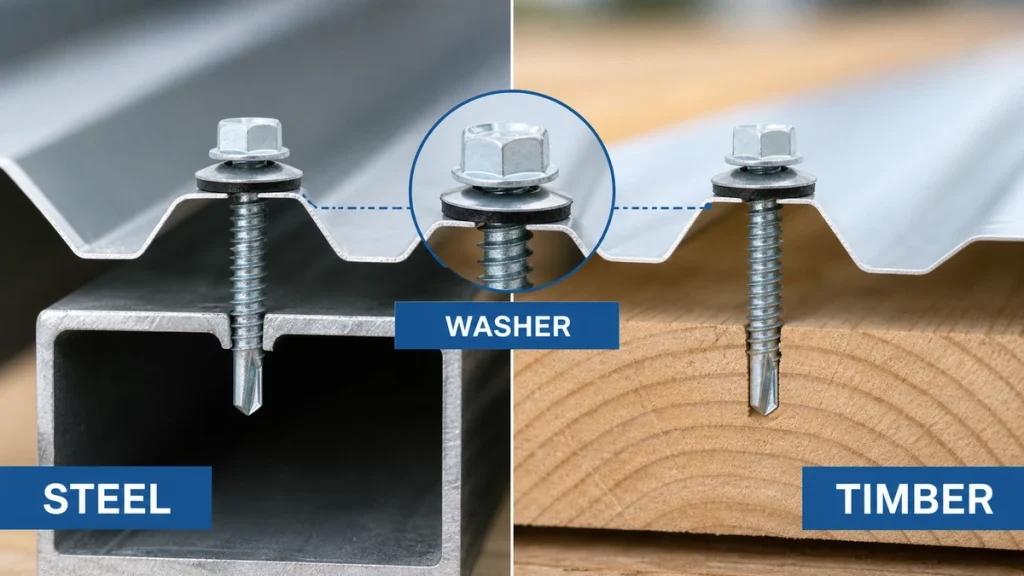
Which Self-Tapping Roofing Screw Specification Fits Metal Panels on Steel or Timber?

Which Self-Tapping Roofing Screw Specification Fits Metal Panels on Steel or Timber?

The correct self-tapping roofing screw depends on the complete panel-and-substrate stack-up. Steel supports typically require a point and thread matched to the support thickness and any pilot-hole requirement; timber supports require a wood-appropriate thread and sufficient embedment. In both cases, buyers must define diameter, length, head, sealing washer, material or coating, environment, pull-out requirements, and […]

Frequently Asked Questions

Can a grub screw replace a headed screw in any joint?

No. A grub screw is intended to sit within a tapped hole and press against or locate another part, so it works well in hubs, collars, knobs, fixtures, and adjustment mechanisms. A headed screw is usually the better choice when the fastener must clamp parts through a clearance hole or provide an external bearing surface.

How should length be chosen for a blind tapped hole?

Measure the usable thread depth and the distance to the contact surface, then allow clearance so the screw does not bottom out before it clamps the mating part. Check the assembled position as well, since excessive length can project into a bore, obstruct movement, or contact another component.

Which point style is suitable for a shaft that must remain reusable?

A flat point generally distributes contact and causes less concentrated marking, while a dog point can locate against a prepared recess or flat. A cup point provides stronger bite but can leave a pronounced mark, so it is more suitable when firm holding matters more than preserving the shaft surface.

Is an inch thread interchangeable with a similar-looking metric thread?

No. Similar outside diameters do not mean the pitch or thread form matches. Confirm the thread standard from the engineering drawing, tapped-hole gauge, or existing fastener before ordering; forcing a near match can damage the mating thread and reduce holding reliability.

What information should accompany a purchase inquiry?

Provide the thread designation and standard, body length, point style, drive type, material, finish, quantity, and an application drawing or sample if available. Also mention vibration, outdoor exposure, repeated adjustment, or a finished shaft because those conditions can affect the suitable point and material choice.

Leave Your Message

Send the thread size or drawing, required length, and point style. If available, also include the material, finish, application part, and estimated quantity so the inquiry can be checked against the actual assembly.