Hexagon Bolt Screws for Assembly | Hebei Wotu Fastener Manufacturing Co., Ltd.

Hexagon bolt screws for assembly joints

Hexagon bolt screws are chosen when a joint needs a six-sided head that can be tightened with a wrench or socket. The right specification depends on the joint design: whether the fastener passes through a clearance hole and uses a nut, or cuts or engages its own thread in the receiving material.

Before requesting a quotation, fix the fastener type, diameter, length, thread form, material, surface finish and head style. These details affect fit, installation access and resistance to the conditions around the joint.

Related Products

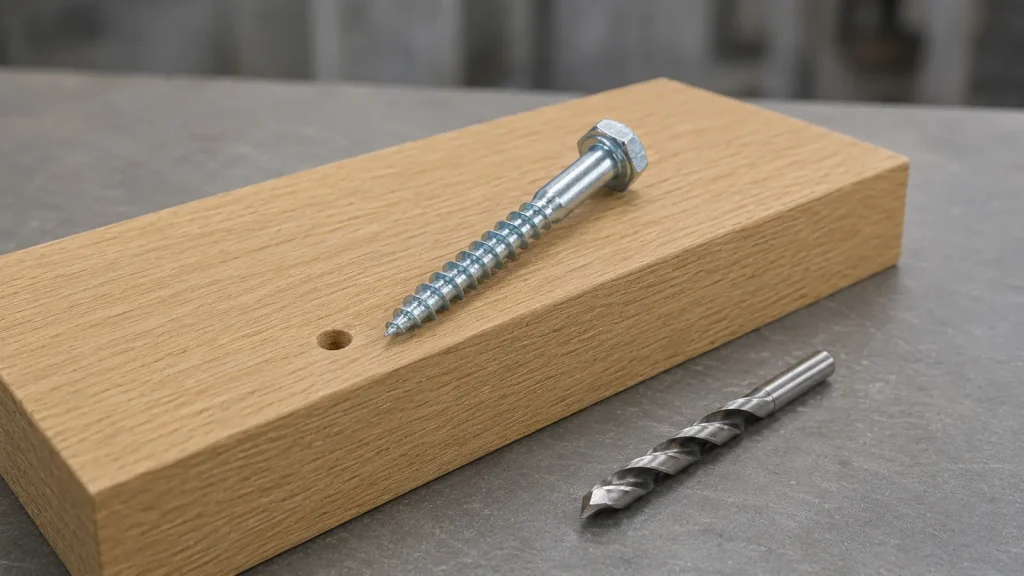
Hexagonal Wood Screws

Hexagonal Wood Screws

Brand: Wotu Surface: blue and white zinc plated Specifications: Chinese national standard 6#/8#/10#/12#/16#/20#, rod length 35mm~250mm full range of specifications in stock, supports nonstandard length customization Packaging: 25kg cartons, full pallets packed on wooden pallets, support neutral packaging, private-label customization

Read More


7-letter, 9-letter L-shaped anchor bolt (Chinese national standard GB/T799-1988 embedded anchor screw)

7-letter, 9-letter L-shaped anchor bolt (Chinese national standard GB/T799-1988 embedded anchor screw)

Brand: Wotu Surface: Natural black oxide treatment, customized hot-dip galvanized, zinc plated as required Specifications: Follow Chinese national standard GB/T799-1988, in stock M12-M48, total length 120mm~1500mm, nonstandard customized diameter, bending length, total screw length available Matching: Nuts, flat washers and spring washers of the same specification can be supplied in complete sets. Packaging: Bundling and packaging, using wooden pallets and film-wrapped export packaging in large quantities

Read More
U-bolt ( / U-bolt, M10/M12/M16/M20/M24 multiple specifications)

U-bolt ( / U-bolt, M10/M12/M16/M20/M24 multiple specifications)

Brand: Wotu Surface: natural black oxide / hot-dip galvanized / blue-white zinc plated, multiple processes available Specifications: Based on common industry drawing parameters, suitable for pipe diameter 25mm~139.7mm, screw diameter M10~M24, total length can be nonstandard customized Matching: can be matched with nut, flat washer and spring washer of the same specifications for complete shipment Packaging: Bundling and packaging + 25kg export carton, full-container wooden pallet wrapped with film, supports private-label export packaging

Read More
Wafer Head Self-Drilling Screw

Wafer Head Self-Drilling Screw

Brand: Hengzuan Surface: blue and white zinc plated, can be customized color zinc plated, black oxide plated Specifications: Comply with GB/T15856.2 Chinese national standard, in stock ST3.5/ST4.2/ST4.8/ST5.5 mainstream wire diameter, rod length 13mm~50mm full range of specifications, nonstandard length customization on demand, drilling applicable plate thickness 2~5mm Packaging: 25kg export cartons, full pallets wrapped with film, supports neutral export packaging, private-label customization

Read More

Match the hex-head fastener to the joint

Fastener selection

Compare hexagon bolt screws by fastening method, thread engagement, diameter, length, head dimensions, material, surface finish and the clearance available for a wrench or socket. The receiving material and joint thickness are especially important because they determine whether a bolt, machine screw, self-tapping screw or self-drilling screw is appropriate.

Criterion What To Check Why It Matters Buyer Tip
Bolt or screw configuration Confirm whether the fastener uses a nut and clearance hole, or drives into a tapped hole or substrate. Check the drawing or a sample. The mating part, thread engagement and installation method depend on this distinction; a bolt and a hex-head screw are not interchangeable in every assembly. Ask: “Is this specified as a hexagon-head bolt or a hex-head screw, and what mating component should we use?”
Thread and length specification Compare nominal diameter, thread pitch, thread type, overall length, length measured under the head, and full or partial threading against the assembly drawing. Incorrect thread form can prevent assembly, while the wrong length can reduce engagement or leave insufficient clearance. Ask the supplier to show every thread and length dimension on the quotation or product drawing before approval.
Material, grade and surface finish State the required material or strength grade and the exposure conditions, then verify the proposed finish and any available inspection documentation. Material and finish affect load resistance, corrosion behavior and compatibility with the mating material or surrounding environment. Ask: “Which material, grade and coating options suit this application, and what evidence can you provide for the supplied batch?”
Hex head and tool access Check head width, head height and wrench or driver access against the available clearance in the assembly. A correctly threaded fastener can still fail to install if the tool cannot reach the head or the head interferes with nearby parts. Ask for the head dimensions and confirm the installation tool before ordering samples.
Point and intended substrate Determine whether the part has a standard threaded end, drilling point or another point design, and match it to wood, metal or another substrate. The point controls whether a pilot hole, tapped hole or direct drilling is needed; using the wrong design can damage the material or leave inadequate engagement. Ask: “What substrate and thickness is this point designed for, and is pre-drilling required?”

Specify the right bolt or screw for assembly

The main distinction is between a hexagon-head bolt used with a separate nut and a hexagon-head screw intended to engage a tapped hole or form its own thread. A bolt normally requires access to both sides of the joint, while a screw can be more suitable where the rear side is inaccessible or the receiving component already has a thread.

Self-drilling hex-head screws are a separate option for certain sheet-material applications because the point is designed to start the hole as the fastener is installed. They should not be substituted for a structural or machine bolt without checking the joint materials, load requirements and assembly method.

Start with the joint, not the fastener name. State the materials being joined, the total grip thickness and whether the fastener will pass through a clearance hole, enter a tapped hole, use a nut or form a thread. A bolt that is too short may not engage the nut correctly; one that is too long may interfere with nearby parts or leave unnecessary exposed thread.

Choose the thread and head form to match the mating component and available tool access. Coarse and fine threads have different engagement and adjustment characteristics, while a larger hex head may offer better wrench access but require more clearance around the joint. Confirm the relevant dimensional standard rather than relying on a general description such as “hexagon screw.”

Material and finish should reflect the service environment. Consider moisture, outdoor exposure, contact with dissimilar metals, temperature and the appearance required after installation. Do not specify a coating only by colour; ask what base material and finish are available and whether they suit the mating parts and intended environment.

To obtain a useful quotation from Hebei Wotu Fastener Manufacturing Co., Ltd., send a drawing, existing sample or clear specification with the joint materials, required size and finish. Also state the estimated quantity and any applicable standard or inspection requirement so the proposed fastener can be compared against the actual assembly.

Criteria Importance Description Example Options
Fastening method Critical because it determines how the joint is assembled and what access is required. Compare a bolt used with a nut, a screw entering a tapped hole, and a self-tapping or self-drilling option that engages the receiving material. A through-joint with access to both sides may suit a bolt and nut; a panel with no rear access may require a screw-based arrangement.
Joint access and head clearance Important for installation, tool engagement and maintenance. Check whether a wrench or socket can reach the hex head and whether the joint allows access to the nut or receiving hole. Head size can affect clearance around adjacent parts. A confined equipment panel may need a head and tool arrangement that can be reached without removing nearby components.
Thread and engagement Critical for matching the mating component and achieving the intended fit. Confirm the thread form, pitch, engagement length and whether the fastener must pass through a clearance hole, enter a tapped hole or form its own thread. A replacement fastener for an existing nut should match that nut rather than being selected only by outside diameter.
Material and surface finish Important where moisture, outdoor exposure, dissimilar metals, temperature or appearance may affect service. Choose the base material and finish for the joint environment and check compatibility with the mating parts. Colour alone does not identify the protective system. An exposed assembly may need a different material and finish decision from an indoor, dry equipment joint.
Fastener length and grip Critical for correct thread engagement without unwanted interference. Relate the fastener length to the total material thickness, washer or nut arrangement and surrounding components. Excess length can obstruct nearby parts, while insufficient length may not engage the nut or threaded hole properly. A joint with added washers or a thicker bracket may require a different length from the original assembly.

Blog Articles / Reviews

Which Hexagonal Wood Screw Specifications Should Buyers Freeze Before Production?

Which Hexagonal Wood Screw Specifications Should Buyers Freeze Before Production?

A hexagonal wood screw order should not be released from a gauge number and length alone. Before production, the buyer and supplier need one approved specification that fixes the screw diameter, length basis, thread geometry, point, hex-head dimensions, material, finish, installation method, substrate and acceptance evidence. The pilot hole belongs in the application specification as […]

The Concept of Hexagonal Self-Drilling Screws and High-Pressure Standard Parts

The Concept of Hexagonal Self-Drilling Screws and High-Pressure Standard Parts

Hexagonal self-drilling screws, manufactured by Hebei Wotu Fastener Manufacturing Co., Ltd., operate under a modern enterprise system and strictly manage according to the ISO9001:2015 quality system. The company uses “Wotu” as its registered trademark. The term “standard parts” in China is a shorthand for “standard fasteners,” a narrow definition. High- and medium-pressure standard parts refer […]

A manufacturer of hexagonal self-drilling screws discusses their performance standards.

A manufacturer of hexagonal self-drilling screws discusses their performance standards.

Hebei Wotu Fastener Manufacturing Co., Ltd., founded in the 1990s, is located in Yongnian District, Handan City, Hebei Province, known as the “Hometown of Fasteners.” 1. Core Hardness: Standard: HRC32-40. Our products are measured at HRC31.7-39.0. 2. Surface Hardness: Standard: HV600-700. Our products are measured at approximately HV620. 3. Hardened Layer: 4#-6#: 0.05-0.18mm; 8#-12#: 0.10-0.23mm; […]

What are the standard dimensions of a universal hexagonal self-drilling screw?

What are the standard dimensions of a universal hexagonal self-drilling screw?

Self-drilling screws, also known as “drill screws,” “self-drilling screws,” or “dovetail screws,” are classified into different types based on their application, material, and shape. A standard 6mm self-drilling screw has a flatness of 9.38mm or 9.8mm. A hexagonal self-drilling screw with dimensions 4.5*14*25 means the screw size is 4.5mm, the screw length is 25mm, and […]

How to Specify Countersunk Head Cross Thick Thread Fiberboard Screws for Furniture Assembly Projects

How to Specify Countersunk Head Cross Thick Thread Fiberboard Screws for Furniture Assembly Projects

Fiberboard screws are selected based on more than screw size alone. For furniture assembly and board-based applications, buyers need to match the screw structure with the characteristics of fiberboard, MDF, and similar engineered wood materials. A suitable specification should consider thread design, head style, screw length, diameter, installation method, and application requirements. For buyers sourcing […]

Frequently Asked Questions

Can I use a hex-head screw instead of a bolt in the same joint?

Not automatically. A bolt usually passes through a clearance hole and tightens against a separate nut, while a screw may enter a tapped hole or form its own thread. Check the joint access, receiving material, thread engagement and load before substituting one for the other.

When is a self-drilling version a suitable choice?

A self-drilling hex-head screw can suit certain sheet-material assemblies because its point starts the hole during installation. It is not a general replacement for a machine bolt or structural fastener; confirm the material combination, joint demands and installation method first.

Does a six-sided head tell me that the fastener will fit my assembly?

No. The head shape only describes one part of the fastener. Diameter, length, thread form, head dimensions, material, finish and tool clearance also determine whether it fits and can be installed correctly.

What is the practical difference between coarse and fine threads?

They provide different thread engagement and adjustment characteristics, so the choice should match the mating component and joint design. Do not select between them by appearance alone; check the existing tapped hole, nut or specification that the fastener must match.

What information should I provide when requesting a quotation?

Send a drawing, existing sample or clear specification showing the required diameter, length, head style, thread and finish. Include the joined materials, total grip thickness, fastening method, estimated quantity and any applicable dimensional or inspection requirements.

Leave Your Message

Please share the joint materials, required diameter and length, and whether the fastener uses a nut, tapped hole or self-drilling point.