| Hex socket size versus thread size |
Confirm whether “5mm” means a 5 mm Allen key drive or a 5 mm bolt thread diameter. |
These are different specifications. A bolt that takes a 5 mm Allen key is not always an M5 bolt, and ordering by the wrong meaning can make the fastener unusable on site. |
Ask: “Do you need an M5 thread, or a socket bolt driven by a 5 mm Allen key?” |
| Head style and clearance |
Identify the required head type, such as socket head cap, button head, countersunk, or low head. |
The head shape affects tool access, clamping area, surface finish, and whether the bolt sits proud or flush in the assembly. |
Send a drawing or state: “The head must sit flush / fit in a counterbore / remain exposed.” |
| Thread diameter, pitch, and length |
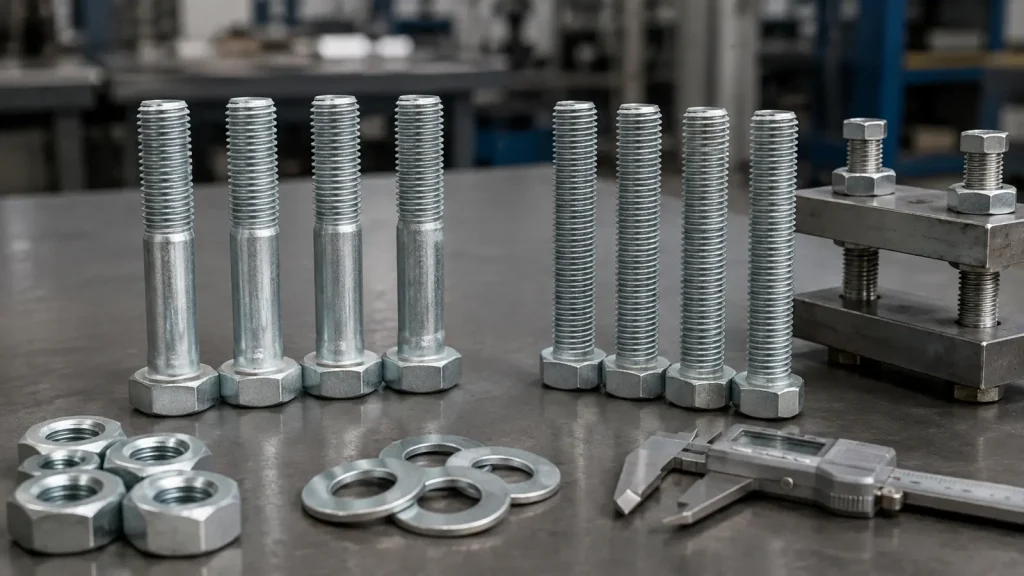
Specify the nominal thread size, thread pitch if it is not standard, overall length, and whether full thread or partial thread is needed. |
Small socket bolts are often used in tapped holes, inserts, machinery parts, and brackets where a few millimetres of wrong length can bottom out or fail to clamp. |
Ask: “Can you match this thread size, pitch, length, and threaded portion from our drawing or sample?” |
| Material, strength grade, and finish |
Confirm the required steel, stainless steel, alloy steel, or other material, plus any strength grade and surface finish. |
Material and coating affect load capacity, corrosion resistance, appearance, and compatibility with the mating parts. |
Ask: “What material and finish do you recommend for indoor machinery, outdoor exposure, or stainless assemblies?” |
| Drive fit and installation method |
Check that the hex socket is suitable for the planned Allen key, bit holder, or torque tool, and ask about socket depth or drive standards if fit is critical. |
Poor tool engagement can round the socket, especially on small bolts, coated heads, or repeated assembly work. |
Ask: “Will these bolts be hand tightened, installed with a torque wrench, or used in repeated service?” |