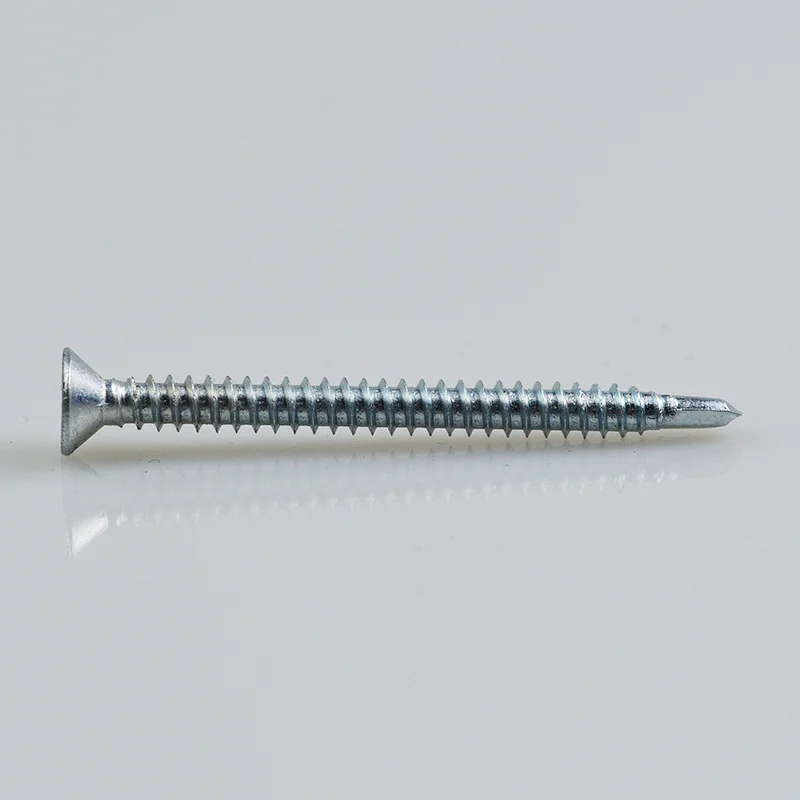
RCC Fasteners for Concrete Fixing | Hebei Wotu Fastener Manufacturing Co., Ltd.

RCC fasteners for reinforced concrete fixing

Fastening into RCC means choosing a fixing that can hold reliably in reinforced cement concrete without cracking the base material or loosening under service loads. The main decision is not just the fastener size; it is the match between the load, the concrete condition, the fixture thickness, edge distance and the installation method.

For brackets, frames, equipment bases, pipe supports or facade accessories fixed to RCC, buyers usually compare expansion anchors, concrete screws, through bolts, sleeve anchors and chemical anchors. Each option behaves differently in cracked concrete, near edges, under vibration and in outdoor exposure.

Related Products

U-bolt ( / U-bolt, M10/M12/M16/M20/M24 multiple specifications)

U-bolt ( / U-bolt, M10/M12/M16/M20/M24 multiple specifications)

Brand: Wotu Surface: natural black oxide / hot-dip galvanized / blue-white zinc plated, multiple processes available Specifications: Based on common industry drawing parameters, suitable for pipe diameter 25mm~139.7mm, screw diameter M10~M24, total length can be nonstandard customized Matching: can be matched with nut, flat washer and spring washer of the same specifications for complete shipment Packaging: Bundling and packaging + 25kg export carton, full-container wooden pallet wrapped with film, supports private-label export packaging

Read More
White Zinc Plated Hex Head Self-Drilling Screw

White Zinc Plated Hex Head Self-Drilling Screw

Brand: Hengzuan Surface: blue and white zinc plated, optional black oxide, color zinc plated coating Specifications: in stock 4.2/4.8/5.5/6.3mm wire diameter, length 16mm~165mm full size range, supports nonstandard customized rod length Packaging: 25kg export cartons, full-container wooden pallets wrapped with film, supports neutral packaging, private-label customization

Read More
Hex Head No. 5 Point Self-Drilling Screw

Hex Head No. 5 Point Self-Drilling Screw

Brand: Wotu Surface: blue and white zinc plated, customized color zinc plated, Dacromet anti-corrosion coating available Specifications: ST5.5, ST6.3 mainstream specifications, rod length 20mm~125mm, full size range in stock, support nonstandard customization, drilling to adapt to steel sheet 2-6mm Packaging: 25kg cartons, whole wooden pallets

Read More
Countersunk Head Blue Zinc Self-Drilling Screw

Countersunk Head Blue Zinc Self-Drilling Screw

Brand: Hengzuan Surface: blue and white zinc plated, can be customized color zinc plated, black oxide plated Specifications: in stock 3.5/3.9/4.2/4.8/5.5 mainstream wire diameter, rod length 13mm~75mm full size range, nonstandard length can be customized as needed Packaging: 25kg export cartons, full wooden pallets wrapped with film, supports neutral export packaging, private-label customization

Read More
Chinese-standard Color Nylon Head Hex Self-Drilling Screw

Chinese-standard Color Nylon Head Hex Self-Drilling Screw

Brand: Hengzuan Surface: screw color zinc plated, head color nylon protective cap, multiple colors available Specifications: Chinese national standard ST5.5, ST6.3 mainstream caliber, rod length 25mm~125mm full range of specifications in stock, supports nonstandard length customization, suitable for drilling steel sheet thickness 2~6mm Packaging: 25kg cartons, full pallets packed on wooden pallets, support neutral packaging, private-label customization

Read More

Key criteria for RCC fasteners

RCC fastener selection

When comparing RCC fastener options, focus on anchor type, base-material suitability, embedment requirement, corrosion protection, installation access and whether the fixing must be removable after installation. These details are more useful than a product name alone.

Criterion What To Check Why It Matters Buyer Tip
RCC substrate and fixing method Confirm whether the fastener is intended for reinforced concrete, masonry, or a fixture-mounted anchor system. Concrete density, cracks, and the chance of hitting reinforcement affect drilling, holding power, and installation risk. Ask which base materials and fixing methods the fastener has been designed and tested for.
Thread, anchor, and embedment design Compare the thread profile, anchor style, usable embedment, and fixture thickness with the joint design. These details determine how the fastener engages the concrete and whether enough material remains for a secure fixing. Provide the fixture thickness, hole arrangement, and required embedment when requesting a suitable size.
Corrosion protection and exposure Verify the fastener material and surface treatment against indoor, outdoor, damp, or chemically exposed conditions. Surface treatment that suits a dry interior may not provide the same protection in wet or aggressive environments. Ask for the applicable coating or oxidation-treatment specification and its intended exposure conditions.
Head, washer, and fixture interface Check the head style, drive recess, washer arrangement, and clearance around the fixing point. The interface affects tool access, load distribution, sealing, and whether the fastener sits correctly against the fixture. Send a drawing or photo of the fixing point and ask which head and washer combination is recommended.
Installation limits and verification Confirm the required drill type, pilot-hole guidance, installation sequence, and any limits near edges or reinforcement. Incorrect drilling or placement can reduce grip, damage the concrete, or interfere with reinforcement. Ask for installation instructions and the checks used to confirm that the installed fixing is secure.

Choosing a fixing for reinforced concrete

The most important distinction is between mechanical anchoring and bonded anchoring. Mechanical RCC fasteners grip by expansion, threading or wedging inside the drilled hole, so they are quick to install and easy to inspect visually. Bonded anchors use adhesive with a stud or rebar, which can suit higher-load or edge-sensitive applications, but they depend heavily on hole cleaning, curing conditions and correct installation.

Material and surface treatment also matter. Zinc-plated carbon steel may suit dry indoor use, while galvanized or stainless options are often considered for moisture, exterior exposure or corrosive surroundings. If the fixing is part of a safety-critical support, confirm the applicable design standard, load data and installation requirements before placing an order.

Start with the base material and load direction. RCC is strong in compression but can split or spall if the anchor expands too close to an edge, too near another anchor or into poor-quality concrete. Tell the supplier whether the fixing carries tension, shear, combined loads or vibration, because the suitable anchor type can change.

Check the fixture and installation details before choosing the fastener. Fixture hole diameter, plate thickness, required embedment, available drilling depth and whether the anchor must be removable all affect the product choice. A common mistake is ordering only by nominal diameter without confirming the actual grip range and hole preparation.

Match the fastener material to the environment. Indoor dry concrete, damp basements, coastal air, chemical exposure and outdoor weathering do not ask for the same finish. Surface treatment can improve corrosion resistance, but it does not replace correct material selection where the fixing is exposed or difficult to replace.

For an enquiry to Hebei Wotu Fastener Manufacturing Co., Ltd., share the drawing or application photo, concrete condition, anchor size or target load, fixture thickness, finish requirement and quantity. If a specific standard, test report or coating is required, ask for confirmation before approving samples or production.


Criteria Importance Description Example Options
Anchor mechanism Often the first decision because it affects load behavior and installation method Expansion, screw, through-bolt and bonded anchors transfer load into RCC in different ways. The best option depends on tension, shear, vibration, edge distance and whether expansion stress is acceptable. A bracket far from an edge may suit a mechanical anchor, while a close-to-edge fixing may prompt a review of a bonded anchor.
Concrete condition and hole preparation Critical for holding performance and repeatable installation Old, cracked, hollowed, damp or poorly drilled concrete can reduce anchor reliability. Drilling diameter, depth, cleaning and rebar avoidance should be checked before choosing the fastener. A chemical anchor in a dusty hole may not bond properly even if the stud size is correct.
Fixture thickness and embedment Important because the anchor must grip the concrete after passing through the fixture The selected fastener must allow enough effective embedment while accommodating the plate, bracket or base thickness. Ordering by nominal diameter alone can lead to insufficient grip length. A thick mounting plate may require a longer anchor than the same diameter used for a thin bracket.
Corrosion protection High importance where the fixing is exposed, wet or difficult to replace Finish and material should match the environment. Zinc plating, galvanizing and stainless steel are not interchangeable choices; each suits different exposure conditions and budget expectations. A dry indoor frame fixing may use a different finish from an exterior railing support.
Removability and inspection Relevant when maintenance, replacement or site adjustment is expected Some fasteners are easier to remove or visually inspect after installation than others. Permanent bonded systems may suit strength requirements but can be less convenient for future changes. A temporary equipment bracket may favor a removable concrete screw over a bonded stud.

Blog Articles / Reviews

Oxidation Treatment Specifications for Self-Drilling Screw Fasteners

Oxidation Treatment Specifications for Self-Drilling Screw Fasteners

The surface treatment of self-drilling screws requires specific procedures. What manufacturing processes are generally used for surface treatment? Hebei Wotu Fastener Manufacturing Co., Ltd. will explain oxidation treatment below. The surface treatment of self-drilling screws requires specific procedures. What manufacturing processes are generally used for surface treatment? Hebei Wotu Fastener Manufacturing Co., Ltd. will explain […]

National Standards for Self-Drilling Screws – Fasteners

National Standards for Self-Drilling Screws – Fasteners

When using fasteners, are you familiar with the standards governing them? Today, Hebei Wotu Fastener Manufacturing Co., Ltd. will discuss the national standards for fasteners with you. Let’s take a look. 1. Standards for Fastener Product Dimensions: These specifically define the basic dimensions of the product; for threaded products, this also includes the basic dimensions […]

Frequently Asked Questions

Which anchor type is usually suitable for fixing into reinforced concrete?

It depends on the load, concrete quality, edge distance and installation access. Expansion anchors and through bolts are common for many structural fixings, concrete screws can be useful where removability matters, and chemical anchors are often considered where high loads or reduced expansion stress are important.

Is a larger diameter fastener always safer?

No. A larger anchor can create more expansion force, need a deeper hole, or require more edge distance than the concrete can provide. The safer choice is the anchor type and size that match the design load, embedment depth, fixture thickness and spacing limits.

What is the trade-off between mechanical anchors and chemical anchors?

Mechanical anchors are generally faster to install and can often be loaded sooner, but they may be less forgiving near edges or in weaker concrete. Chemical anchors can reduce expansion stress and suit some demanding applications, but they rely on correct hole cleaning, adhesive curing and temperature conditions.

What information should be shared before asking for a quotation?

Provide the application, anchor size if known, concrete condition, fixture thickness, required finish, quantity and any drawing or photo. If the fixing carries a specified load or must follow a particular standard, include that information before samples or production are confirmed.

Can the same fixing be used indoors and outdoors?

Not always. A fastener used in dry indoor concrete may only need basic corrosion protection, while outdoor, damp or chemically exposed locations may require a different coating or material. Confirm the environment and expected service life before selecting the finish.

Leave Your Message

Send the application type, concrete condition, fixture thickness, required fastener size or load, surface finish and order quantity so the inquiry can be reviewed accurately.