| Self-tapping or self-drilling function |
Confirm whether the screw must cut its own thread in a pilot hole or drill through the material without a pre-drilled hole. |
A self-tapping screw still needs the right hole condition, while a self-drilling screw has a drill point for faster installation in suitable metal thicknesses. |
Ask: Is the assembly pre-drilled, or should the screw drill and tap in one operation? |
| Base material and stack-up |
List each layer the screw will pass through, such as sheet metal, steel section, timber, washer, gasket, or panel. |
Material type and total thickness affect point style, thread engagement, screw length, and risk of stripping or poor clamp load. |
Ask: What materials and thicknesses are in the full joint, not just the top panel? |
| Drive style for machine installation |
Match the head recess or drive type to the driver bit used on the production line or site tool. |
Machine-driven screws need stable bit engagement to reduce cam-out, head damage, inconsistent seating, and operator rework. |
Ask: Which driver bit and installation tool will be used, and is torque control required? |
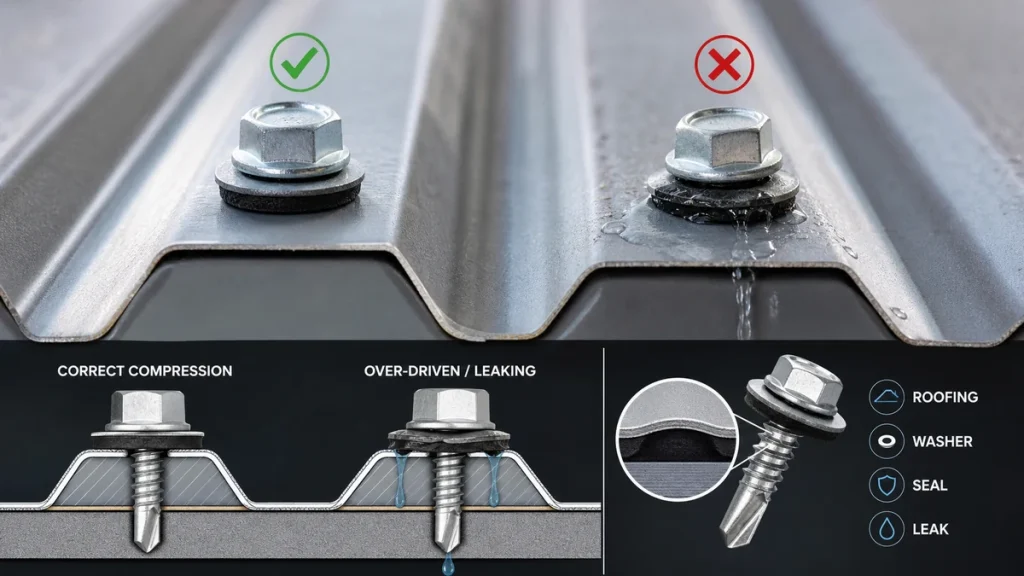
| Head, washer, and sealing needs |
Choose the head form and washer arrangement based on whether the joint needs flush seating, broad bearing area, or weather sealing. |
Roofing and panel assemblies often fail from poor sealing or washer compression, while machinery brackets may need clearance or a flush surface. |
Ask: Should the screw seal against water, sit flush, or spread load over a larger contact area? |
| Coating and environment |
Define the exposure condition, such as indoor dry use, outdoor panels, treated timber contact, or corrosive industrial surroundings. |
Coating choice affects corrosion resistance, appearance, friction during driving, and compatibility with the connected materials. |
Ask: What environment will the screw see after installation, and is a specific coating such as zinc, Dacromet, or another finish required? |