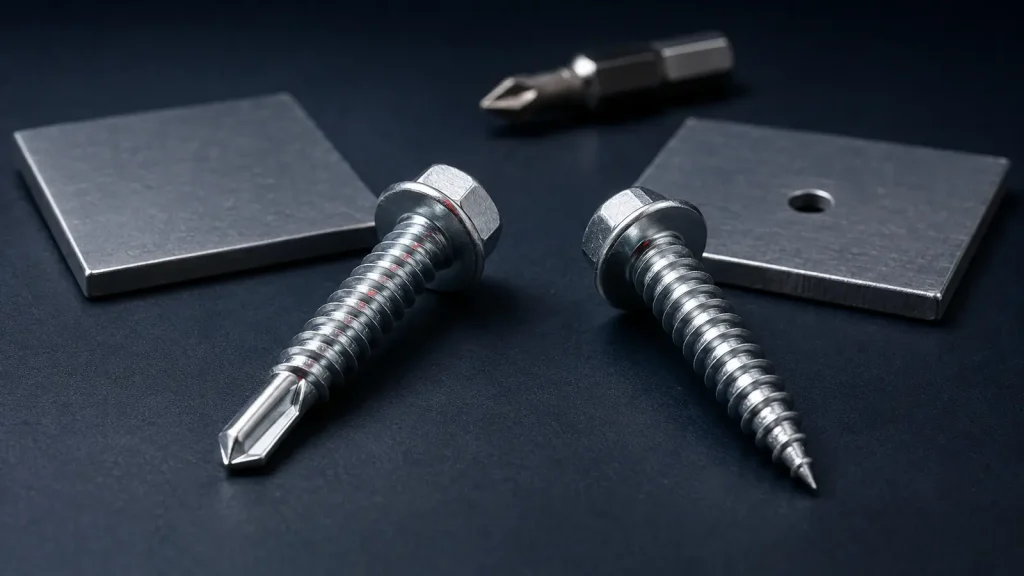
The practical distinction is between self tapping and self drilling screws. A self tapping screw forms or cuts its own thread in a prepared hole. A self drilling screw has a drill point and can create the hole before forming the thread. In machine assembly, that difference matters because many parts already have punched, molded, or drilled holes, so a drilling point may add cost or create chips where they are not wanted.
Thread-forming screws are often preferred where chips should be avoided, such as plastic parts or enclosed assemblies. Thread-cutting screws can suit harder materials but may leave debris and need better control of pilot hole size. If the assembly uses thin sheet metal, too little engagement can strip; if the hole is too small, the screw may require excessive torque or damage the part.
Start with the material being fastened. Steel sheet, aluminum, plastic, and timber do not respond the same way to a self tapping thread. Metal applications usually need close attention to pilot hole diameter and thread engagement. Plastic parts need a thread design that reduces cracking and boss damage. For outdoor equipment or damp environments, ask about a finish suitable for the exposure rather than choosing by appearance alone.
Match the head and drive to the assembly process. Pan head, countersunk head, hex washer head, and flange styles solve different seating problems. A countersunk head sits flush but can split thin or brittle material if the recess is not prepared correctly. A washer head spreads load and can help on sheet metal or panels. The drive recess also matters: automated tools need stable bit engagement, while field installation may favor a drive that tolerates variable operator technique.
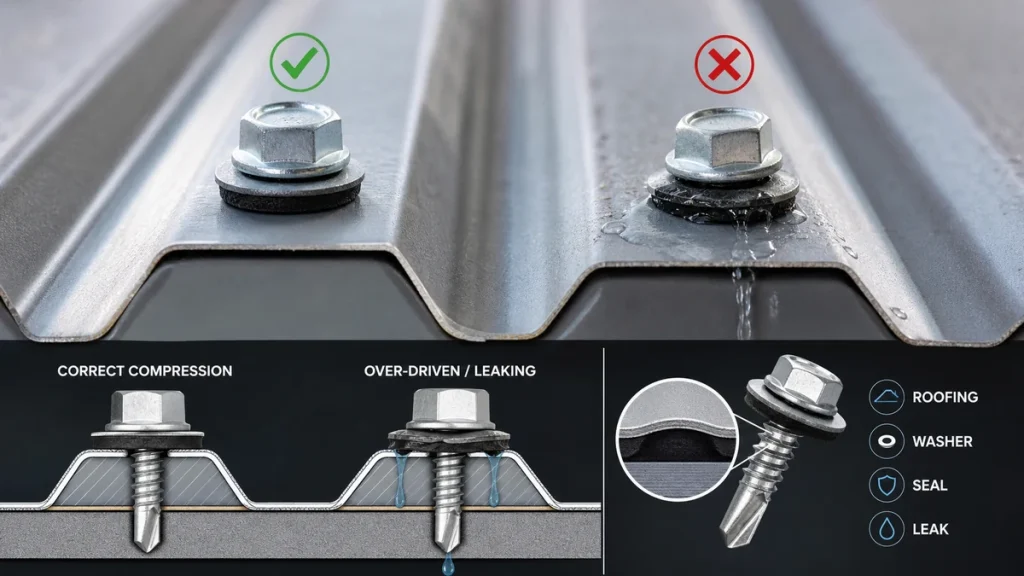
Avoid treating length as the only strength variable. Longer screws do not automatically improve the joint if the engaged thread is in weak material or if the tip bottoms out. Confirm the clamped stack thickness, available depth, required clearance behind the part, and the minimum thread engagement needed for the base material. In roofing or panel work, sealing washers and seating pressure can be just as important as screw length.
Next step: describe the joint before asking for a quote. Share the base material, mating material, hole condition, head preference, drive type, surface environment, and installation method. If you have a failed sample, include the failure mode: stripping, head cam-out, cracking, corrosion, leakage, or loosening. That information changes the recommendation more than a part name alone.