| Thread diameter and gauge |
Match the screw diameter to the hole size, sheet thickness, and required clamp load rather than choosing by length alone. |
A screw that is too small may strip or loosen; one that is too large can split timber, distort thin metal, or require excessive driving torque. |
What base material and thickness will the screw tap into, and is there a required pilot hole diameter? |
| Overall length and thread engagement |
Confirm how much threaded length will bite into the supporting material after passing through washers, panels, brackets, or coatings. |
Enough engagement is needed for holding strength, but excess length can protrude, interfere with other parts, or increase installation time. |
After all layers are stacked, how many millimeters of thread must engage the base material? |
| Point style for the application |
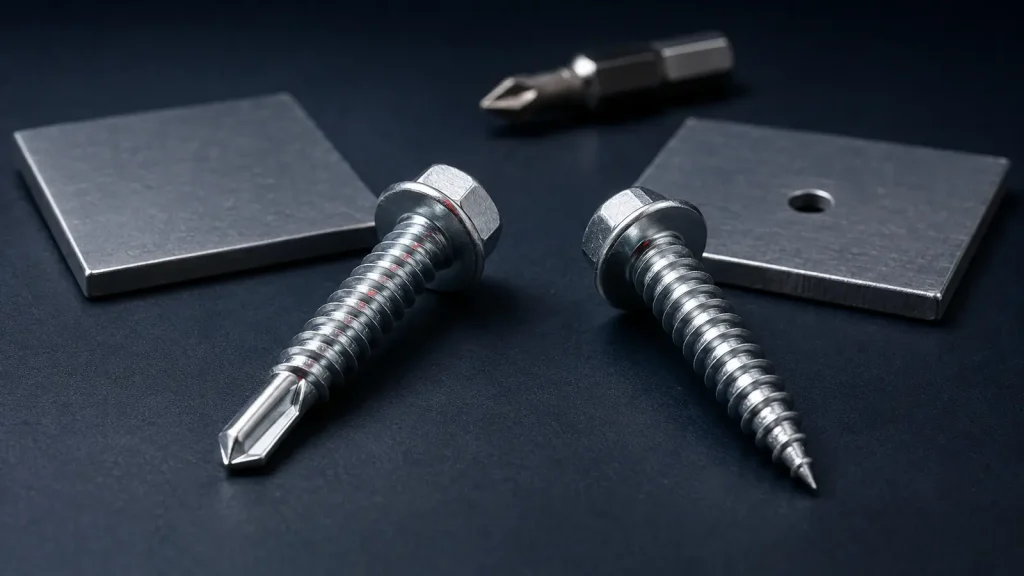
Separate true self-tapping screws used with a pilot hole from self-drilling screws that cut their own hole in metal. |
The wrong point can cause slow installation, poor thread formation, broken tips, or oversized holes that reduce holding power. |
Will the installer drill a pilot hole first, or should the screw drill and tap in one operation? |
| Head and drive size |
Compare pan, hex, countersunk, washer head, or roofing-style heads with the required bearing area and tool access. |
Head choice affects clamping, appearance, sealing, flush fit, and whether installers can drive the screw cleanly in the available space. |
Does the joint need a flush surface, a wide bearing face, or a hex head for higher installation torque? |
| Material, coating, and washer fit |
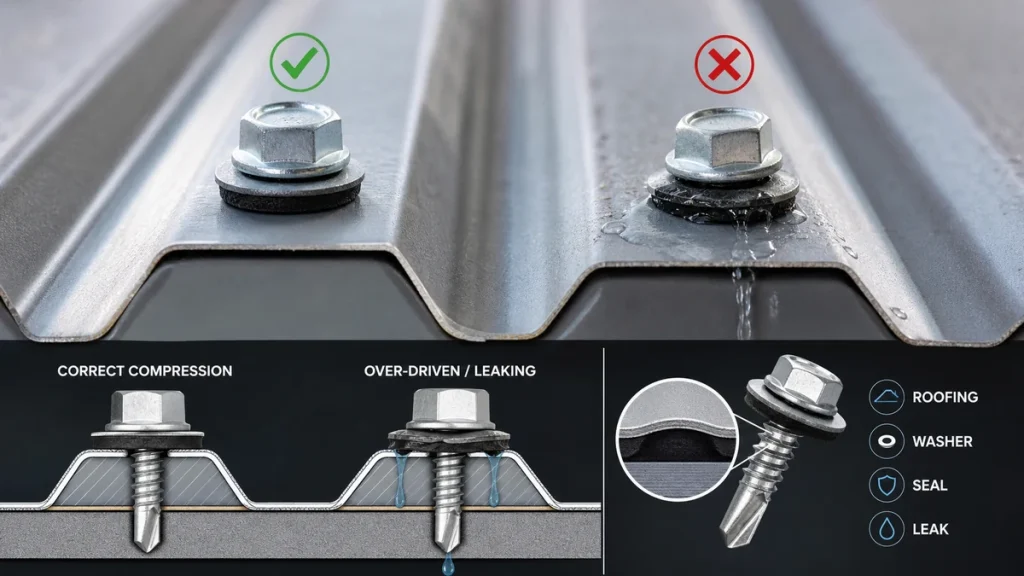
Choose the screw material and surface finish for the service environment, and confirm washer diameter and compatibility if sealing is needed. |
Outdoor, wet, or dissimilar-metal assemblies may corrode faster if the coating or washer is unsuitable, even when the screw size is correct. |
Will the screws be used indoors, outdoors, on roofing panels, or against treated timber or dissimilar metals? |