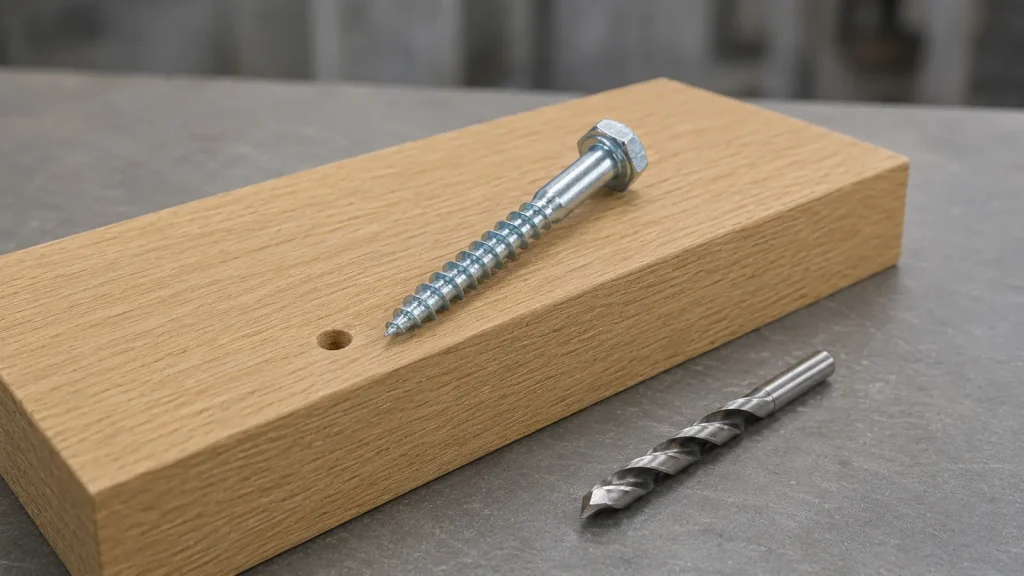
| Point style for biting into timber |
Compare the screw tip shape: sharp point, type 17 cutting point, self-tapping point, or drill point for mixed materials. |
The point controls how quickly the screw starts, how much it splits the wood, and whether a pilot hole is needed. |
Ask: Is the screw intended to start directly in softwood, hardwood, plywood, or through metal into wood? |
| Thread form for the wood density |
Review thread pitch, thread depth, and whether the thread is coarse, fine, full-thread, or partial-thread. |
Coarser, deeper threads usually grip timber better, while the wrong thread can strip the hole or fail to clamp the parts tightly. |
Ask: What exact wood type and thickness will the screw fasten, and does the joint need pull-down clamping? |
| Head and drive for installation control |
Match the head type and drive recess to the tool, access space, and finished appearance required. |
The wrong drive can cam out or damage the coating, while the wrong head may sit proud, crush the wood, or fail to seat properly. |
Ask: Should the head sit flush, washer-style on the surface, or clamp a bracket or metal plate? |
| Need for pilot holes or pre-drilling |
Confirm whether the selected point and thread can be used without pre-drilling in the actual material stack. |
Skipping a required pilot hole can split hardwood, distort thin boards, or cause poor alignment in production assembly. |
Ask: Can samples be tested in the real wood and joint layout before fixing the production specification? |
| Surface finish for the service environment |
Identify whether the screw will be used indoors, in damp timber, outdoors, or near treated wood, then confirm a suitable finish. |
Moisture and timber treatment can attack unsuitable coatings, leading to staining, corrosion, or weaker long-term fastening. |
Ask: What environment will the assembled product face, and is coating compatibility with the wood treatment required? |