Stand Drill Machine Selection Guide | Hebei Wotu Fastener Manufacturing Co., Ltd.

Stand Drill Machine Selection Guide

A stand drill machine gives workshops and production teams a stable way to make repeatable holes in metal, plastic, wood or assembled parts. The main purchase decision is whether a bench drill or floor-standing machine provides the required working height, reach, rigidity and control for the workpiece.

For fastener-related work, match the machine to the material, hole size, part geometry and expected production rhythm. Confirm whether Hebei Wotu Fastener Manufacturing Co., Ltd. supplies or specifies stand drill machines for your application, rather than assuming a fastener manufacturer offers this equipment.

Related Products

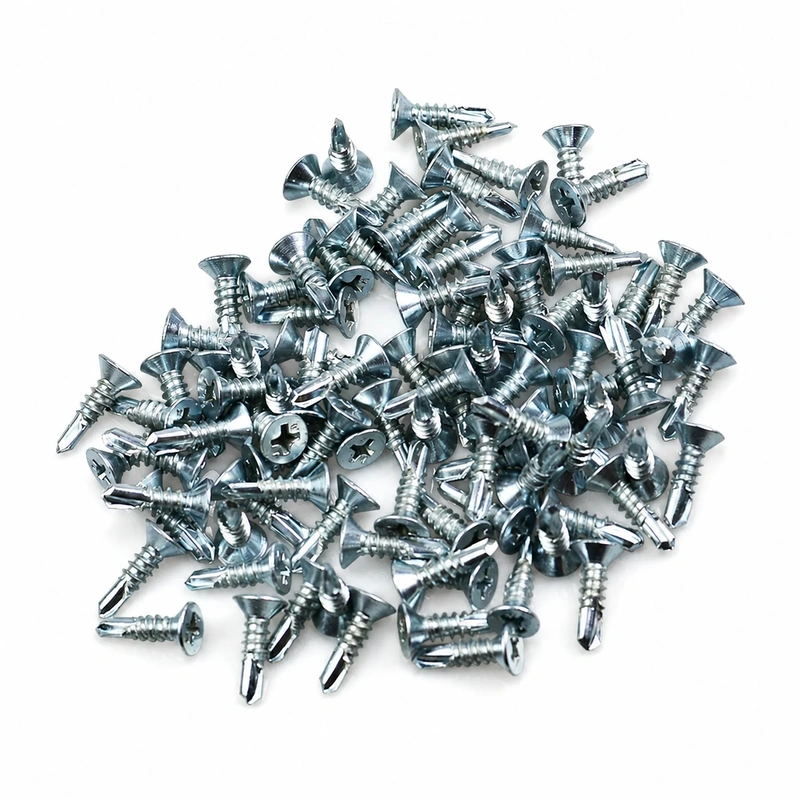
Countersunk Head Blue-White Zinc Plated Self-Drilling Screw (Chinese National Standard: Phillips Countersunk Head Self-Drilling And Self-Tapping Screw GB/T15856.2-2002)

Countersunk Head Blue-White Zinc Plated Self-Drilling Screw (Chinese National Standard: Phillips Countersunk Head Self-Drilling And Self-Tapping Screw GB/T15856.2-2002)

Brand: Hengzuan Surface: blue and white zinc plated, can be customized color zinc plated, black oxide plated Specifications: Comply with GB/T15856.2-2002 Chinese national standard, in stock ST4.2/ST4.8/ST5.5 full range of specifications, length 13mm~75mm optional, supports customized nonstandard rod lengths; drilling adaptation plate thickness 0.7~6mm Packaging: 25kg export cartons, full pallets wrapped with film, supports neutral export packaging, customer private-label customization

Read More
Chinese-standard Color Nylon Head Hex Self-Drilling Screw

Chinese-standard Color Nylon Head Hex Self-Drilling Screw

Brand: Hengzuan Surface: screw color zinc plated, head color nylon protective cap, multiple colors available Specifications: Chinese national standard ST5.5, ST6.3 mainstream caliber, rod length 25mm~125mm full range of specifications in stock, supports nonstandard length customization, suitable for drilling steel sheet thickness 2~6mm Packaging: 25kg cartons, full pallets packed on wooden pallets, support neutral packaging, private-label customization

Read More
Hex nut (Chinese national standard GB52-1976)

Hex nut (Chinese national standard GB52-1976)

Brand: Wotu Surface: 304 stainless steel Specifications: in stock M6~M24 full standard metric specifications, supports nonstandard pitch, thickening/customized Matching: Can be matched with bolts of corresponding specifications, flat washer, spring washer complete set of supporting shipment Packaging: 25kg cartons, whole wooden pallets

Read More
Hex Head Self-Drilling Screw With Bonded Washer

Hex Head Self-Drilling Screw With Bonded Washer

Brand: Hengzuan Surface: blue and white zinc plated, color zinc plated can be customized on request Specifications: in stock 4.2/4.8/5.5/6.3mm mainstream wire diameter, length 20mm~165mm full range of specifications, nonstandard rod length, drill point size can be customized Packaging: 25kg export cartons, full pallets wrapped with film, supports neutral export packaging, customer private-label customization

Read More
Dacromet Hex Head Self-Drilling Screw

Dacromet Hex Head Self-Drilling Screw

Brand: Hengzuan Surface: Dacromet anti-corrosion coating Specifications: in stock ST5.5/ST6.3 mainstream caliber, rod length 50mm~150mm, extended full range of specifications, supports nonstandard extra long customized, suitable for drilling steel sheet thickness 2~6mm Packaging: 25kg export cartons, full pallets wrapped with film, supports neutral export packaging, private-label customization

Read More

Stand drill machine features for your parts and process

Machine selection criteria

Compare stand drill machines by usable workspace, rigidity, spindle and chuck compatibility, speed control, depth control, table adjustment, workholding options and service support. The right balance depends on whether the machine is for occasional workshop drilling, fixture-based repeat work or a more demanding production process.

Criterion What To Check Why It Matters Buyer Tip
Drilling capacity for the material Compare the machine’s stated maximum drilling diameter with the metals, plastics, or wood you actually drill, and confirm whether that capacity applies to steel or only softer materials. A stand drill machine that is too small will stall, overheat tools, or produce poor holes, especially in thicker steel parts. Ask: What maximum hole size can this machine drill repeatedly in my material and thickness?
Spindle speed range and adjustment Look at the available speed steps or variable-speed control, then match them to the drill bit sizes and materials used in your work. Large bits and hard metals need slower speeds, while small bits often need higher speeds. The wrong speed shortens tool life and affects hole accuracy. Ask: Can the operator change speed quickly enough for the mix of drill sizes we use each day?
Table size, travel, and work holding Check the table dimensions, height adjustment, tilt function if needed, and the way vises or fixtures can be mounted. Stable clamping matters as much as motor power. Poor support causes wandering holes, damaged parts, and unsafe operation. Ask: Will our largest workpiece fit on the table with a vise or fixture installed?
Spindle travel and depth control Confirm the quill stroke and whether the machine has a clear, repeatable depth stop for blind holes or countersinking. Short spindle travel may require repositioning the workpiece, and weak depth control makes batches inconsistent. Ask: Can the machine drill our required hole depth in one operation with a repeatable stop?
Power supply and workshop fit Verify the required voltage, phase, plug type, footprint, machine weight, and guarding before purchase. A drill press that does not match the site power or floor space creates installation delays and may not suit the intended work area. Ask: What electrical supply, bench or floor space, and basic safety guards are required before commissioning?

Choose between bench and floor-standing drilling setups

A bench drill is suited to smaller parts and limited workspace, while a floor-standing stand drill machine generally gives more clearance for larger workpieces and a more permanent production setup. The distinction matters because a compact machine may be easier to install but restrict the size or position of the part; a larger machine may occupy more space and require a more deliberate installation plan.

Choose by the work the machine must repeat, not by motor size alone. A buyer should compare usable throat depth, spindle travel, table arrangement, speed control, tool compatibility and the support available for the material being drilled.

Start with the workpiece. Record the material, maximum part dimensions, hole diameters, hole depth, required location accuracy and whether holes pass through a flat surface, an edge or an irregular assembly. A machine that handles small flat components may be unsuitable for long parts or fixtures that need clearance around the spindle.

Consider rigidity and control together. A rigid column, table and spindle support can reduce wandering and vibration, but the correct cutting tool, speed range and workholding method still depend on the material and hole size. Avoid selecting a machine only from its stated drilling capacity without checking how that capacity relates to your actual parts.

Review the tool interface and working features before purchase. Confirm the required chuck or spindle arrangement, table movement, depth control, speed adjustment and compatibility with your existing drills, reamers or tapping accessories. If the machine will support repeat production, ask about guards, controls, maintenance access and the availability of replacement parts.

Send an inquiry with a part drawing or photographs, material, hole-size range, largest workpiece, expected usage and preferred power arrangement. Ask which stand drill machine configuration fits those conditions, what is included, and whether installation or technical support is available; electrical connection and mechanical installation should be handled by a qualified professional.


Criteria Importance Description Example Options
Bench drill versus floor-standing drill High for workspace, part size and installation planning Bench models save space and suit smaller components, while floor-standing models provide more working height and a more fixed production setup. A small bracket may fit a bench drill, while a long frame section may need a floor-standing machine for clearance.
Usable throat depth and spindle travel Critical when hole position and drilling depth vary These factors determine whether the drill can reach the required hole location and complete the required depth without awkward repositioning. A wide plate with holes far from the edge needs enough throat depth, not just enough drilling power.
Rigidity and workholding Important for repeatability, surface finish and tool life A stable column, table and clamping method help reduce vibration and drill wandering, especially in harder materials or repeated production work. Fixture-based drilling on metal parts generally needs more stability than occasional drilling in soft material.
Speed control and tool compatibility Important when materials or hole sizes change Different materials and drill sizes need suitable speed ranges and compatible chucks or spindle tooling. Tooling should be checked against the buyer’s existing drills, reamers or tapping accessories. A workshop drilling both plastic and steel should confirm that the machine can support appropriate cutting conditions for each material.
Support, maintenance access and included items Practical for production users and multi-shift workshops Buyers should confirm what accessories, guards, manuals, spare parts and support are available instead of assuming they are included. For repeat production, ask what is supplied with the machine and what must be purchased separately before installation.

Product Selection

Related Options

For a workshop drilling holes in brackets, plates or fastener-related components, the key priority is a stable setup that accommodates the largest part while maintaining suitable tool control. Any product comparison should therefore begin with the buyer's part dimensions, material and hole pattern rather than treating one machine as the best choice for every application.

Blog Articles / Reviews

National Standards for Self-Drilling Screws – Fasteners

National Standards for Self-Drilling Screws – Fasteners

When using fasteners, are you familiar with the standards governing them? Today, Hebei Wotu Fastener Manufacturing Co., Ltd. will discuss the national standards for fasteners with you. Let’s take a look. 1. Standards for Fastener Product Dimensions: These specifically define the basic dimensions of the product; for threaded products, this also includes the basic dimensions […]

The Concept of Hexagonal Self-Drilling Screws and High-Pressure Standard Parts

The Concept of Hexagonal Self-Drilling Screws and High-Pressure Standard Parts

Hexagonal self-drilling screws, manufactured by Hebei Wotu Fastener Manufacturing Co., Ltd., operate under a modern enterprise system and strictly manage according to the ISO9001:2015 quality system. The company uses “Wotu” as its registered trademark. The term “standard parts” in China is a shorthand for “standard fasteners,” a narrow definition. High- and medium-pressure standard parts refer […]

A manufacturer of hexagonal self-drilling screws discusses their performance standards.

A manufacturer of hexagonal self-drilling screws discusses their performance standards.

Hebei Wotu Fastener Manufacturing Co., Ltd., founded in the 1990s, is located in Yongnian District, Handan City, Hebei Province, known as the “Hometown of Fasteners.” 1. Core Hardness: Standard: HRC32-40. Our products are measured at HRC31.7-39.0. 2. Surface Hardness: Standard: HV600-700. Our products are measured at approximately HV620. 3. Hardened Layer: 4#-6#: 0.05-0.18mm; 8#-12#: 0.10-0.23mm; […]

What are the standard dimensions of a universal hexagonal self-drilling screw?

What are the standard dimensions of a universal hexagonal self-drilling screw?

Self-drilling screws, also known as “drill screws,” “self-drilling screws,” or “dovetail screws,” are classified into different types based on their application, material, and shape. A standard 6mm self-drilling screw has a flatness of 9.38mm or 9.8mm. A hexagonal self-drilling screw with dimensions 4.5*14*25 means the screw size is 4.5mm, the screw length is 25mm, and […]

What Should an RFQ Include When Sourcing Dacromet Hex Head Self-Drilling Screw?

What Should an RFQ Include When Sourcing Dacromet Hex Head Self-Drilling Screw?

When sourcing dacromet hex head self drilling screw, a complete RFQ should define the application, screw configuration, coating requirement, dimensions, and supplier confirmation requirements. Buyers often receive different quotations because suppliers may interpret coating, size, drilling capability, or packaging scope differently. Before preparing a project inquiry, buyers can review the available fastener product categories to […]

Frequently Asked Questions

Is a bench drill enough, or do I need a floor-standing machine?

A bench drill can be suitable for smaller parts, lighter drilling and workshops with limited floor space. A floor-standing machine is usually the better direction when the workpiece is tall, long, heavy or needs more clearance around the spindle and table.

What information decides the correct drilling setup?

The most useful details are the workpiece material, maximum part size, hole diameter range, hole depth, required positional accuracy and expected daily use. A drawing or photo also helps show whether the part can sit flat on the table or needs a fixture.

Can one machine drill metal, wood and plastic?

Many stand drill machines can be used across different materials, but the tool, speed, feed pressure and workholding must match the material. A setup that works well for wood may need different speed control and rigidity for steel or other harder materials.

Is stated drilling capacity the same as real working suitability?

Not always. Drilling capacity gives a general limit, but practical suitability also depends on throat depth, spindle travel, table support, tool holding, rigidity and how the workpiece is clamped.

What is a common mistake when buying this type of machine?

A common mistake is choosing by motor power or low price without checking the largest part and the required hole position. If the machine cannot hold the workpiece securely or reach the hole location, it will not solve the production problem.

What should I ask Hebei Wotu Fastener Manufacturing Co., Ltd. before ordering?

Ask whether the company can supply or recommend a stand drill machine for your application, and provide your material, part size, hole range and usage level. Also confirm what is included with the machine, what tooling is required separately, and what technical support is available.

Leave Your Message

Tell us the material and dimensions of your workpieces, the hole-size and depth range, and whether you need a bench or floor-standing setup. Include a drawing or photo if the parts have an unusual shape.