Table Drill Selection for Workshop Hole Making | Hebei Wotu Fastener Manufacturing Co., Ltd.

Table Drill Selection for Controlled Workshop Drilling

A table drill is usually chosen for controlled, repeatable hole making on small or medium workpieces. The main decision is not only motor size or price; it is whether the drill press can hold the work securely, keep the hole square, and match the material, hole diameter, and production rhythm you need.

For fastener-related work, fabrication, repair benches, and small batch metal parts, the useful question is how much accuracy, throat depth, spindle travel, and clamping support the job requires before a larger floor drill, magnetic drill, CNC drilling process, or outsourced machining becomes the better fit.

Related Products

Chinese-standard Color Nylon Head Hex Self-Drilling Screw

Chinese-standard Color Nylon Head Hex Self-Drilling Screw

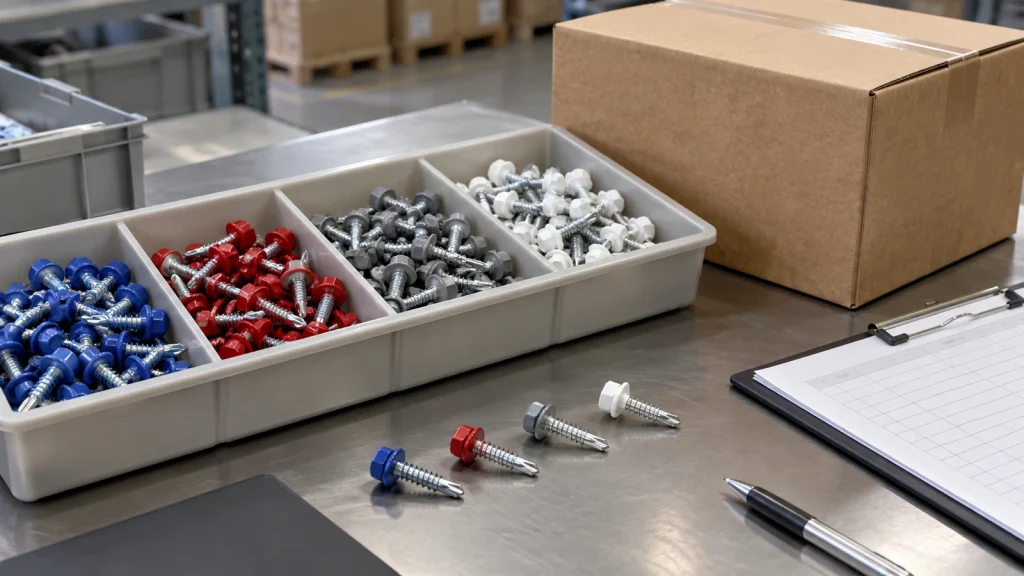
Brand: Hengzuan Surface: screw color zinc plated, head color nylon protective cap, multiple colors available Specifications: Chinese national standard ST5.5, ST6.3 mainstream caliber, rod length 25mm~125mm full range of specifications in stock, supports nonstandard length customization, suitable for drilling steel sheet thickness 2~6mm Packaging: 25kg cartons, full pallets packed on wooden pallets, support neutral packaging, private-label customization

Read More
Wafer Head Self-Drilling Screw

Wafer Head Self-Drilling Screw

Brand: Hengzuan Surface: blue and white zinc plated, can be customized color zinc plated, black oxide plated Specifications: Comply with GB/T15856.2 Chinese national standard, in stock ST3.5/ST4.2/ST4.8/ST5.5 mainstream wire diameter, rod length 13mm~50mm full range of specifications, nonstandard length customization on demand, drilling applicable plate thickness 2~5mm Packaging: 25kg export cartons, full pallets wrapped with film, supports neutral export packaging, private-label customization

Read More
Countersunk Head Blue-White Zinc Plated Self-Drilling Screw (Chinese National Standard: Phillips Countersunk Head Self-Drilling And Self-Tapping Screw GB/T15856.2-2002)

Countersunk Head Blue-White Zinc Plated Self-Drilling Screw (Chinese National Standard: Phillips Countersunk Head Self-Drilling And Self-Tapping Screw GB/T15856.2-2002)

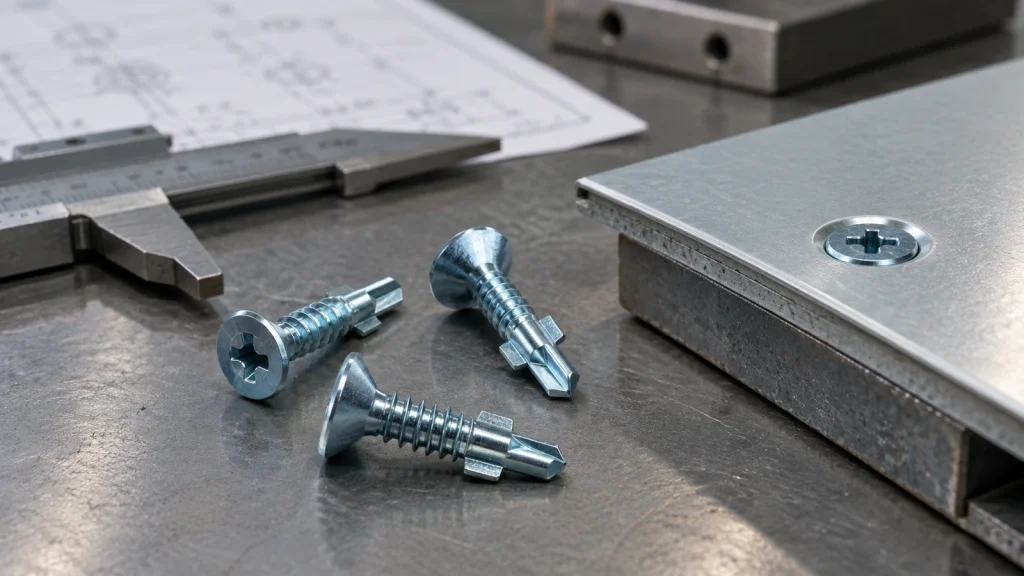
Brand: Hengzuan Surface: blue and white zinc plated, can be customized color zinc plated, black oxide plated Specifications: Comply with GB/T15856.2-2002 Chinese national standard, in stock ST4.2/ST4.8/ST5.5 full range of specifications, length 13mm~75mm optional, supports customized nonstandard rod lengths; drilling adaptation plate thickness 0.7~6mm Packaging: 25kg export cartons, full pallets wrapped with film, supports neutral export packaging, customer private-label customization

Read More
Countersunk Head Blue Zinc Self-Drilling Screw

Countersunk Head Blue Zinc Self-Drilling Screw

Brand: Hengzuan Surface: blue and white zinc plated, can be customized color zinc plated, black oxide plated Specifications: in stock 3.5/3.9/4.2/4.8/5.5 mainstream wire diameter, rod length 13mm~75mm full size range, nonstandard length can be customized as needed Packaging: 25kg export cartons, full wooden pallets wrapped with film, supports neutral export packaging, private-label customization

Read More

Table Drill Selection for Real Workpieces

Selection points

Compare a table drill by the work it must hold, the holes it must make, and the repeatability expected from the operator. Useful selection points include table size, spindle travel, speed adjustment, chuck compatibility, workholding options, and the support needed for metal, wood, plastic, or mixed-material assemblies.

Criterion What To Check Why It Matters Buyer Tip
Workpiece material and hole size Match the drill’s chuck capacity, spindle travel and speed range to the metals, plastics or wood you plan to drill. A table drill that is too light for the material can chatter, wander or stall, while an oversized machine may be unnecessary for small repetitive holes. What material, maximum hole diameter and typical thickness will the table drill need to handle?
Speed control for the drill bit type Confirm whether the machine uses stepped pulleys, variable speed control or preset speed ranges. Small bits, large bits, steel, aluminum and wood all need different speeds for clean holes and longer tool life. Ask which speed settings are available and whether they suit your most common drill bit sizes.
Table size, adjustment and clamping Look at the usable table area, tilt adjustment, height travel and whether clamps or a vise can be fixed securely. Stable support keeps the hole position accurate and reduces the risk of the workpiece spinning or shifting during drilling. Can the supplier show how your part would be supported and clamped on the table?
Runout and drilling accuracy Ask how spindle runout is controlled and whether accuracy data can be provided for the model offered. Poor runout makes holes oversize or off-center, especially with small bits or repeated production work. Request the runout tolerance or inspection method before choosing a table drill for precision parts.
Power supply and workshop fit Confirm motor power, voltage, plug type, footprint, weight and guarding before ordering. A drill that does not match the workshop power supply or available bench space can delay installation and reduce safe operation. Share your site voltage, bench space and expected daily use so the supplier can recommend a suitable configuration.

What to Check Before Choosing a Table Drill

The practical difference between a table drill and a handheld drill is control. A table drill keeps the spindle vertical, lets the operator set depth more consistently, and makes repeated holes easier to position when the work is clamped properly. That matters for bolt holes, bracket holes, pilot holes, countersinking preparation, and workshop fixtures where misalignment can affect assembly.

A table drill is not the right answer for every hole. Large, heavy, long, or awkward workpieces may be difficult to support safely on a small table. Thick metal, hard materials, and high-volume production can require slower speeds, more rigid machines, coolant, jigs, or a different drilling method. Before buying, match the machine to the actual material and hole pattern rather than choosing from the machine name alone.

Start with the workpiece. Note the material, part size, hole diameter, hole depth, and whether the holes are one-off, repeated, or positioned from a drawing. A compact table drill can be useful for maintenance and light fabrication, but parts that overhang the table or need accurate hole spacing may need better fixturing or a larger machine.

Check rigidity and control, not just headline power. A stable column, smooth feed handle, adjustable table, suitable speed range, and reliable depth stop make a visible difference in hole quality. Excess runout, poor clamping, or a flexible setup can cause oversized holes, broken drills, burrs, and uneven countersinks.

Think about the tooling and holding method at the same time as the drill. The chuck capacity, drill bit type, clamps, vise, backing plate, and any jig or stop determine how repeatable the work will be. A common mistake is buying a drill press and then trying to hold small metal parts by hand; the work should be secured before drilling.

For an inquiry, send the material, maximum workpiece size, expected hole diameter range, required hole depth, and whether the work is occasional workshop drilling or repeated batch production. If the application involves fasteners or pre-drilled assemblies, include the screw or bolt size and the assembly material so the drilling method can be discussed more clearly.

Criteria Importance Description Example Options
Workpiece size and support High for safety and hole accuracy The part must sit securely on the table or in a vise without tipping, twisting, or overhanging in a way that makes drilling unstable. A small bracket can usually be clamped on the table; a long rail or large panel may need a different drilling method or external support.
Hole accuracy and repeatability Important when holes must align with bolts, screws, or mating parts A table drill offers better vertical control than a handheld drill, but repeatable hole spacing may still require stops, jigs, or a marked fixture. A repair hole may only need careful positioning; a batch of identical plates may need a fence or jig to keep every hole in the same place.
Material and hole diameter Critical for choosing speed, tooling, and machine rigidity Harder materials, thicker sections, and larger holes place more load on the drill and may require slower speeds, stronger clamping, and appropriate drill bits. Thin plastic, softwood, and light sheet metal are different jobs from drilling thick steel plate or hardened material.
Depth control Useful when blind holes, countersink preparation, or repeated depths matter A depth stop helps keep holes consistent and reduces the risk of drilling too deep, especially when several parts need the same result. A fixture hole that passes through a plate is simpler than a controlled-depth hole in a component that must not be drilled through.
Alternative drilling method Worth checking before buying for larger or higher-volume work A table drill is flexible for workshop use, but a floor drill, magnetic drill, punched hole process, CNC machining, or outsourced drilling may fit better for certain jobs. Small batch bench work may suit a table drill; heavy structural pieces or tight repeated hole patterns may need more specialized equipment.

Blog Articles / Reviews

What Should an RFQ Include When Sourcing Dacromet Hex Head Self-Drilling Screw?

What Should an RFQ Include When Sourcing Dacromet Hex Head Self-Drilling Screw?

When sourcing dacromet hex head self drilling screw, a complete RFQ should define the application, screw configuration, coating requirement, dimensions, and supplier confirmation requirements. Buyers often receive different quotations because suppliers may interpret coating, size, drilling capability, or packaging scope differently. Before preparing a project inquiry, buyers can review the available fastener product categories to […]

What Is the Difference Between Self Drilling and Self Tapping Screws?

What Is the Difference Between Self Drilling and Self Tapping Screws?

Direct Answer: A self-drilling screw has a drill-shaped point that creates a hole and then forms mating threads in a suitable material. A self-tapping screw forms or cuts mating threads but may require a correctly sized pilot hole. Selection depends on substrate type and thickness, joint stack, point geometry, installation tool, finish and application testing—not […]

What RFQ Details Matter When Ordering Blue Zinc Winged Self-Drilling Screws?

What RFQ Details Matter When Ordering Blue Zinc Winged Self-Drilling Screws?

When ordering a blue zinc self drilling screw with a winged, countersunk configuration, diameter and length are not enough to define the application. The RFQ should identify the materials being connected, upper-material thickness, steel-substrate thickness, total material stack, required countersunk seating, screw diameter, total length, drill-point condition, wing geometry, surface treatment, installation method, quantity and […]

What Should Buyers Confirm When Ordering Color Nylon Head Hex Self-Drilling Screws?

What Should Buyers Confirm When Ordering Color Nylon Head Hex Self-Drilling Screws?

When ordering a chinese standard color nylon head hex self drilling screw, the RFQ should define more than a color name. Buyers should confirm the exact color reference, nylon head or cap configuration, base screw diameter and length, steel-sheet condition, metallic screw finish, visible-face requirement, color approval method, batch-consistency check and packaging or SKU separation. […]

Rust Prevention Tips for Self-Drilling Screws

Rust Prevention Tips for Self-Drilling Screws

As we all know, the simplest way to prevent self-drilling screws from rusting is to properly isolate the screws from moisture-containing and humid environments. This can be achieved through selective application of protective coatings and sealants, or by purchasing specially formulated rust-resistant or rust-proof screws. This is why many businesses and households have rust prevention […]

Frequently Asked Questions

Is a bench-mounted drill press suitable for metal parts?

Yes, it can be suitable for small and medium metal parts if the machine has enough rigidity, the right speed range, suitable drill bits, and secure clamping. The decision depends on the material thickness, hole diameter, required accuracy, and how often the same hole pattern is repeated.

When is a handheld drill a better choice?

A handheld drill is often easier for large, fixed, or awkward parts that cannot sit safely on a drill table. The trade-off is lower control over squareness, depth, and repeatability, so it is less suitable for precise bolt patterns or repeated workshop drilling.

Does more motor power always mean better hole quality?

No. Hole quality also depends on spindle runout, column rigidity, feed control, correct speed, sharp tooling, and proper workholding. A powerful but flexible setup can still produce oversized holes, chatter, burrs, or broken drill bits.

What details should be checked before buying one for fastener-related work?

Confirm the material, part size, hole diameter, hole depth, and screw or bolt size involved in the assembly. Also check whether the work is occasional repair drilling or repeated batch work, because repeatability may require a vise, jig, stop, or a larger drilling setup.

Can it replace pre-punched or CNC-drilled holes?

Only in some cases. A table drill can work well for prototypes, repair jobs, and small batches, but punched or CNC-drilled holes are often better for high-volume parts, tight positional tolerances, or repeated patterns from drawings.

Leave Your Message

Send the workpiece material, maximum part size, and hole diameter or depth range. If the holes relate to a fastener assembly, include the screw or bolt size and the expected batch quantity.