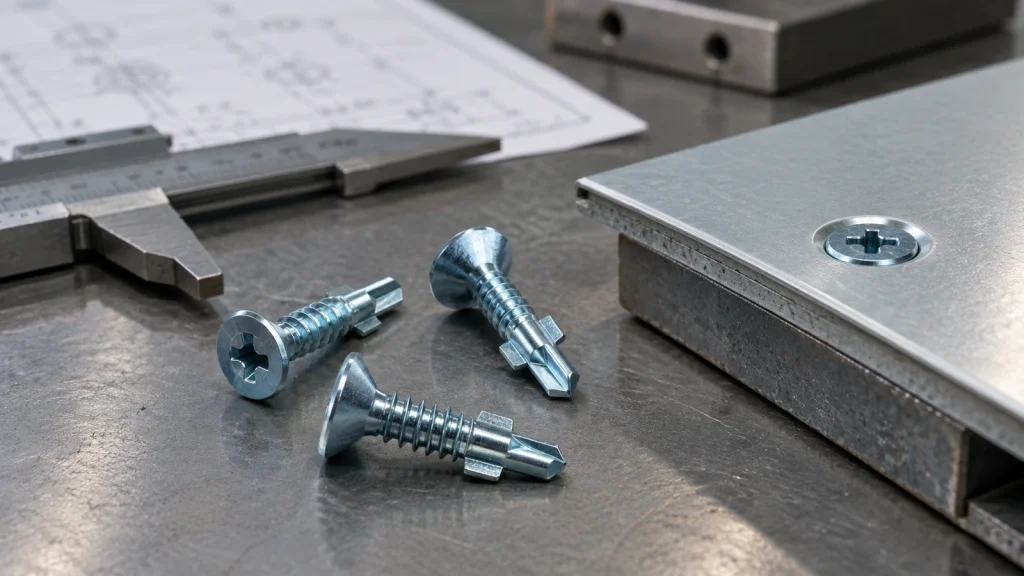
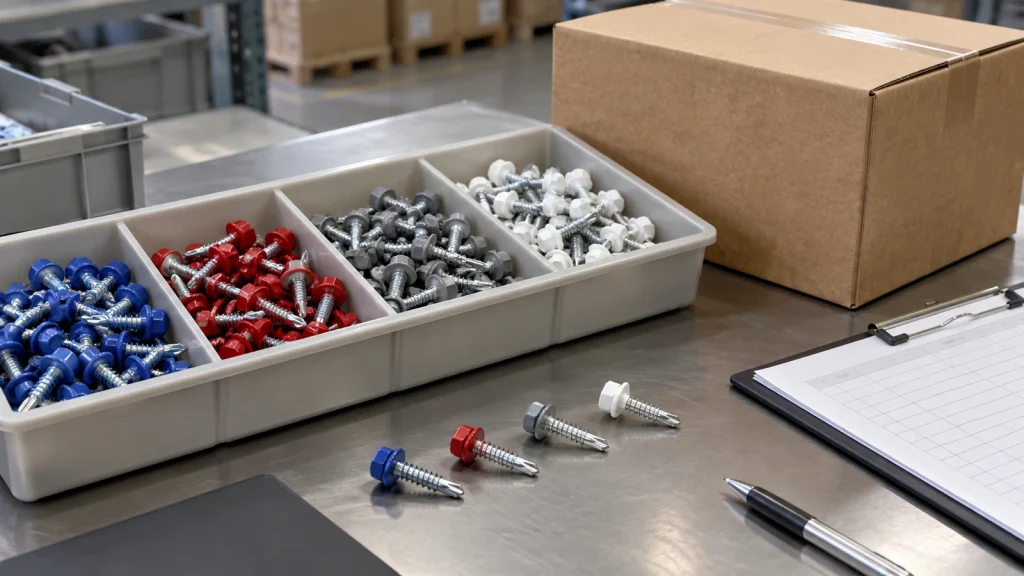
A drill machine and an impact driver are not interchangeable for every fastening job. A drill gives more controlled rotation and is useful for drilling, piloting, and lighter fastening. An impact driver delivers pulsed torque, which can drive screws quickly but may over-tighten small fasteners, damage painted or nylon heads, or make it harder to control washer compression.
For self-drilling screws, the practical question is not only “which brand is best?” but “which tool setup matches this screw and substrate?” Metal thickness, screw diameter, drill point type, head style, washer type, surface coating, and required finish all affect whether you should prioritize speed control, torque control, chuck type, bit fit, or battery runtime.
Match the tool to the screw point and material. Self-drilling screws cut their own hole, so tool speed and pressure affect drilling performance. Too little control can blunt the drill point or cause wandering; too much torque can strip the joint after the screw has seated. For thicker metal or repetitive work, confirm the screw style and recommended driving approach before standardizing one drill machine across the site.
Do not judge a drill by power alone. High torque sounds attractive, but fastening quality often depends on controllable speed, reliable clutch behavior, comfortable handling, and the right driver bit engagement. Hex washer heads, countersunk heads, pan heads, painted heads, and nylon heads may need different care during installation.
Consider the finish you need to protect. Coated screws, Dacromet fasteners, blue zinc screws, color nylon heads, and painted roofing fasteners can be marked or damaged by poor bit fit or aggressive driving. If corrosion resistance or appearance matters, specify the screw coating and the visible finish requirements when asking for advice.
Next step: share the screw type, base materials, approximate material thickness, head style, coating, and installation method. With those details, a supplier can help you confirm whether the fastening choice suits a drill, driver, or controlled installation setup rather than relying on a brand recommendation in isolation.