Black Self Tapping Screws Selection Guide | Hebei Wotu Fastener Manufacturing Co., Ltd.

Black self tapping screws for dark finished assemblies

Black self tapping screws are usually chosen where the fastener must cut its own mating thread and also leave a dark, less visible finish on the assembly. The main decision is not color alone: the screw must match the base material, pilot hole condition, head style, drive type, coating, and required holding strength.

For procurement, the useful question is whether the black finish is mainly for appearance, corrosion resistance, reduced glare, or compatibility with a painted part. That answer changes the coating choice and the level of performance that should be verified before ordering.

Related Products

Blue-White Zinc Plated Pan Head With Pad Self-Tapping Screw

Blue-White Zinc Plated Pan Head With Pad Self-Tapping Screw

Brand: Hengzuan Surface: blue and white zinc plated Specifications: in stock ST4.2/ST4.8full range of specifications, length 13~50mm in stock, support nonstandard length customization Packaging: 25kg cartons, solid wood packaging, support neutral packaging, private-label customization

Read More
Countersunk Head Blue-White Zinc Plated Self-Drilling Screw (Chinese National Standard: Phillips Countersunk Head Self-Drilling And Self-Tapping Screw GB/T15856.2-2002)

Countersunk Head Blue-White Zinc Plated Self-Drilling Screw (Chinese National Standard: Phillips Countersunk Head Self-Drilling And Self-Tapping Screw GB/T15856.2-2002)

Brand: Hengzuan Surface: blue and white zinc plated, can be customized color zinc plated, black oxide plated Specifications: Comply with GB/T15856.2-2002 Chinese national standard, in stock ST4.2/ST4.8/ST5.5 full range of specifications, length 13mm~75mm optional, supports customized nonstandard rod lengths; drilling adaptation plate thickness 0.7~6mm Packaging: 25kg export cartons, full pallets wrapped with film, supports neutral export packaging, customer private-label customization

Read More
Black Phosphated Winged Countersunk Head Self-Drilling Screw

Black Phosphated Winged Countersunk Head Self-Drilling Screw

Brand: Hengzuan Surface: high temperature black phosphated anti-rust treatment, blue zinc, color zinc plated coating can be replaced as needed Specifications: in stock ST3.5/ST4.2/ST4.8 common specifications, rod length 16mm~50mm, complete, supports nonstandard size customization, suitable for drilling steel sheets 2~5mm Packaging: 25kg cartons, whole wooden pallets, support neutral packaging, private-label customization

Read More
Countersunk Head Self-Tapping Screw

Countersunk Head Self-Tapping Screw

Brand: Hengzuan Surface: blue and white zinc plated, optional color zinc plated, black oxide treatment Specifications: Follow GB/T846-1985 Chinese national standard, in stock ST4.2/ST4.8/ST5.5 full range of specifications Packaging: 25kg export cartons, full pallets wrapped with film, supports neutral export packaging, private-label customization

Read More

Select black self tapping screws by material, finish, and installation method

Selection criteria

Compare black self tapping screws by application first: base material, hole condition, thread engagement, head style, drive type, and surface treatment. The right choice should install cleanly, hold without stripping, and match the required black appearance after handling and assembly.

Criterion What To Check Why It Matters Buyer Tip
Black finish and base coating Ask what creates the black appearance, such as black oxide, black phosphate, painted coating, or another surface treatment. The finish affects corrosion resistance, appearance, friction during driving, and suitability for indoor or outdoor use. A black color alone does not define protection level. What black finish is supplied, and is it intended for dry indoor use, exterior exposure, or a specific assembly environment?
Material being fastened Confirm the screw is specified for the actual substrate, such as sheet metal, plastic, wood, or a pre-drilled assembly. Self tapping screws cut or form their own mating thread, but the point style and thread form must match the material. The wrong type can strip, crack the workpiece, or fail to start cleanly. Can you recommend the point type and thread form for this material thickness and assembly stack?
Pilot hole requirement Verify whether the screw needs a pilot hole and what hole size range should be used for the buyer’s material. Too small a pilot hole can raise driving torque or break screws. Too large a hole can reduce thread engagement and pull-out strength. For our material and thickness, what pilot hole size should we test before production use?
Head style and drive recess Compare pan, flat, hex washer, or other head forms, and confirm the drive type used by your tools. Head shape controls clamp area, flushness, and appearance. Drive type affects tool fit, installation speed, and the risk of cam-out or damaged black coating. Which head and drive combination suits our assembly: visible finish, flush fit, or higher driving control?
Length, diameter, and thread engagement Check the full screw length, threaded length, diameter, and how many threads will engage the receiving material. A screw that looks long enough may still give poor holding if it does not engage enough material, while excessive length can protrude or interfere with parts behind the joint. Given our total stack thickness, what screw length and diameter should we trial for secure engagement without protrusion?

Key decisions before ordering black self tapping screws

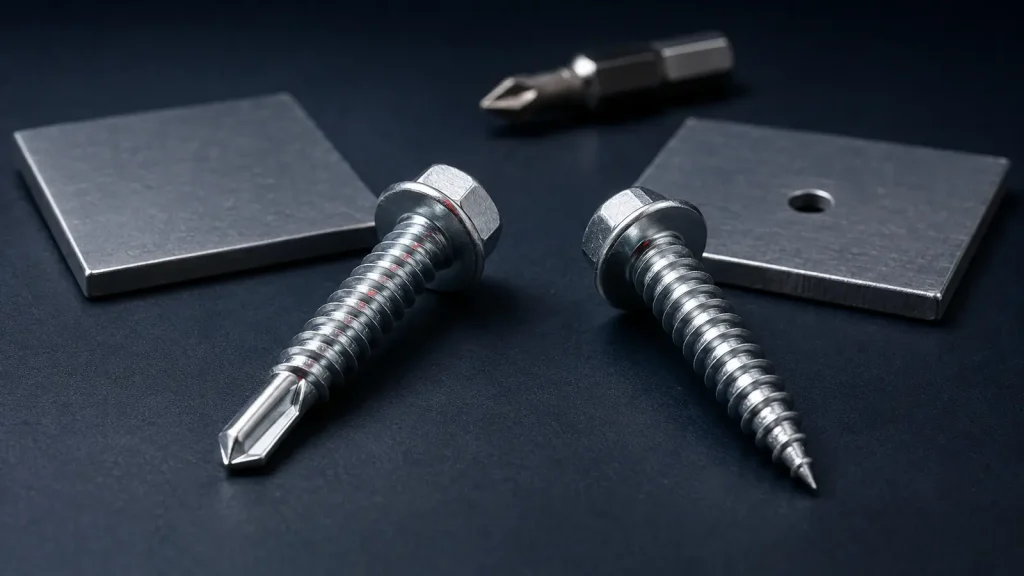
A self tapping screw forms threads in the material as it is driven, but it is not always the same as a self drilling screw. A self drilling screw has a drill point that can create its own hole in suitable metal, while many self tapping screws still need a prepared pilot hole. Confusing the two can lead to cracked material, stripped threads, slow installation, or poor clamp load.

The black finish also needs clarification. Black oxide, black phosphate, black zinc, black painted, or other dark coatings can look similar in photos but behave differently in handling, outdoor exposure, lubrication, and corrosion protection. Buyers should confirm the actual surface treatment instead of specifying only “black.”

Start with the joint materials. Sheet metal, aluminum, plastic, timber, and pre-drilled steel do not accept the same thread form or point style. A screw that works well in thin metal may split plastic or give weak engagement in soft material. Share the material grade or at least the material type and thickness so the thread and point can be checked.

Decide how the hole will be made. If the assembly already has pilot holes, the screw needs the right thread geometry and diameter for that hole. If installers expect the screw to create the opening, confirm whether a self drilling point is required instead. A common mistake is buying a “self tapping” screw for metal-to-metal work and then discovering that the point cannot drill through the top sheet.

Match the head and drive to the installation method. Pan head, countersunk head, hex washer head, and flange styles distribute load differently and affect the final appearance. Phillips, Pozi, square, hex, or Torx-style drives also change installation speed, cam-out risk, and tool control. For visible black assemblies, the head shape and drive recess matter as much as the thread.

For the next step, prepare a short inquiry with screw size or target hole size, material and thickness, head and drive preference, finish requirement, indoor or outdoor use, and any sample or drawing available. Ask Hebei Wotu Fastener Manufacturing Co., Ltd. to confirm which black surface treatment and point style fit the application rather than approving only by color and length.

Criteria Importance Description Example Options
Pilot hole versus drill point Critical because it determines whether the fastener can start and penetrate the joint as intended. Use a tapping point for a prepared hole when the hole diameter and thread engagement are already controlled. Use a self-drilling point when the application requires the screw to create an opening through suitable metal. A pre-drilled panel assembly may use a tapping screw, while joining two metal sheets without a prepared opening may call for a self-drilling alternative.
Base material and thickness Critical because thread formation, holding strength, and risk of cracking vary between metal, aluminum, plastic, timber, and composite materials. Match the thread form, point style, diameter, and length to the material being fastened and the amount of usable engagement. A design suitable for thin sheet metal may not suit soft plastic or wood. A screw selected for thin steel should not be transferred to a plastic housing without checking thread engagement and installation torque.
Black surface treatment Important when the assembly faces moisture, abrasion, outdoor exposure, or frequent handling. Specify the actual finish rather than the color alone. Different black treatments can vary in corrosion protection, appearance, lubrication, and resistance to damage during installation. An indoor decorative panel and an exposed bracket may both need a black appearance but require different finish discussions.
Head style and drive Important for seating, visible appearance, tool access, and resistance to installation problems. Pan, countersunk, hex washer, and flange heads serve different seating and load-distribution needs. Drive choices also affect tool control and the risk of cam-out during installation. A visible panel may favor a neat countersunk or pan-head appearance, while a bracket may need a washer-style head for broader bearing.
Thread engagement and overall length Important because too little engagement can weaken the joint, while excessive length can damage the material or interfere with components behind it. Determine the combined material thickness, any washer or clearance allowance, and the engagement needed in the receiving material. Do not select length from the visible top layer alone. For a layered assembly, calculate the screw length from the full stack-up and verify that the point will not project into a sensitive part.

Blog Articles / Reviews

How Should Buyers Evaluate Self Tapping Screws for Project Procurement?

How Should Buyers Evaluate Self Tapping Screws for Project Procurement?

#4 self tapping screws should not be purchased from the “#4” designation alone. For a usable B2B specification, the buyer still needs the actual screw diameter, thread form or pitch, overall length, substrate, pilot-hole condition, head and drive style, material, surface finish and quantity. This matters because suppliers may use different naming systems. Wotu Fastener’s […]

Why Do Self-Tapping Roofing Screws Leak Even When the Screw Length Looks Correct?

Why Do Self-Tapping Roofing Screws Leak Even When the Screw Length Looks Correct?

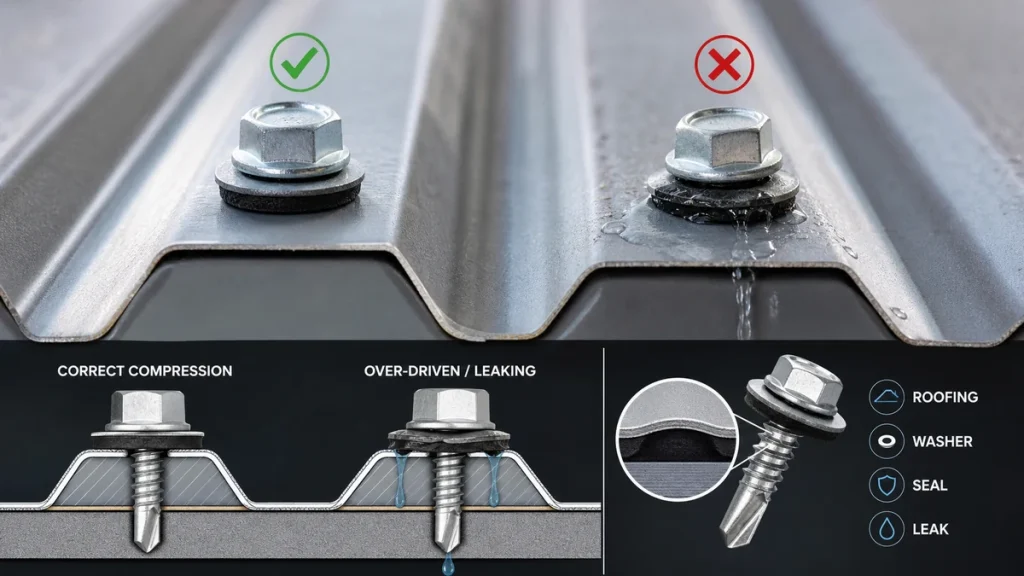
Direct answer: Correct screw length does not guarantee a watertight metal-roof connection. Self tapping roofing screws can leak because of incorrect washer compression, enlarged or stripped holes, insufficient thread engagement, panel movement, or an unsuitable coating-and-washer system. Buyers should diagnose the complete installed connection—including panel profile, support thickness, point type, washer condition, and exposure—rather than […]

What Is the Difference Between Self Drilling and Self Tapping Screws?

What Is the Difference Between Self Drilling and Self Tapping Screws?

Direct Answer: A self-drilling screw has a drill-shaped point that creates a hole and then forms mating threads in a suitable material. A self-tapping screw forms or cuts mating threads but may require a correctly sized pilot hole. Selection depends on substrate type and thickness, joint stack, point geometry, installation tool, finish and application testing—not […]

What are self-tapping screws?

What are self-tapping screws?

What is the working principle of self-tapping screws? Let’s discuss this with Wotu Fasteners. As the name suggests, self-tapping screws are screws that can tap their own threads. Regular screws require pre-drilled holes to be screwed in. Self-tapping screws tap their own threads as they are screwed in. To achieve this self-tapping, these screws are […]

Frequently Asked Questions

Are these screws suitable for fastening metal to wood or plastic?

They can be suitable, but the thread shape, point, diameter, and length must match the softer material. A design that forms threads effectively in sheet metal may split plastic, crush wood fibers, or provide insufficient engagement, so confirm the joint materials and thickness before ordering.

When should I choose a self-drilling screw instead?

Choose a self-drilling screw when the fastener must create the opening through suitable metal during installation. A conventional self-tapping screw is often better for a pre-drilled assembly, but it may not penetrate the top sheet without a separate pilot hole.

Does a black appearance mean the screw has strong corrosion protection?

No. A dark appearance identifies the color, not the surface-treatment performance. Black oxide, black phosphate, black zinc, and painted finishes can differ in corrosion resistance, handling durability, lubrication, and suitability for indoor or outdoor exposure.

How should I specify the required size if the assembly already has pilot holes?

Provide the pilot-hole diameter or drawing, the joined-material thicknesses, and the required thread engagement. Also state the head and drive style, because the screw must fit both the hole and the available installation tool while providing the intended clamping result.

Can a countersunk version replace a pan-head version without changing the assembly?

Not automatically. A countersunk head needs a matching countersink and seats flush, while a pan head remains above the surface and distributes load differently. Check the mating surface, available clearance, appearance, and whether the receiving material can support the chosen seating method.

Leave Your Message

Send the screw size or drawing, the material and thickness being fastened, and the required black finish or use environment. If you are unsure about pilot holes, include how the screw will be installed.