Concrete Screw Anchors | Hebei Wotu Fastener Manufacturing Co., Ltd.

Concrete Screw Anchors

A concrete screw anchor fixes brackets, rails, frames, machinery guards and service supports directly into concrete or masonry after a drilled hole is prepared. The key decision is not only diameter and length; it is whether the anchor type, head style, coating and embedment suit the base material, fixture thickness and working environment.

For procurement, the safest starting point is the installation condition: cracked or uncracked concrete, indoor or outdoor exposure, removable or permanent fastening, and the load direction. Those details affect thread form, corrosion protection and the installation method more than a simple size callout does.

Related Products

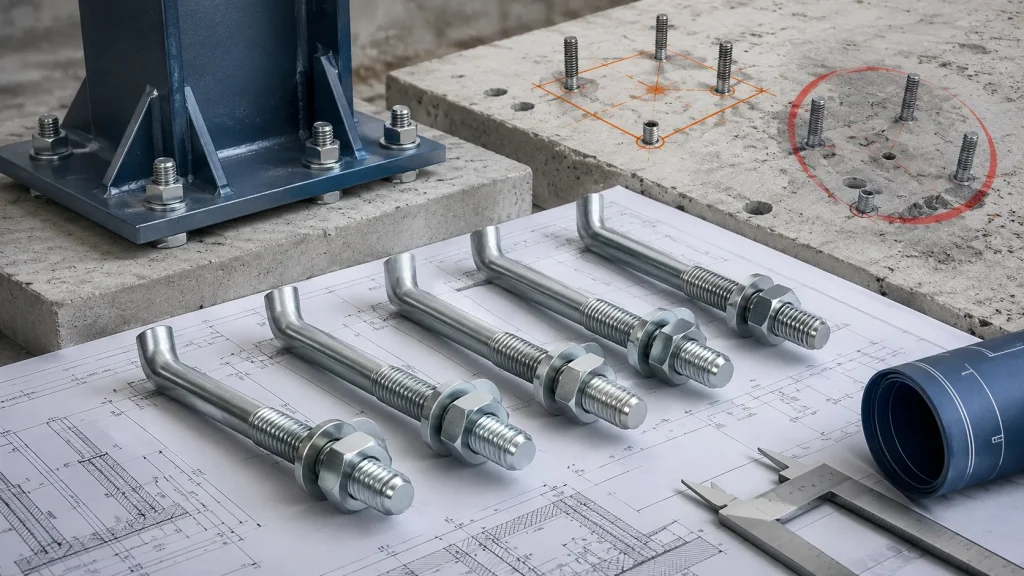
7-letter, 9-letter L-shaped anchor bolt (Chinese national standard GB/T799-1988 embedded anchor screw)

7-letter, 9-letter L-shaped anchor bolt (Chinese national standard GB/T799-1988 embedded anchor screw)

Brand: Wotu Surface: Natural black oxide treatment, customized hot-dip galvanized, zinc plated as required Specifications: Follow Chinese national standard GB/T799-1988, in stock M12-M48, total length 120mm~1500mm, nonstandard customized diameter, bending length, total screw length available Matching: Nuts, flat washers and spring washers of the same specification can be supplied in complete sets. Packaging: Bundling and packaging, using wooden pallets and film-wrapped export packaging in large quantities

Read More
Wafer Head Self-Drilling Screw

Wafer Head Self-Drilling Screw

Brand: Hengzuan Surface: blue and white zinc plated, can be customized color zinc plated, black oxide plated Specifications: Comply with GB/T15856.2 Chinese national standard, in stock ST3.5/ST4.2/ST4.8/ST5.5 mainstream wire diameter, rod length 13mm~50mm full range of specifications, nonstandard length customization on demand, drilling applicable plate thickness 2~5mm Packaging: 25kg export cartons, full pallets wrapped with film, supports neutral export packaging, private-label customization

Read More
Countersunk Head Blue-White Zinc Plated Self-Drilling Screw (Chinese National Standard: Phillips Countersunk Head Self-Drilling And Self-Tapping Screw GB/T15856.2-2002)

Countersunk Head Blue-White Zinc Plated Self-Drilling Screw (Chinese National Standard: Phillips Countersunk Head Self-Drilling And Self-Tapping Screw GB/T15856.2-2002)

Brand: Hengzuan Surface: blue and white zinc plated, can be customized color zinc plated, black oxide plated Specifications: Comply with GB/T15856.2-2002 Chinese national standard, in stock ST4.2/ST4.8/ST5.5 full range of specifications, length 13mm~75mm optional, supports customized nonstandard rod lengths; drilling adaptation plate thickness 0.7~6mm Packaging: 25kg export cartons, full pallets wrapped with film, supports neutral export packaging, customer private-label customization

Read More
Countersunk Head Blue Zinc Self-Drilling Screw

Countersunk Head Blue Zinc Self-Drilling Screw

Brand: Hengzuan Surface: blue and white zinc plated, can be customized color zinc plated, black oxide plated Specifications: in stock 3.5/3.9/4.2/4.8/5.5 mainstream wire diameter, rod length 13mm~75mm full size range, nonstandard length can be customized as needed Packaging: 25kg export cartons, full wooden pallets wrapped with film, supports neutral export packaging, private-label customization

Read More
Painted Hex Head Self-Drilling Screw

Painted Hex Head Self-Drilling Screw

Brand: Hengzuan Surface: screw color zinc plated + hex head outdoor paint Specifications: ST5.5, ST6.3, rod length 25mm~120mm in stock, supports nonstandard customization, suitable for drilling steel sheets 2~5mm Packaging: 25kg cartons, whole wooden pallets

Read More

Selecting a Concrete Screw Anchor for the Base Material and Fixture

Selection criteria

Concrete screw anchor selection usually turns on a few linked details: base material, required embedment, fixture thickness, head style, coating and installation access. Confirming these points early helps avoid anchors that fit the drawing size but fail to clamp the fixture properly or suit the site conditions.

Criterion What To Check Why It Matters Buyer Tip
Base material and anchor type Confirm whether the fixing is going into cracked concrete, non-cracked concrete, block, brick, or another masonry base. Concrete screw anchors cut their own thread into the hole, so holding performance depends heavily on the base material and its condition. Ask: Is this screw anchor intended for solid concrete only, or has it been assessed for the masonry material on my project?
Hole diameter, drilling depth, and embedment Compare the required drill bit size, minimum hole depth, and effective embedment for each anchor size. A small mismatch between the anchor and drilled hole can cause poor thread bite, difficult installation, or reduced load capacity. Ask for the drilling instructions and installation drawing for the exact concrete screw anchor size you plan to order.
Head style and fixture clearance Decide whether the application needs a hex head, countersunk head, pan head, or other drive and bearing style. The head affects tool access, surface finish, clamping area, and whether the fixture can sit flush after installation. Ask: What head styles are available for this anchor, and which one suits my fixture hole and surface requirement?
Coating and exposure conditions Match the finish to the environment, such as dry indoor use, damp interiors, exterior exposure, or contact with treated materials. Concrete and moisture can accelerate corrosion if the coating is not suitable for the installation environment. Ask which coating options are available and whether the supplier can provide the finish specification for review.
Load direction and installation repeatability Identify whether the anchor will mainly take tension, shear, combined loading, or temporary/removable fixing duty. Some concrete screw anchors can be adjusted or removed, but repeated installation conditions and load direction still matter for safe selection. Ask for load data or technical guidance for the exact installation condition rather than selecting only by screw diameter and length.

Key Choices Before Ordering Concrete Screw Anchors

A concrete screw anchor differs from an expansion anchor because it cuts or forms its holding path in the drilled hole instead of relying mainly on expansion pressure. That can help where installers need a removable fastening or where edge distance and spacing need careful control, but it also makes hole diameter, drilling quality and embedment depth especially important.

The practical distinction matters on site. A screw anchor may install quickly and leave less expansion stress in the concrete, but it still needs the correct drill bit, clean hole and compatible base material. If the concrete is weak, hollow, damaged or inconsistent, the purchase decision should include confirmation of the substrate and the required load performance before the anchor is selected.

Start with the base material and load case. Concrete strength, masonry type, edge distance, spacing, shear load, tension load and vibration all influence the anchor choice. A common mistake is ordering by visible fixture hole size only, then finding that the required embedment or head clearance does not match the installation.

Match the head style to the fixture. Hex head anchors suit many brackets and service supports because installers can drive them with common tools. Countersunk heads sit flush in plates or frames but require the fixture hole and countersink to be prepared correctly. Pan or flange styles may spread bearing pressure, depending on the design. The head is not cosmetic; it affects clamping, tool access and final fit.

Choose the finish for the environment, not just for appearance. Dry indoor use may not need the same coating as exposed concrete, damp service rooms or outdoor fixings. If the anchor will contact treated timber, dissimilar metals or chemical exposure, ask which coating or material is appropriate rather than assuming a standard zinc finish will be enough.

For an inquiry, send the anchor diameter and length if already specified, but also include fixture thickness, hole diameter if fixed by the drawing, base material, required head type, finish, quantity and packing preference. If the project has an engineer’s specification, share the exact callout so the thread, coating and installation assumptions can be checked before quoting.


Criteria Importance Description Example Options
Base material Critical because holding performance depends on the anchor engaging sound material. Identify whether the fixing is going into solid concrete, lightweight concrete, brick, block or another masonry type. Do not assume that an anchor suitable for solid concrete will suit hollow or damaged material. A bracket fixed to sound concrete presents a different selection problem from a service support fixed to hollow block.
Load and embedment Critical for structural fit and for avoiding an anchor that is too short, too long or unsuitable for the load direction. Consider tension, shear, combined loading, vibration, edge distance, spacing and the required embedment in sound substrate. A longer anchor is not automatically a stronger or safer choice. A light wall-mounted rail and an overhead support may require different verification even if their fixture holes are similar.
Head style and fixture fit Important for clamping, clearance, tool access and the finished surface. Hex heads suit fixtures with accessible drive locations, while countersunk heads are intended for prepared countersunk holes. Other head profiles may be appropriate where bearing area or clearance is the priority. A flat plate designed for a flush fastener should not be paired with a protruding head without checking the drawing and clearance.
Finish and service environment Important wherever moisture, outdoor exposure, chemicals, treated materials or dissimilar metals may affect the fastening. Select the material or coating with the installation environment in mind rather than choosing by appearance alone. Confirm compatibility when the anchor will contact treated timber, another metal or a corrosive atmosphere. A dry indoor fixture and an exposed outdoor support may call for different corrosion-protection requirements.
Concrete screw anchor versus expansion anchor A key alternative decision when removability, expansion pressure or the project specification affects the installation method. A screw anchor engages the drilled hole through its thread, while an expansion anchor relies on expansion within the base. Compare the specified load performance, substrate limits, edge conditions and whether future removal is required. A removable maintenance bracket may justify evaluating a screw anchor, while a project drawing that specifies an expansion system should not be changed without technical approval.

Blog Articles / Reviews

How to Specify Countersunk Head Cross Thick Thread Fiberboard Screws for Furniture Assembly Projects

How to Specify Countersunk Head Cross Thick Thread Fiberboard Screws for Furniture Assembly Projects

Fiberboard screws are selected based on more than screw size alone. For furniture assembly and board-based applications, buyers need to match the screw structure with the characteristics of fiberboard, MDF, and similar engineered wood materials. A suitable specification should consider thread design, head style, screw length, diameter, installation method, and application requirements. For buyers sourcing […]

What Should an RFQ Include When Sourcing Dacromet Hex Head Self-Drilling Screw?

What Should an RFQ Include When Sourcing Dacromet Hex Head Self-Drilling Screw?

When sourcing dacromet hex head self drilling screw, a complete RFQ should define the application, screw configuration, coating requirement, dimensions, and supplier confirmation requirements. Buyers often receive different quotations because suppliers may interpret coating, size, drilling capability, or packaging scope differently. Before preparing a project inquiry, buyers can review the available fastener product categories to […]

How Should Buyers Evaluate Self Tapping Screws for Project Procurement?

How Should Buyers Evaluate Self Tapping Screws for Project Procurement?

#4 self tapping screws should not be purchased from the “#4” designation alone. For a usable B2B specification, the buyer still needs the actual screw diameter, thread form or pitch, overall length, substrate, pilot-hole condition, head and drive style, material, surface finish and quantity. This matters because suppliers may use different naming systems. Wotu Fastener’s […]

Anchor Bolts: 7 Ordering Errors That Cause Site Rework

Anchor Bolts: 7 Ordering Errors That Cause Site Rework

ost anchor bolt ordering errors come from incomplete drawings, unclear dimensions, unsuitable material or coating choices, undefined tolerances, and mismatched nuts or washers. These mistakes affect steel fabricators, EPC contractors, equipment installers, importers, and distributors because anchor bolts are usually embedded before the connected structure arrives on site. Once concrete has cured, even a small […]

Which Self-Tapping Roofing Screw Specification Fits Metal Panels on Steel or Timber?

Which Self-Tapping Roofing Screw Specification Fits Metal Panels on Steel or Timber?

The correct self-tapping roofing screw depends on the complete panel-and-substrate stack-up. Steel supports typically require a point and thread matched to the support thickness and any pilot-hole requirement; timber supports require a wood-appropriate thread and sufficient embedment. In both cases, buyers must define diameter, length, head, sealing washer, material or coating, environment, pull-out requirements, and […]

Frequently Asked Questions

Can a concrete screw anchor be used in brick or hollow block?

Not automatically. A standard anchor intended for solid concrete may not provide the required holding performance in hollow masonry or weak brick, so confirm the base material, wall construction and load before selecting an anchor.

When is an expansion anchor a better alternative?

An expansion anchor may suit an application whose design specifically calls for expansion-based holding or a permanent fastening method. A concrete screw anchor may be preferable where removal is useful or where limiting expansion pressure matters, but the final choice should follow the load, edge-distance and substrate requirements.

Does choosing a longer anchor always improve holding strength?

No. The anchor needs sufficient embedment in sound material, but extra length does not compensate for a poor substrate, an incorrectly drilled hole or inadequate installation. Excess length can also create clearance problems or interfere with reinforcement, services or the rear face of the base.

Are these anchors suitable for overhead, vibrating or safety-critical fixtures?

They may be suitable only when the anchor, substrate and installation meet the project load requirements. For overhead, vibrating or safety-critical work, provide the load direction, service conditions and design specification for confirmation rather than selecting by diameter and length alone.

What information should accompany a purchasing inquiry?

Provide the base material, fixture thickness, required diameter and length or drawing callout, head style, finish, quantity and packing preference. Include any known tension, shear, vibration or removal requirements so the proposed anchor can be checked against the installation.

Leave Your Message

Send the base material, fixture thickness and required anchor size or drawing callout. Please also note the head style, finish and quantity so the inquiry can be checked against the installation conditions.