Drill Bit Size For M10 Anchor Bolt Selection Guide | Hebei Wotu Fastener Manufacturing Co., Ltd.

M10 Anchor Bolt Drill Bit Size

For an M10 anchor bolt, the correct drill bit size depends on the anchor design and the material being drilled—not simply on the M10 thread diameter. An expansion anchor, sleeve anchor, chemical anchor and direct-install anchor can each require a different hole diameter.

Match the bit to the anchor manufacturer’s stated hole size, then check the required hole depth and drilling method for the base material. Choosing the bit from the bolt’s nominal thread size alone can leave the anchor loose, prevent proper expansion or make installation impossible.

Related Products

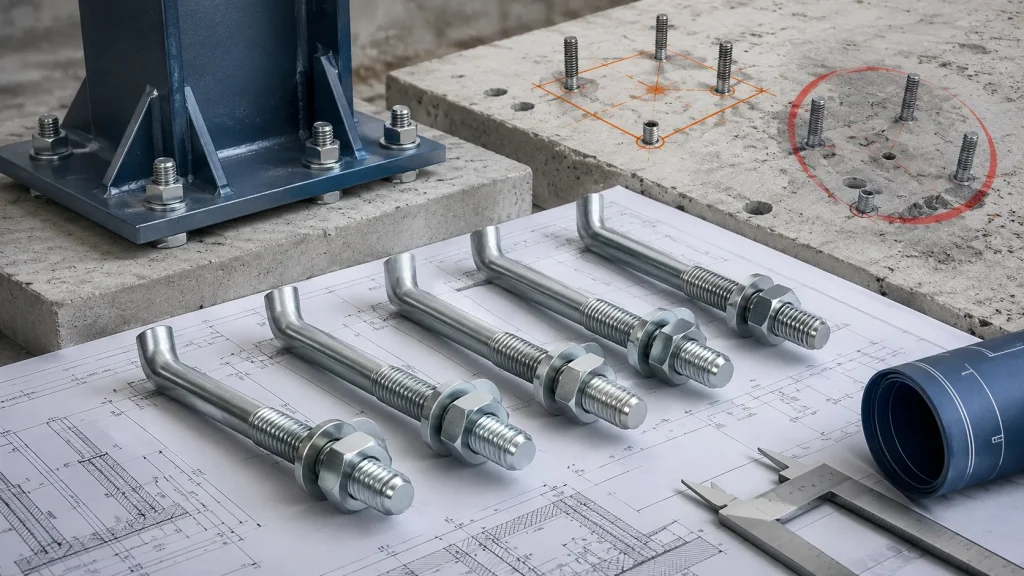
7-letter, 9-letter L-shaped anchor bolt (Chinese national standard GB/T799-1988 embedded anchor screw)

7-letter, 9-letter L-shaped anchor bolt (Chinese national standard GB/T799-1988 embedded anchor screw)

Brand: Wotu Surface: Natural black oxide treatment, customized hot-dip galvanized, zinc plated as required Specifications: Follow Chinese national standard GB/T799-1988, in stock M12-M48, total length 120mm~1500mm, nonstandard customized diameter, bending length, total screw length available Matching: Nuts, flat washers and spring washers of the same specification can be supplied in complete sets. Packaging: Bundling and packaging, using wooden pallets and film-wrapped export packaging in large quantities

Read More
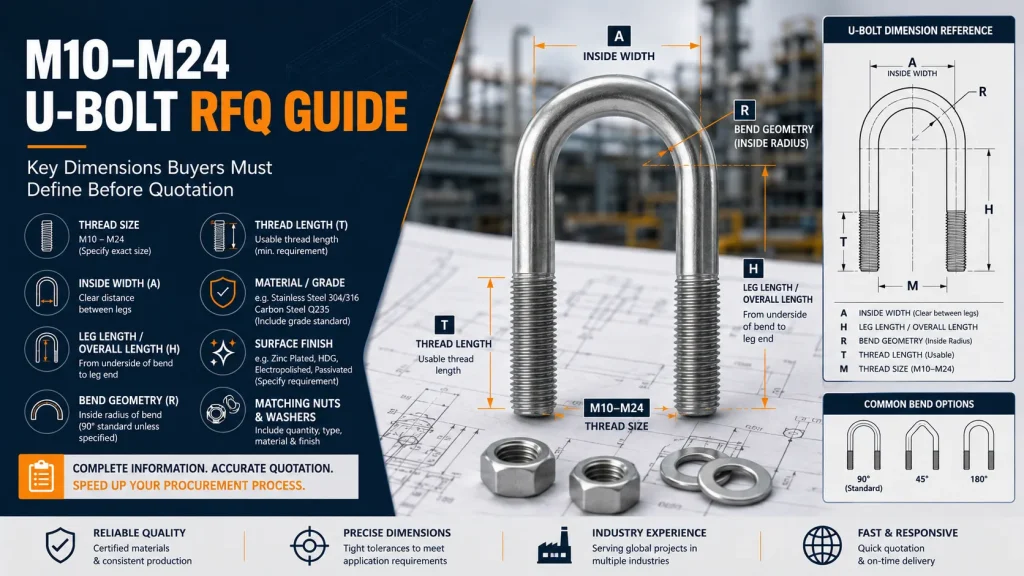
U-bolt ( / U-bolt, M10/M12/M16/M20/M24 multiple specifications)

U-bolt ( / U-bolt, M10/M12/M16/M20/M24 multiple specifications)

Brand: Wotu Surface: natural black oxide / hot-dip galvanized / blue-white zinc plated, multiple processes available Specifications: Based on common industry drawing parameters, suitable for pipe diameter 25mm~139.7mm, screw diameter M10~M24, total length can be nonstandard customized Matching: can be matched with nut, flat washer and spring washer of the same specifications for complete shipment Packaging: Bundling and packaging + 25kg export carton, full-container wooden pallet wrapped with film, supports private-label export packaging

Read More
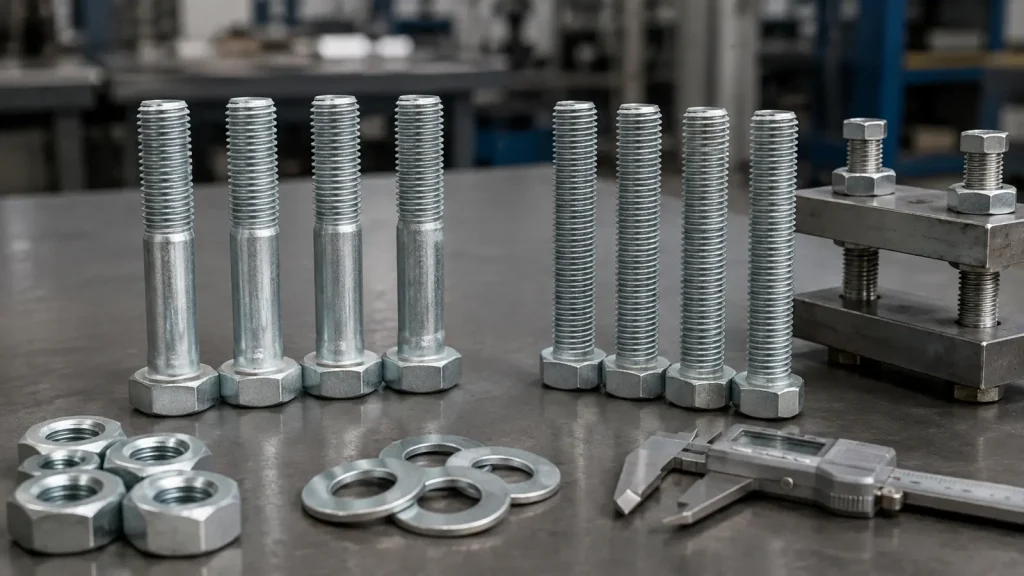
Hot-Dip Galvanized Hex Head Bolt (DIN931 Half Thread / DIN933 Full Thread / GB30 Chinese National Standard Bolt, Can Be Equipped With Nut And Washer Set)

Hot-Dip Galvanized Hex Head Bolt (DIN931 Half Thread / DIN933 Full Thread / GB30 Chinese National Standard Bolt, Can Be Equipped With Nut And Washer Set)

Brand: Wotu Surface: overall hot-dip zinc plating treatment Specifications: Comply with DIN and GB standards, in stock M6-M48 full range of specifications, length 20mm-300mm, supports nonstandard customized. Packaging: woven bag inside / 25kg export carton, film-wrapped wooden pallet; supports neutral packaging and customer private-label customization.

Read More
Black Phosphated Winged Countersunk Head Self-Drilling Screw

Black Phosphated Winged Countersunk Head Self-Drilling Screw

Brand: Hengzuan Surface: high temperature black phosphated anti-rust treatment, blue zinc, color zinc plated coating can be replaced as needed Specifications: in stock ST3.5/ST4.2/ST4.8 common specifications, rod length 16mm~50mm, complete, supports nonstandard size customization, suitable for drilling steel sheets 2~5mm Packaging: 25kg cartons, whole wooden pallets, support neutral packaging, private-label customization

Read More
Hex Head Self-Drilling Screw

Hex Head Self-Drilling Screw

Brand: Hengzuan Surface: color zinc plated Specifications: ST4.2/ST4.6/ST4.8/ST5.5/ST6.3, length 80mm~165mm in stock Packaging: 25kg cartons, packed in whole pallets, supports neutral private-label

Read More

Compare M10 anchor types by hole and substrate requirements

Anchor selection criteria

Compare anchors by type, outside body diameter, approved substrate, embedment, corrosion requirements and installation method. The key selection record should show the nominal thread size separately from the recommended hole diameter and depth, so installers do not mistake M10 for a universal bit specification.

Criterion What To Check Why It Matters Buyer Tip
Anchor type, not just M10 thread Confirm whether the M10 anchor is a wedge anchor, sleeve anchor, drop-in anchor, expansion bolt, or chemical anchor. The threaded size does not automatically set the drill bit size. Different anchor designs need different hole diameters to expand, grip, or accept resin correctly. Ask: “For this exact M10 anchor model, what drill diameter does the manufacturer specify?”
Base material and hole condition Identify whether the anchor will be installed in concrete, brick, block, or stone, and whether the hole will be drilled dry, wet, or cleaned before installation. Hard concrete, hollow masonry, and cracked or dusty holes can change holding performance even when the drill diameter is correct. Ask: “Is this M10 anchor approved for my base material, and what hole-cleaning method is required?”
Embedment depth and effective hole depth Compare the required embedment depth with the total hole depth shown in the anchor instructions. A hole that is too shallow can stop the anchor from seating; a hole drilled too deep or poorly cleaned can reduce expansion or bonding reliability. Ask: “What minimum hole depth and embedment depth should I drill for this M10 anchor?”
Drill bit type and wear Use the bit type recommended for the substrate, and check that the bit is not worn, bent, or oversized from heavy use. A worn bit can produce an irregular or enlarged hole, which may make an expansion anchor loose or reduce pull-out resistance. Ask: “Should I use an SDS masonry bit, rotary hammer bit, or another bit style for this anchor and base material?”
Installation tolerance and fit test Before full installation, test one anchor in a sample hole or non-critical location and confirm insertion force, seating depth, and tightening behavior. The right nominal drill size can still fail if the site material, drill condition, or anchor design differs from assumptions. Ask: “Can you provide the installation sheet so our site team can confirm the hole size before drilling all positions?”

Confirm the bit size before drilling or ordering

Is an M10 drill bit suitable for an M10 anchor bolt? Usually, not automatically. “M10” identifies the bolt or threaded section, while the hole size is governed by the anchor’s outside body, expansion mechanism and installation instructions. Some anchors need a hole larger than 10 mm; others use a different installation method entirely.

The practical distinction is between the threaded diameter and the anchor diameter that sits in the hole. Confirm the anchor type, outside diameter, required hole diameter and hole depth from the product drawing before drilling. If the anchor is being purchased in bulk, ask for the installation specification rather than relying on the M10 designation.

Start by identifying the complete anchor assembly. An M10 wedge or sleeve anchor is selected by its expansion body and embedment requirements, while a chemical anchor normally uses a threaded rod with a drilled hole sized for the specified resin system. A concrete screw or other direct-install fastener may follow a separate bit recommendation. Do not group all of these products under one M10 hole size.

Check the base material before choosing the bit. Concrete, reinforced concrete, brick and hollow block differ in drilling method and holding behaviour. A rotary hammer bit may be appropriate for some concrete applications, while masonry or hollow substrates may require a different anchor and installation approach. Confirm that the selected anchor is approved for the actual substrate and load direction.

Hole depth matters as much as diameter. Account for the anchor’s required embedment, dust clearance and any non-threaded section that must enter the hole. A hole that is too shallow can stop the anchor before it reaches its intended position; a hole that is too deep can complicate cleaning and installation. Avoid enlarging an undersized hole by repeatedly moving the bit, since an oversized or irregular hole can reduce holding performance.

For an enquiry, send the anchor type or product drawing, the base material, and the required embedment or total fastener length. Ask the supplier to confirm the recommended bit diameter, drilling method, hole depth and cleaning procedure for that exact M10 assembly.

Criteria Importance Description Example Options
Nominal thread size versus drilled hole size Essential to avoid choosing the bit from the wrong dimension M10 refers to the threaded section, not automatically to the hole diameter. The correct bit size is determined by the anchor body, expansion part or resin system. An enquiry should list both “M10 thread” and “recommended drilled hole diameter” as separate fields.
Anchor type High because different anchor designs work by different fixing principles Wedge anchors, sleeve anchors, chemical anchors and concrete screws do not use one shared drilling rule. Each needs its own installation specification. A chemical anchor with an M10 threaded rod may use a different hole size from a mechanical expansion anchor with an M10 thread.
Base material High because the substrate affects holding behaviour and installation method Concrete, cracked concrete, brick and hollow block place different demands on the anchor. The buyer should confirm the actual site material before approving a drilling instruction. A bracket fixed to solid concrete may need a different anchor choice from the same bracket fixed to hollow masonry.
Hole depth and embedment Critical for correct seating and load transfer The bit diameter alone is not enough. The hole must also reach the required depth, allow for dust removal and suit the specified embedment of the anchor. A purchase drawing can show total anchor length, required embedment and minimum drilled depth to prevent site guesswork.
Installation and cleaning procedure Important because a correct bit can still give poor results if the hole is poorly prepared Dust, irregular drilling or the wrong drilling mode can affect anchor performance. Mechanical and chemical anchors may require different cleaning steps before installation. Before placing a repeat order, ask the supplier to confirm drilling method, hole cleaning steps and any installer notes for the selected anchor.

Product Selection

Related Options

For a baseplate, bracket or equipment support fixed to concrete, the main priority is a verified match between the anchor body and the drilled hole. Review each proposed M10 assembly against the site substrate and installation drawing before selecting a bit or placing a repeat order.

Blog Articles / Reviews

Which M10–M24 U-Bolt Measurements Must Buyers Send Before an RFQ?

Which M10–M24 U-Bolt Measurements Must Buyers Send Before an RFQ?

Direct Answer: For an M10–M24 U-bolt RFQ, buyers should send a dimensioned drawing that defines thread diameter, inside width, leg or overall length, bend geometry, thread length, application diameter, material or grade requirement, surface finish, matching nuts/washers, quantity, and packing needs. Nominal thread size alone is not enough because different measurement datums can produce U-bolts […]

Anchor Bolts: 7 Ordering Errors That Cause Site Rework

Anchor Bolts: 7 Ordering Errors That Cause Site Rework

ost anchor bolt ordering errors come from incomplete drawings, unclear dimensions, unsuitable material or coating choices, undefined tolerances, and mismatched nuts or washers. These mistakes affect steel fabricators, EPC contractors, equipment installers, importers, and distributors because anchor bolts are usually embedded before the connected structure arrives on site. Once concrete has cured, even a small […]

DIN 931 vs DIN 933 Hex Bolts: What Should Buyers Confirm Before Bulk Ordering?

DIN 931 vs DIN 933 Hex Bolts: What Should Buyers Confirm Before Bulk Ordering?

DIN 931-style half-thread and DIN 933-style full-thread hex bolts should not be selected from diameter and overall length alone. The practical choice depends on the joint stack, required grip, location of the thread transition, available nut engagement, mating hardware, material or property requirement, coating system and governing product specification. A half-thread bolt is not automatically […]

Rust Prevention Tips for Self-Drilling Screws

Rust Prevention Tips for Self-Drilling Screws

As we all know, the simplest way to prevent self-drilling screws from rusting is to properly isolate the screws from moisture-containing and humid environments. This can be achieved through selective application of protective coatings and sealants, or by purchasing specially formulated rust-resistant or rust-proof screws. This is why many businesses and households have rust prevention […]

Oxidation Treatment Specifications for Self-Drilling Screw Fasteners

Oxidation Treatment Specifications for Self-Drilling Screw Fasteners

The surface treatment of self-drilling screws requires specific procedures. What manufacturing processes are generally used for surface treatment? Hebei Wotu Fastener Manufacturing Co., Ltd. will explain oxidation treatment below. The surface treatment of self-drilling screws requires specific procedures. What manufacturing processes are generally used for surface treatment? Hebei Wotu Fastener Manufacturing Co., Ltd. will explain […]

National Standards for Self-Drilling Screws – Fasteners

National Standards for Self-Drilling Screws – Fasteners

When using fasteners, are you familiar with the standards governing them? Today, Hebei Wotu Fastener Manufacturing Co., Ltd. will discuss the national standards for fasteners with you. Let’s take a look. 1. Standards for Fastener Product Dimensions: These specifically define the basic dimensions of the product; for threaded products, this also includes the basic dimensions […]

Frequently Asked Questions

Can I drill a 10 mm hole because the anchor is M10?

Not safely as a general rule. M10 describes the thread size, while the drilled hole must match the anchor body and installation method. Check the anchor drawing or installation sheet for the stated hole diameter before drilling.

Why do sleeve, wedge and chemical anchors need different holes?

Each anchor transfers load in a different way. Sleeve and wedge anchors expand mechanically inside the hole, so the body diameter and expansion zone control the bit size. Chemical anchors depend on resin around the threaded rod, so the hole size is set by the resin system and embedment requirement.

What happens if the hole is slightly too large?

An oversized or uneven hole can reduce grip, stop an expansion anchor from tightening correctly, or change the resin thickness around a chemical anchor. Do not try to “adjust” a poor hole by moving the drill side to side. If a hole is wrong, the site should follow the anchor maker’s repair or replacement guidance.

Does the base material change the bit choice?

Yes. Dense concrete, brick, hollow block and reinforced concrete can require different anchor types and drilling methods. The same M10 thread may be suitable in one substrate and unsuitable in another, so confirm the base material before selecting the anchor and bit.

What information should be sent before ordering M10 anchors in bulk?

Send the anchor type or drawing, thread size, total length, required embedment, base material, finish requirement and intended application. Also ask for the recommended hole diameter, hole depth, drilling method and cleaning steps for that exact anchor assembly.

Leave Your Message

Tell us the M10 anchor type or drawing, the base material, and the required embedment or fastener length so we can confirm the relevant hole diameter and installation details.