Drilling And Screwing Machine Selection Guide | Hebei Wotu Fastener Manufacturing Co., Ltd.

Choosing a Drilling and Screwing Machine

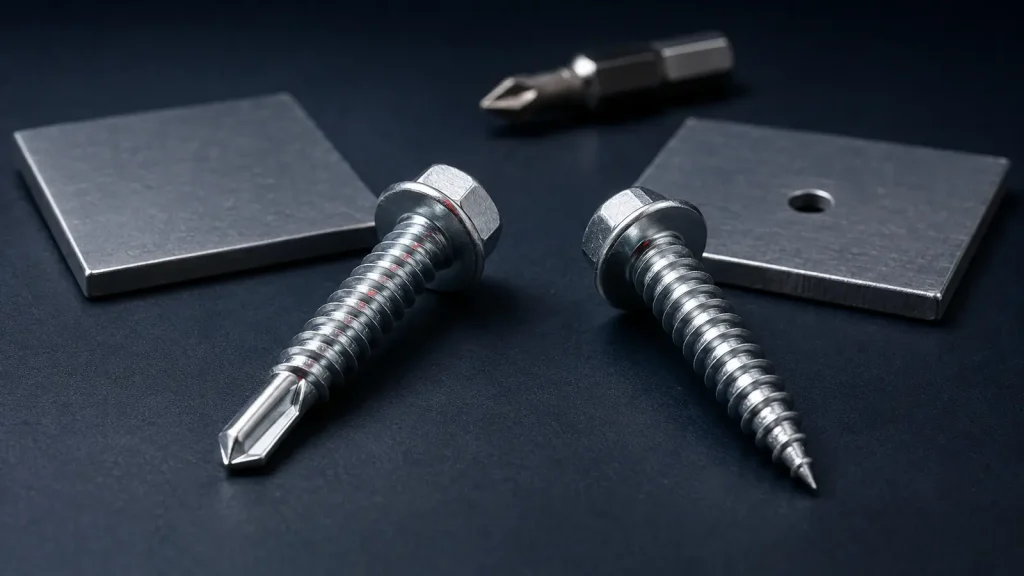
A drilling and screwing machine is only as reliable as the screw, bit, feed setting and workpiece match behind it. For buyers planning metal roofing, steel framing, panel fixing or other repetitive fastening work, the main decision is not just the machine type; it is whether the chosen screw can drill, form or cut its own path without stripping, wandering or damaging the material.

If your application uses self-drilling screws, confirm the screw point, head style, thread form, coating and washer arrangement before choosing the driving setup. Those details affect installation speed, holding strength and the number of rejected joints.

Related Products

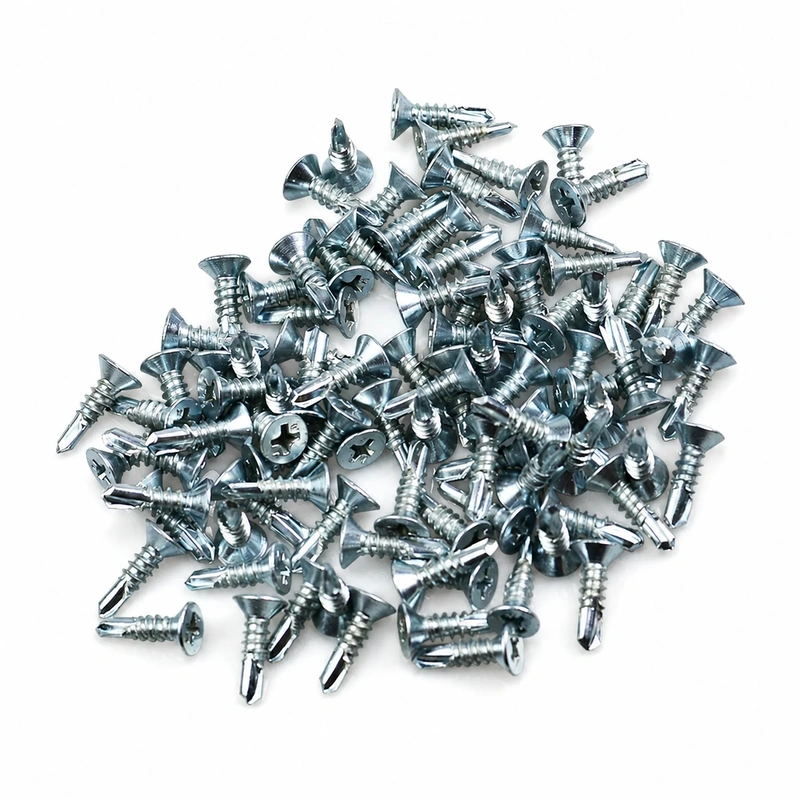
Countersunk Head Blue-White Zinc Plated Self-Drilling Screw (Chinese National Standard: Phillips Countersunk Head Self-Drilling And Self-Tapping Screw GB/T15856.2-2002)

Countersunk Head Blue-White Zinc Plated Self-Drilling Screw (Chinese National Standard: Phillips Countersunk Head Self-Drilling And Self-Tapping Screw GB/T15856.2-2002)

Brand: Hengzuan Surface: blue and white zinc plated, can be customized color zinc plated, black oxide plated Specifications: Comply with GB/T15856.2-2002 Chinese national standard, in stock ST4.2/ST4.8/ST5.5 full range of specifications, length 13mm~75mm optional, supports customized nonstandard rod lengths; drilling adaptation plate thickness 0.7~6mm Packaging: 25kg export cartons, full pallets wrapped with film, supports neutral export packaging, customer private-label customization

Read More
Chinese-standard Color Nylon Head Hex Self-Drilling Screw

Chinese-standard Color Nylon Head Hex Self-Drilling Screw

Brand: Hengzuan Surface: screw color zinc plated, head color nylon protective cap, multiple colors available Specifications: Chinese national standard ST5.5, ST6.3 mainstream caliber, rod length 25mm~125mm full range of specifications in stock, supports nonstandard length customization, suitable for drilling steel sheet thickness 2~6mm Packaging: 25kg cartons, full pallets packed on wooden pallets, support neutral packaging, private-label customization

Read More
Hex nut (Chinese national standard GB52-1976)

Hex nut (Chinese national standard GB52-1976)

Brand: Wotu Surface: 304 stainless steel Specifications: in stock M6~M24 full standard metric specifications, supports nonstandard pitch, thickening/customized Matching: Can be matched with bolts of corresponding specifications, flat washer, spring washer complete set of supporting shipment Packaging: 25kg cartons, whole wooden pallets

Read More
Hex Head Self-Drilling Screw With Bonded Washer

Hex Head Self-Drilling Screw With Bonded Washer

Brand: Hengzuan Surface: blue and white zinc plated, color zinc plated can be customized on request Specifications: in stock 4.2/4.8/5.5/6.3mm mainstream wire diameter, length 20mm~165mm full range of specifications, nonstandard rod length, drill point size can be customized Packaging: 25kg export cartons, full pallets wrapped with film, supports neutral export packaging, customer private-label customization

Read More
Painted Hex Head Self-Drilling Screw

Painted Hex Head Self-Drilling Screw

Brand: Hengzuan Surface: screw color zinc plated + hex head outdoor paint Specifications: ST5.5, ST6.3, rod length 25mm~120mm in stock, supports nonstandard customization, suitable for drilling steel sheets 2~5mm Packaging: 25kg cartons, whole wooden pallets

Read More

Selecting screws for machine-driven drilling and fastening

Fastener selection criteria

Useful selection criteria include screw type, drilling point style, thread form, head design, washer requirement, surface treatment and compatibility with the intended drilling and screwing machine. The right combination should install cleanly, hold the joint securely and avoid unnecessary pre-drilling where the application allows.

Criterion What To Check Why It Matters Buyer Tip
Match the machine to the screw type Confirm whether the job uses self-drilling screws, self-tapping screws, or pre-drilled holes with standard screws. A self-drilling screw needs enough axial pressure and speed control to cut its own pilot hole, while a self-tapping screw mainly forms or cuts threads after a hole exists. Ask: Which screw type and point style will be used with this machine, and does the tool setup suit that fastening method?
Torque control for consistent fastening Look for adjustable torque or clutch control, then test it on the actual material stack and screw size. Too little torque leaves loose joints; too much torque can strip threads, damage washers, or deform thin sheet material. Ask: Can the supplier recommend a torque setting range or testing method for the screw and substrate you plan to use?
Speed range and trigger control Check whether the machine allows controlled low-speed starting and stable running speed under load. Self-drilling screws often need a clean start, controlled drilling, and then a secure final seat. Poor speed control can cause walking, overheating, or damaged screw heads. Ask: How does the machine maintain speed when driving into steel sheet, aluminum, or timber?
Bit, socket, and nosepiece compatibility Verify the drive type, socket size, bit length, magnetic holder, and depth stop against the selected fastener head. A mismatch between the tool and the screw head increases cam-out, rounded heads, poor washer compression, and operator fatigue. Ask: Which bit or socket is recommended for the exact screw head and washer style in the order?
Duty cycle and site use Compare handheld, corded, cordless, or bench-mounted options based on fastening volume, access space, and operator working position. A machine that suits occasional installation may slow down or overheat in repetitive production work, while a heavy tool may be awkward for roof, wall, or overhead fastening. Ask: Is this machine intended for workshop assembly, construction installation, or high-volume repeated screw driving?

Key choices before pairing fasteners with a drilling and screwing machine

The practical distinction is between drilling a pilot hole first and using a self-drilling screw that combines drilling and fastening in one operation. A drilling and screwing machine can support either method, but the correct choice depends on the base material, sheet thickness, joint design and required finish.

Self-drilling screws can reduce steps in suitable metal-to-metal or metal-to-substrate applications, while self-tapping screws still need a prepared hole in many cases. Confusing the two often leads to poor thread engagement, broken points, stripped heads or joints that feel tight during installation but do not hold consistently in service.

Start with the joint, not the tool. Identify the top material, the base material and whether the screw must clamp sheets, attach brackets, fix panels or seal through a washer. A screw for thin sheet work is not selected the same way as a screw for heavier steel sections or outdoor roofing panels.

Match the screw point to the operation. Self-drilling points remove the separate drilling step, but the point must suit the material being penetrated. If the point is too light for the work, it can overheat or dull before the threads engage; if it is too aggressive for thin material, it may enlarge the hole and reduce holding power.

Consider the drive and head style with the machine. Hex washer heads are common where strong tool engagement and clamping are needed, while other head forms may suit flush or low-profile fastening. The machine’s torque control, feed consistency and bit engagement should reduce cam-out and avoid crushing washers or damaging coatings.

Before asking for a recommendation, prepare the material stack, screw size range, head preference, coating or corrosion exposure, and expected installation method. If Hebei Wotu Fastener Manufacturing Co., Ltd. is being considered for the fasteners, ask which self-drilling or self-tapping screw options suit your machine-driven process and what standards or dimensions can be confirmed for the intended joint.

Criteria Importance Description Example Options
Self-drilling versus self-tapping operation High for installation method and cycle time Self-drilling screws combine hole-making and fastening in one step when the point suits the material. Self-tapping screws form or cut threads but often need a prepared hole first. A metal panel fixing job may use self-drilling screws to reduce steps, while a controlled assembly may use a pre-drilled hole for more predictable alignment.
Material stack and thickness Critical for point selection and holding strength The top sheet, base material and total thickness determine whether the screw can drill cleanly and form a secure joint. A mismatch can cause dull points, enlarged holes or weak thread engagement. Thin sheet-to-sheet fastening and fastening into a heavier steel member may require different drilling points and thread forms.
Head, drive and washer arrangement Important for seating, sealing and tool engagement The head style affects clamping area and final appearance, while the drive must suit machine installation without frequent bit slip. Washers matter where sealing or load distribution is required. A roof panel joint may need a washered head, while an internal bracket may prioritize compact seating or tool access.
Torque and feed consistency Important for reducing installation defects Machine settings should let the screw drill, thread and seat without stripping the hole, crushing a washer or damaging the coating. The right setting depends on the screw and workpiece combination. Too much torque can overdrive a fastener; too little can leave the head proud or the joint under-clamped.
Surface treatment and exposure Important where moisture, weather or corrosive environments are present The coating or surface finish should suit the service environment and the connected materials. Compatibility should be confirmed rather than assumed from screw type alone. An indoor dry assembly and an outdoor panel application may need different corrosion-resistance considerations.

Blog Articles / Reviews

What Is the Difference Between Self Drilling and Self Tapping Screws?

What Is the Difference Between Self Drilling and Self Tapping Screws?

Direct Answer: A self-drilling screw has a drill-shaped point that creates a hole and then forms mating threads in a suitable material. A self-tapping screw forms or cuts mating threads but may require a correctly sized pilot hole. Selection depends on substrate type and thickness, joint stack, point geometry, installation tool, finish and application testing—not […]

National Standards for Self-Drilling Screws – Fasteners

National Standards for Self-Drilling Screws – Fasteners

When using fasteners, are you familiar with the standards governing them? Today, Hebei Wotu Fastener Manufacturing Co., Ltd. will discuss the national standards for fasteners with you. Let’s take a look. 1. Standards for Fastener Product Dimensions: These specifically define the basic dimensions of the product; for threaded products, this also includes the basic dimensions […]

The Concept of Hexagonal Self-Drilling Screws and High-Pressure Standard Parts

The Concept of Hexagonal Self-Drilling Screws and High-Pressure Standard Parts

Hexagonal self-drilling screws, manufactured by Hebei Wotu Fastener Manufacturing Co., Ltd., operate under a modern enterprise system and strictly manage according to the ISO9001:2015 quality system. The company uses “Wotu” as its registered trademark. The term “standard parts” in China is a shorthand for “standard fasteners,” a narrow definition. High- and medium-pressure standard parts refer […]

A manufacturer of hexagonal self-drilling screws discusses their performance standards.

A manufacturer of hexagonal self-drilling screws discusses their performance standards.

Hebei Wotu Fastener Manufacturing Co., Ltd., founded in the 1990s, is located in Yongnian District, Handan City, Hebei Province, known as the “Hometown of Fasteners.” 1. Core Hardness: Standard: HRC32-40. Our products are measured at HRC31.7-39.0. 2. Surface Hardness: Standard: HV600-700. Our products are measured at approximately HV620. 3. Hardened Layer: 4#-6#: 0.05-0.18mm; 8#-12#: 0.10-0.23mm; […]

What are the standard dimensions of a universal hexagonal self-drilling screw?

What are the standard dimensions of a universal hexagonal self-drilling screw?

Self-drilling screws, also known as “drill screws,” “self-drilling screws,” or “dovetail screws,” are classified into different types based on their application, material, and shape. A standard 6mm self-drilling screw has a flatness of 9.38mm or 9.8mm. A hexagonal self-drilling screw with dimensions 4.5*14*25 means the screw size is 4.5mm, the screw length is 25mm, and […]

Frequently Asked Questions

Can one machine setup handle both self-drilling and self-tapping screws?

Often it can, but the screw type changes the setup. Self-drilling screws need the point, speed and torque to create the hole and then form the joint; self-tapping screws usually rely on a prepared hole, so the main concern is thread engagement and seating without stripping.

When is pre-drilling still the better choice?

Pre-drilling can be the safer route when the base material is too thick, too hard or too sensitive for the selected self-drilling point. It can also help where hole position, finish quality or reduced installation load matters more than saving a process step.

What is the common misunderstanding about self-drilling screws?

A self-drilling screw is not suitable for every metal thickness or joint simply because it has a drill point. The point length, thread design and head style must match the material stack; otherwise the screw may drill poorly, fail to form strong threads or seat before the joint is properly clamped.

Which screw details should be confirmed before buying for machine installation?

Confirm the material stack, screw diameter and length range, drilling point type, head style, drive type, washer requirement and surface treatment. Also ask which dimensions or standards can be documented for the screws being considered.

How do head style and drive choice affect repetitive fastening?

The head and drive determine how well the bit transfers force and how the screw clamps the workpiece. For example, a hex washer head may suit strong tool engagement and clamping, while a lower-profile head may be preferred where the finished surface must stay flatter.

Leave Your Message

Send the material stack, approximate screw size or head style, and whether the job uses self-drilling or pre-drilled fastening. Include the working environment if corrosion resistance or sealing washers matter.