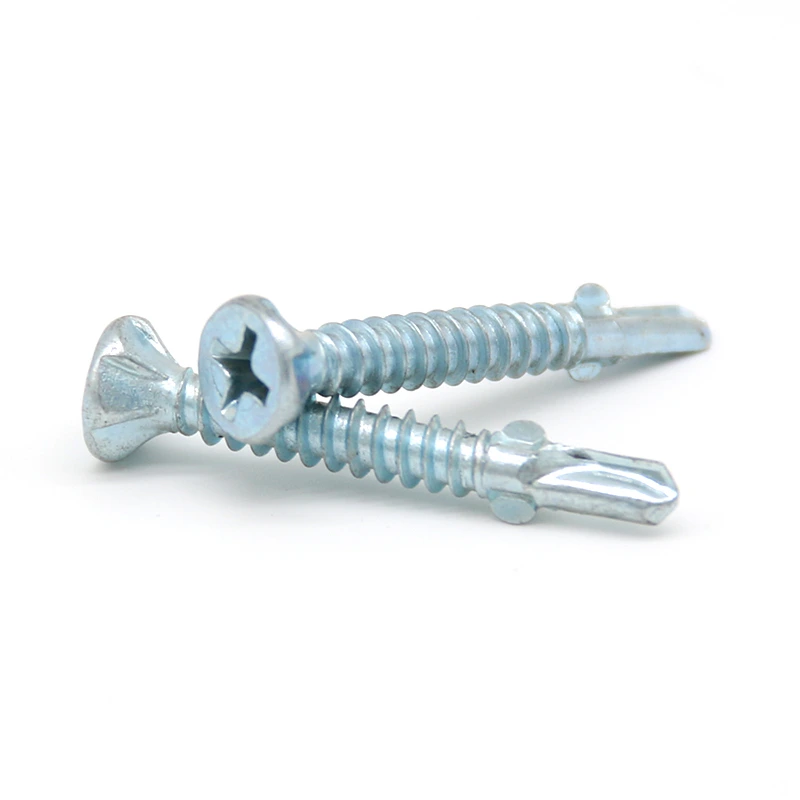
| One-piece construction and mating parts |
Confirm which parts are integrated into the fastener, such as washer, sealing element, drill point, thread, or head feature. |
An integral fastener reduces loose components, but the built-in part must match the joint design. A fixed washer or point can be helpful in assembly and unsuitable if the application needs separate material or size choices. |
Ask: Which elements are formed as one piece, and can any washer, seal, or head style be changed for my assembly? |
| Material and surface treatment |
Verify the base material and the finish used for corrosion resistance, appearance, or assembly performance. |
Material and coating affect strength, rust resistance, thread engagement, and compatibility with the joined materials. Some finishes are better for dry indoor use, while others suit exposed or mildly corrosive environments. |
Ask: What material and surface treatment do you recommend for the actual substrate and service environment? |
| Thread and point design |
Compare thread form, pitch, point style, and drilling or tapping function against the materials being joined. |
A fastener that drills well in one sheet thickness or material may strip, stall, or fail to clamp properly in another. The point and thread must suit the stack-up, not just the fastener diameter. |
Ask: What material thickness range and substrate type is this thread and point intended to fasten? |
| Head style and drive recess |
Check whether the head shape, bearing surface, and drive type fit the tool, access space, and finished appearance required. |
The head controls clamp load distribution and clearance. The drive affects installation speed, bit wear, cam-out risk, and whether the fastener can be installed consistently in production. |
Ask: Which drive bit and installation method should be used, and is the head designed to sit flush, raised, or sealed? |
| Applicable standard or drawing control |
Ask whether the integral fastener is supplied to a recognized standard, a company drawing, or a custom specification. |
Standards and drawings define dimensions, tolerances, material, finish, and inspection expectations. Without a clear reference, samples from different batches or suppliers may not interchange reliably. |
Ask: Can you quote against my drawing or state the exact standard, size code, finish, and inspection items used for supply? |