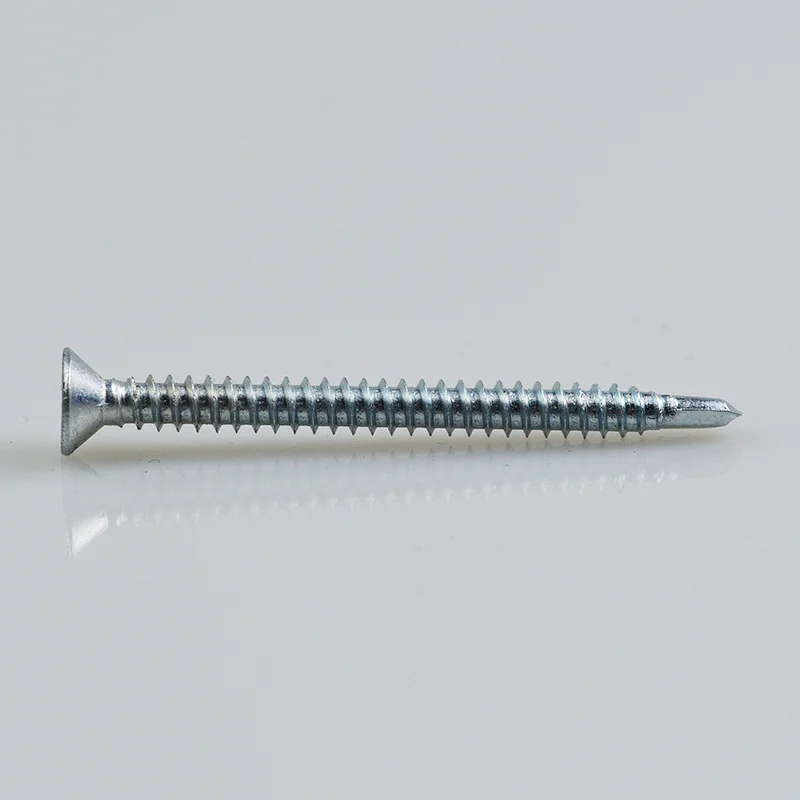
Metal Fasteners for Sheet and Frame Assemblies | Hebei Wotu Fastener Manufacturing Co., Ltd.

Metal fasteners for sheet, frame and panel assemblies

Metal fasteners hold panels, frames, brackets and structural parts together, but the right choice depends on the base materials, hole condition, load direction and exposure. A screw that works well in thin metal sheet may fail in thicker steel, timber backing or an outdoor roof assembly.

For buyers comparing fasteners for metal work, the main decision is not only size. Thread form, point style, head type, washer choice and surface treatment all affect installation speed, joint strength and corrosion resistance.

Related Products

Hex thin nut

Hex thin nut

Brand: Wotu Surface: zinc plated Specifications: in stock M8~M64 full standard specifications, covering precision, machinery, and steel structure full size range, supporting nonstandard tooth pitch and customized thickness Matching: Can be matched with bolts of corresponding specifications, flat washer, spring washer complete set of shipment Packing: packed in 25kg cartons and packed on wooden pallets.

Read More
Hex flange nut (Chinese national standard GB/T6177.1-2000)

Hex flange nut (Chinese national standard GB/T6177.1-2000)

Brand: Wotu Surface: zinc plated Specifications: in stockM6/M8/M10/M12/M14/M16/M20 Chinese national standardfull range of specifications, support nonstandard thickness, tooth pitch customized Matching: can be matched with bolts of the same specification, flat washer, spring washer complete set of shipment Packaging: 25kg cartons, whole wooden pallets

Read More
Grade 8/Grade 10 High-strength Black Oxide Hex Nut (DIN934/GB Chinese National Standard Thickened Nut)

Grade 8/Grade 10 High-strength Black Oxide Hex Nut (DIN934/GB Chinese National Standard Thickened Nut)

Brand: Wotu Surface: quenching and tempering heat treatment + high temperature black oxide anti-rust treatment Specifications: Comply with DIN934, GB/T6170 standards, in stock M6-M48 full range of specifications, nonstandard sizes can be customized Packaging: 25kg carton/woven bag inner packaging, whole wooden pallet wrapped with film for export packaging, supports neutral/private-label customization packaging

Read More
Hot-Dip Galvanized Hex Nut (DIN934 Thickened/GB Thin Nut In Multiple Specifications)

Hot-Dip Galvanized Hex Nut (DIN934 Thickened/GB Thin Nut In Multiple Specifications)

Brand: Wotu Surface: high temperature hot dip zinc plated surface treatment Specifications: Comply with DIN934, GB/T6170, GB/T6172.1 Chinese national standard German standard, in stock M6-M64 full range of specifications, length is nonstandard customized as required Packaging: 25kg woven bag/export carton, full-container wooden pallet wrapped with film, supports neutral packaging, private-label customization

Read More
Hot-Dip Galvanized Hex Head Bolt (DIN931 Half Thread / DIN933 Full Thread / GB30 Chinese National Standard Bolt, Can Be Equipped With Nut And Washer Set)

Hot-Dip Galvanized Hex Head Bolt (DIN931 Half Thread / DIN933 Full Thread / GB30 Chinese National Standard Bolt, Can Be Equipped With Nut And Washer Set)

Brand: Wotu Surface: overall hot-dip zinc plating treatment Specifications: Comply with DIN and GB standards, in stock M6-M48 full range of specifications, length 20mm-300mm, supports nonstandard customized. Packaging: woven bag inside / 25kg export carton, film-wrapped wooden pallet; supports neutral packaging and customer private-label customization.

Read More

Metal fastener choices by joint type and installation method

Selection criteria

Compare metal fasteners by application fit: material pairing, drilling or tapping method, head style, thread engagement, washer requirement and corrosion protection. These details usually change the recommendation more than the fastener category alone.

Criterion What To Check Why It Matters Buyer Tip
Fastener type for the joint Confirm whether the assembly needs a self-drilling screw, self-tapping screw, bolt, nut, washer, or another metal fastener. The thread and point must match the joining method and whether the materials are pre-drilled. Ask, “Will this fastener make its own hole, form threads in a pilot hole, or be installed through a prepared hole?”
Joining materials and substrate thickness Provide the exact material pair, such as metal-to-metal or metal-to-wood, plus the thickness of each layer. Material hardness and thickness affect thread engagement, drilling effort, holding power, and the risk of stripping or breakthrough. Ask for a recommendation based on the full material stack rather than only the top sheet thickness.
Corrosion protection and service exposure Compare the base material and surface treatment, then state whether the joint will face indoor humidity, outdoor weather, condensation, chemicals, or dissimilar metals. The wrong protection can lead to corrosion, staining, seizure, or loss of clamping performance during service. Ask which coating or material is intended for the stated environment and whether compatibility with adjoining metals has been reviewed.
Length, diameter, head, and drive style Verify the fastener diameter, usable length, head form, washer requirement, and drive recess against the access and clearance available. These details affect thread engagement, sealing or clamping, tool access, installation speed, and the chance of damaging the workpiece. Send a drawing or assembly photo and ask the supplier to confirm the complete dimensional selection.
Standard, drawing, and inspection documents Request the applicable standard or controlled drawing and confirm what dimensional, material, coating, and inspection information accompanies the shipment. Clear reference documents make incoming inspection and repeat purchasing more consistent, especially for custom or mixed fastener orders. Ask, “Which document defines this part, and what inspection records can you provide for the supplied batch?”

Key details to confirm before selecting metal fasteners

The first distinction to make is between self-drilling, self-tapping and fasteners used with pre-drilled holes. A self-drilling screw cuts its own pilot hole in suitable metal, which can reduce installation steps. A self-tapping screw forms or cuts threads after a hole already exists, or after the point has entered a softer backing. Bolts, nuts, rivets and anchors solve different problems where the joint needs serviceability, clamping force or expansion grip.

This matters because the wrong point or thread can strip the hole, leave the joint loose, damage coatings or slow installation. For example, metal-to-metal work often needs careful matching between drill point, thread pitch and sheet thickness, while metal-to-wood work usually requires enough thread engagement in the timber and a head or washer that seals or clamps the panel correctly.

Start with the joint, not the fastener name. Confirm what materials are being joined, their approximate thickness, whether the hole is pre-drilled, and whether the joint is permanent or needs future removal. A metal roof panel, a machinery bracket and a light-gauge frame can all use metal fasteners, but they place very different demands on the thread, head and finish.

Match the point and thread to the installation method. Self-drilling screws are useful where drilling and fastening in one operation is appropriate, but the drill point must suit the metal thickness and hardness. Self-tapping screws can be a better fit when pilot holes are controlled separately. Avoid assuming that “self” in the name means the screw will work in every metal assembly.

Choose the head, washer and drive for the real working conditions. Hex heads can give good tool engagement for roof and sheet-metal work, while pan, countersunk or flange heads suit different seating requirements. Sealing washers help where water entry is a concern, but they need proper compression and compatible materials. A drive that strips easily during installation can create more problems than a lower unit price solves.

Surface treatment should follow the environment. Indoor dry assemblies, outdoor exposure, treated timber contact and coastal or industrial conditions can require different coatings or materials. For an inquiry, share the application, base materials and exposure conditions first; then ask which point, thread, head and finish are appropriate for that joint.

Criteria Importance Description Example Options
Installation method High importance because it affects drilling steps, tool choice and installation consistency. Choose between a self-drilling point, a self-tapping design used with a prepared hole, or a fastener installed through a pre-drilled assembly. A self-drilling screw may suit suitable sheet-metal work, while a self-tapping screw can fit an assembly where pilot-hole size is controlled in advance.
Material pairing and thickness Critical because thread engagement and point performance depend on the materials being joined. Check whether the joint is metal-to-metal, metal-to-wood or a pre-drilled connection, then match the thread and point to the material hardness and combined thickness. A screw for thin sheet may not provide the same fit in thicker steel or in timber backing.
Head, drive and washer arrangement Important for tool engagement, seating, clamping and sealing. Select the head shape and drive for access and load transfer, and add a compatible washer when the joint needs broader bearing or moisture control. A hex head may suit accessible sheet-metal work, while a countersunk head may be chosen where the head must sit flush.
Material or surface protection Important when the joint faces moisture, outdoor exposure, treated timber or contact with dissimilar metals. Compare the fastener material and surface treatment with the service environment and the surrounding materials; do not treat a finish label as a complete environmental assessment. A dry indoor bracket and an exposed roof panel may require different corrosion-protection choices.
Removability and joint function Important because service access and the required clamping method can change the best fastener type. Decide whether the joint should be removable, permanently fixed or able to accommodate a nut, threaded hole or expansion mechanism. A serviceable machinery bracket may favor a removable screw or bolt arrangement, while a permanent sheet assembly may be evaluated alongside rivet options.

Blog Articles / Reviews

Which Self-Tapping Roofing Screw Specification Fits Metal Panels on Steel or Timber?

Which Self-Tapping Roofing Screw Specification Fits Metal Panels on Steel or Timber?

The correct self-tapping roofing screw depends on the complete panel-and-substrate stack-up. Steel supports typically require a point and thread matched to the support thickness and any pilot-hole requirement; timber supports require a wood-appropriate thread and sufficient embedment. In both cases, buyers must define diameter, length, head, sealing washer, material or coating, environment, pull-out requirements, and […]

Oxidation Treatment Specifications for Self-Drilling Screw Fasteners

Oxidation Treatment Specifications for Self-Drilling Screw Fasteners

The surface treatment of self-drilling screws requires specific procedures. What manufacturing processes are generally used for surface treatment? Hebei Wotu Fastener Manufacturing Co., Ltd. will explain oxidation treatment below. The surface treatment of self-drilling screws requires specific procedures. What manufacturing processes are generally used for surface treatment? Hebei Wotu Fastener Manufacturing Co., Ltd. will explain […]

National Standards for Self-Drilling Screws – Fasteners

National Standards for Self-Drilling Screws – Fasteners

When using fasteners, are you familiar with the standards governing them? Today, Hebei Wotu Fastener Manufacturing Co., Ltd. will discuss the national standards for fasteners with you. Let’s take a look. 1. Standards for Fastener Product Dimensions: These specifically define the basic dimensions of the product; for threaded products, this also includes the basic dimensions […]

Frequently Asked Questions

Can these fasteners be used for both metal-to-metal and metal-to-wood joints?

A fastener suitable for one joint may not suit the other. Metal-to-metal work usually depends on the drill point, thread form and combined metal thickness, while metal-to-wood work needs sufficient thread engagement in the timber and an appropriate head or washer for clamping.

When is a self-drilling screw a better choice than a self-tapping screw?

A self-drilling screw can reduce installation steps when it is suitable for the metal thickness and hardness, because its point makes the pilot hole. A self-tapping screw may be preferable when pilot holes are already controlled or when the assembly requires a specific hole size and thread-forming process.

Does a corrosion-resistant finish make any fastener suitable for outdoor use?

No. Corrosion protection depends on the coating or material, the exposure, contact with other metals and the condition of the joint. Outdoor, coastal, industrial or treated-timber applications should be reviewed separately rather than selected by finish name alone.

What information should I send when requesting a recommendation?

Provide the materials being joined, the approximate thickness of each material, whether holes are pre-drilled, the required head or washer arrangement and whether the joint must be removable. Also describe indoor or outdoor exposure and the installation tool or method, especially for roofing, sheet metal or framing.

Are bolts, rivets and screws interchangeable in the same assembly?

They solve different joint requirements. Screws are useful where installation access and possible removal matter, bolts provide clamping with a nut or threaded hole, and rivets are commonly considered for permanent joints where access to the reverse side may be limited or available depending on the rivet type.

Leave Your Message

Send the materials being joined, the approximate thickness or hole condition, and the working environment. If the fastener is for roofing, sheet metal, framing or machinery, include that application so the point, thread, head and finish can be checked.