The practical difference between an open-end wrench and a ring, box, or socket wrench is access. An open-end wrench slides onto the fastener from the side, which helps around long threaded rods, pipes, and assembled structures. The trade-off is that it contacts fewer sides of the fastener, so it needs a clean fit and controlled force.
If the job involves high torque, damaged fasteners, or repeated production tightening, a box-end wrench, socket, or torque tool may be safer and more consistent. If the job involves quick adjustment, restricted side access, or nuts on U-bolts and clamps, an open-end wrench can be the more convenient choice.
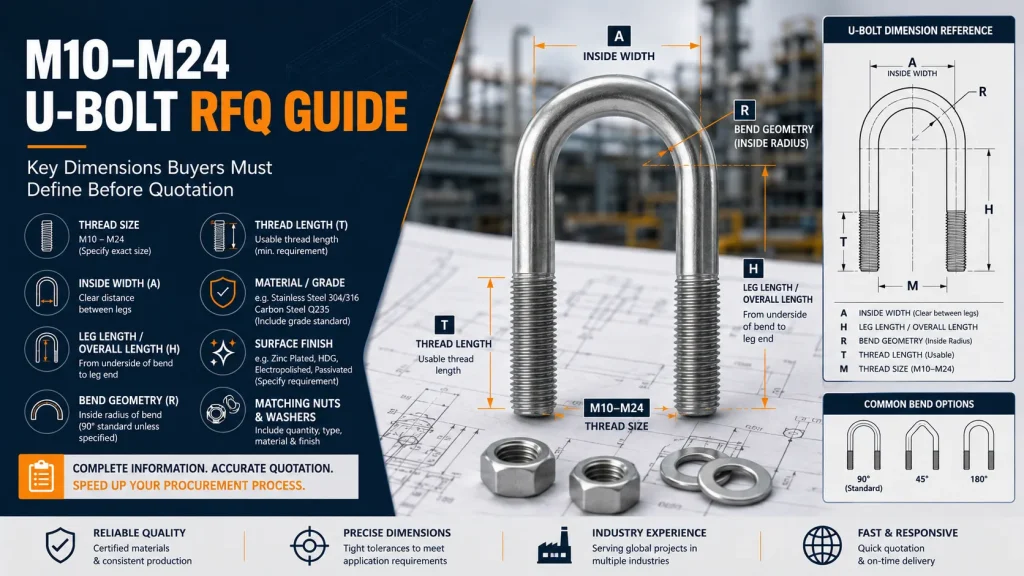
Start with the fastener, not the tool name. Ask for the across-flats size of the nut or bolt head, the thread size, and the standard being used. For example, an M10 or M24 thread does not automatically tell you the wrench opening because nut dimensions can vary by standard, heavy pattern, thin pattern, or special design.
Check the space around the fastener. A longer handle gives more leverage, but it may not swing in a narrow bracket or pipe assembly. A slim head can reach tight areas, while a thicker head may provide better strength. If the wrench must work around U-bolts, flanges, or support frames, photos or drawings of the installation are useful.
Choose the tool style around how often it will be used. A single open-end wrench may be enough for occasional adjustment. A double open-end wrench covers two sizes in one tool. A combination wrench gives an open end for access and a ring end for better grip where there is enough clearance.
A common mistake is ordering by thread size alone or assuming one regional standard matches another. Before requesting a quote or recommendation, send the nut across-flats dimension, the fastener type, the working position, and whether the tool is for installation, maintenance, or field repair.