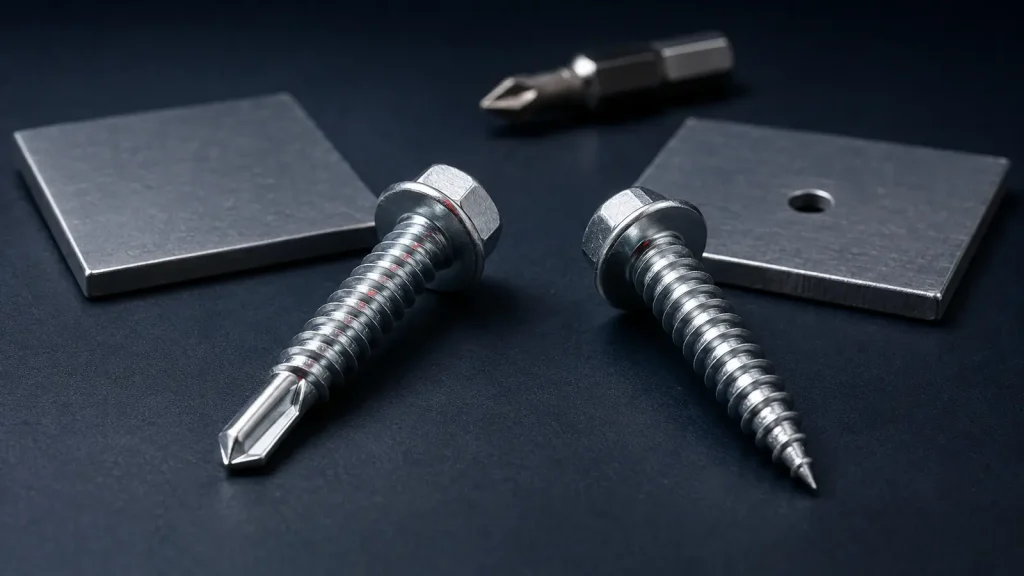
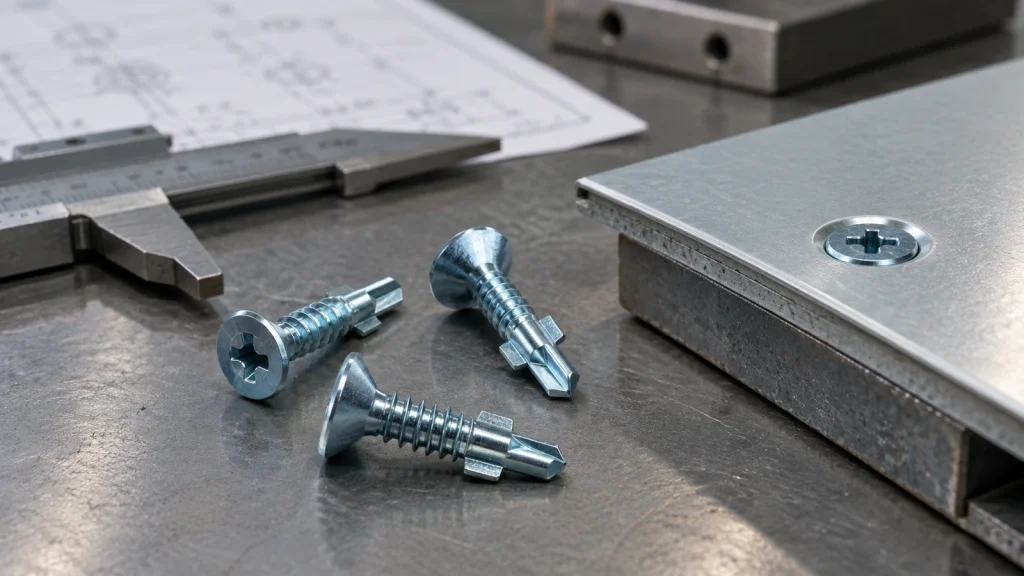
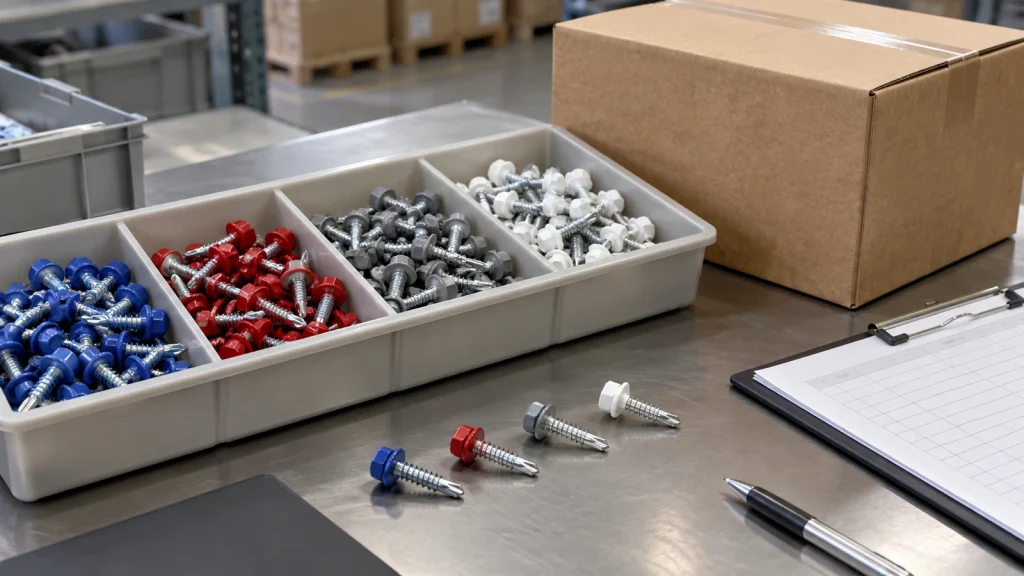
The practical distinction is between drilling a clearance hole, a pilot hole and a tapping-sized hole. A clearance hole lets a bolt or screw pass through one part and clamp into another. A pilot hole guides a self-tapping screw so it can form or cut its thread. A tapping-sized hole is prepared for a separate tapping operation or a thread-forming fastener.
This matters because the same pillar drill can produce all three hole types, but the fastener choice changes. A hole that is too small can split material, distort sheet or overload the screw. A hole that is too large can reduce thread engagement and weaken pull-out resistance.
Start with the joint, not the drill. Identify the base material, thickness, coating and whether the fastener must clamp one layer or several layers. Mild steel, aluminium, timber, composite sheet and pre-painted panels all behave differently under drilling pressure and screw installation.
Decide whether you need a pre-drilled assembly or a self-drilling fastener. A pillar drill is useful when hole position, perpendicularity and repeatability matter. Self-drilling screws reduce a separate drilling step, but they still need the correct point style, head type and coating for the material stack.
Avoid treating hole diameter as a rough estimate. Small changes affect thread bite, insertion torque and final clamp. For production work, ask for the recommended pilot or clearance hole based on the fastener type and material, then test on the actual parts before approving a batch.
For an enquiry to Hebei Wotu Fastener Manufacturing Co., Ltd., share the fastener style you are considering, the drilled material and thickness, and the required finish or corrosion exposure. If the hole will be made on a pillar drill, include whether it is a pilot hole, clearance hole or hole for a tapped thread.